
Alaska cruises in August require layered clothing for temperatures ranging from 50-65°F. Pack a waterproof jacket, fleece or sweater, long pants, and comfortable walking shoes. Bring both short and long sleeves for variable weather. Dressier outfits are needed for formal dining nights. Accessories should include a warm hat, gloves, and sunglasses for glacier viewing.
Quick Facts: Alaska Cruise Packing for August
| Category | What You Need |
|---|---|
| Average Temperature | 50-65°F (10-18°C) |
| Rainfall Probability | High – August averages 13-16 rainy days |
| Daylight Hours | 16-18 hours of daylight |
| Essential Items | Waterproof jacket, layers, sturdy shoes |
| Formal Nights | 1-2 depending on cruise length |
| Shore Excursion Gear | Daypack, water bottle, binoculars |
Want to know more about planning your Alaska cruise wardrobe? We’ve got comprehensive guides to help you pack smart for your adventure.
The Art of Layering for Alaska in August
August sits in Alaska’s peak cruise season, but don’t let that fool you into thinking you’ll need your beach wardrobe. The weather is notoriously fickle, and you might experience four seasons in a single day. The secret weapon? Layers that you can add or remove faster than a glacier calves into the ocean.
Your Base Layer Strategy
- Moisture-wicking basics: Pack lightweight long-sleeve shirts that pull sweat away from your skin. Synthetic fabrics or merino wool work better than cotton, which stays damp and cold.
- Tank tops and short sleeves: Yes, you’ll actually use these when the sun decides to make an appearance or when you’re indoors on the ship.
- Thermal underwear: For early morning wildlife viewing or glacier excursions, these are lifesavers. The kind that doesn’t add bulk works best under jeans.
Middle Layer Must-Haves
- Fleece pullover or jacket: This is your MVP garment. Lightweight, warm, and quick-drying.
- Sweaters or cardigans: Choose ones that compress well in your luggage and don’t wrinkle easily.
- Insulated vest: Here’s an insider tip most people miss – a packable down or synthetic vest adds warmth without restricting arm movement, perfect for photography or binocular use.
Outer Layer Essentials
Your waterproof jacket deserves its own discussion. We’re not talking about a flimsy rain poncho that’ll shred in the first breeze. You need a proper rain jacket with sealed seams and a hood. Bonus points if it has pit zips for ventilation because you’ll work up heat hiking to waterfalls or climbing stairs in port towns.
Footwear That Won’t Fail You
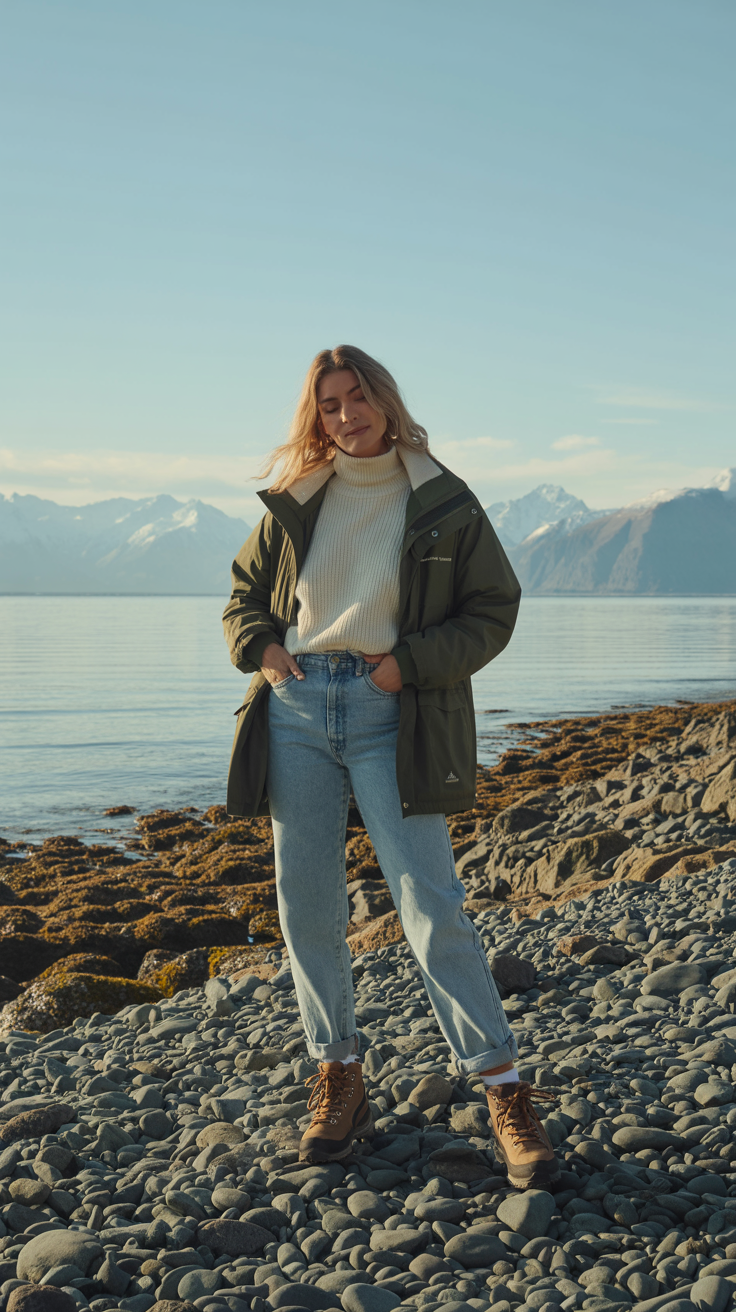
This is where many first-time Alaska cruisers go wrong. Those adorable canvas sneakers? They’ll be soaked and useless within an hour of your first shore excursion.
- Waterproof hiking shoes or boots: Broken-in is crucial. Nobody wants blisters while tracking through Tongass National Forest.
- Comfortable walking shoes for onboard: The ship has a lot of walking. Your feet will thank you for supportive footwear.
- Dressier shoes for dinner: One pair of nice shoes for formal nights on your August Alaska cruise. Women can get away with dressy flats; men need closed-toe shoes.
- Slip-on shoes: For quickly getting in and out of your cabin or hitting the breakfast buffet.
Gender-Specific Outfit Considerations
Check out our detailed guides for women’s Alaska cruise outfits and men’s Alaska cruise outfits for specific style recommendations that work in Alaska’s unique climate.
For Women
- Leggings or travel pants with stretch are more practical than jeans for active excursions
- A versatile scarf serves as both warmth and a dinner outfit upgrade
- Sports bras that work as both active and base layers reduce packing volume
- Waterproof mascara and minimal makeup – the mist and rain will challenge anything elaborate
For Men
- Dark jeans hide dirt better during multiple wears between washes
- Button-up shirts layer better than polos and work for casual dining
- A lightweight packable jacket can compress into a daypack
- Quick-dry pants for excursions mean you can rinse and reuse
What to Pack for Different Excursion Types
August is prime time for diverse activities, and your Alaska cruise packing list should reflect what you’ve booked.
Glacier Viewing and Boat Tours
- Warmest layers including gloves and warm hat
- Sunglasses and sunscreen (glacial reflection is intense)
- Neck gaiter or buff to protect against wind
- Hand warmers tucked in pockets
Wildlife Watching and Hiking
- Neutral-colored clothing (bright colors can disturb animals)
- Binoculars on a comfortable strap
- Small backpack with water and snacks
- Bug spray for forested areas
Town Exploration
- Comfortable waterproof footwear
- Light rain jacket that stuffs into a bag
- Crossbody bag or secure daypack for valuables
- Reusable water bottle
Comparing August to Other Months
Understanding how August differs from other cruise months helps you pack smarter. Check out our guides for May outfits, June outfits, July outfits, and September outfits to see the differences.
August typically offers the warmest temperatures of Alaska’s cruise season, but you’ll still need all your layers. The advantage? You’re less likely to encounter snow at higher elevations compared to May or September. However, August also brings more rainfall than July, so waterproofing becomes even more critical. Learn more about when to cruise Alaska to understand seasonal variations.
Onboard Dress Codes
Cruise ships maintain dress codes that surprise casual packers. Most Alaska cruises feature “resort casual” as the standard, with one or two formal or semi-formal nights depending on cruise length.
Casual Nights (Most Nights)
- Nice jeans or casual pants with a collared shirt or blouse
- Sundresses with a cardigan work for women
- Clean sneakers or casual shoes are acceptable
- No swimwear, tank tops, or shorts in main dining rooms
Formal or Semi-Formal Nights
- Men: Suit and tie or dark slacks with dress shirt
- Women: Cocktail dress, dressy pantsuit, or evening wear
- Many passengers rent tuxedos or pack one versatile dressy outfit
- You can skip formal dining and eat at buffet or casual venues if you prefer
Accessories That Make the Difference
These small items punch above their weight in usefulness.
- Packable down jacket: Compresses to nothing but provides serious warmth for early mornings on deck watching for whales
- Waterproof phone case: Protect your device from rain and sea spray while capturing those incredible moments
- Buff or neck gaiter: Works as scarf, headband, face covering, and wrist warmer
- Sunglasses with strap: Wind on deck can send unsecured glasses overboard
- Small dry bag: Keeps electronics and documents safe during zodiac landings and rainy excursions
- Portable charger: Extended daylight means extended photo opportunities that drain batteries
Bonus Tips Most People Miss
- Pack outfit photos on your phone: Pre-plan combinations so you don’t overpack or forget pieces
- Wear your bulkiest items on the plane: Save luggage space by wearing hiking boots and your heaviest jacket during travel
- Bring ziplock bags: Perfect for wet clothes, dirty shoes, or keeping small items organized
- Dark colors hide stains better: Between ship dining and outdoor excursions, spills happen
- Compression packing cubes: Double your suitcase space and keep outfits organized
- Test all gear before you go: Discover that your rain jacket leaks at home, not in Ketchikan
- Pack a small sewing kit: A popped button shouldn’t ruin formal night
- Bring laundry detergent packets: Most ships have self-service laundry, extending your wardrobe options
- Download weather apps for Alaska ports: Check conditions before each port day to adjust your outfit
- Pack merino wool socks: They regulate temperature, don’t stink, and dry quickly
What You Can Skip
Just as important as what to bring is knowing what to leave home.
- Heavy cotton hoodies (they stay wet forever)
- Multiple pairs of jeans (one or two max, they’re heavy and slow to dry)
- Fancy jewelry (you won’t wear it and risk losing it)
- Umbrellas (useless in wind, both hands needed for cameras and rails)
- Excessive formal wear (one nice outfit is plenty)
- New shoes (blisters guaranteed)
- Hair dryer and full-size toiletries (ships provide basics)
Getting More Creative With Limited Space
For more inspiration, browse our Alaska cruise outfit ideas that show you how to mix and match fewer pieces for maximum versatility.
The key is choosing pieces that work multiple ways. That fleece zip-up works for hiking, layering under your rain jacket, wearing to breakfast, and throwing over your shoulders at dinner. Your dark jeans dress up or down. A simple black or navy base lets you swap just one colorful layer to create “new” outfits.
Common Questions and FAQ
Should I pack for cold or warm weather in August?
Both. August averages 55-65°F but can swing from 45°F early morning at glaciers to 70°F on sunny afternoon decks. The ability to layer is more important than packing for a specific temperature.
Do I really need waterproof pants?
For most cruisers, water-resistant pants or treated jeans are sufficient. However, if you’ve booked kayaking, zodiac tours, or serious hiking excursions, waterproof pants become worthwhile. Rain can blow sideways, soaking regular pants quickly.
Can I do laundry on the ship?
Most ships offer self-service laundry rooms (small fee) and full laundry services (more expensive). This means you can pack lighter and rewear items, especially base layers and socks.
What if I forget something important?
Port towns like Juneau, Ketchikan, and Skagway have outdoor gear shops where you can purchase forgotten items. Prices are higher than at home, but you won’t be stranded without essentials. The ship’s store also carries basics.
Are there any special requirements for helicopter or floatplane excursions?
Yes. Most aerial tours have weight restrictions and require closed-toe shoes. They’ll provide any necessary gear like rain pants or boots for glacier landings. Loose items and selfie sticks are typically prohibited. Check with your specific tour operator beforehand.
How many outfits should I pack for a week-long cruise?
A practical formula: 4-5 casual day outfits that mix and match, 1-2 formal/semi-formal outfits, workout clothes if you’ll use the gym, and pajamas. With layering pieces, you can create different looks from the same base items. Remember, you’re on vacation – repeating outfits is completely normal and expected.
Personal Experience
When I booked my August Alaska cruise, I figured summer meant warm weather, right? Wrong. The first morning in Juneau, I stepped out in shorts and immediately regretted every choice I’d made while packing. The temperature was around 55 degrees with a misty drizzle that seemed to come from nowhere. Thank goodness I’d thrown in a fleece jacket at the last minute. What saved me throughout the trip was learning to layer everything – tank top, long-sleeve shirt, waterproof jacket. I’d peel off or add layers depending on whether we were on the ship’s sunny deck or exploring a glacier up close.
The best advice I can give is to pack like you’re going camping in spring, not summering in the tropics. My lightweight rain jacket and comfortable waterproof sneakers got more use than anything else in my suitcase. Those cute sandals I packed? Wore them exactly once at dinner. During our whale watching excursion, I watched other passengers shivering in sundresses while I was cozy in jeans and my trusty pullover. The weather really does change every few hours, so having options in your daypack makes all the difference. And honestly, nobody cares if you wear the same jacket three days in a row when you’re watching a bear catch salmon in the wild.