
Propriano is a charming port town on Corsica’s southwestern coast, offering cruise visitors access to pristine beaches, authentic Corsican culture, and dramatic mountain scenery. The small port accommodates tender operations, bringing passengers ashore to explore the marina, local restaurants serving regional cuisine, historic sites, and nearby coastal villages. The town serves as a gateway to Corsica’s rugged interior landscapes.
Quick Port Facts
| Fact | Detail |
|---|---|
| Port Location | Town centre marina at Gulf of Valinco |
| Distance to Town | Direct access – port is in town centre |
| Docking | Alongside berth or tender (ships up to 80m) |
| Currency | Euro (EUR) |
| Language | French, Corsican |
| Port Coordinates | 41.6764° N, 8.9031° E |
Want to know more about cruise ports across Corsica including Bonifacio, Ajaccio and Calvi?
Propriano Map with Attractions
Map shows cruise terminal and main attractions within walking distance.
Can You Walk to Town from the Port?
Cruise ships dock at Port de Plaisance de Propriano, which sits directly in the town centre at the heart of the waterfront. There’s no shuttle needed and no separate cruise terminal to navigate – you’re literally stepping off the ship onto the harbour promenade where cafés, shops and restaurants begin immediately.
- Distance: Zero distance – the port is the town. You’re in the action as soon as you disembark. The main shopping street, Rue du Général de Gaulle, is about 100 metres from the quay.
- Terrain: Completely flat along the harbour front and through the town centre. Pavements are well-maintained and there are no stairs or cobblestones on the main routes. The only exception is if you walk up to Notre-Dame de la Miséricorde church for the views – that’s a short uphill walk on paved roads. Comfortable walking shoes will serve you well for exploring the town and harbour area.
- Weather: Corsican summers get seriously hot, so bring water and sunscreen. The harbour promenade has some shaded sections under trees, but you’ll be in direct sun for stretches. Spring and autumn are perfect walking weather.
- Safety: Very safe during the day. Propriano is a small, quiet town with minimal traffic in the pedestrian areas near the port. Evening strolls are equally safe, though the town goes pretty quiet after dinner service ends.
- Bottom line: Walking is not just practical – it’s unavoidable in the best way. This port is designed for easy access, making it ideal for less mobile passengers or anyone who’d rather skip the transport hassle.
How to Get Around from Propriano Port & Shore Transportation
While Propriano itself is entirely walkable, you’ll need transport for attractions beyond town. The port sits in the town centre, so taxis and buses are easy to find just outside the marina gates.
Taxis
- Taxis line up near the port entrance on busy cruise days. Drivers usually display fixed rates for popular destinations like Sartène (around €30-40 one way) and Filitosa (€40-50 one way). Always confirm the fare before setting off – meters aren’t always used for tourist runs.
- For longer trips or groups, negotiate a return fare with waiting time included. This often works out cheaper than two separate journeys.
- Taxi availability can be limited if multiple ships call on the same day, so consider booking ahead through your ship’s shore excursions desk or asking the capitainerie for local taxi numbers when you arrive.
Local Buses
- Public buses connect Propriano to surrounding villages and beaches, with tickets purchased directly from the driver. Services are infrequent compared to mainland France – often just a few buses per day – so check timetables carefully at the port or tourist office.
- This is a budget-friendly option if your timing aligns, but not practical if you’re on a tight cruise schedule.
Tourist Train
- During peak summer months, a heritage tourist train called “U Trinighellu” runs between Propriano and Ajaccio, offering scenic views along the coast and through the mountains. The ride takes about two hours each way, so you’ll need a longer port call to make this worthwhile.
- Check current schedules at the tourist office on Avenue Napoléon, as services vary by season and aren’t guaranteed on all cruise calling days.
Car Hire
- Several car hire agencies operate in Propriano, with offices within walking distance of the port. If you’re comfortable driving on narrow Corsican mountain roads and want maximum flexibility, this gives you access to inland villages, remote beaches and archaeological sites at your own pace.
- Book ahead for cruise days, as availability gets tight when multiple ships call. Bring your driving licence and be prepared for challenging hairpin bends if you head into the interior.
Private Tours
- Cruise lines offer organised shore excursions, typically covering Sartène, Filitosa or coastal drives. These remove the stress of navigation and timing, though you’ll pay a premium compared to independent travel.
- Local operators also offer private guided tours – ask at the tourist office or port information desk for licensed guides. This often provides better value for small groups than ship-organised options.
What to See Within Walking Distance from the Port
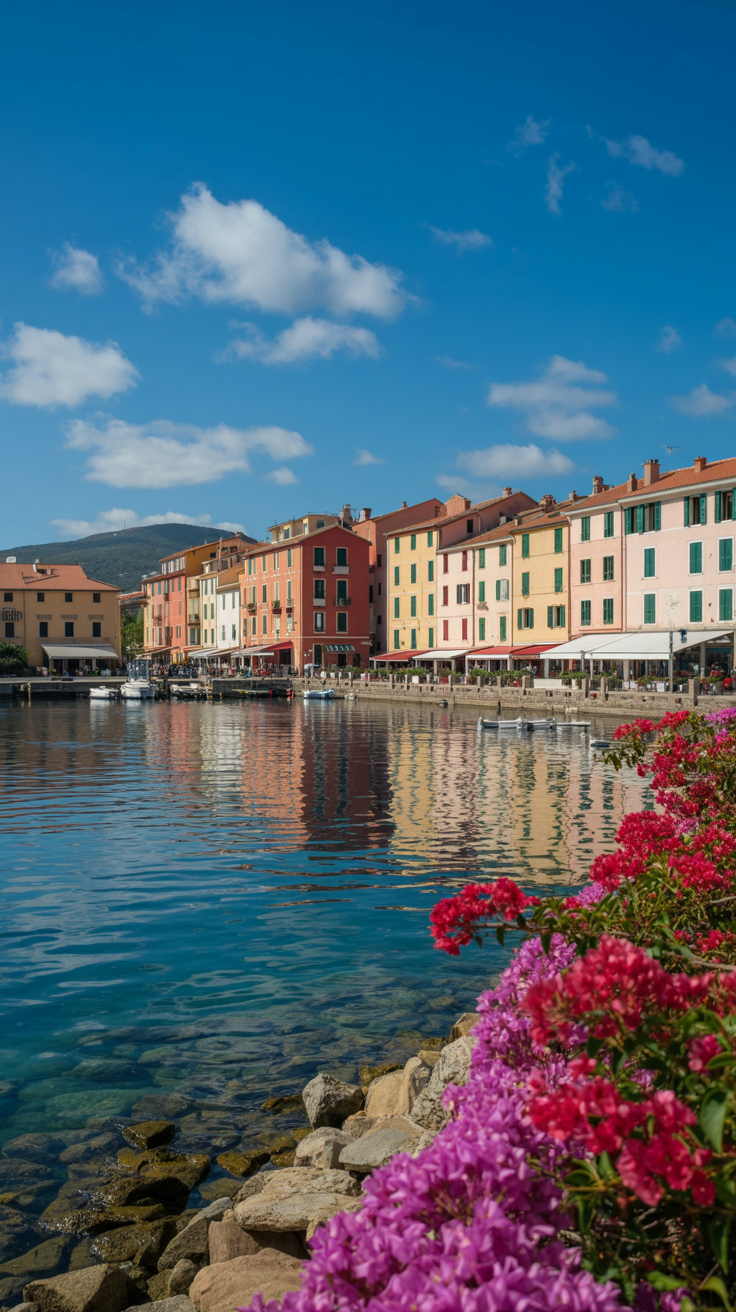
Propriano’s compact town centre means you can cover the main sights in a couple of hours on foot, leaving time for a swim or a leisurely lunch.
- Harbour Promenade and Marina: The liveliest part of town, where fishing boats moor alongside luxury yachts. It’s the perfect spot for people-watching with a coffee, and you’ll see locals haggling over the morning’s catch at the fish stalls. The promenade stretches for about 400 metres and takes ten minutes to walk end-to-end.
- Scoglio Longo Lighthouse and Beach: This small lighthouse sits at the southern end of the harbour, about a 15-minute walk from where you disembark. The adjacent beach is a narrow strip of golden sand with calm, clear water – ideal for a quick dip if you didn’t plan a longer beach day. It gets busy with locals in summer. If you’re planning a swim, pack a quick-dry beach towel that won’t take up much space in your day bag.
- Notre-Dame de la Miséricorde Church: A short uphill walk from the harbour leads to this modest church with sweeping views over the Gulf of Valinco. The Belvedere viewpoint near the church offers one of the best photo opportunities in town, particularly late afternoon when the light hits the mountains behind. Allow 20 minutes for the walk up and back.
- Morning Market (Place de l’Hôtel de Ville): If your ship arrives early enough, the morning market near the town hall sells local Corsican products including brocciu cheese, charcuterie, honey and olive oil. It’s small but authentic, with none of the tourist tat you’ll find in bigger ports. The market typically runs until around midday, so get there before 11am.
- Rue du Général de Gaulle and Avenue Napoléon III: These parallel streets form the shopping heart of Propriano, lined with boutiques, souvenir shops and food stores. It’s a pleasant 30-minute stroll if you fancy browsing, though don’t expect high-end retail. Most shops close for lunch between 12:30pm and 3pm, which catches out a lot of cruise passengers.
- Capu Laurosu Beach: One of Propriano’s longest beaches, Capu Laurosu is a gentle 15-minute walk from the port along the coast road. The beach has soft sand and shallow water, making it popular with families. There are a couple of beach bars if you want a cold drink, but bring your own towel and sun umbrella as facilities are basic.
Must See Attractions in Propriano for a One Day Cruise Visit
Propriano itself is more of a base than a headline attraction, but the surrounding area offers some genuinely fascinating sites that justify venturing beyond the harbour.
Filitosa Archaeological Site
- What it is: One of the Mediterranean’s most important prehistoric sites, featuring carved stone statues (menhirs) dating back 8,000 years. These warrior figures stand in an olive grove, some with eerily detailed faces and weapons etched into the stone.
- Why it matters: This is proper ancient history – these statues predate the Romans by millennia. The site museum explains the mysterious Torrean civilisation that created them, and walking among the stones in their original setting is genuinely atmospheric.
- Time needed: About two hours including 30 minutes’ drive each way from Propriano, plus an hour to explore the site properly. The route takes you through beautiful Corsican countryside.
- Practical tips: Entry costs around €8 for adults. The site is open-air with minimal shade, so visit in the morning during hot weather. Wear comfortable shoes as the paths can be uneven. English information boards are limited, so consider a guided tour if you want detailed context. Most cruise passengers book this through their ship, but you can easily arrange a taxi independently if you prefer.
Sartène
- What it is: A medieval hilltop town about 15km inland from Propriano, often called “the most Corsican of Corsican towns” thanks to its granite architecture and fiercely traditional atmosphere.
- Why it matters: Sartène gives you a glimpse of Corsica beyond the beaches – narrow stone streets, ancient family vendettas commemorated in plaques, and a Good Friday procession (Catenacciu) that’s one of the island’s most intense religious traditions. The old town is beautifully preserved without feeling like a tourist stage set.
- Time needed: Allow three hours minimum – 20 minutes’ drive each way, plus at least two hours to wander the old town, visit the Musée de Préhistoire Corse, and have a coffee in Place de la Libération.
- Practical tips: Park at the bottom of the town and walk up – driving through the medieval streets is stressful and parking is nearly impossible. The museum costs about €5 and complements Filitosa well if you’re interested in Corsican prehistory. Lunch here is a good idea; the restaurants around the main square serve excellent Corsican specialities without the harbour-side price markup you’ll find in Propriano.
Gulf of Valinco Beaches
- What it is: A string of beautiful beaches along the gulf coast, ranging from the easily accessible town beaches in Propriano to quieter coves requiring a short drive or taxi ride.
- Why it matters: If you’re cruising the Mediterranean for sun and sea, these beaches deliver crystal-clear water and far fewer crowds than you’ll find at major resort ports. The water stays warm from June through September, and the mountain backdrop makes for stunning photos.
- Time needed: As little or as much as you want. Capu Laurosu is walkable from the port for a quick swim, or take a taxi to Plage de Cupabia (20 minutes) or Plage de Porto Pollo (15 minutes) for more secluded spots.
- Practical tips: Bring cash for beach bars and sunbed hire (around €15-20 for two beds and an umbrella). Most beaches have basic facilities but nothing fancy. The water can be surprisingly cold early in the season despite air temperatures feeling warm. If you’re planning several hours at the beach, pack reef shoes – some coves have rocky patches at the waterline.
Campomoro Tower and Beach
- What it is: A 16th-century Genoese watchtower perched on a headland overlooking a pristine beach, about 20km south of Propriano. The tower is the largest of its kind in Corsica and you can climb to the top for panoramic views.
- Why it matters: This combines history, scenery and a swim opportunity in one location. The tower itself is impressive – these coastal fortifications were built to defend against North African pirates – and the beach below is one of the prettiest on the southwest coast.
- Time needed: Three to four hours including 30 minutes’ drive each way, time to explore the tower (30 minutes), and a swim or beach time if desired.
- Practical tips: Tower entry is usually free or a small donation. The approach road is narrow and winding – not for nervous drivers. Arrive early if visiting in July or August, as parking fills up quickly. The beach has one basic café but no other facilities, so bring supplies if you’re spending time there.
Olmeto and Viggianello Villages
- What it is: Two small mountain villages a short drive inland from Propriano, offering a taste of rural Corsican life with hilltop views, old stone houses, and friendly locals who aren’t yet tired of tourists.
- Why it matters: These villages give you the authentic Corsica that cruise passengers often miss – elderly men playing cards outside the bar, washing hanging between houses, chickens pecking around the church square. They’re not “attractions” in the formal sense, but they’re more memorable than many official sights.
- Time needed: Two hours for a quick visit to one village, or make this part of a longer loop with Sartène if you have a full day.
- Practical tips: There’s not much in the way of formal sights – you’re here to soak up atmosphere and take photos. Both villages have one or two cafés where you can get a drink and perhaps a simple meal. The roads are narrow and steep; drive slowly and be prepared to reverse if you meet oncoming traffic on tight bends.
Port Day Itinerary: Things to Do in 8 Hours
Here’s a realistic schedule that fits a typical 8am-5pm port day, assuming you want to mix cultural sights with beach time and good food.
- 8:00am – 8:30am | Disembark and morning coffee: Step off the ship and head straight to one of the harbour-side cafés for a proper French coffee and a croissant. Le Lido or Bar de la Marine are good bets. This gives you time to orient yourself and plan your next move without rushing.
- 8:30am – 11:00am | Filitosa archaeological site: Take a pre-arranged taxi or hire car and drive to Filitosa. Spend an hour exploring the stone warriors and the small museum, then head back towards Propriano. This timing means you’ll beat the tour bus crowds and avoid the worst of the midday heat.
- 11:30am – 1:00pm | Lunch in Sartène: On the return journey, stop in Sartène for lunch. Try Restaurant Santa Barbara or Le Jardin de l’Échauguette for Corsican specialities – wild boar stew, local charcuterie, and brocciu cheese feature heavily. Budget €25-35 per person for a proper meal with wine.
- 1:30pm – 3:30pm | Beach time at Cupabia or Porto Pollo: After lunch, head to one of the gulf beaches for a swim and some downtime. Two hours gives you a proper break without feeling rushed. These beaches are quieter than those right in Propriano and the water is spectacularly clear.
- 3:45pm – 4:30pm | Back to Propriano for gelato and shopping: Return to town and park up (or have your taxi drop you). Grab an ice cream from one of the harbour parlours and browse the shops on Rue du Général de Gaulle. This is your chance to pick up Corsican honey, olive oil or charcuterie to take home.
- 4:30pm – 5:00pm | Return to ship: Stroll back to the ship with plenty of buffer time. The walk takes less than five minutes from the town centre, so you’re not stressed about catching a shuttle or fighting traffic.
This schedule works comfortably without requiring you to sprint between sights or skip meals. If your ship stays later, consider adding the Campomoro tower or spending longer in Sartène.
Where to Eat Near the Port
Propriano’s food scene punches well above its weight for a small port town. The harbour-side restaurants serve excellent seafood, and you’re in the heart of Corsica’s wine and charcuterie region, so local specialities are both authentic and reasonably priced.
- Harbour-front restaurants: Le Cabanon and Tempi Fà are both solid choices for waterfront dining with views over the marina. Expect grilled fish, lobster (when available), and Corsican meat dishes. A main course runs €18-28, and the daily catch specials are usually your best bet for quality and value. Book ahead in high season or arrive before 12:30pm for lunch.
- Corsican charcuterie and cheese: Don’t leave without trying a proper charcuterie board featuring prisuttu (Corsican prosciutto), coppa, lonzu and figatellu sausage, paired with brocciu cheese (soft sheep’s milk cheese unique to Corsica). Most restaurants serve this as a starter for around €12-16, enough for two people to share. It’s genuinely special – the pigs roam freely and eat chestnuts, which gives the meat a distinctive sweet flavour you won’t find in mainland French or Italian cured meats.
- Quick lunch options: If you’re short on time or want something lighter, grab a sandwich from one of the bakeries on Rue du Général de Gaulle. The traditional Corsican sandwich stuffed with charcuterie, cheese and tomato on crusty bread costs around €6-7 and makes a perfect beach picnic.
- Market produce: The morning market near Place de l’Hôtel de Ville sells fresh figs, peaches, melons and other fruit in season. Perfect if you want a healthy snack back on the ship. Vendors usually let you taste before buying, and prices are reasonable – a kilo of ripe peaches might cost €3-4.
- Ice cream and desserts: Several gelaterias line the harbour, serving Italian-style ice cream and Corsican specialities like chestnut ice cream and citron sorbet. A couple of scoops costs around €4-5. The chestnut flavour is worth trying – it’s made from the island’s famous chestnuts and tastes unlike anything you’ll find elsewhere.
- Food safety: Tap water is safe to drink throughout Corsica. Restaurants maintain high standards and food poisoning is rare. In hot weather, be cautious about seafood that’s been sitting in market stalls for hours – stick to restaurants with good turnover or buy from the morning’s fresh catch.
Shopping: What to Buy & Where to Go
Propriano isn’t a major shopping destination, but it offers genuine Corsican products worth bringing home – far better quality than the tourist tat you’ll find at bigger ports.
What to Buy
- Corsican charcuterie: Vacuum-packed prisuttu, coppa and lonzu travel well and taste incredible. Look for products marked AOP (Appellation d’Origine Protégée) for guaranteed authenticity. Expect to pay €20-30 for a quality selection that’ll serve four people. Specialist shops near the harbour can advise on what’s legal to bring into your country – UK and EU visitors face no issues, but check regulations if you’re travelling from elsewhere.
- Local honey: Corsican honey comes in several varieties depending on which flowers the bees fed on – chestnut honey has a strong, slightly bitter taste, while maquis honey (from the wild herbs that cover the island) is more delicate and floral. A 250g jar costs around €8-12. Look for producers from the Sartène area, which has a strong reputation.
- Olive oil: Corsican olive oil has AOP status and a distinctive peppery taste. A 500ml bottle of quality oil costs €15-20. Buy from food shops rather than souvenir stores to ensure you’re getting the real thing – check the label for “Huile d’Olive de Corse AOP”.
- Wine and liqueurs: The Sartène wine region produces excellent reds under the Sartène AOC label. Wine shops near the port stock local bottles from €10-20. Also worth trying: myrtle liqueur (made from wild myrtle berries) and chestnut liqueur, both around €15-18 for 500ml. These make distinctive gifts and actually taste good, unlike most tourist liqueurs.
- Corsican knives: Traditional folding knives with handles made from horn, olive wood or juniper are the classic Corsican souvenir. Prices range from €30 for basic models to several hundred euros for handcrafted pieces. Be aware that airline security rules may prevent you carrying these in hand luggage – pack them in checked bags.
- Cosmetics and soaps: Several brands make soaps, creams and essential oils using Corsican immortelle (a yellow flower that grows wild across the island). These products are high quality and distinctively Corsican. A bar of soap costs around €6-8, while creams and oils range from €15-30. La Savonnerie du Verdon is a reputable local brand.
Where to Shop
- Morning market (Place de l’Hôtel de Ville): Best for honey, fresh produce, and sometimes handmade crafts. It’s small but authentic, with producers selling directly. Open until around midday, though the best selection is before 11am. Cash preferred at many stalls.
- Rue du Général de Gaulle: The main shopping street has several food shops specialising in Corsican products, plus clothing boutiques and souvenir stores. Quality varies – look for shops that focus on local products rather than generic Mediterranean tourist goods. Maison Ceccaldi is reliable for charcuterie and local specialities.
- Harbour-side shops: Convenient but often pricier than stores a street back from the waterfront. That said, some genuinely good food shops operate near the marina, so don’t dismiss them entirely. Check prices and ask questions – shop staff are usually happy to explain products and let you taste charcuterie or cheese before buying.
- Supermarkets: There’s a small Super U supermarket about ten minutes’ walk from the port if you want to stock up on basics like bottled water, snacks or sunscreen at normal prices rather than tourist markups.
Haggling isn’t expected or appropriate in Propriano shops. Prices are fixed in stores, and while market vendors might occasionally offer a small discount if you’re buying multiple items, aggressive bargaining will just annoy them. This is France, not a North African souk.
Safety Tips & Avoiding Scams
Propriano is a safe, low-crime town where cruise passengers can relax. That said, a few practical precautions will keep your port day hassle-free.
- Petty theft: Pickpocketing is rare but not unknown in busy areas during peak summer when tourist numbers peak. Keep valuables secure in a zipped bag or inside pocket, particularly if you’re exploring crowded market areas or sitting at outdoor cafés where bags might be within reach of passing opportunists. An anti-theft backpack with slash-proof material and lockable zippers provides extra peace of mind when carrying cameras, phones and wallets.
- Taxi overcharging: Most Propriano taxi drivers are honest, but a minority see cruise passengers as fair game for inflated prices. Always agree the fare before setting off, and if possible, get a recommendation from the port staff or your ship’s information desk. For standard routes (Sartène, Filitosa), there are usual fares – if a driver quotes significantly higher, negotiate or find another cab.
- Unofficial “guides”: Occasionally, someone will approach cruise passengers offering private tours at what seems like a bargain price. These freelance guides are sometimes legitimate locals trying to earn extra money, but they lack insurance and official licensing. If you want a private tour, book through recognised operators or your cruise line – it costs more but you’re covered if something goes wrong.
- Beach theft: If you’re spending time at the beach, don’t leave valuables unattended on your towel while you swim. Either take turns watching belongings or use a waterproof pouch for essentials. Opportunistic theft from beaches does happen, particularly at the busier spots in high season. A waterproof phone pouch lets you take your phone and some cash into the water with you, keeping them safe while you swim.
- Driving hazards: If you hire a car, Corsican mountain roads are narrow, winding and sometimes poorly maintained. Drive slowly, use your horn before blind bends, and be prepared for oncoming vehicles (including buses) that take up most of the road. Accidents involving tourists are not uncommon, so don’t attempt mountain routes if you’re not confident with challenging driving conditions.
- Sun and heat: Corsican summer sun is intense. Dehydration and sunstroke affect cruise passengers every year, particularly those who underestimate the heat during inland excursions. Carry water, wear a hat, use high-factor sunscreen, and take breaks in shade. This isn’t health-and-safety paranoia – people do end up needing medical attention.
Emergency Contacts
- Police: 17 (or dial 112 for general emergencies)
- Ambulance (SAMU): 15
- Fire and rescue: 18
- Port authority (Capitainerie): +33 4 95 76 10 40
- Nearest hospital: Centre Hospitalier de Castelluccio, Ajaccio (about 70km north) – for serious medical issues. Propriano has a smaller medical centre for minor problems.
Save your cruise ship’s emergency contact number before going ashore. If you have a problem, your ship’s guest services can coordinate local help far more effectively than you can manage alone.
Essential Items for Your Day in Propriano
Whether you’re exploring archaeological sites, wandering medieval villages, or spending time on the beach, having the right gear makes your port day more comfortable and stress-free.
- Sun protection essentials: Corsican sun is intense, especially during summer months. Pack reef-safe sunscreen if you’re swimming at local beaches – it protects your skin while being kinder to marine ecosystems. A packable sun hat takes up minimal space in your bag but provides crucial shade during inland excursions to Filitosa or Sartène.
- Beach day gear: If you’re planning time at Cupabia, Porto Pollo or any of the gulf beaches, bring a beach bag tote large enough for towels, sunscreen and water bottles. A waterproof dry bag keeps your valuables safe from sand and water, and doubles as a day bag for non-beach activities.
- Walking and comfort items: Even though Propriano town is flat, you’ll be on your feet exploring harbour promenades, market streets, and potentially hiking up to viewpoints. Comfortable men’s walking shoes or women’s walking shoes make a significant difference. Consider blister prevention products if you’re breaking in new shoes.
- Weather contingencies: Spring and autumn weather can be changeable. A packable rain jacket weighs almost nothing but protects you from unexpected showers. If travelling during cooler months, merino wool base layers for women or merino wool base layers for men provide warmth without bulk.
- Security and organisation: Keep your euros, passport and cards secure with an RFID blocking travel wallet or a discreet money belt worn under clothing. For general exploring, an anti-theft crossbody bag keeps essentials accessible while deterring opportunistic theft.
- Hydration and power: Bring a collapsible water bottle that you can refill throughout the day – tap water is safe to drink in Corsica and staying hydrated in the heat is essential. A portable phone charger ensures your phone stays powered for photos, maps and communication with your ship.
- Beach swimming extras: If you’re swimming at rocky coves or exploring coastal areas, reef shoes provide foot protection. A rash guard swim shirt with UPF protection offers additional sun defence for extended water time, and a quick-dry beach towel packs smaller than traditional towels and dries rapidly between uses.
Currency, ATMs & Money Matters
Propriano uses the euro, and while cards are widely accepted, you’ll want cash for markets, taxis and some smaller restaurants.
- Local currency: Euro (EUR). France uses the standard euro coins and notes, so if you have leftover euros from previous European ports, they’ll work fine here.
- ATMs: Several banks with ATMs are located within a five-minute walk of the port along the main streets. Withdrawal fees depend on your home bank’s policies – typically €3-5 per transaction plus any foreign exchange markup your bank charges. To minimise fees, withdraw larger amounts less frequently rather than making multiple small withdrawals.
- Card acceptance: Most restaurants, shops and tour operators accept Visa and Mastercard. American Express is less widely accepted. Contactless payment works for amounts up to €50. Some market stalls and very small businesses are cash-only, so don’t rely exclusively on cards.
- Exchange rates: There’s no need to use currency exchange services – withdraw euros directly from ATMs for the best rate. If you’re arriving with another currency and need to exchange, banks offer better rates than exchange bureaux, but really, just use an ATM.
- Notify your bank: Tell your bank you’ll be using your card in Corsica before you leave home. Otherwise, fraud prevention systems may block your card when transactions suddenly appear from a foreign location. This happens more often than you’d think and causes unnecessary stress when you’re trying to pay for lunch.
- Tipping: Service charge is included in French restaurant bills, so tipping isn’t obligatory. That said, rounding up the bill or leaving small change (€2-3 on a €40-50 meal) is appreciated if service was good. For taxis, round up to the nearest €5 or add 10% for longer journeys. Tour guides appreciate a tip if they’ve done a good job – €5-10 per person is reasonable.
- Typical costs: Coffee €2-3, beer €4-5, main course in a decent restaurant €18-28, taxi to Sartène around €35-40, sunbed and umbrella hire €15-20, gelato €4-5, baguette sandwich €6-7. Propriano is cheaper than major French Riviera ports like Marseille, but not bargain-basement Mediterranean pricing.
Weather by Month
| Season | Months | Temperature | Conditions | What to Expect |
|---|---|---|---|---|
| Spring | April – May | 15-22°C | Warm days, cooler evenings, occasional rain | Lovely weather for sightseeing and walking. Sea still cool for swimming (16-18°C). Wild flowers in bloom inland. Fewer crowds than summer. Pack layers for temperature changes. |
| Summer | June – August | 25-32°C | Hot, dry, sunny | Peak season with guaranteed sunshine but intense heat inland. Sea temperature perfect (22-25°C). Beaches busy. Book restaurants ahead. Essential to carry water and use sun protection. Most cruise calls happen during these months. |
| Autumn | September – October | 20-26°C | Warm, settled, decreasing rainfall | Excellent shoulder season – still warm enough for beach time, sea temperature comfortable (20-23°C), and crowds thin out after mid-September. September weather often better than June. October can see some rain but still pleasant. |
| Winter | November – March | 10-15°C | Cool, wet, quiet | Few cruise ships call during winter. Town is quiet, many tourist businesses closed. Can be pleasant for walking if you catch a sunny day, but unpredictable weather and cool temperatures. Not recommended for beach activities. |
Common Questions & FAQ
Do cruise ships dock in Propriano or do we tender?
It depends on your ship’s size. Small to mid-size ships (up to about 80 metres) can dock directly at the marina quay, putting you steps from town. Larger ships anchor in the gulf and tender passengers ashore. Check with your cruise line before arrival. Either way, you’ll end up at the same central marina location.
Is Propriano better than Bonifacio for a Corsican cruise stop?
They offer completely different experiences. Bonifacio has dramatic cliff-top scenery and impressive fortifications – it’s visually spectacular and more obviously “touristy” in the best sense. Propriano is lower-key, with better beach access and easier reach to inland archaeological sites like Filitosa and traditional mountain villages. If your cruise calls at both, you’ll get a nicely balanced view of Corsica. If you can only pick one port, Bonifacio wins for dramatic scenery, Propriano for authentic local atmosphere.
How far is the beach from where cruise ships dock?
The nearest beach (Scoglio Longo) is about 15 minutes’ walk from the marina. Capu Laurosu beach is also walkable at roughly 15-20 minutes. Better beaches like Plage de Cupabia or Porto Pollo require a taxi or car – around 15-20 minutes’ drive. If a quick harbour-side swim is all you want, the walking options work fine. For a proper beach day with facilities and prettier settings, budget for transport.
Can I visit Ajaccio from Propriano during a port call?
Technically yes, but it’s pushing it. Ajaccio is about 70km north – roughly 90 minutes by car or up to two hours by the tourist train when it’s running. That means four hours of your port day spent travelling, leaving perhaps two to three hours in Ajaccio itself. It’s doable if your ship has a long call (10+ hours) and you’re determined, but you’d get more out of your day exploring closer sights like Filitosa, Sartène and local beaches.
Are there English-speaking guides available in Propriano?
Some local guides speak English, particularly those working with cruise lines or larger tour operators. However, don’t expect the level of English you’d find in major Mediterranean ports. Many taxi drivers and restaurant staff speak limited English. If language is a concern, consider booking shore excursions through your cruise line, which guarantee English-speaking guides. Alternatively, translation apps work reasonably well for basic communication.
What’s the best shore excursion from Propriano if I only have time for one thing?
For history and culture, Filitosa archaeological site wins hands down – it’s genuinely impressive and unlike anything else you’ll see on most Western Mediterranean cruises. If you prefer traditional villages, Sartène offers that authentic Corsican mountain town experience. For scenery and a swim, head to Campomoro for the Genoese tower and beach combination. Your choice depends on your interests, but Filitosa plus lunch in Sartène would be my personal recommendation for a well-rounded half-day excursion.
Is Propriano suitable for cruise passengers with mobility issues?
The port area and harbour promenade are flat and wheelchair-accessible. Shops and restaurants along the main streets are generally manageable. However, the church viewpoint involves an uphill walk with no wheelchair access, beaches have uneven sand or pebbles, and inland excursions to places like Sartène involve steep medieval streets and steps. If you have mobility concerns, stick to the harbour area and arrange accessible transport for any excursions – discuss options with your cruise line’s accessibility team before booking.
Can I use British pounds or US dollars in Propriano?
No. France uses the euro, and businesses won’t accept other currencies. You’ll need to withdraw euros from an ATM or exchange money before arrival. Some cruise ships offer currency exchange on board, though rates are rarely competitive. If you’re on a cruise from Southampton or another UK port, sort your euros before leaving or at your first port of call to avoid last-minute stress.
Personal Experience
We pulled into Propriano on a warm morning last June, and honestly, this little Corsican port town surprised me in the best way. The cruise terminal is right in the heart of town, so you can literally walk off the ship and be strolling along the harbour in minutes. I grabbed a coffee at one of the cafés facing the marina and just watched the fishing boats come and go. The town itself is pretty compact – everything’s within walking distance, though if you want to explore the beaches further out, there are taxis lined up near the port. I ended up at Plage de Lido, about ten minutes away, and the water was so clear I could see my feet perfectly even when I was waist-deep.
For lunch, I wandered into this place called Le Cabanon Bleu that someone at the tourist office recommended. The grilled fish was incredible, and they brought out this local Corsican charcuterie plate that I’m still thinking about. If you’ve got more time, the archaeological site at Filitosa is absolutely worth the drive – these ancient stone statues just standing there in an olive grove, thousands of years old. The whole southern Corsica vibe is more laid-back than I expected, with way fewer crowds than the northern towns like Calvi or Bastia. Make sure you have some euros on hand though, because a lot of the smaller shops and restaurants don’t take cards.
Last Updated: 22 December 2025