
“`html
Venice is gorgeous until you realise you’ve just climbed your fifteenth bridge in suffocating humidity while tourists photograph pigeons. The city demands a specific approach to dressing – one that acknowledges you’ll be walking constantly, sweating occasionally, and wanting to look at least somewhat presentable in the inevitable photos your travel companions will insist on taking.
Forget the flowing maxi dresses and delicate sandals you’ve seen in travel photos. Venice is cobblestones, steep bridge steps, sticky summer air, and the occasional splatter from a passing water taxi. You need clothes that work hard without looking like activewear, fabrics that breathe without showing every sweat patch, and shoes that won’t leave you hobbling by lunchtime.
Why Venice Requires Different Clothes
Venice isn’t your typical city break. There are no taxis to bail you out when your feet hurt, no shortcuts through air-conditioned shopping centres, and absolutely no respite from those relentless bridge climbs. The entire city sits on water, which means humidity is your constant companion even on days that don’t feel particularly hot.
The cobblestones are uneven and often slippery near the canals. Churches require covered shoulders and knees (they’re serious about this and will turn you away). Restaurants range from casual canal-side spots to proper dining rooms where you’ll feel underdressed in shorts. And if you’re visiting as part of a Mediterranean cruise, you’re probably trying to pack light whilst still covering multiple destinations with different dress codes.
The Foundation: Footwear That Won’t Ruin Your Day
Your shoes matter more in Venice than anywhere else you’ll visit. Those picturesque bridges might look charming but they’re steep, narrow, and lined with worn stone steps that offer questionable grip.
What Actually Works
- Cushioned leather trainers – Not running shoes, but proper leather sneakers that look intentional rather than gym-adjacent. They need good arch support and a sole with actual grip. A quality pair of men’s walking shoes or women’s walking shoes designed for extended wear will save your feet and your trip.
- Supportive walking sandals with back straps – If you’re visiting in proper heat, a decent pair of Tevas or similar will save you. Skip anything with thin straps that’ll dig in after an hour.
- Low-profile ankle boots – For cooler months, a comfortable pair with a slight tread works well. They handle cobblestones better than flats and look smarter than trainers.
What Doesn’t Work
- Heels of any height – You’ll last about three bridges before admitting defeat.
- Flip-flops – Dangerous on wet stone and you’ll be denied entry to churches.
- Brand new shoes – Venice is not the place to break in footwear. You’ll be walking 15,000+ steps daily. Keep blister treatment supplies in your bag just in case.
- Completely flat ballet pumps – No support means aching feet by mid-afternoon, and the thin soles transmit every cobblestone directly to your foot bones.
Handling the Humidity: Fabric Choices That Matter
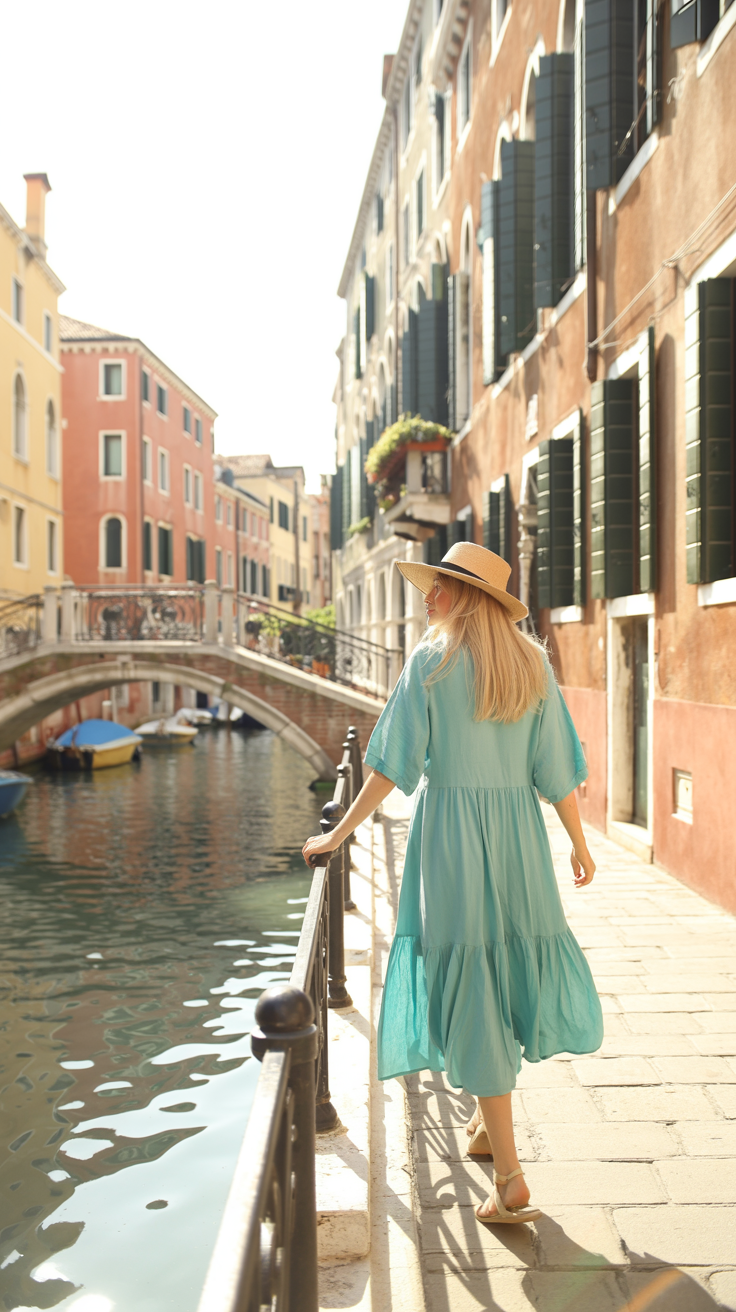
Venice humidity is the sneaky sort. It doesn’t always feel that hot but you’ll find yourself uncomfortably sticky within an hour of leaving your hotel. Natural fabrics are your friends here, though not all natural fibres are created equal.
Fabrics That Work
- Linen – Yes, it wrinkles immediately, but it breathes brilliantly and somehow looks intentionally relaxed rather than messy. Loose linen trousers or a linen shirt over a vest work well. Pack a compact travel steamer if wrinkles bother you, though honestly they’re part of the linen aesthetic.
- Cotton – Proper cotton, not the heavy stuff. Lightweight cotton dresses, loose cotton tops, and cotton-blend trousers all handle sweat better than synthetic alternatives.
- Tencel or modal – These manufactured fibres from natural sources feel like silk but dry faster and don’t cling when damp.
- Merino wool – Sounds counterintuitive for warm weather but lightweight merino is temperature-regulating and doesn’t hold odours, making it ideal if you’re rewearing clothes across multiple days.
Fabrics to Avoid
- Polyester – Traps heat, shows sweat patches instantly, and will leave you feeling like you’re wearing a plastic bag by noon.
- Thick denim – Heavy jeans take forever to dry if splashed and they’re miserable in humidity. If you must wear denim, go for lightweight or stretch versions.
- Silk – Water marks from sweat or splashes show immediately and it clings unattractively when damp.
Outfit Templates That Actually Function
Here are combinations that work for Venice’s specific demands without making you look like you’ve given up entirely.
For Women: Day Walking
- Option one: Knee-length cotton or linen dress (loose but not shapeless) + cushioned leather trainers + crossbody bag + lightweight linen shirt for church coverage.
- Option two: Loose linen trousers + breathable vest or tee + trainers or supportive sandals + cotton cardigan that can be tied around waist.
- Option three: Below-knee skirt in cotton or tencel + simple fitted tee + trainers + small backpack.
For Men: Day Walking
- Option one: Lightweight chinos or cotton trousers + short-sleeve cotton shirt (not a polo – they’re too casual for many restaurants) + leather trainers + small crossbody or messenger bag.
- Option two: Shorts that hit just above knee (not board shorts) + linen shirt + walking sandals with back straps + lightweight jacket for evening.
- Option three: Stretch cotton trousers + merino tee + desert boots or leather trainers.
Evening Restaurant Wear
Venice restaurants can be surprisingly formal, particularly the traditional ones. You don’t need formal cruise night outfits but you should step up from daytime walking clothes.
- Women: Midi dress in a natural fabric + ankle boots or smarter flats + nicer crossbody bag. A fitted linen jumpsuit also works brilliantly.
- Men: Chinos + collared shirt (linen or cotton) + leather shoes (not trainers) + optional lightweight blazer if dining somewhere proper.
The Layers You’ll Actually Need
Venice weather is unpredictable and the temperature difference between sun and shade (or outside and inside a church) can be significant.
Essential Layers
- Lightweight linen shirt or shacket – Covers shoulders for churches, provides a layer for air-conditioned museums, can be tied around waist when not needed.
- Pashmina or large cotton scarf – Solves the church dress code issue instantly, provides warmth in over-air-conditioned restaurants, can be used as a makeshift picnic blanket.
- Packable rain jacket – Summer storms appear from nowhere. Get something that stuffs into its own pocket. A women’s lightweight rain jacket or men’s packable rain jacket takes up minimal space but saves you from getting drenched.
- Thin merino jumper – For cooler months or overly enthusiastic restaurant air conditioning.
Colours and Patterns: Practical Considerations
Venice is beautiful but grubby. Those canal walls are splattered with algae, the stone seats have decades of grime, and water taxis spray unexpected amounts of water.
Smart Colour Choices
- Mid-tones: Olive, navy, burgundy, tan, and dusty blue all hide dirt well and don’t show sweat patches.
- Patterns: Small prints disguise wrinkles and any unfortunate splashes better than solid colours.
- Dark colours for bottoms: Black or navy trousers/skirts won’t show every bit of grime from sitting on stone ledges.
Colours to Reconsider
- White or cream: Shows every mark and you’ll spend the day anxiously avoiding anything dirty (which is most of Venice).
- Very pale colours: Same problem as white, plus they show sweat.
- All black: Shows dust and lint, absorbs heat, and looks oddly formal for daytime Venice wandering.
Bags That Work With Constant Movement
You need your hands free for climbing bridges, steadying yourself on water taxis, holding gelato, and taking photos. A shoulder bag that constantly slides down your arm will drive you mad within an hour.
Best Bag Options
- Crossbody bag with adjustable strap – Sits securely against your body, keeps valuables safe in crowds, leaves hands completely free. Make sure it’s big enough for a water bottle, sunscreen, and the layers you’ll inevitably remove. An anti-theft messenger bag with RFID protection gives extra peace of mind in crowded tourist areas.
- Small backpack – Works brilliantly if you’re comfortable with that look. Choose something structured rather than a hiking pack. An anti-theft backpack with hidden zippers and slash-proof material is worth considering for Venice’s busy areas.
- Belt bag worn crossbody – Less practical than a full crossbody but fine if you’re only carrying absolute essentials.
Bags That Don’t Work
- Large tote bags – They bash into people on narrow bridges and your shoulder will ache.
- Shoulder bags without crossbody option – Constantly sliding off whilst climbing steps.
- Backpacks you can’t swing round to front – You need to see your valuables in crowded areas.
Church Dress Code Reality
Venetian churches are serious about their dress codes. San Marco will turn away anyone showing shoulders or knees, and many smaller churches follow the same rules. You’ll want to visit these buildings – they’re spectacular inside – so plan accordingly.
Meeting the Requirements
- Shoulders covered: A lightweight shirt, cardigan, or large scarf works. The scarf is most practical as it takes up minimal bag space when not needed.
- Knees covered: This means below-knee length, not just touching the knee. Loose trousers, midi skirts, or longer dresses solve this instantly.
- No beach clothing: Vest tops, shorts, and flip-flops will get you turned away regardless of how you style them.
What to Pack for a Venice Cruise Port Day
If you’re visiting Venice as part of a cruise, you’ve got limited time and limited luggage space. Here’s a minimal packing list that covers everything you need without overloading your cabin.
| Item | Why You Need It |
|---|---|
| Comfortable walking shoes (worn, not new) | You’ll walk 6-8 hours on uneven surfaces |
| Backup shoes (sandals or different trainers) | In case of rain or blisters |
| 2-3 breathable tops | One to wear, one spare, one in wash rotation |
| 2 pairs bottoms (trousers/skirt/shorts) | One to wear, one backup |
| Lightweight layer for churches | Dress code compliance and air conditioning |
| Sun hat or cap | Piazzas have minimal shade |
| Sunglasses | Essential for canal reflections |
| Small crossbody bag | Hands-free security and comfort |
| Refillable water bottle | Venice water fountains are safe and free |
| Compact umbrella | Summer storms appear without warning |
Want to know more about the logistics of your Venice port visit? Our Venice cruise port guide covers everything from getting into the city centre to finding luggage storage.
Seasonal Adjustments
Venice operates on Mediterranean weather patterns but with added humidity year-round from the canals. Here’s what changes by season.
Spring (March-May)
Mild but unpredictable. Pack layers that work together. The mornings can be genuinely chilly whilst afternoons heat up considerably. A light jacket is essential. The city is busy but not overwhelmingly so. Expect occasional rain – proper rain, not drizzle – so waterproof shoes or boots make sense. This is actually ideal weather for exploring if you layer properly. A packable lightweight jacket for women or men’s light puffer compresses down small but provides real warmth when needed.
Summer (June-August)
Hot, humid, and crowded. Minimal clothing whilst still meeting church dress codes. Linen and cotton become non-negotiable. Early mornings (before 9am) and evenings (after 6pm) are most comfortable for extensive walking. Midday is brutal so plan indoor activities then. The humidity makes it feel hotter than the actual temperature. Breathable everything. Sunscreen that won’t run into your eyes when you sweat. A hat that actually shades your face, not a decorative one. Keep a collapsible water bottle in your bag so you can refill at Venice’s many public fountains without carrying bulk when empty.
Autumn (September-November)
Similar to spring but with occasional acqua alta (flooding) from October onwards. September remains warm. October onwards requires waterproof footwear that can handle puddles. A packable rain jacket becomes essential rather than optional. The shoulder-season light is beautiful for photos but the weather is genuinely unpredictable. Pack for warm and cool weather simultaneously. Consider a waterproof rain jacket that provides actual protection rather than just water resistance.
Winter (December-February)
Cold, damp, and often foggy. The humidity makes the cold penetrate differently than dry cold. Warm layers, waterproof boots, proper coat. The city empties of tourists which is glorious but the weather can be miserable. Churches become colder inside than outside. A warm scarf becomes essential. Fewer tourists mean you can wear slightly bulkier, warmer clothing without overheating in crowds. A proper insulated puffer jacket for women or men’s winter puffer makes the difference between enjoying winter Venice and enduring it.
Photography Outfit Considerations
You’ll take photos. Everyone does. If you want to look decent in them without compromising comfort, here’s what actually matters.
What Photographs Well Whilst Remaining Comfortable
- Solid colours in mid-tones – Photograph better than busy patterns and don’t compete with Venice’s colourful buildings.
- Defined waistlines – Even on loose clothing, a defined waist photographs better than entirely shapeless garments. A belt on loose linen trousers or a dress with some structure solves this.
- Layers with intention – A shirt tied around your waist looks deliberate; a jumper shoved in your bag and pulled out crumpled looks exactly like that.
- Clothes that fit properly – This sounds obvious but clothes that are too big or too small don’t photograph well. Comfortable doesn’t mean oversized.
Things That Ruin Photos
- Massive backpacks that dominate every shot
- Sunglasses on top of head (just looks odd in photos)
- Clothes so wrinkled they look slept in
- Visible sweat patches (stick to darker colours for tops)
- Extremely bright white trainers that draw all focus in photos
What You Can Skip
Travel packing lists love to include items you’ll never actually use. Here’s what you genuinely don’t need for Venice.
- Fancy jewellery – You won’t wear it and it’s an unnecessary theft target. If you must bring pieces, use a compact jewelry organizer to keep them secure and untangled.
- Multiple evening outfits – One smart outfit is plenty unless you’re attending a specific event.
- Heels for evening – The cobblestones don’t become flat after 6pm. Smart flats work perfectly well.
- Hair styling tools – The humidity will undo any styling within an hour. Embrace your hair’s natural texture or tie it back.
- Full makeup kit – It’ll slide off in the heat. Tinted moisturiser with SPF and waterproof mascara is plenty.
- More than two pairs of shoes – They take up massive luggage space and you’ll default to wearing the same comfortable pair anyway. Use travel shoe bags to keep them separate from clean clothes.
Dealing With the Acqua Alta Reality
Venice floods. Not constantly, but during autumn and winter the acqua alta (high water) turns some streets into shallow rivers. The city provides raised walkways but you’ll still encounter water if you’re visiting during these months.
If Flooding is Predicted
- Waterproof boots (proper ones, not water-resistant) become essential
- Roll trouser legs up or wear things that can be hitched up
- Bring plastic bags for electronics and anything that can’t get wet – a dry bag keeps phones and cameras protected
- Accept that you might get wet feet – the raised walkways don’t cover everywhere
- Locals wear actual wellingtons during bad floods and nobody looks twice
The city provides warning sirens before flooding occurs. If you hear them, head to higher ground or prepare to navigate via the raised platforms. Keep your phone in a waterproof pouch so you can still use it for navigation and photos without risking water damage.
Extend Your Stay in Venice
If you’re considering spending extra time in the city before or after your cruise, think carefully about accommodation location. Hotels in Venice proper mean you’re already in the heart of everything without needing transport, but they’re expensive and often lack amenities like lifts. Mainland options near Mestre offer better value and proper facilities but you’ll need to factor in the train or bus time into the city.
The benefit of staying longer is experiencing Venice at different times of day. Early mornings before the day-trippers arrive are magical – you’ll have entire streets to yourself. Late evenings after they’ve left offer similar peace. A longer stay also means you can pace yourself rather than trying to cram everything into one exhausting day. You can actually sit at a canal-side café for an hour without feeling like you’re wasting precious sightseeing time. Venice rewards slower exploration rather than frantic dashing between highlights.
Personal Experience
Last spring I learned the hard way that Venice requires a very specific wardrobe strategy. Those adorable heeled sandals I packed? Lasted about twenty minutes before the cobblestones and endless bridge steps had me limping. What actually worked was a cotton sundress that hit just below the knee, paired with cushioned leather sneakers that didn’t look completely ridiculous in photos. The dress was loose enough to handle the sticky humidity but structured enough that I didn’t feel like a walking bedsheet. I also kept a lightweight linen button-up in my bag for churches and air-conditioned restaurants where I’d gone from sweating to freezing in seconds.
The real MVPs were breathable fabrics and layers you could actually tie around your waist without looking absurd. My travel partner wore loose linen pants with a simple tank top and looked perfectly put-together whilst being completely comfortable. We both avoided anything white (those canal-side seats are deceptively grimy) and stuck to colours that could handle a little sweat and wrinkles. A crossbody bag kept hands free for grabbing gelato and steadying ourselves on those steep bridge climbs. Nothing fancy, nothing Instagram-perfect, just practical clothes that let us actually enjoy the city instead of constantly adjusting our outfits.
Common Questions & FAQ
Can I really wear trainers with a dress in Venice?
Absolutely. Leather trainers or clean canvas ones look perfectly fine with casual dresses and you’ll see locals doing exactly this. The alternative is sore feet and potential injury on uneven cobblestones. Fashion tourists might judge but they’re also the ones limping by mid-afternoon. Choose trainers that aren’t bright white or covered in neon branding and you’ll look intentional rather than lazy.
Will I be turned away from restaurants wearing shorts?
Casual daytime restaurants generally don’t care. Traditional trattorias and anywhere remotely upscale will expect long trousers or at minimum smart knee-length shorts for men. Women have slightly more flexibility with smart shorts but knee-length skirts or dresses are safer. Check the restaurant’s dress code beforehand if you’re planning somewhere nice – many state it clearly on their websites.
How many outfit changes do I need for a Venice port day?
None. One comfortable outfit that works for walking, churches, and casual dining is perfectly sufficient. If you’re planning a very upscale restaurant for dinner, bring one smart change in your day bag but honestly most people don’t bother. You’ll be too busy seeing the city to worry about outfit changes. Pack smart layers instead so you can adjust the same base outfit for different situations. Using compression packing cubes helps organize multiple outfit options without taking excessive space in your carry-on luggage.
What do I do with my jacket when it gets hot?
This is why fabric matters. A lightweight linen shirt or thin cardigan can be tied around your waist without creating a bulky mess. Alternatively, stuff it in your crossbody bag if there’s room, though this gets annoying if you’re pulling it in and out repeatedly for churches. Some people clip a small carabiner to their bag strap and hook a jacket through it. Looks a bit utilitarian but it works.
Are leggings appropriate for Venice?
On their own, probably not for anything beyond the most casual situations. Churches will often reject them as too casual and they’re quite clearly athleisure rather than actual clothing. Under a tunic or long top they’re fine for walking but won’t pass muster for nicer restaurants. If you’re looking at leggings as your main option, consider loose linen trousers instead – they’re just as comfortable but significantly more versatile for different Venice situations.
Should I pack different shoes for morning and evening?
Only if you’re attending a specific event that requires dress shoes. For normal Venice exploring, wear the same comfortable shoes all day and evening. The cobblestones don’t smooth out after sunset and you’ll still be walking extensively to and from restaurants. One pair of proper walking shoes is better than two pairs of compromised footwear taking up luggage space.
What about those traditional Venetian masks and fancy accessories?
They’re lovely souvenirs but don’t wear them around the city unless you want to look like you’ve dramatically misunderstood the assignment. They’re costume pieces for Carnival or display items. Actual Venetians aren’t wandering around in masks and elaborate period dress. If you buy one, pack it carefully for home rather than trying to incorporate it into your outfit.
Will I look underdressed compared to other cruise passengers?
Probably the opposite. Many cruise outfit choices prioritise looking polished over comfort, which means you’ll see people struggling in impractical shoes and formal clothing whilst you’re comfortably exploring. Venice rewards practical dressing over aspirational dressing. By mid-afternoon you’ll spot the people who dressed for photos versus those who dressed for actually experiencing the city. Be in the second group.
“`