
Natal is a small-ship Brazilian port of call at the mouth of the Rio Potengi, in Rio Grande do Norte. Cruise ships berth alongside at the Terminal Marítimo de Passageiros, not at a resort dock, and the famous sights, Ponta Negra, Morro do Careca, Genipabu, the Pirangi cashew tree, are a taxi or organised tour away. In a normal six-to-eight-hour call, most passengers choose either dune buggies and beach or the compact historic centre around the star-shaped Forte dos Reis Magos.


Natal at a glance
| What | Practical answer |
|---|---|
| Ship docks | Berço 03, Terminal Marítimo de Passageiros do Porto de Natal, Rua Chile, Ribeira |
| Tender | No, normal calls are alongside |
| Ponta Negra and Morro do Careca | 10–13 km, 25–32 minutes by car |
| Genipabu dunes | 20–25 km, 25–40 minutes by road |
| Forte dos Reis Magos | 2.3 km, about 29 minutes on foot |
| Pirangi cashew tree | About 25 km, 30–40 minutes by road |
| Airport | About 24 km from the centre, 38 km from Ponta Negra |
| Currency | Brazilian real, written R$ |
| Language | Portuguese |
| Timezone | UTC-3, America/Fortaleza |
Where do cruise ships dock in Natal?
All cruise ships berth at the Terminal Marítimo de Passageiros do Porto de Natal, entered from Rua Chile in the Ribeira district. The passenger berth is Berço 03, directly in front of the terminal. It is 232 m long including a mooring dolphin and has 12.4 m of depth. There is no separate cruise terminal elsewhere in the port, and normal cruise calls do not use tenders: the ship ties up and you walk off onto the quay.
For maps and drivers, the address is Rua Chile, Ribeira, Natal-RN. This is a working harbour. Berths 01 and 02 handle containers, bagged cargo and wheat for the mill behind the port. Don’t treat the pier like a promenade. Follow the marked passenger route and have a proper destination.
Why this is a small-ship call
The Newton Navarro bridge has an air draft of 55 metres. That rules out most larger cruise ships; only about 20 ships in the current market can fit under it. A proposed turning basin before the bridge could take vessels up to 300 m and roughly double the number of compatible ships, but for now expect small expedition and boutique vessels.
Typical recent calls include Hanseatic Spirit alongside 13:00–19:00 and Seabourn Venture about 08:00–16:00. Natal is a transit port, not a turnaround port, so there is no embarkation-day baggage hall with hotel transfers and long-stay parking at the pier.
Natal cruise port map
Ships dock at Natal cruise port. From the terminal, Centro de Turismo is about a 20-minute walk and Praia dos Artistas about 26 minutes. Tap a pin for directions.
- Natal cruise portWhere ships dock
- Centro de TurismoCraft centre · About 20 min walk from the terminal
- Praia dos ArtistasBeach · About 26 min walk from the terminal
- Ponta NegraBeach · About 12 km from the terminal
- Morro do CarecaDune · About 14 km from the terminal
- Mercado da RedinhaMarket · About 2 km from the terminal
- Aquário NatalAquarium · About 4 km from the terminal
- Parque das DunasPark · About 6 km from the terminal
- Genipabu dunesDunes · About 11 km from the terminal
- Pirangi cashew treeCashew tree · About 25 km from the terminal
- MaracajaúAbout 42 km from the terminal
- Museu Câmara CascudoMuseum · About 3 km from the terminal
- Newton Navarro bridgeBridge · About 2 km from the terminal
What is the cruise terminal actually like?
The passenger terminal is an underused World Cup legacy building. It has around 5,068 m² over three levels and was designed for 3,000 passengers at once. There are lifts, an air-conditioned event hall on the first floor, and a second-floor mirante with a view over the Potengi.
Designed facilities include an information desk, snack bar, ten shop units, three units for car and buggy rental, currency exchange, a baggage area, a Federal Police passport counter and lifts. In practice, the public areas are open, but the shops, kiosks and panoramic restaurant depend on a leasing process the port authority was still waiting for. Plan on a modern but quiet terminal: restrooms and seats, but not a guaranteed mall, left-luggage service or Wi-Fi.
The terminal is still a comfortable meeting point. Taxi drivers, Uber cars and private guides can enter for pickup, and many private operators meet you inside the terminal with a name sign.
How far is the cruise port from the sights?
| Destination | Distance from the ship | Typical time |
|---|---|---|
| Ribeira / Cidade Alta historic centre | 1.1–2 km | 13–30 min walk |
| Centro de Turismo | 1.1 km | 13 min walk |
| Praia dos Artistas / Praia do Meio | About 1.2 km | 15–20 min walk |
| Forte dos Reis Magos | 2.3 km | 29 min walk |
| Ponta Negra / Morro do Careca | 10–13 km | 25–32 min drive |
| Genipabu dunes | 20–25 km | 25–40 min drive |
| Pirangi cashew tree | About 25 km | 30–40 min drive |
| Maracajaú | 55–70 km | 1h30+ each way |
| Airport | About 24 km from centre, 38 km from Ponta Negra | 20–60 min by car |
These are working ranges. The two main traffic risks are Via Costeira and the Newton Navarro bridge. Allow at least 90 minutes before all-aboard when returning from Ponta Negra, and a bigger buffer from Genipabu or Maracajaú.

How to get from the Natal cruise port into the city
Taxis and ride-hailing
Metered taxis queue at the terminal. A taxi to Ponta Negra is estimated at around R$46 each way, though the return leg is sometimes quoted nearer R$65. Uber and 99 operate across Natal and are usually cheaper than street taxis. UK FCDO advice for Brazil is not to flag taxis in the street; book through an app or use the official terminal taxi rank.
Private transfers
Fixed-price transfer and tour operators can pick up inside the terminal with a name sign. This is the least-friction option for a short call if you want to reach Genipabu, Pirangi or Maracajaú. Operators quote fixed prices to the airport, Ponta Negra, Via Costeira, Genipabu and Pipa.
Walking from the port
You can walk to the old centre, Centro de Turismo, and along to the fort in daylight if you are comfortable in an urban Brazilian port area. The first stretch around the port and Ribeira is industrial and not a pedestrian route. It is not a scenic seaside promenade. If it is late, hot, raining, or you are unsure, take a taxi.
Public buses
City buses in Natal are cheap, around R$4–5, but they are slow and not a good use of a six-hour port day. The 122 bus runs from the Ribeira terminal to Genipabu in about 1h30. Use buses only if you are in Natal independently for longer.
Whatever you do, leave a return buffer. Traffic on the bridge and beach road can sit. If your all-aboard is 15:30, be in the car from Ponta Negra by 14:00 at the latest.
Is Natal safe for cruise passengers?
Natal is not a no-go zone, but it is a Brazilian city with a working-port edge. The UK FCDO advice is useful: avoid quiet or deserted areas, take taxis after sunset rather than walking, do not carry large sums or flash jewellery, and keep a copy of your passport and photo ID with you. Theft from beaches, including arrastões, groups running through the sand grabbing possessions, happens. Do not take valuables to the beach, do not put your phone under a chair and expect it to be there, and do not go onto city beaches after dark.
At the terminal, the immediate Ribeira area is industrial. Head straight to your destination rather than exploring the pier on foot. Use an official taxi, an app ride, or a pre-booked guide.
Card cloning and overcharging on payment terminals are common in Brazil. Keep sight of your card, check the amount before tapping, and decline any offer to pay in your home currency, which adds 6–12% via dynamic conversion.
Emergency numbers are police 190, fire 193, ambulance 192.
Beach and water safety
Lifeguards from the state fire brigade cover Ponta Negra, Artistas, Areia Preta, Meio, Forte and Redinha. Red flags mark rip currents. On Ponta Negra, research points more often to jellyfish stings, surfer accidents and the rocks along the promenade than strong rips, but hazards change daily. Heavy rain makes the water turbid and hides rocks. The fire brigade’s rule for a rip: stay calm, float, then swim parallel to the sand rather than against it.
Nurse sharks are the common local species and are described as non-aggressive, but leave the water calmly if one appears.
Natal weather and sea conditions on a cruise day
The Brazilian cruise season runs from late October to early April. Natal’s average daily maximum is about 30.2°C in January, 29.8°C in April and 27.7°C in July. November averages 14.7 mm of rain, December 20.8 mm, January 54.6 mm and April 264.7 mm. The north-east rainy season is April to July, but heavy rain can happen outside it. Sea temperature is around 28°C in January. The UV index is extreme, and the constant trade-wind breeze hides how quickly you burn.
Go early, drink water constantly, wear high-factor sunscreen, and use a wide-brimmed hat with a chin strap. Light, quick-drying clothing beats jeans. Sand on the dunes gets hot enough to burn bare feet. A rain shower can make city-centre cobbles slick and low-lying streets flood, and heavy rain makes dune tracks miserable.
Money, cards, ATMs and tipping in Natal
Currency is the Brazilian real, written R$. Contactless Visa and Mastercard work almost everywhere, including many beach kiosks and street stalls. You still need small reais for city buses, a few small stalls and tips. R$100 notes are hard to break, so ask for change when you can.
Restaurants usually add a 10–13% service charge. It is legally optional but treated as the tip. Taxi drivers expect rounding up. Porters get about R$5–10 per bag. A good buggy driver tip is about R$20.
ATMs inside bank branches are the safest. Stand-alone Banco24Horas machines can charge R$20–35 on foreign cards and cap withdrawals at R$300–500 overnight. There is a Banco do Brasil branch with ATMs at Avenida Duque de Caxias 20, Ribeira. Foreign cash is not commonly accepted. At the Pirangi cashew tree gate, card or Pix only: no cash.
Portuguese basics and local etiquette
The language is Portuguese, not Spanish. English is not something to rely on, even in tourist areas. Download an offline translation app and a phrase or two before arrival.
- Obrigado / obrigada: thank you, depending on the speaker’s gender
- Por favor: please
- Quanto custa?: how much?
- Onde fica…?: where is…?
- Banheiro?: toilet?
Greetings are informal. A handshake between men and a single cheek kiss is common between women. Ask Posso? before photographing vendors or children, and cover up away from the beach. Swimwear stays on the sand. On a buggy, the driver may ask com emoção ou sem emoção: with or without thrills.
Forte dos Reis Magos and the historic centre
The Forte dos Reis Magos is the city’s founding monument: a small star-shaped fort on a reef at the mouth of the Rio Potengi. Entry is R$10 full, R$5 half price, Tuesday to Sunday 08:00–16:00. It is closed on 1 January, 25 December and election days, and free for Natal residents with proof.
At high tide water surrounds the fort; at low tide you cross on foot over reef and sand. The approach ramp is steep, and in windy weather the route can be slick and exposed. Wear footwear with grip, take water, and expect a guided circuit of about 40 minutes.
Address for maps: Avenida Café Filho, Praia do Forte.
Nearby, the old Cidade Alta is compact. The Centro de Turismo is in a former 19th-century prison, 1.1 km from the ship. It houses 38 craft shops inside the old cells, is free, and opens daily 08:00–18:00. There is an art gallery upstairs and forró on Thursday evenings.
Ponta Negra and Morro do Careca: the postcard beach day
Ponta Negra is the city’s postcard beach, about 10–13 km from the terminal. The drive takes 25–32 minutes, depending on traffic. The beach has a promenade, kiosks with chairs and umbrellas, and a solid eating strip along Avenida Erivan França and the roads behind it.
Morro do Careca, the big dune at the south end, is closed to climbing by court order. Going up is an environmental offence and can be fined. Most guides quote it as over 100 m high; a university measurement puts it at about 63.63 m. Either way, it is a look-and-photograph landmark, not a hiking objective.
The beach itself was widened by a nourishment scheme that added 50–100 m of sand. That extra sand gives you more room, but it does not remove the usual Brazilian beach rules: use a kiosk for your things, do not bring valuables, and leave before dark.
Genipabu dunes and buggy trips
Genipabu is the dune buggy excursion people remember. It is 20–25 km north of the city, across the Newton Navarro bridge, a 25–40 minute drive. The area has white mobile dunes, lagoons and the classic northeastern buggy ride.
Only accredited local bugueiros may drive on the mobile dunes. A whole buggy for up to four passengers costs roughly R$300–450, or about R$90 per person when full. Agencies can charge much more per seat, so know what you are buying. Extras on the standard circuit include a R$10 environmental fee for the dunes, R$20 for the Pitangui lagoon ferry and about R$13 per slide at Jacumã.
Drivers will ask com emoção ou sem emoção: with or without thrills. Seatbelts are the rule. A half-day buggy circuit typically includes dromedary rides, sandboarding and a lagoon swim. Tip the driver about R$20 for a good ride.
Use a licensed operator from a tour desk or a pre-booked private guide, not a random curbside driver. The buggy tour is not wheelchair accessible and often has a minimum age of five. For a cruise call, book through the ship or a private operator with a guaranteed return, because public transport is too slow and the bridge road can catch you out.
Pirangi cashew tree and the south coast
The Pirangi cashew tree is not a tree in the usual sense: it is a single cashew plant covering about 8,500 m² and recognised by Guinness as the largest cashew tree in the world. Visitors walk the boardwalks under the canopy and climb an observation tower. Entry is R$10, daily 08:00–17:30, card or Pix only at the gate. Half price applies for students, teachers, over-60s, disabled visitors and blood donors.
It is about 25 km from the city centre, 30–40 minutes by road. The visit itself takes 30–60 minutes, and there is a small craft fair at the entrance. Pirangi pairs best with a south-coast run rather than a Genipabu morning; the two are in different directions.
Maracajaú reefs, snorkelling and boat trips
Maracajaú is a reef-pool snorkelling area about 7 km offshore and roughly 55–70 km from Natal. Boats run by catamaran to a floating platform over about 3 m of water. Departures are set by the tide table, so times vary by day.
This is not a casual add-on. The drive, check-in, boat ride and snorkelling can eat most of a day. A four-hour port window definitely excludes it, and even an eight-hour call is tight. Book through the ship, or a private operator who guarantees return, if this is your priority. Operators usually have minimum ages of six or seven. Accessibility information varies by operator, so check carefully if you have mobility needs.
Parque das Dunas and other green escapes
Parque das Dunas is 1,172 hectares of Atlantic Forest on dunes inside the city. Entry is R$1, Tuesday to Sunday 07:30–17:00, closed Mondays. It is the cheap nature option for families. Trails are guided and must be booked, with a minimum of five and maximum of 25 people. The shortest trail, Perobinha, is 800 m, takes about 40 minutes, and is rated for ages six and over. Rules include closed shoes, no snacking on the trail, and carrying water.
Food and drink: what to eat in Natal
The local dish is ginga com tapioca: small fried fish inside a tapioca crepe, sold around the Mercado da Redinha and by beach vendors for about R$10–25. The other staple is carne de sol with macaxeira, queijo coalho and feijão verde. Rio Grande do Norte is Brazil’s leading farmed shrimp producer, so camarão potiguar shows up in dozens of forms. For dessert, try cartola: fried banana with melted cheese, sugar and cinnamon.
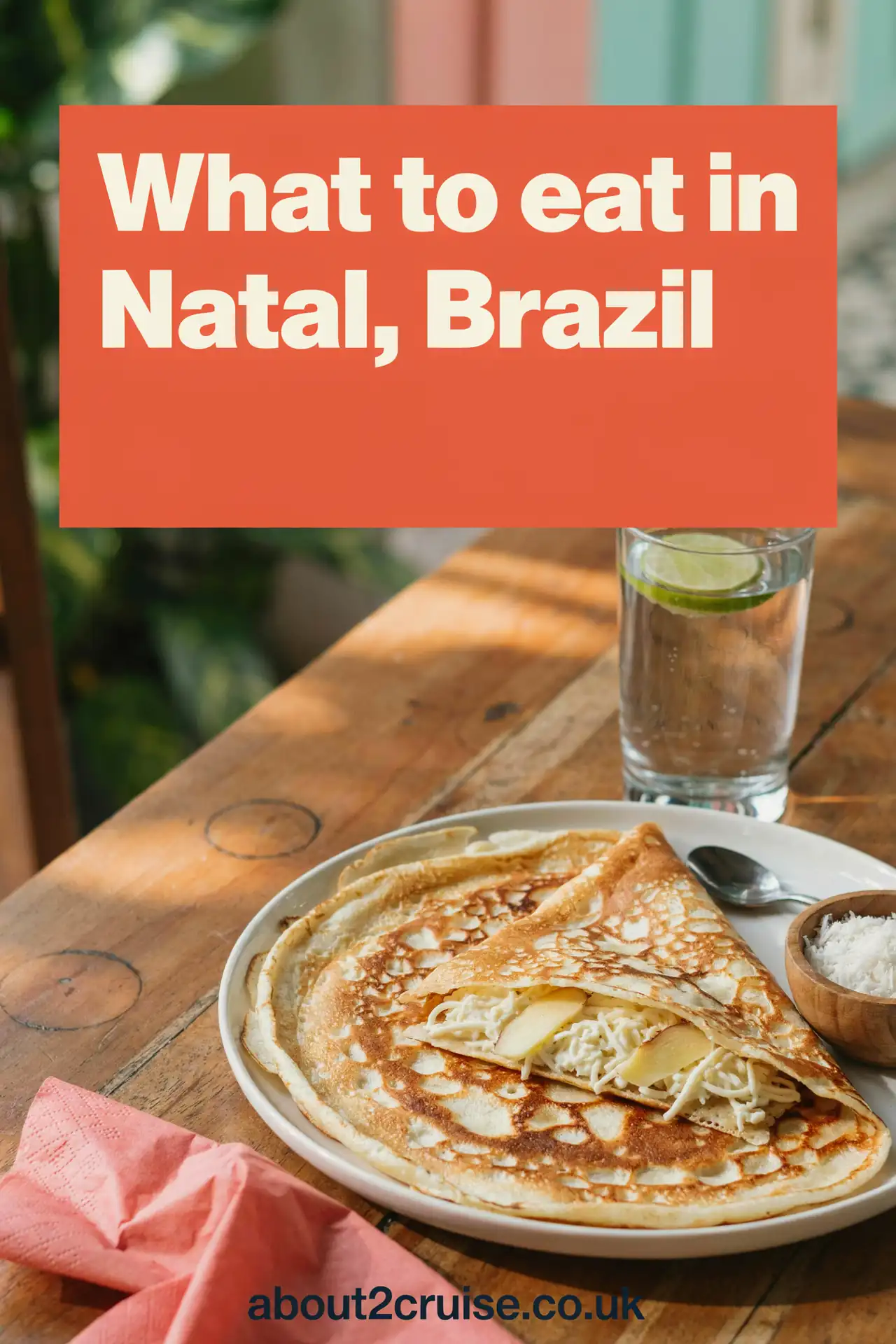
Prices: filled tapiocas R$8–18, a prato feito lunch R$30–60, and a mid-range restaurant R$85–180 per person. Portions are built for two or three people, so order fewer dishes than the table has diners. A 10% service charge is usually added.
Good eating strips are Ponta Negra: particularly Rua Dr. José Augusto Bezerra de Medeiros and Avenida Engenheiro Roberto Freire: the Mercado da Redinha north of the river, and the Centro de Turismo.
Shopping, crafts and souvenirs
The best central souvenir stop is the Centro de Turismo, where 38 craft shops operate inside a former 19th-century prison. It is free and opens daily 08:00–18:00. Look for northeastern hammocks, lace, pottery and small craft pieces. The Pirangi cashew tree has a small craft fair at the entrance, and beach kiosks at Ponta Negra sell some craft and snack items. Cards are widely accepted, but keep small reais for market stalls.
Families and children in Natal
Good family choices include the Aquário Natal at Redinha, which holds more than 60 species, including sharks, penguins and turtles, and is open daily 08:00–17:00. Adult R$66, half price R$33. Parque das Dunas is R$1 and has a short trail rated for ages 6+. Pirangi is an easy walk under the canopy. Maracajaú catamarans often have minimum ages of six or seven; Genipabu buggies often have a minimum age of five.
Accessibility and mobility
The terminal has lifts and a wheelchair access platform, but there is no published official accessibility statement. The ship berths alongside, so there is no tender transfer to deal with. However, the infrastructure around the sights varies: the Forte dos Reis Magos approach is steep and the surface is reef and sand; dune buggies are not wheelchair accessible; and the dunes themselves are not suitable for wheelchairs.
On the beach, a free volunteer project runs amphibious chairs and assisted bathing at Ponta Negra at weekends, with a pilot at Redinha. The airport has 22 lifts, 18 adapted toilets, ramps, Ambulift boarding and the sunflower lanyard scheme, but the port does not publish equivalent detail.
Bad-weather and rainy-day options
Rain in Natal can be sharp. The Ribeira cobbles near the port turn slick, low-lying streets can flood, and the fort approach is unpleasant. In heavy rain, go for the aquarium, Centro de Turismo, the free Museu Câmara Cascudo, or a long lunch in Ponta Negra. Do not attempt dune buggies in a storm, and do not assume a beach day will dry out quickly.
Shore excursions in Natal: ship-booked or independent?
Ship-booked excursions in Natal include city tours, dune buggy adventures, lace-making and fishing-village visits, and Parque das Dunas trail walks. The big advantage is that the tour is timed to the ship and the ship will wait for its own tour. Independent tours are usually cheaper and more flexible, but the ship will not wait for you. The next likely ports after Natal are Recife or Fortaleza, which is a very expensive way to catch up.
Independent buggy tours start around US$57 per person for a seven-hour shared tour, and private vehicles are priced per buggy. Private transfer and tour operators can pick up inside the terminal with a name sign and quote fixed prices. For Genipabu, Pirangi or Maracajaú on a six-to-eight-hour call, a private guide or the ship’s tour is the sensible option.
Short port-day itineraries
Four hours
A four-hour window is enough for the historic centre and fort, not for the famous beaches. Aim for Forte dos Reis Magos first if tide and weather allow, then the Centro de Turismo and a quick tapioca or coffee in Ribeira. Use a taxi between the terminal and fort, and keep an eye on the clock.
Six to eight hours
Choose one direction. Option A: Genipabu by pre-booked buggy or 4×4, with a lagoon stop and a late lunch near Redinha. Option B: Ponta Negra for a beach morning, lunch along Avenida Erivan França, then back via the Centro de Turismo or Forte if time allows. You cannot comfortably do Genipabu and Pirangi in the same call; they sit in opposite directions.
Longer calls or overnight
If you have nine hours or more, do Genipabu in the morning, then a quieter Ponta Negra beach late afternoon, or combine Ponta Negra with Pirangi if the ship leaves late. Start early and return earlier.
How Natal compares with Salvador, Recife and Fortaleza
Natal is not the big-ship cruise hub of the Brazilian northeast. In the current season the wider region has around 675 calls and 831,000 berths nationally, but Salvador has 47 calls, Maceió 26, Recife 9, Fortaleza 8 and Natal only one or two. The practical result is that Natal gets small expedition and boutique vessels while Salvador and Maceió take the big-ship operations.
For a passenger, Natal feels smaller and less crowded than Salvador, with a beach-and-dunes identity rather than Salvador’s large historic core. Compared with Fortaleza, Natal’s historic centre and star fort are more compact and walkable, while both are strong for dune buggies. Compared with Recife, Natal is an easier short call for beaches and a small historic centre, but with fewer shore-excursion choices.
Further north-west along Brazil’s north-east coast, you may call at Sao Luis on Amazon-bound itineraries.
Airport, luggage, parking and staying near the port
The airport is Governador Aluízio Alves, often shown as NAT, about 24 km north-west of the centre and 38 km from Ponta Negra. A taxi from the airport to Ponta Negra is a fixed R$110, an app ride starts around R$60, and an airport-to-port taxi is about R$70–90 for 20–40 minutes. There is no direct train or shuttle from the airport to the port.
Luggage: do not plan on left luggage at the cruise terminal. The only sourced option is the 24-hour automated Malex lockers in the airport arrivals hall, which are 24 km away. If you are joining or leaving a ship in Natal, check with your line; but Natal is normally a transit port, not a turnaround.
Parking: the nearest long-stay parking is at the airport, not the port. It has about 1,500 spaces at R$55 a day standard or R$70 covered VIP, with a 15-minute free drop-off.
Hotels: most independent travellers base in Ponta Negra because the beach, restaurants, tour pick-ups and nightlife are walkable. The Via Costeira is a car-dependent resort strip, and the city centre/Ribeira is not recommended as a base. If you want a hotel near the port, Porto Suites Natal Hotel is about 1.6 km from the terminal on Praia dos Artistas, with breakfast from 06:30 and luggage storage. Yak Beach Hotel and Residence Praia Hotel are also near the port. In Ponta Negra, Manary Praia Hotel, Serhs Natal Grand Hotel & Resort and Ocean Palace are well-known choices. High-season prices rise 30–50% from December to February.
Photo spots and viewpoints
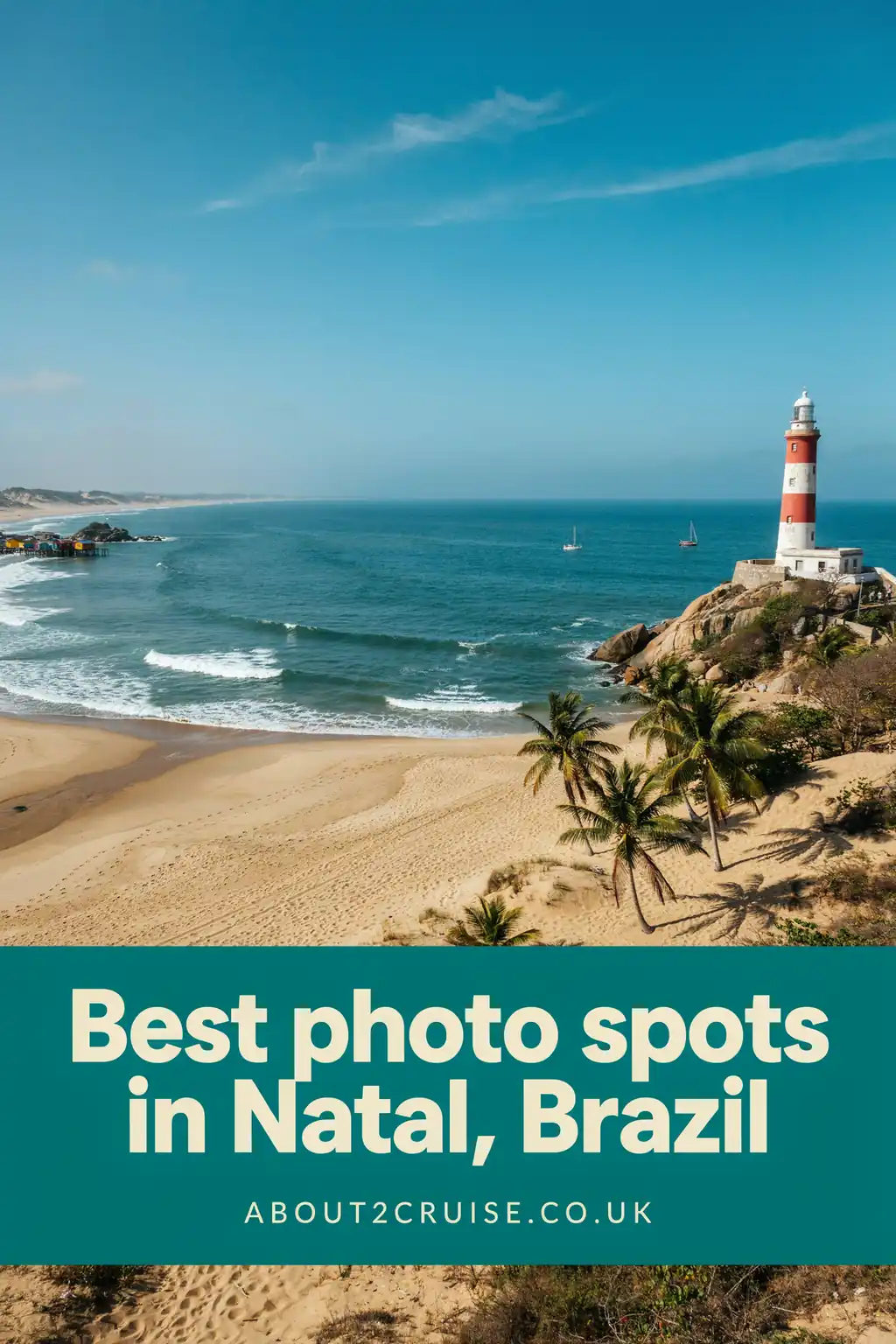
Shoot Ponta Negra and Morro do Careca at sunrise, when light hits the dune face from the sea. The Forte dos Reis Magos is best at low tide, when you can cross and frame the fort with the Newton Navarro bridge in one shot. The terminal’s second-floor mirante looks over the Potengi and is billed for its sunset view. The bridge itself is one of the most photographed points in the city.
Culture and events: forró, Carnival and Potiguar roots
Natal calls itself the Cidade do Sol and claims about 300 sunny days a year. The big festival is Carnatal, the city’s off-season Carnival, which runs three days in December at the Arena das Dunas. The last edition drew 130,000 people and R$155m in local spending. Forró com Turista runs on Thursday evenings at the Centro de Turismo, with live pé-de-serra bands and dance lessons. If your call coincides with a December event, expect extra traffic and book transfers early.
How to spend a port day in Natal
A port day in Natal works best if you pick one direction: the compact historic centre around Forte dos Reis Magos, or the beaches and dunes north to Genipabu and south to Ponta Negra.
Before you sail
- Book a Genipabu or Ponta Negra tour through the ship or a private operator with a guaranteed return.
- Download an offline Portuguese translation app; English is not widely spoken.
- Check your passport has at least six months' validity beyond arrival.
Short port day: under 6 hours
- On dockingWalk to Centro de TurismoIndustrial startAbout 1.1 km and 13 minutes on foot. Stay on the main route through Ribeira and have a destination.
- +15 minCentro de TurismoFree entry, 38 craft shops in the cells of a former 19th-century prison. Open daily 08:00 to 18:00.
- +45 minWalk to Forte dos Reis MagosAbout 15 to 20 minutes further. The fort sits on a reef at the river mouth.
- +1 hr 15 minForte dos Reis MagosLow tide crossingStar-shaped fort, entry is paid at the gate. Cross on foot at low tide; allow 40 minutes for the guided circuit.
- +2 hr 30 minLunch on the return loopTry camarão potiguarWalk back along the seafront or through the centre. Beachfront kiosks and Cidade Alta restaurants serve local shrimp or ginga com tapioca; portions serve two or three.
- All-aboard minus 1 hrBack at the terminalThe loop back takes about 30 to 40 minutes on foot. If you are tired or short on time, take a taxi from the centre.
The time on the map is the whole walk, every stop added together.
Open this walking route in Google Maps
If plans change: If the fort is closed or the tide is in, stay around the Centro de Turismo and the beachfront kiosks, then return by taxi.
Long port day: 8 hours or more
- On dockingTaxi or Uber to Ponta NegraUse the rankAbout 10 to 13 km and 25 to 32 minutes. Use the terminal taxi rank or an app, not street taxis.
- +45 minPonta Negra beach morningRent chairs and an umbrella at a kiosk. Swim near lifeguards and keep valuables off the sand.
- +2 hr 30 minWalk the promenade to Morro do CarecaThe dune at the south end is closed to climbing, but the beach is the best place to photograph it.
- +3 hr 45 minLunch along Avenida Erivan FrançaTry camarão potiguarBeach restaurants serve local shrimp and carne de sol. Portions are built for two or three people.
- +5 hr 30 minAfternoon at the beachfront kiosksBrowse craft stalls or have a coffee at a kiosk. Leave before dark and keep a return buffer.
- All-aboard minus 90 minTaxi back to the shipAllow 90 minutes from Ponta Negra, more if the bridge road is busy.
This map shows the taxi ride from the ship. The time is the drive only, not your time ashore.
Open the taxi route in Google Maps
If plans change: If Ponta Negra is too crowded or the red flags are up, taxi back early and spend the afternoon at the Centro de Turismo and Forte dos Reis Magos.
Our Brazil cruise ports guide covers the other ports in the region.
Natal cruise port FAQs
Do cruise ships tender in Natal?
No. Normal cruise calls tie up alongside at Berço 03, directly in front of the Terminal Marítimo de Passageiros. You walk on and off. There is no scheduled tender operation.
What is the best beach nearest to the cruise port?
The closest urban beaches are Praia dos Artistas and Praia do Meio, about 1.2 km from the terminal. They are city beaches, not the postcard strip. For the famous Ponta Negra beach with the best tourist infrastructure, expect a 25–32 minute drive.
Can I climb Morro do Careca?
No. Climbing the dune is prohibited by court order to stop erosion. It is an environmental offence and can be fined. Photograph it from the beach or a viewpoint.
Do I need Brazilian reais, or can I use US dollars and euros?
Use reais. Foreign cash is not commonly accepted. Cards are widely accepted, but you will want small reais for market stalls, some bus fares, and tips.
Do I need a visa for Brazil from the UK?
British passport holders can stay in Brazil for up to 90 days visa-free. Your passport must have at least six months’ validity beyond arrival, and you should get a passport stamp. Always check the current UK FCDO entry requirements before your cruise.
Is there a printable Natal cruise port guide PDF or official map?
There is no official passenger PDF from the port. The terminal is modern but underused, and the port authority’s public page is more about events and leasing than cruise-day maps. To save this page as a PDF, use your browser’s print or save-as-PDF function. For navigation, pin Rua Chile, Ribeira, Natal-RN.
Related cruise port guides
If your South America or transatlantic cruise also calls at these ports, you may find these useful:
Last Updated: 18 November 2026