
The Tlingit are Indigenous people of Southeast Alaska with a rich cultural heritage visible on Alaska cruises. Their society is organized into moieties, clans, and house groups, featuring intricate totem poles, ceremonial regalia, and traditional art. Visitors can experience Tlingit culture through cultural centers, performances, museums, and historic sites in ports like Juneau, Ketchikan, and Sitka.
Quick Facts About Tlingit Culture
| Aspect | Details |
|---|---|
| Population | Approximately 17,000 Tlingit people |
| Language | Tlingit (Na-Dené language family) |
| Social Structure | Two moieties: Raven and Eagle/Wolf |
| Traditional Territory | Southeast Alaska panhandle and parts of British Columbia |
| Best Ports for Culture | Juneau, Ketchikan, Sitka, Icy Strait Point |
| Key Art Forms | Totem poles, button blankets, woven baskets, formline design |
Want to know more about Alaska specialty topics and cultural experiences?
Understanding Tlingit Social Organization
The Tlingit social structure isn’t just historical trivia—it’s actively practiced today and understanding it enriches your cultural encounters. Every Tlingit person belongs to one of two moieties (large groups): Raven or Eagle (sometimes called Wolf in northern areas). Here’s the clever part: you must marry someone from the opposite moiety. A Raven marries an Eagle, and children always take their mother’s clan identity.
Within each moiety exist numerous clans like Killer Whale, Frog, Coho Salmon, and Bear. These aren’t just names—they represent ancestral stories and territorial rights that go back centuries. When you see totem poles in Ketchikan, you’re looking at family crests and histories carved in cedar.
Where to Experience Authentic Tlingit Culture
Juneau
As Alaska’s capital, Juneau offers several excellent cultural venues. The Sealaska Heritage Institute houses an impressive collection of Northwest Coast art and hosts the biennial Celebration festival. The Alaska State Museum features Tlingit artifacts and contemporary art. Downtown galleries often showcase work by Tlingit artists working in traditional and modern styles.
Sitka
The Sheet’ká Kwáan Naa Kahídi Tribal Community House presents traditional dance performances that aren’t watered down for tourists. These are actual ceremonial dances performed by community members in full regalia. Sitka National Historical Park features one of the finest outdoor totem pole collections and a Southeast Alaska Indian Cultural Center where you can watch artists at work.
Ketchikan
Totem Bight State Historical Park and Saxman Native Village both offer concentrated experiences with totem poles and carving demonstrations. The Totem Heritage Center preserves the oldest surviving totem poles in existence—some dating back to the early 1800s.
Icy Strait Point
This port is actually owned and operated by the Huna Tlingit people, making it unique among cruise destinations. The Tlingit culture at Icy Strait Point feels more integrated into daily operations rather than presented as a separate attraction. The cannery museum and cultural center are run by community members.
Understanding Tlingit Art and Symbolism
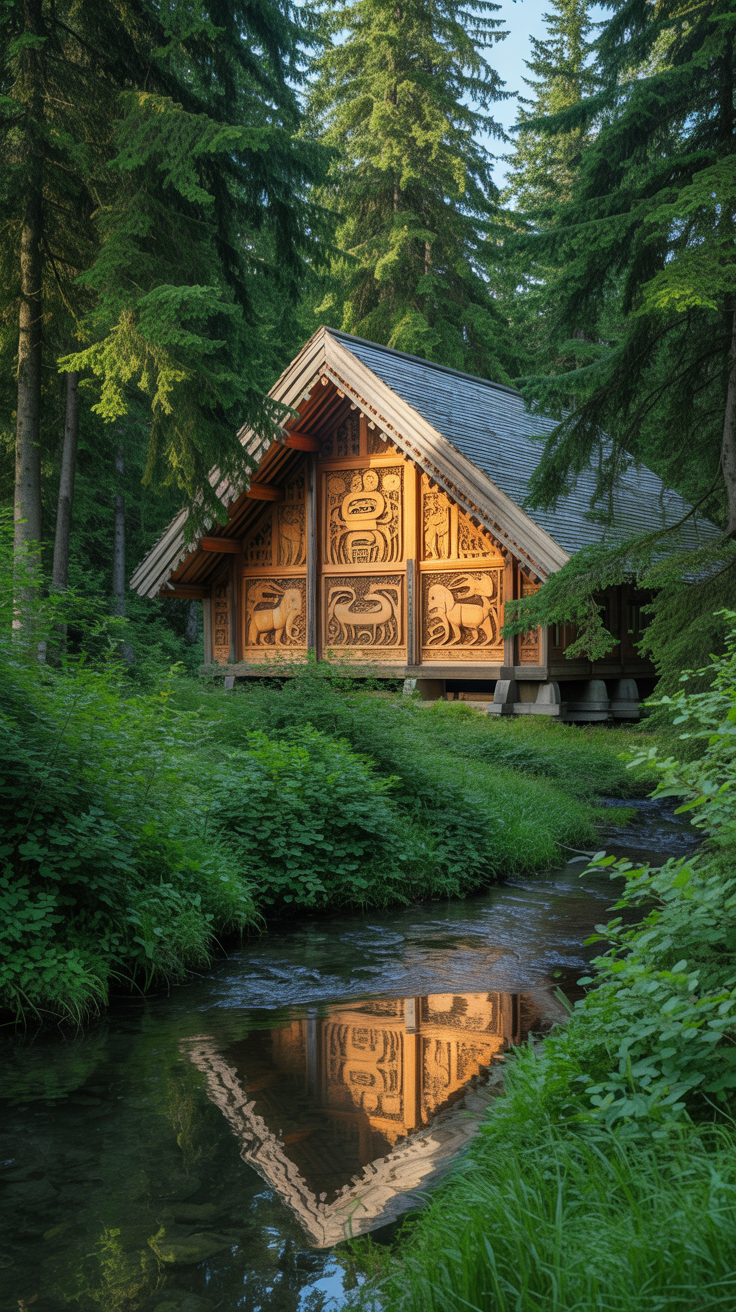
Tlingit art follows strict formline design principles that date back thousands of years. Those flowing black lines with red and blue-green accents aren’t random—they follow specific rules about how shapes connect and flow. Master carvers train for decades to perfect these techniques.
Common elements you’ll see:
- Ovoids: The rounded rectangular shapes that form eyes and joints
- U-forms: Rounded U-shapes that create feathers, fins, and body parts
- S-forms: The connecting curves between major design elements
- Split design: Animals shown as if split down the middle and opened flat
When purchasing art, ask if the artist is enrolled in a tribe and whether they apprenticed with a master. Authentic Tlingit art commands higher prices but represents real cultural transmission. Many galleries can tell you the artist’s clan and lineage.
Practical Tips for Cultural Engagement
Photography rules vary by venue. Always ask before photographing people, especially during ceremonies. Some dances and regalia are sacred and photos may not be permitted. Cultural centers usually allow photography of exhibits but check about flash usage near sensitive artifacts.
Attending a dance performance? Arrive early for good seats and stay for the entire program. Performers often invite audience participation for certain songs—don’t be shy. The “exit song” signals the end and it’s considered polite to remain until it’s complete.
When browsing cultural excursions on Alaska cruises, look for tours led by Tlingit guides or that partner with tribal organizations. These typically offer more authentic perspectives than generic city tours with a quick totem pole stop.
Beyond the Tourist Sites
Serious culture seekers should explore Alaska native culture beyond the standard cruise port offerings. Local restaurants sometimes serve traditional foods like smoked salmon, herring eggs on kelp, or seal (though this is rare in tourist areas). Ask locals where they eat.
The connection between Tlingit culture and the gold rush history of Alaska is more complex than many realize. The Klondike gold rush brought massive disruption to Tlingit communities, but also led to some Tlingit people serving as guides and packers, earning significant income during that period.
Speaking of authenticity, you should definitely read about what cruise brochures don’t tell you about Alaska to set realistic expectations for cultural experiences versus glossy marketing.
Bonus Tips
- The word “totem” isn’t actually Tlingit—it comes from Ojibwe. Tlingit people call them “kootéeyaa” but understand “totem pole” since that’s what most visitors say
- Button blankets (wool blankets decorated with clan designs in buttons and ribbon) became traditional in the late 1800s after trade goods became available, showing how culture evolves
- If someone shares their Tlingit name with you, they’re offering something personal and meaningful—not just a translation curiosity
- Many Tlingit words use sounds that don’t exist in English, including a unique “L” sound made on the sides of the tongue. Don’t worry about perfect pronunciation but do make an effort
- Small cultural centers and museums often need donations more than major venues—a few dollars makes a real difference
- Tlingit Elders use capital “E” when written to denote respect for knowledge keepers
- Some cruise ship jewelry shops sell “Native-style” art made overseas—if authenticity matters, buy directly from galleries that verify artist enrollment
- Traditional Tlingit territory extends into Canada; the culture doesn’t stop at political borders
- The .áat ending on many place names means “town of”—like Sheet’ká .áat (Sitka)
- Ravens appear in Tlingit art constantly because Raven is the creator/trickster figure who brought light to the world and shaped human society
Challenges and Considerations
Not everything about experiencing Indigenous culture on a cruise is straightforward. Time constraints mean you get snapshots rather than deep understanding. A 30-minute dance performance can’t convey thousands of years of tradition, and rushing through a museum between shopping stops means missing context.
Some Tlingit people have mixed feelings about tourism. While it provides economic opportunities and platforms to share culture, it can also feel exploitative when cruise ships dump thousands of visitors into small communities for a few hours then leave. Being respectful of this dynamic means engaging thoughtfully rather than treating culture as entertainment.
Language revitalization is a sensitive topic. Tlingit nearly disappeared as government boarding schools punished children for speaking it. Efforts to teach it now face challenges since few fluent speakers remain. When you hear Tlingit spoken, you’re witnessing something precious and hard-won.
Not all “Native villages” near ports are authentic communities. Some were created specifically for tourism. This doesn’t make them valueless, but understanding the difference matters. Icy Strait Point represents an actual Tlingit community, while some other villages are more like living history museums.
Making It Meaningful
The difference between checking a cultural site off your list and actually learning something often comes down to asking questions. Most guides and cultural center staff genuinely enjoy sharing knowledge when visitors show real interest. Ask about modern life, how traditions are practiced today, and what challenges communities face.
Buy something meaningful rather than a generic souvenir. A small cedar carving or print by a Tlingit artist costs more than a mass-produced magnet but supports the continuation of artistic traditions. Many artists include cards explaining their clan background and the piece’s significance.
Take time to read exhibit text instead of just photographing objects. The stories behind artifacts often prove more fascinating than the objects themselves. That bentwood box took someone weeks to steam and bend—understanding the process changes how you see it.
Consider attending talks or demonstrations even if they overlap with shopping time. You can buy trinkets anywhere but you can’t learn traditional basket-weaving techniques or hear clan histories just anywhere.
Common Questions and FAQ
Can I use the word “tribe” when referring to Tlingit people?
Yes, though “nation” or “people” are also appropriate. The Tlingit are recognized as tribal entities under federal law. Individual communities like the Huna Tlingit or Sitka Tribe of Alaska are specific tribal governments.
Are totem poles religious objects?
Not exactly. They serve various purposes including recording history, displaying family crests, honoring important people, and marking graves. While they hold spiritual and cultural significance, they aren’t worshipped or used in religious ceremonies the way some people assume.
Why do some dance performances restrict photography?
Certain regalia, songs, and dances belong to specific clans and carry sacred meaning. Allowing unrestricted photography can lead to misuse of cultural property. It’s about respecting ownership of intellectual and spiritual property.
How do I pronounce Tlingit?
Most commonly “KLINK-it” or “TLING-git” with the T slightly softened. The proper pronunciation involves a voiceless lateral fricative that doesn’t exist in English, so approximations are accepted from visitors.
Is it offensive to call someone Alaskan Native versus Native Alaskan?
Alaska Native (capital N) is the preferred and legally recognized term. It distinguishes Indigenous peoples of Alaska from Native Americans of the lower 48 states, as Alaska Native groups have distinct cultural traditions and legal status.
Can non-Native people own Tlingit art featuring clan crests?
Yes. When Tlingit artists create work for sale, purchasing it is respectful and supports their livelihood. What’s inappropriate is non-Native people creating or selling art using Tlingit designs, or misrepresenting where art comes from.
Do Tlingit people still speak their language?
Tlingit is critically endangered with fewer than 200 fluent speakers, mostly Elders. However, intensive revitalization efforts including immersion programs are working to increase the number of speakers. You might hear it spoken at cultural centers and ceremonies.
Personal Experience
During our stop in Juneau, we wandered into the Sealaska Heritage Institute without really knowing what to expect. Within minutes, we were standing in front of massive house posts and hearing stories that stretched back thousands of years. A Tlingit elder named George shared the Raven creation story with such animation and humor that everyone in our small group was completely drawn in. He explained how the formline designs on the carvings weren’t just decorative – each curve and shape carried meaning about family lineages and connections to the natural world. Watching a carver work on a canoe paddle in the studio, you could feel the weight of tradition being passed down through every careful stroke.
The next day in Sitka, we visited the Sheet’ká Kwáan Naa Kahídi community house for a dance performance. The regalia was stunning – button blankets, woven hats, and carved masks that represented different clans. What struck me most was how living and present everything felt. This wasn’t a museum recreation; it was real people sharing their actual culture, language, and songs. Between dances, the performers talked about what certain ceremonies mean to their families today and how they’re teaching their children the old ways. It gave our whole cruise a deeper context, understanding that these coastal communities have called Alaska home since time immemorial.