
Catania cruise port serves as the gateway to Mount Etna, Europe’s most active volcano, located 30 kilometers away. The port offers easy access to Catania’s historic baroque centre, Taormina’s cliffside villages, and Syracuse’s ancient ruins. Visitors can explore volcanic landscapes, sample Sicilian cuisine, shop local markets, or relax on nearby beaches during their port call.
Quick Port Facts
| Fact | Detail |
|---|---|
| Port Website | Catania Cruise Port |
| Time Zone | Central European Time (CET/CEST) |
| Language | Italian (English spoken in tourist areas) |
| Currency | Euro (EUR) |
| Walking Distance to City Centre | 15-25 minutes to Piazza del Duomo |
| Main Cruise Terminal | Vecchia Dogana (Old Customs area) |
Port Day Checklist
- Book Mt. Etna excursions early as volcanic activity can cause route changes or cancellations
- Wear layers for Etna visits – summit areas are significantly cooler and windier than the port
- Check your tour operator’s safety briefing the morning of arrival for current access restrictions
- Bring proper walking shoes with grip if you’re planning crater hikes or lava cave visits
- Allow at least 90 minutes buffer time before all-aboard to account for traffic from Etna
- Save small euro notes for the fish market and street food vendors near Piazza del Duomo
- Download offline maps as mobile signal can be patchy on Etna’s slopes
Want to know more about other cruise ports? Check out our guides to Mediterranean cruise ports in Sicily and Mediterranean cruise ports in Italy for comprehensive port information across the region.
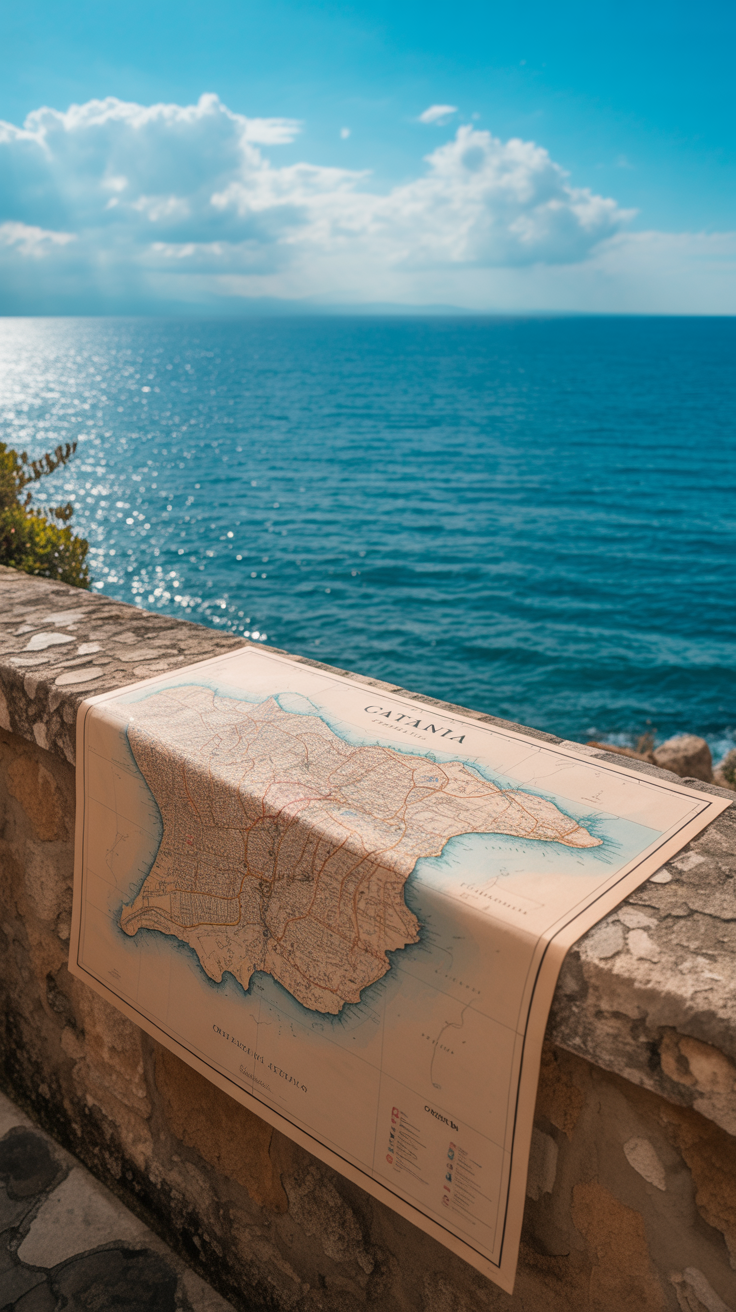
Catania Map
The cruise terminal sits on Sicily’s eastern coast at the Vecchia Dogana (Old Customs) building. Most ships dock at the Barbieri/Porto area, with Catania’s baroque historic centre lying directly northwest. Piazza del Duomo and the main pedestrian thoroughfare Via Etnea are within walking distance, whilst Mount Etna looms 30 kilometers to the north.
Can You Walk to Town from the Port?
Yes, Catania’s historic centre is absolutely walkable from the cruise terminal, though the distance and route quality vary depending on your exact berth. The walk to Piazza del Duomo typically takes 15-25 minutes from the Vecchia Dogana exit.
- The route is straightforward – head northwest from the port exit along Via VI Aprile or Via Cardinale Dusmet towards the cathedral square
- Pavements can be uneven in places with typical Sicilian cobblestones, so comfortable walking shoes matter
- The walk is flat with no significant hills between port and city centre, making it manageable even in warm weather
- Signage is limited near the port itself, so having offline maps loaded helps avoid wrong turns
- Allow extra time during busy cruise days when multiple ships dock simultaneously and pedestrian areas get crowded
- The fish market area (La Pescheria) sits between the port and Piazza del Duomo, making a natural mid-walk stop
How to Get Around from Catania Cruise Port & Shore Transportation
Transport options at Catania port range from simple taxis to organized shore excursions, with most cruise passengers choosing either pre-booked tours for Etna visits or independent exploration on foot for the city centre.
Taxis
- Official taxis wait at the port exit near the Vecchia Dogana building
- Metered fares to Piazza del Duomo run approximately €10-15 for a 5-minute ride
- Negotiate prices upfront for longer trips like Taormina (expect €70-100 one way) or confirm the meter is running
- Drivers don’t always speak English, so have your destination written down or shown on your phone
- Taxis are the most practical option if you’ve got mobility concerns or limited walking stamina
Shore Excursion Operators
- Most Mt. Etna tour operators pick up passengers directly at the port exit, with signs displaying tour company names
- Typical Etna excursions last 6-9 hours and include 4×4 transport, guided hikes, lava cave visits (with helmets provided), and sometimes wine tastings on lower slopes
- Combined Etna and Taormina tours are popular but ambitious – expect long days with tight schedules
- Small-group tours (8-12 passengers) offer more flexibility than coach tours if volcanic activity forces route changes
- Confirm pickup times and meeting points the night before through your booking confirmation
- Reputable operators include clear cancellation policies for days when Etna access is restricted due to heightened volcanic activity
Public Transport
- Public buses connect the port area to central Catania, though service frequency and route information can be confusing for first-time visitors
- The AST bus company operates routes to Rifugio Sapienza (Etna’s cable car base) from Catania, but schedules don’t align well with cruise ship port times
- Bus tickets must be purchased before boarding from tabacchi (tobacconist) shops or newsstands, not from drivers
- This option works better for experienced independent travellers with flexible schedules rather than cruise passengers watching the clock
Walking
- The historic centre, fish market, and Via Etnea shopping street are all comfortably walkable from the terminal
- Walking lets you move at your own pace and stop for coffee, pastries, or spontaneous photo opportunities
- Return journey to the port is equally straightforward, just reverse your route towards the waterfront
What to See Within Walking Distance from the Port
Catania’s baroque heart sits close enough to the port that you can explore major landmarks, eat proper Sicilian food, and still make it back to the ship with time to spare.
- Piazza del Duomo: Catania’s main square centres around the iconic Elephant Fountain (Fontana dell’Elefante) and the Cathedral of Sant’Agata with its striking baroque façade. The square functions as the city’s social hub where locals meet for coffee and evening passeggiata. Walking time from port: 15-25 minutes depending on pace and exact berth location.
- La Pescheria (Fish Market): This raucous morning market operates in the streets behind Piazza del Duomo, where vendors shout prices over swordfish, octopus, and shellfish still glistening from the morning catch. The atmosphere peaks between 8am-1pm, after which stalls pack up. Even if you don’t buy anything, the energy and authenticity make it worth the detour. Walking time: 10-15 minutes from port.
- Via Etnea: Catania’s main north-south artery runs from Piazza del Duomo straight towards Mount Etna (visible on clear days at the far end of the street). This pedestrianized stretch offers shops, cafés, gelaterias, and people-watching opportunities. Walking time: starts immediately north of Piazza del Duomo.
- Castello Ursino: Frederick II’s 13th-century fortress now houses the civic museum with archaeological finds and medieval art. The exterior alone justifies the walk, with imposing stone walls that once sat at the shoreline before a 1669 lava flow extended the coastline. Walking time: 10-15 minutes from Piazza del Duomo, 20-30 minutes from port.
- Monastero dei Benedettini di San Nicolò l’Arena: This vast Benedictine monastery complex ranks as one of Europe’s largest, with cloisters, baroque architecture, and a fascinating history mixing religious devotion with architectural ambition. Guided tours available. Walking time: 20-30 minutes from port through the historic centre.
- Via Crociferi: A concentrated baroque street lined with ornate church façades, religious buildings, and theatrical architecture that makes for excellent photography. You can walk the entire street in 10 minutes but allow longer for proper appreciation. Walking time: 15-20 minutes from port via Piazza del Duomo.
Must See Attractions in Catania for a One Day Cruise Visit
With limited port time, prioritize what genuinely matters. For most cruise passengers, that means choosing between a full Etna experience or thorough exploration of Catania’s historic centre – attempting both properly in one day rarely works.
Mount Etna
- What it is: Europe’s highest and most active volcano, with lunar landscapes, active craters, lava fields, and altitude that reaches over 3,300 meters. Tours typically visit Rifugio Sapienza around 1,900 meters, with cable car access to higher elevations and 4×4 transport to upper crater zones when permitted.
- Why it matters: Standing on an active volcano that’s shaped Sicily’s history, agriculture, and daily life offers perspective you can’t get anywhere else. Recent eruptions mean you’re seeing geology in real-time, not ancient history.
- Time needed: Full-day excursions run 6-9 hours including transport from port, cable car or 4×4 rides, guided hikes, and often a stop at lava caves or wineries. Half-day options exist but feel rushed.
- Practical tips: Volcanic activity can restrict access with little warning – authorities tightened safety measures recently including distance limits from active lava flows, group size restrictions, and occasional route closures. Book operators who adjust itineraries rather than cancel outright. Temperature at upper elevations drops significantly even in summer; bring layers and windproof outerwear. Comfortable hiking boots with ankle support work better than trainers on volcanic terrain. Cable car tickets cost approximately €30 one-way if booking independently. Helmet and flashlight provided for lava cave portions. Confirm your tour’s exact pickup time and meeting point at the port exit the day before.
Catania’s Historic Centre and Piazza del Duomo
- What it is: The baroque heart of Catania rebuilt after the devastating 1693 earthquake, centered on Piazza del Duomo with its Elephant Fountain, cathedral, and surrounding palazzi. UNESCO recognizes this area as part of the Late Baroque Towns of the Val di Noto.
- Why it matters: This represents authentic Sicilian city life rather than tourist reconstruction. Locals actually use these squares, shops, and markets daily, giving you genuine cultural immersion rather than a museum experience.
- Time needed: Allow 2-3 hours minimum for the square, cathedral interior (free entry), surrounding streets, and a proper coffee stop. Add another hour if you want to visit inside Castello Ursino or explore Via Crociferi’s churches.
- Practical tips: The cathedral sometimes closes for services; midday (12-3pm) is most reliable for entry. Modest dress required (covered shoulders and knees). The elephant fountain makes an obvious photo landmark but the square’s beauty lies in the architectural harmony of surrounding buildings. Early morning (8-10am) offers the best light and fewer crowds. If visiting on Sunday, many shops close but churches and cafés remain open.
La Pescheria Fish Market
- What it is: A working fish market operating since medieval times in the streets between Piazza del Duomo and the old harbour, where fishmongers sell the morning’s catch with theatrical flair and zero concessions to tourism.
- Why it matters: This is Catania unfiltered – loud, chaotic, smelly, and absolutely authentic. You’ll see fish species you’ve never encountered and witness transactions conducted in rapid-fire Sicilian dialect.
- Time needed: 30-45 minutes to walk through, photograph, and absorb the atmosphere. Arrive before 1pm when stalls begin packing up.
- Practical tips: No entry fee; this is a working market not a tourist attraction. Watch your belongings in crowded areas and stay aware of wet floors and ice meltwater. Vendors appreciate if you ask before photographing their stalls. The surrounding streets house small trattorias that cook fish bought that morning – grab lunch here if timing works. Wearing nice shoes is a mistake; the cobblestones get slippery and wet.
Castello Ursino
- What it is: A Norman-Swabian fortress built by Frederick II in the 13th century, originally positioned at the water’s edge before the 1669 eruption’s lava flow extended the shoreline by several hundred meters.
- Why it matters: The building itself tells Catania’s story of earthquakes, eruptions, and reconstruction. Inside, the Civic Museum holds archaeological treasures and medieval artifacts in atmospheric vaulted rooms.
- Time needed: 45 minutes to an hour for the museum interior; 10 minutes if you’re just appreciating the exterior fortress architecture.
- Practical tips: Entry fee around €6-8. Opening hours typically 9am-7pm but confirm locally. Signage inside is primarily Italian with limited English translations. The courtyard offers shade and benches if you need a rest break. Photography permitted in most areas.
Via Etnea and Shopping District
- What it is: Catania’s main commercial street running 3 kilometers from Piazza del Duomo north towards Mount Etna, lined with shops, cafés, gelaterias, and baroque churches along a pedestrianized thoroughfare.
- Why it matters: This is where Catania’s residents actually shop, meet friends for aperitivo, and conduct daily life. On clear days, Mount Etna appears at the northern end of the street creating one of Sicily’s most iconic views.
- Time needed: You could walk the entire street in 45 minutes, but factor in stops for coffee (essential), window shopping, gelato, and photography. Budget 2 hours to do it properly.
- Practical tips: No entry fees as it’s a public street. Shops typically close 1-4pm for siesta, reopening until 8pm. Sunday sees reduced opening hours. Via Etnea gets crowded during evening passeggiata (7-9pm) when locals stroll and socialize. Historic cafés like Spinella serve excellent granita and cannoli at mid-street locations. The Etna view depends entirely on weather clarity; haze or clouds often obscure the volcano even when it’s technically visible.
Taormina
- What it is: A picture-perfect hilltop town 50 kilometers north of Catania, famous for its ancient Greek theatre with Mount Etna and the Ionian Sea as backdrop, medieval streets, and undeniable charm.
- Why it matters: Taormina delivers the postcard Sicily experience – dramatic views, historic sites, elegant boutiques, and café culture wrapped in a compact medieval core.
- Time needed: The drive from Catania port takes 45-60 minutes each way. Allow minimum 3 hours in town to see the Greek Theatre, walk Corso Umberto (the main pedestrian street), and have lunch. Most tours allocate 4-5 hours including transfer time.
- Practical tips: Tours that combine Etna and Taormina in one day sound appealing but involve substantial driving and limited time at each location. If Taormina is your priority, dedicated tours work better than combo options. The Greek Theatre charges €10 entry and gets crowded midday (10am-2pm); arrive early or late afternoon for better photo opportunities. Parking sits well below the town center; expect to walk uphill or take a shuttle. Street parking scams exist – only use official car parks. Taormina is touristy and prices reflect that; expect to pay more for lunch than in Catania. The town closes down January-February with many restaurants and shops shuttered. For more detailed planning, see our complete Taormina cruise ship port guide.
Port Day Itinerary: Things to Do in 8 Hours
Here’s a realistic schedule that fits a typical 8am-5pm port day, focusing on Catania itself rather than attempting the full Etna expedition. If you’re doing an Etna tour, that consumes your entire port day with operator-managed timing.
- 8:00-8:45am | Disembark and Walk to La Pescheria: Head straight to the fish market whilst it’s at peak chaos and the morning catch is freshest. The walk from port takes 10-15 minutes, getting you there before the cruise crowd arrives. Watch vendors prepare octopus, haggle with locals, and photograph swordfish longer than your arm. The atmosphere matters more than buying anything.
- 8:45-9:30am | Piazza del Duomo and Cathedral: Walk two minutes from the market to Catania’s main square. Morning light hits the baroque façades beautifully, and you’ll beat the midday heat and tour groups. Step inside the Cathedral of Sant’Agata (free entry, modest dress) to see the ornate interior and Sant’Agata’s chapel. Grab your first espresso of the day at a café facing the Elephant Fountain.
- 9:30-11:00am | Via Etnea and Historic Centre: Walk north along Via Etnea, stopping at baroque churches like Sant’Agata al Carcere or San Biagio as you fancy. Detour east to Via Crociferi for concentrated baroque architecture and photo opportunities. Pop into shops selling Sicilian ceramics, lava stone jewelry, or local food products if shopping interests you.
- 11:00am-12:30pm | Castello Ursino: Head southwest towards the medieval fortress (15-minute walk from Via Etnea). Explore the Civic Museum inside if art and archaeology appeal, or just admire the exterior fortifications and imagine the shoreline before the 1669 eruption. The surrounding Piazza Federico di Svevia offers benches and shade for a rest.
- 12:30-2:00pm | Lunch Near the Port: Walk back towards the port area and choose a trattoria near La Pescheria for seafood or pasta alla norma (Catania’s signature eggplant and tomato dish). Osteria Antica Marina gets recommended frequently for fresh fish and local atmosphere. Budget €15-25 per person including wine. Try arancini as a starter – the rice balls here are enormous and cost around €3 each.
- 2:00-3:30pm | Monastero dei Benedettini or Casual Wandering: If you’ve got energy for more formal sightseeing, visit the Benedictine monastery complex (guided tours available, approximately €8 entry). Alternatively, wander back through the historic centre at a gentler pace, stopping for granita (semi-frozen flavoured ice) or cannoli at a pasticceria. This is Sicily – sitting in the shade with good dessert counts as legitimate cultural experience.
- 3:30-4:15pm | Final Via Etnea Stroll and Shopping: Use your last hour for any shopping you’ve been contemplating – ceramics, pistachios, wine, or local specialties. Via Etnea’s shops reopen after siesta around 3:30-4pm. Stock up on snacks for the ship if you’ve found good bakeries.
- 4:15-4:45pm | Return to Ship: Walk back to the port (15-25 minutes) with plenty of buffer time before all-aboard. The return route is straightforward – just head towards the waterfront and follow it south to the Vecchia Dogana entrance.
This timing assumes moderate walking pace and builds in buffer time. You’ll comfortably make it back to the ship without stress, which matters more than cramming in one extra church.
Where to Eat Near the Port
Catania’s food scene revolves around fresh seafood, baroque-era recipes, and ingredients from Etna’s volcanic soil. The area between the port and Piazza del Duomo offers genuine local cooking rather than tourist-trap mediocrity.
- La Pescheria District Trattorias: Small restaurants surrounding the fish market cook what was caught that morning. Osteria Antica Marina gets recommended consistently for simple grilled fish, pasta with sea urchin, and seafood platters served at outdoor tables in the market atmosphere. Expect to pay €15-25 per person for a full meal including house wine. Trattoria del Marinaio and similar spots offer comparable quality at similar prices. These places don’t take reservations – arrive before 1pm or after 2:30pm to avoid queues.
- Arancini and Street Food: Catania arguably makes Sicily’s best arancini (deep-fried rice balls). Traditional fillings include ragù (meat sauce), butter and ham, or pistacchio. You’ll find arancini at most bakeries and dedicated street food spots near Piazza del Duomo and Via Etnea for €2.50-4 each. One arancino makes a substantial snack; two count as lunch. Savia Pasticceria near Via Etnea serves excellent versions along with other Sicilian pastries.
- Pasta alla Norma: Catania invented this dish – pasta with fried eggplant, tomato sauce, basil, and ricotta salata (salted ricotta cheese). Every trattoria serves their version for €8-12. It’s genuinely good here because locals judge restaurants by their norma quality. Pair it with a glass of Etna Rosso wine from the volcanic slopes.
- Casual Pizzerias: Sicilian pizza differs from Neapolitan style with a thicker, airier crust. Via Garibaldi and streets around Piazza Carlo Alberto house reliable pizzerias charging €6-10 for a proper pizza. Lunch menus (menù fisso) often include pizza, drink, and dessert for €12-15.
- Cannoli and Granita: You’re in Sicily – eating cannoli is mandatory, not optional. Fresh ricotta filling should be piped into the crispy shell when you order, not hours earlier. Pasticceria Savia and historic cafés along Via Etnea serve authentic versions for €2-3.50. Granita (semi-frozen dessert) comes in traditional flavours like almond, lemon, or coffee, served with a brioche bun for dunking. It’s breakfast food in Sicily, not just dessert. Cost €2.50-4.
- Quick Pre-Ship Options: If you’re tight on time before all-aboard, grab focaccia, pizza slices, or panini from bakeries near Via VI Aprile on your walk back to the port. Budget €3-6 for filling takeaway food.
- Food Safety and Water: Tap water is safe to drink in Catania though most locals prefer bottled. Street food from busy vendors near the market is generally fine – high turnover means fresh preparation. Avoid seafood from places with empty tables at peak lunch hours; locals voting with their feet tells you something.
Shopping: What to Buy & Where to Go
Catania isn’t Sicily’s shopping capital but offers enough interesting purchases to fill a suitcase if you’re motivated. The historic centre concentrates most worthwhile shops within walking distance of the port.
- Sicilian Ceramics: Colorful hand-painted pottery featuring traditional Moorish designs, lemon patterns, or baroque motifs. Via Etnea hosts several ceramic shops selling plates, bowls, and decorative pieces. Prices range from €10 for small items to €100+ for large serving platters. Quality varies dramatically – look for pieces signed by the artist and check that the glaze is smooth and even. These are fragile and heavy; shipping services exist if you’re buying multiple pieces.
- Etna Products: Volcanic stone jewelry, lava rock coasters, and decorative items made from Etna’s basalt appear in tourist shops along Via Etnea. The novelty appeals more than the aesthetic quality in most cases. Etna honey, pistachios, and wine from volcanic slopes make better purchases than lava tchotchkes. Expect €8-15 for jars of honey or pistachio cream.
- Sicilian Food Products: Bring home pistachio products (paste, cream, whole nuts), almond pastries, sun-dried tomatoes in oil, capers, Modican chocolate, and Etna wines. Specialist food shops near Piazza del Duomo stock properly packaged products suitable for luggage. A quality bottle of Etna Rosso or Etna Bianco costs €12-30; these volcanic-soil wines age well and taste distinctive. Vacuum-packed pistachios from Bronte (an Etna foothill town) run €8-15 per 200g package.
- Fresh Produce at La Pescheria: The fish market’s surrounding streets also sell fruit, vegetables, olives, and cheeses. Blood oranges (in season November-April) are an Etna specialty worth tasting, though bringing fresh produce back to the ship depends on your cruise line’s policies. Dried oregano, chili flakes, and other spices make packable souvenirs.
- Leather Goods: Shops along Via Etnea sell leather bags, belts, and wallets at moderate prices (€30-100 for bags, €15-30 for belts). Quality is acceptable but not exceptional – this isn’t Florence. Bargaining isn’t expected in established shops with marked prices.
- Clothing and Fashion: Via Etnea hosts Italian chain stores (Zara, Mango, etc.) plus some local boutiques. Prices align with mainland Italy; no particular bargains exist here. Shops open roughly 9:30am-1pm, then 4pm-8pm. Sunday sees limited hours or closures.
- Markets: Beyond La Pescheria, Catania’s Fera ‘o Luni flea market operates (mainly for locals buying household goods rather than tourist souvenirs). Unless you’re hunting for vintage items or random treasures, your time is better spent elsewhere.
Haggling: Fixed prices are standard in established shops. Haggling works at street markets and with street vendors but not in boutiques or food shops with posted prices.
Shop Hours: Most shops close 1-4pm for siesta, reopening until 8pm. Sunday sees many closures, though tourist-area shops may stay open. Public holidays (Italian national holidays plus local feast days) shut down commerce completely.
Essential Gear for a Full Day Exploring Catania
You’ll likely walk 15,000+ steps exploring Catania’s cobblestone streets, volcanic slopes, and baroque centre. Here’s what made our day comfortable:
For Your Feet
The cobblestones and hills here are no joke. Comfortable walking shoes for men or walking shoes for women saved us from the blisters we got in other Italian ports. The uneven Sicilian pavements and potential volcanic terrain at Etna demand proper footwear with grip and ankle support. Bring blister prevention just in case – better to have it in your bag than need it halfway through Via Etnea.
Your Daypack
You’ll need something for water, sunscreen, layers for Etna’s temperature changes, and souvenirs from the fish market. An anti-theft backpack fits under airline seats on the way here and kept our stuff secure in crowded areas like La Pescheria. The slash-proof construction matters in busy tourist zones. A collapsible water bottle clips on the outside and takes up minimal space when empty – essential for staying hydrated during summer port days when temperatures hit 30°C+.
Staying Charged
Between photos of Mount Etna, maps navigating back to the port, and messaging your ship, your phone will die. A portable charger 20000mah got us through 12-hour port days in Italy without stressing about battery. Don’t forget a European power adapter for charging overnight in your cabin – Italy uses Type C/F outlets.
Weather Protection
Etna’s summit areas stay 10-15°C cooler than the port even in summer, and wind whips across exposed volcanic slopes. A lightweight packable jacket for men or women’s lightweight puffer jacket compresses small in your daypack but makes the difference between enjoying Etna and shivering through it. Pair with a packable rain jacket for men or women’s rain jacket because Sicilian weather changes fast, especially at altitude.
Staying Organized
With limited cabin space on cruise ships, compression packing cubes let us find what we needed without destroying our suitcase. Game-changer for multi-port Mediterranean cruises when you’re living out of a tiny cabin for a week. A hanging toiletry bag uses vertical space in cramped ship bathrooms, and a cable organizer keeps phone chargers, portable battery packs, and adapter plugs from becoming a tangled mess.
Emergency Contacts
- Police (Carabinieri): 112 (general emergency number for all services in Italy)
- Ambulance: 118
- Port Authority Emergency: +39 095 536111
- Hospital: Policlinico Vittorio Emanuele, +39 095 7431111 (main hospital with emergency services)
- Coast Guard: 1530
Save your cruise ship’s emergency contact number before going ashore. Your cabin keycard typically lists the ship’s phone number and agent contact information.
Currency, ATMs & Money Matters
Italy uses the euro, and Catania offers standard European banking services with a few port-specific considerations.
- Local Currency: Euro (EUR). As of standard exchange rates, €1 equals approximately £0.85-0.88, though rates fluctuate. Credit cards are widely accepted but cash remains important for markets, small trattorias, and street food.
- ATMs: Multiple ATMs sit along Via Etnea and around Piazza del Duomo, about 15-20 minutes walk from the port. Major Italian banks (Unicredit, Intesa Sanpaolo, BNL) operate machines with English language options. Withdrawal limits typically cap at €250-500 per transaction. Choose “decline conversion” when prompted to avoid poor exchange rates charged by the ATM network.
- Card Acceptance: Restaurants and shops in tourist areas accept Visa and Mastercard reliably. American Express sees spottier acceptance. Some smaller trattorias and market vendors remain cash-only. Contactless payment works in most modern establishments.
- Cash Needs: Budget €40-60 in cash per person for a day in Catania if you’re eating at casual spots, buying street food, and shopping at markets. Higher-end restaurants and boutiques take cards without issue.
- Exchange Services: Banks along Via Etnea offer currency exchange but rates and commissions generally favor using ATMs instead. The port area doesn’t have reliable exchange services; handle currency needs in the city centre or use ATMs.
- Bank Notifications: Alert your bank before traveling to Sicily to prevent fraud blocks on your cards. Italy sees enough card fraud that banks often automatically decline foreign transactions without advance notice.
- Tipping: Italian restaurants include service (servizio) in the bill. Locals round up or leave €1-2 per person at casual spots, more like 5-10% at upscale restaurants only if service was exceptional. Tipping isn’t obligatory as servers earn proper wages. Taxi drivers appreciate rounding up the fare but don’t expect percentage-based tips.
Weather by Month
| Season | Months | Temperature | Conditions | What to Pack |
|---|---|---|---|---|
| Spring | March-May | 15-23°C | Mild and increasingly warm; occasional rain in March; wildflowers on Etna slopes; good visibility | Layers, light jacket, comfortable walking shoes; sunscreen by May |
| Summer | June-August | 26-33°C | Hot and dry; intense sun; sirocco winds bring occasional heat spikes above 35°C; crowded tourist season | Light breathable clothing, sun hat, strong sunscreen; layers for Etna where it’s 10-15°C cooler at altitude |
| Autumn | September-November | 18-26°C | Warm through October then cooling; September still feels like summer; occasional storms in November | Light layers, long sleeves for cooler evenings; light rain jacket by November |
| Winter | December-February | 10-16°C | Mild by northern European standards but cool by Sicilian ones; rain possible; Etna often snow-capped; fewer tourists | Warm layers, jacket, umbrella; proper winter gear if visiting Etna’s upper elevations |
Best Weather for Cruising: April-May and September-October offer the sweet spot of warm temperatures, manageable crowds, and reliable weather. July-August brings intense heat that makes walking around midday uncomfortable, though Etna stays cooler at altitude.
Common Questions & FAQ
Can I visit Mount Etna independently without a tour?
Yes, but it’s complicated and time-consuming from a cruise port. You’d need to take public transport (AST buses) to Rifugio Sapienza, which runs infrequently and doesn’t align well with ship schedules. Once there, you can walk marked trails around the lower craters independently, but accessing higher elevations requires the cable car (€30 one-way) and potentially 4×4 guides. Current volcanic activity means some areas close without warning, and you risk getting stuck if access routes change whilst you’re up there. For cruise passengers watching the clock, organized tours handle logistics and timing reliably whilst independent visits risk missing your ship. If you’re an experienced hiker with flexible travel, it’s doable – if you’re on a cruise, it’s probably not worth the stress.
How much volcanic activity will I actually see at Etna?
This depends entirely on current eruptions and what elevation your tour reaches. At minimum, you’ll see steam vents, sulfurous gases, and dramatic lava fields from past flows – the landscape itself proves the volcano’s power. During active periods, you might see smoke plumes, glowing lava at night, or fresh lava flows, but access to active zones gets restricted for safety. Most cruise-day tours visit mid-elevation areas around Rifugio Sapienza where you see craters and lava landscapes but not necessarily active lava. Tour operators adjust routes based on daily volcanic activity bulletins from Italy’s National Institute of Geophysics and Volcanology. Don’t expect guaranteed lava views – even during active periods, safety restrictions often keep tourists at safe distances.
Should I book ship excursions or independent tours for Etna?
Independent tour operators often offer better value and smaller groups than ship-organized excursions, but ship tours guarantee the ship waits if your excursion runs late. For Etna specifically, reputable independent operators (book through established companies with clear cancellation policies) typically cost 20-30% less than ship excursions whilst offering more flexibility on routes and more personal guide attention. The risk is that if something goes wrong – traffic delays, vehicle problems, or your group running late – the ship leaves without you. Assess your risk tolerance and budget. If missing the ship would ruin your entire cruise or cost thousands in catch-up travel, pay extra for ship excursions. If you’re comfortable with carefully chosen independent operators and can handle problems, you’ll save money and probably get a better experience with smaller groups.
Is Catania safe for cruise passengers walking around independently?
Yes, with standard urban precautions. Catania is a working city, not a manicured resort town, so some areas look rough around the edges. The historic centre and routes between port and Piazza del Duomo are fine during daylight hours. Pickpocketing targets tourists in crowded areas like La Pescheria market and around major landmarks – keep valuables secure and bags zipped. Avoid displaying expensive jewelry or electronics. The port neighborhood itself is industrial rather than scenic but not particularly dangerous. After dark, stick to well-lit main streets. Scooter theft (bag snatching from moving scooters) occasionally happens but rarely targets cruise tourists who aren’t carrying designer handbags. Overall, Catania’s crime risk sits below Naples but above smaller Sicilian ports – use common sense and you’ll be fine.
Can I combine Etna, Taormina, and Catania city in one port day?
Physically possible but genuinely unpleasant. Tours that advertise “Etna and Taormina” typically spend 2-3 hours at Etna, 2-3 hours in Taormina, and 2-3 hours driving between locations. You’ll see both places but experience neither properly. You’ll eat lunch in the bus or at a rushed tourist restaurant, take hurried photos, and return to the ship exhausted. If your port call is your only Sicily visit and you’re determined to tick both boxes, these combo tours exist and many passengers book them. If you care about actually enjoying your day rather than just documenting that you went, choose either Etna or Taormina and do it properly. Adding Catania city sightseeing on top of both is fantasy unless you’re docking overnight.
What happens if volcanic activity cancels my Etna excursion?
Reputable tour operators offer alternatives or refunds when safety restrictions prevent accessing planned routes. Common backup plans include visiting lower-elevation lava fields and craters that remain accessible, adding extra time in Taormina or nearby villages, wine tasting tours on Etna’s lower slopes, or pivoting to Catania city tours. Italian authorities take volcanic safety seriously after past accidents; when they close areas, they mean it and no operator can override restrictions. Book with companies that clearly state their cancellation and refund policies. Ship-organized excursions automatically refund if they cancel the tour entirely. Read reviews from other cruise passengers about how operators handled disruptions – this reveals which companies communicate well and which leave you stranded. The volcanic activity that makes Etna fascinating also makes planning somewhat unpredictable; accept that as part of the experience.
Are restaurants near the port touristy and overpriced?
The immediate port area has limited dining, but within 10-15 minutes walk towards the fish market and Piazza del Duomo you’ll find genuine local spots where Catanese residents eat. La Pescheria district restaurants specifically serve locals who buy fish in the morning then eat lunch nearby – these places survive on local reputation, not cruise ship customers. Yes, some tourist-trap spots exist around major landmarks with inflated prices and mediocre food, but they’re easy to spot (menus in six languages, photos of dishes, staff actively recruiting passersby). Look for trattorias with handwritten daily menus, locals at neighbouring tables, and staff who don’t speak much English. If the nearest cruise ship passenger is two tables away and not thirty, you’re probably fine. Prices in Catania generally run lower than northern Italian tourist cities – €15-20 for a full meal with wine remains standard at good local places.
Do I need to bring my passport into Catania?
Yes, carry your passport whenever you leave the ship in any foreign port. Italy is part of the Schengen Area so you won’t face immigration checks walking into Catania, but police can request identification and your ship’s keycard won’t suffice. If you need emergency medical care, rent a vehicle, or face any official situation, you’ll need proper ID. Hotels sometimes offer to hold valuables in safes if you’re worried about pickpockets – use one of the secure zip pockets in your daypack and keep it under your sight. Leaving your passport on the ship sounds safer but creates worse problems if something goes wrong ashore. Just keep it secure on your person.
Personal Experience
When our cruise ship docked in Catania last spring, I wasn’t sure what to expect from Mt. Etna. Everyone talks about visiting an active volcano, but standing at the base with a local guide changed everything. We took the cable car up to about 2,500 meters, and the landscape shifted from green forests to this otherworldly black sand and hardened lava fields. Our guide pointed out steam vents still releasing sulfurous smoke and explained how the eruption had reshaped the entire northern face. The air was crisp and cold despite the warm May weather down at sea level, and honestly, feeling that raw power beneath your feet makes you realize how alive our planet really is.
After coming back down, we had just enough time to grab lunch at a small trattoria in Catania that our guide recommended. The arancini there – these massive rice balls stuffed with ragù – were incredible and cost maybe three euros each. We wandered through the fish market near Piazza del Duomo, where vendors were shouting prices and the whole place smelled like the ocean. If you’ve got an afternoon free, the baroque cathedral is worth seeing, but what really stuck with me was just watching locals go about their day, shopping for dinner and stopping for espresso at tiny cafés. It’s easy to pack too much into a port day, but Catania rewards you for taking moments to just breathe it all in.
For more Sicilian port adventures, check out our detailed guides to Syracuse cruise ship port, Messina cruise ship port, and explore our comprehensive coverage of Mediterranean cruise ports in Greece for planning your broader Mediterranean cruises.
Last Updated: 9 February 2026