
The six main cruise ports on Spain’s north coast are Bilbao (Getxo), Santander, Gijón, A Coruña, Vigo and Ferrol. All six are alongside berths, not tender ports. Bilbao is the one to plan most carefully because ships dock 14–20 km from the city centre in Getxo; the others put you close to the old town, beach or a Santiago transfer.
Northern Spain cruise ports map
Northern Spain has 3 cruise ports: Vigo in the west, A Coruña in the middle and Bilbao in the east. Tap a pin to open that port’s guide.
What Northern Spain Is Known For
Northern Spain is often marketed as Green Spain: the four northern regions of Galicia, Asturias, Cantabria and the Basque Country. Expect 2,500 km of coastline, two national parks, 15 biosphere reserves and more than 200 protected natural areas. Cruisers usually come for the Guggenheim Bilbao, the Camino de Santiago and Santiago de Compostela’s cathedral, the Picos de Europa, Atlantic beaches and the food. This is not the dry Med. Rain can appear in any month, which is exactly why the landscape stays green.
Northern Spain Cruise Ports at a Glance
| Port | Where you dock | City centre | Best for |
|---|---|---|---|
| Bilbao (Getxo) | Getxo cruise terminals | 14–20 km, 20–25 min by shuttle/taxi/metro | Guggenheim, pintxos, Vizcaya Bridge |
| Santander | Estación Marítima or Maliaño, central | A few minutes on foot | City beaches, Magdalena Peninsula, Picos gateway |
| Gijón | El Musel, about 6 km from centre | 10–15 min by shuttle/taxi | Cider houses, Cimadevilla old town, Picos gateway |
| A Coruña | Muelle de Trasatlánticos, central | 5–10 min walk | Tower of Hercules, fastest Santiago by train |
| Vigo | Muelle de Trasatlánticos or Comercio, central | 5–10 min walk | Oysters, Albariño, Cíes Islands |
| Ferrol | Curuxeiras docks, edge of Ferrol Vello | About 1 km, 10-min flat walk | Camino Inglés start, Santiago by coach |

Bilbao Cruise Port (Getxo)
Ships calling at Bilbao actually berth in Getxo. The port has three cruise berths and can take ships of any size, but central Bilbao is 14–20 km away. There is no walking route into the city. Use the ship’s shuttle, a taxi from the terminal, or Metro Bilbao Line 1 from Gobela or Neguri, about 1 km from the terminal.
In Bilbao, focus on the Guggenheim, adult entry is €18, under-18s go free, and you should book through the museum’s own site, and the Casco Viejo pintxos quarter around Plaza Nueva. Getxo itself is a decent fallback: the old fishing port, grand mansions and the UNESCO-listed Vizcaya Bridge are all nearby.
Santander Cruise Port
Santander is one of the easiest calls on the northern coast. Most cruise ships use the Estación Marítima in the city centre; some smaller and premium ships use Maliaño. You can walk into the city, and the waterfront connects the Magdalena Peninsula and El Sardinero beach. The Centro Botín art centre sits on the waterfront but closes on Mondays. Santander also works well as a gateway for the Picos de Europa, with Potes around 1.5 hours away and Fuente Dé about 1 hour 40 minutes.
Gijón Cruise Port
Ships dock at El Musel, about 6 km from the city centre. Most cruises run a shuttle to the Poniente waterfront near the Railway Museum. The Cimadevilla old town is the cider quarter, where natural Asturian cider is poured from height and drunk in small culines. San Lorenzo and Poniente are the city beaches. Gijón is the main Asturias gateway for Picos de Europa tours and coastal villages, so it is often a good call for an excursion rather than only a city wander.
A Coruña Cruise Port
A Coruña is the easiest northern Spain port for Santiago de Compostela. You berth at Muelle de Trasatlánticos in the city centre, a 5–10 minute flat walk from María Pita square and the old town. The main Renfe station is a short taxi or bus ride from the port, and trains to Santiago take roughly 30 minutes. In town, the Tower of Hercules and the glass galleries along Avenida de la Marina are the signature sights. Orzán and Riazor beaches are also within reach.
Vigo Cruise Port
Vigo is a central Galician city port. You step off into the old town, the A Pedra oyster street and the market within 5–10 minutes, though the old town climbs. It is the best port for oysters, Atlantic seafood and Albariño wine. The Cíes Islands are a 40-minute ferry from beside the terminal, but you must get the free Xunta authorisation in peak periods before buying a ferry ticket, and capacity is capped. Santiago is possible at about 90 minutes each way, but most people stay in Vigo or head to the islands.
Ferrol Cruise Port
Ferrol is the quietest of the six. Ships dock at Curuxeiras, at the edge of Ferrol Vello, and the neoclassical Magdalena district is a flat 1 km walk. Ferrol is the official start of the Camino Inglés, which is why some cruise passengers choose it for a Santiago excursion despite the 1.5-hour road transfer each way. The ship’s passage between the San Felipe and La Palma forts is part of the show. The city is small enough for a relaxed, low-key port day.
Which Northern Spain Cruise Port Should You Choose?
For the Guggenheim and Basque food, pick Bilbao. For a classic Spanish seaside city with beaches, pick Santander. For cider, Asturian cooking and Picos access, pick Gijón. For the fastest Santiago de Compostela trip and a neat city walk, pick A Coruña. For oysters, Albariño and the Cíes Islands, pick Vigo. For the Camino de Santiago and a quieter Galician call, pick Ferrol.
If you want to step off the ship and be in the old town, A Coruña, Vigo and Santander are the most walkable. Ferrol is a short flat walk but not directly in the centre. Gijón and Bilbao require transport.
Which Cruise Lines Visit Northern Spain?
Most UK passengers reach northern Spain on a round-trip from Southampton. P&O Cruises regularly runs these ports, often with Gijón, La Coruña, Vigo, Santander and Bilbao paired with Cherbourg, La Rochelle or St Peter Port. Fred. Olsen, Ambassador, Saga, Cunard, MSC, Royal Caribbean Group brands, Celebrity, Silversea, Hapag-Lloyd, Regent Seven Seas and others also call here.
Fred. Olsen and some smaller lines sail from regional UK ports. Barcelona is occasionally used as a Spanish embarkation point for longer northern Europe itineraries that include Bilbao, but it is not the main departure point for a northern Spain cruise. Bilbao, Vigo and Ferrol can also handle turnaround calls with baggage storage and longer-stay parking, though most passengers visit as a port stop.
Best Time to Cruise Northern Spain
The most popular cruise months are April, May, June, September and October. A Coruña’s cruise peaks are April–May and September–October rather than midsummer. Normal temperatures in May and September are around 15–19°C as a daily mean, with daytime highs of 18–25°C. Rain days run from about 6 to 11 per month because this is an Atlantic climate.
July and August are warmer and often sunnier, but cities can be busier. The Bay of Biscay is noticeably rougher than the Med for some sailings, and the chance of a gale rises towards autumn. If you are prone to seasickness, bring remedies and consider a midsummer sailing.
Money, Cards and Tipping in Northern Spain
Spain uses the euro. Visa and Mastercard are widely accepted, and contactless is common in shops and restaurants. Cash machines are easy to find in city centres and historic quarters. For tipping, there is no American-style service charge. In tapas bars or casual restaurants, leave small change or round up; in a full-service restaurant, 5–10% for good service is appreciated. Taxi drivers do not expect a tip, but rounding up is normal.
Spanish is the main language, with Basque, Galician and Asturian also spoken regionally. English is more common in tourist hubs like Bilbao and Santiago than in small villages. The emergency number across Spain is 112.
Getting Around the Northern Spain Cruise Ports
All six ports are alongside berths, so there are no tenders to plan for. Bilbao is the most transport-heavy call: use a shuttle, taxi or metro from Getxo, about 1 km from the terminal. Santander is walkable from the ship. Gijón normally has a shuttle from El Musel to the city centre. A Coruña and Vigo are central enough to walk, and Vigo’s A Laxe lift helps with the old town climb. Ferrol is a flat 1 km walk, though free shuttles sometimes run to the city centre.
Taxis wait at Bilbao’s terminal; elsewhere you may need to walk a short distance or ask the tourist point. Ride-hailing exists in larger cities but is not guaranteed at every port gate. Use only licensed taxis because passengers caught using unlicensed services can be fined. If you are taking a train or bus independently, check the return timetable against ship time and all-aboard time.
Staying Safe in Northern Spain Ports
Spain is safe for cruise passengers, but street crime is the main risk. Thieves use distraction techniques and work in teams, so keep valuables split up and never hang a bag over the back of a chair. Be wary of anyone posing as a police officer who asks to see your wallet; genuine officers ask for ID, not cash or cards. On beaches, obey the flag system and stay out of the water on red flags because some Atlantic beaches have strong undercurrents. Some areas fine people for wearing swimwear on the street or promenade.
Shore Excursions Worth Booking Ahead
Book the Guggenheim Bilbao through its own site before you sail, especially since it closes on Mondays outside summer and holiday periods. Santiago de Compostela Cathedral is free to individual visitors, but the Pórtico de la Gloria has a limited free slot from 16:00 to 17:30 with no bags allowed. The Cíes Islands require a free Xunta authorisation before buying a ferry ticket in peak season. The Tower of Hercules in A Coruña costs €3 and limits entry to 32 people per half hour, so collect or book through the CIAV centre.
For Picos de Europa from Santander or Gijón, a ship excursion is usually the safest way to manage the 1.5-hour-plus journey each way. Independent sightseeing works well in A Coruña, Vigo, Santander and Ferrol, but Bilbao and Gijón require a shuttle or taxi before independent exploring begins.
Food and Drink to Try in Each Region
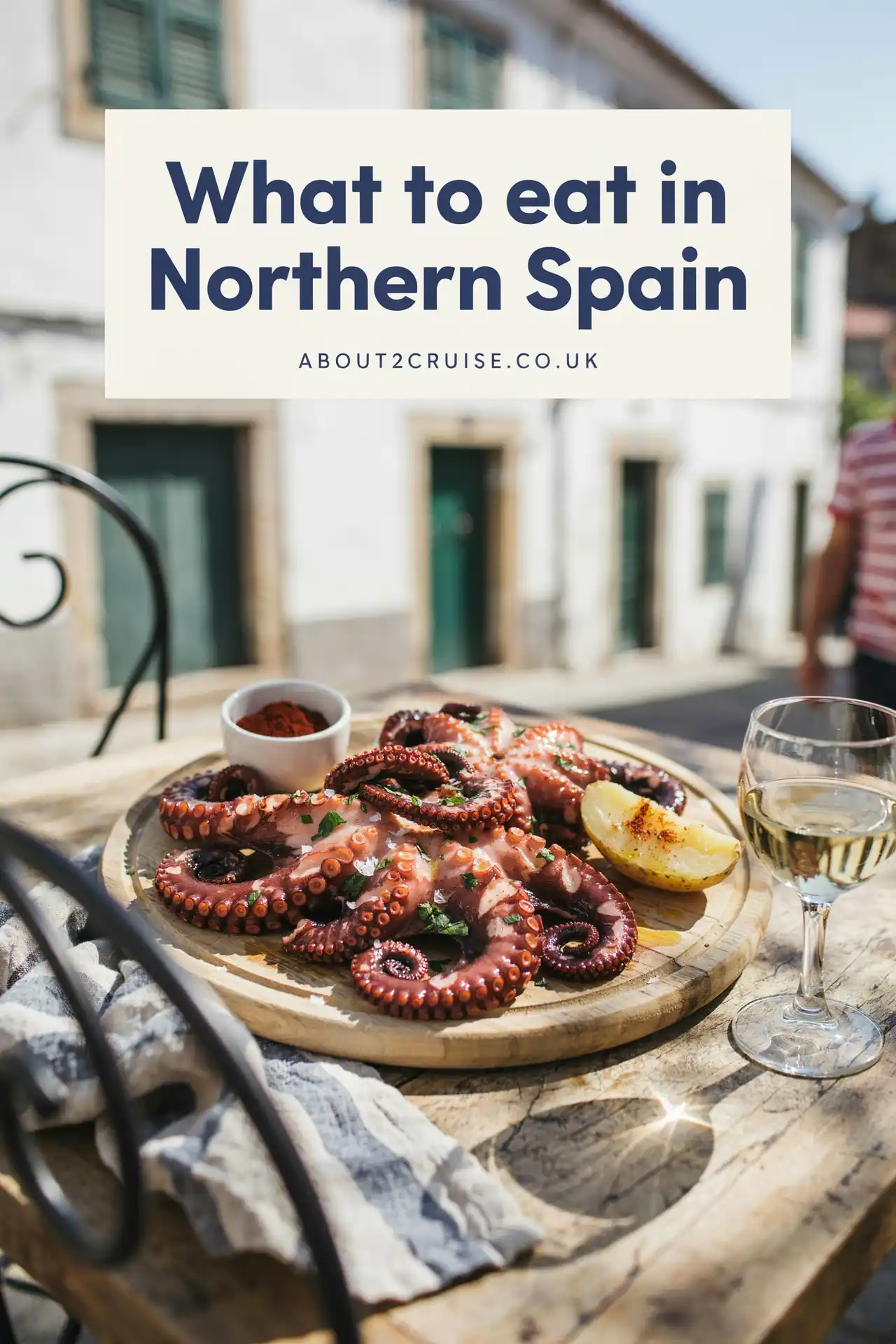
Each region has its own food culture. In the Basque Country, try pintxos, txakoli wine and the bars around Plaza Nueva in Bilbao. Cantabria is known for rabas, fried squid rings, plus Santoña anchovies and sobaos pasiegos. Asturias is cider country: natural cider poured from height, often with fabada asturiana, cachopo and Cabrales cheese. Galicia is seafood country, from pulpo á feira and zamburiñas to oysters eaten at Vigo’s A Pedra quarter, all washed down with Albariño.
Northern Spain Ports with Kids or Limited Mobility
The Guggenheim gives free entry to under-18s, which makes it the cheapest family option in Bilbao. A Coruña’s Aquarium Finisterrae is a good rainy-day or family stop. City beaches are within reach at Santander, Gijón, A Coruña and Getxo, while the Cíes Islands from Vigo offer marked walking routes and the Rodas beach area if you pre-book.
For mobility, Bilbao’s terminal has an airbridge-style mobile gangway for reduced-mobility boarding. Vigo’s quay has had a barrier-free route added, though the old town and Castro climb quickly. A Coruña and Santander are mostly flat at the waterfront; Ferrol is a flat 1 km to the main district. Gijón’s terminal is inside a working commercial port, so ask about wheelchair-accessible shuttles in advance.
What to Pack for a Northern Spain Cruise
Pack layers, a light waterproof, comfortable shoes for cobbles and hills, sun cream for the brighter days, and swimwear for beaches if you plan to swim. Bring euros, a card with no foreign transaction fees, and remedies for the Bay of Biscay if you are prone to seasickness. If you plan to enter Santiago Cathedral or other religious buildings, dress respectfully with shoulders and knees covered.
Port-Day Timing and All-Aboard Tips
All-aboard time is usually around 30 minutes before departure, but always check the daily programme because ship time and local time may differ. Spain is one hour ahead of the UK, so set plans by ship time, not a phone that switches automatically. Allow a buffer for return trains, coaches and shuttles. Port security can be quick, but do not arrive at the gangway exactly at all-aboard.
Sundays, Siesta Hours and Monday Closures
Monday closures catch out many cruise passengers. The Guggenheim Bilbao closes on Mondays outside summer and holiday periods, and the Centro Botín in Santander also closes on Mondays. Many smaller shops and some markets close on Sunday, while restaurants and bars usually stay open. Spain still has a siesta rhythm in smaller towns: some independent shops close mid-afternoon, though major museums and sights generally continue.
Northern Spain Cruise Port FAQs
Is northern Spain worth visiting on a cruise stop?
Yes, especially if you like food-focused cities, green landscapes, Atlantic beaches and historic centres. It is cooler and wetter than the Med, which is either a relief or a disappointment depending on what you want.
Can I visit Santiago de Compostela independently from A Coruña or Ferrol?
From A Coruña, yes: trains take about 30 minutes, but you need to get from the port to the station and leave a good return buffer. From Ferrol, independent buses take around 1 hour 40 minutes each way and are less frequent, so many passengers choose a ship excursion. From Vigo, road transfers are about 90 minutes.
Do I need to pre-book anything for northern Spain ports?
Yes for the Guggenheim Bilbao, the Cíes Islands permit and ferry, the Tower of Hercules slot and any Picos de Europa tour. Santiago Cathedral itself is free, but its museum and special areas can be booked.
Are the northern Spain cruise ports walkable?
Santander, A Coruña and Vigo are the most walkable. Ferrol is a flat 1 km walk. Gijón and Bilbao require a shuttle, taxi or public transport because ships dock outside the city.
What should I do if my ship calls on a Monday?
Check whether the Guggenheim or Centro Botín is closed. Focus on old towns, food markets, beaches, the Vizcaya Bridge at Getxo or the Camino and cathedral areas, which mostly remain open.
Where to Go Next
If your cruise also includes Mediterranean Spain, see the Spain cruise ports guide. If your itinerary calls in western France, use the Western France Atlantic coast cruise ship port guide. If you continue round the coast to Portugal, see the Portugal cruise ship port guide.