
Right. Let me tell you what solo cruisers who pack for dozens of trips have learnt the hard way: most packing lists are written by people who either travel with a partner who carries half their stuff, or who’ve never actually cruised solo. You need different things when you’re managing everything yourself.
This guide covers what to pack for a solo cruise including essential documents, clothing for different cruise situations, shore excursion gear, electronics, toiletries, safety items, and the specific extras that make solo cruising significantly easier.
Documents and Money (The Stuff You Cannot Replace)
Lose your passport as a solo traveller and you’re dealing with embassies alone. Keep your critical documents organised and backed up properly.
- Passport with at least six months validity beyond your return date, plus two photocopies stored separately from the original
- Cruise boarding documents and booking confirmation (print these even if you have digital copies, because ship Wi-Fi can be hopeless)
- Travel insurance policy with the 24-hour emergency number saved in your phone under a name you’ll remember at 3am
- Vaccination records if your itinerary requires them (some Caribbean and South American ports need yellow fever documentation)
- Credit cards from two different providers (if one gets blocked for fraud protection, you’ve got backup without needing someone at home to sort it)
- Small amount of US dollars in small denominations for port tipping and emergencies, plus local currency for your first port if you’re boarding outside the UK
- Digital copies of everything stored in your email and on your phone, accessible offline
- Prescriptions list with generic drug names, not just brand names (crucial if you need medical help abroad)
Keep your cabin safe number written somewhere other than the safe itself. Sounds obvious until you’ve locked yourself out at midnight after formal night drinks.
Clothing for Different Cruise Scenarios
Pack for every situation you’ll face, not just the Instagram moments. Solo cruisers need clothes that work for different venues and climates without requiring a second person to zip up the back.
Daytime Basics
- Five to seven casual tops (t-shirts, blouses, polo shirts) that you genuinely like wearing, because you’ll be photographed by strangers more than you expect
- Three to four pairs of shorts, skirts, or lightweight trousers depending on your destination climate
- Two casual dresses or a romper for easy throw-on-and-go meals
- Light cardigan or wrap for over-enthusiastic air conditioning (ship dining rooms run cold)
- Lightweight jacket for evening deck walks or cooler weather sailings
Evening and Formal Wear
Check your specific cruise line’s formal night policy before you pack. Some lines have dropped formal nights entirely, whilst others still expect proper dress codes. As a solo traveller, choose outfits you can get into and out of independently.
- Two to three nicer tops for main dining room dinners
- One dressier outfit for formal night if your cruise includes them (a wrap dress or jumpsuit works brilliantly when you’re dressing alone)
- Smart-casual trousers or a skirt (note: dark jeans rarely qualify as formal wear, whatever your cruise line’s marketing suggests)
- Avoid anything that requires help with back zippers or complicated fastenings
Swimwear and Pool Deck
- Two to three swimsuits so you’ve always got a dry option (one-piece suits dry faster and don’t require readjustment after slides)
- Cover-up that’s genuinely opaque enough for walking through public areas
- Quick-dry travel towel if you’re planning beach days (cruise ship towels aren’t allowed off the ship, and port towel rental adds up)
Footwear Strategy
You’re walking more than you think. Shore days typically involve several miles on uneven surfaces, and you’ll be carrying everything yourself.
- Comfortable walking shoes you’ve already broken in (ship corridors are longer than you expect, and port cobblestones are murder on new shoes)
- Sandals or flip-flops for pool deck and cabin use
- Dressy flats or loafers for evening dining (heels on a moving ship when you’re dining solo and potentially having wine is optimistic)
- Water shoes if your itinerary includes rocky beaches or water sports
Accessories That Actually Matter
- Sunglasses with a proper strap or retainer (lost overboard sunglasses are a solo cruiser classic)
- Wide-brimmed hat for sun protection (baseball caps don’t protect your ears or neck)
- Lightweight scarf for sun protection and conservative dress codes at religious sites
- Small crossbody bag for evening events when you need your cruise card and phone but don’t want a full handbag
Shore Excursion Kit
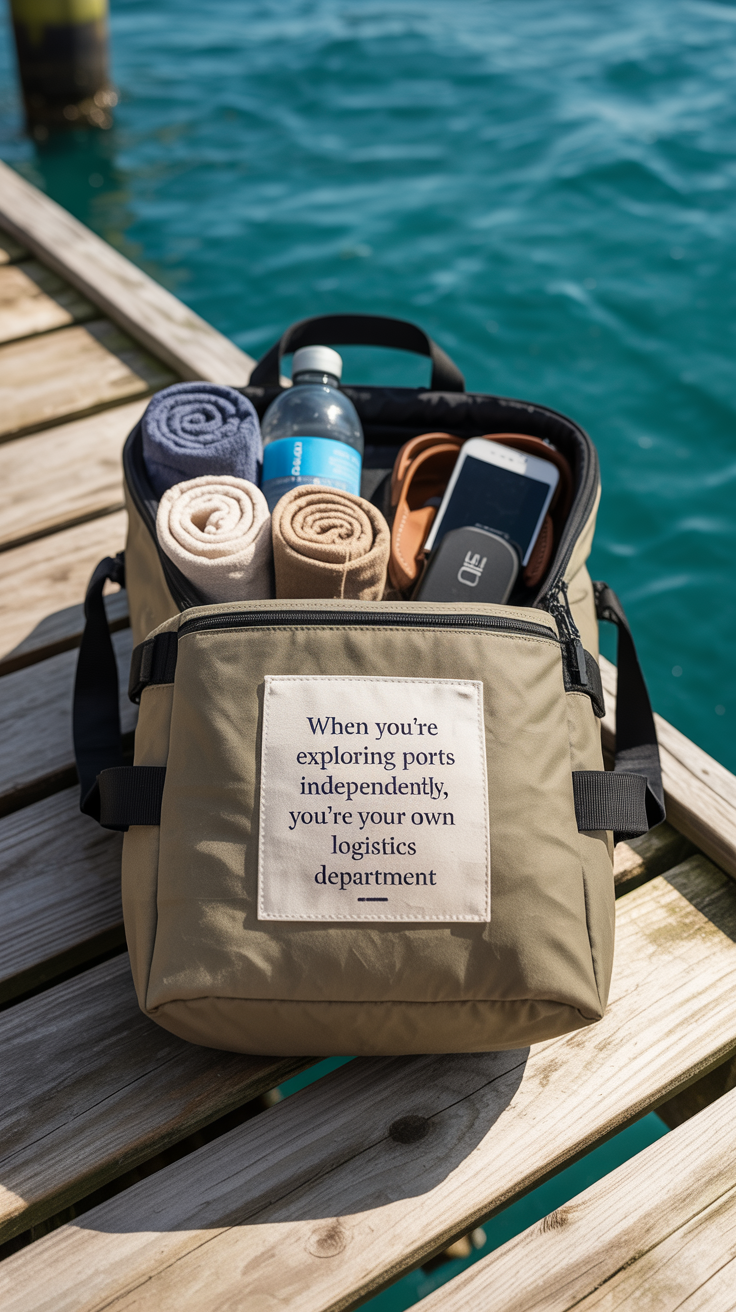
When you’re exploring ports independently, you’re your own logistics department. Pack items that give you flexibility without weighing you down.
- Compact day backpack or anti-theft crossbody bag (zip closures, not magnetic snaps)
- Reusable water bottle (you’ll pay tourist prices for bottled water at every port)
- Reef-safe sunscreen if you’re snorkelling (regular sunscreen is banned at many marine parks and they’ll confiscate it at the entrance)
- Insect repellent for tropical and jungle excursions (the ship’s gift shop will charge you three times what it’s worth)
- Lightweight rain jacket or packable poncho (Mediterranean summer showers and Caribbean rain forests don’t care about your plans)
- Money belt or hidden pouch for passport and backup cash when you’re in crowded port areas
- Small dry bag or waterproof phone pouch for beach and boat days
- Power bank fully charged before each port day (you’re the only photographer and navigator)
If you’re planning water activities, most ports offer mask and snorkel rental for less than the baggage weight cost of bringing your own. Bring your own only if you’re particular about fit or doing multiple snorkel days.
Check our guide on staying safe during port visits for specific security strategies when you’re exploring alone.
Electronics and Connectivity
Your phone is your camera, guidebook, translator, and connection to people at home. Treat it accordingly.
- Phone and charging cable (bring a spare cable because they fail at inconvenient moments)
- Portable power bank with enough capacity for a full day ashore, minimum 10,000mAh
- International power adapter for cabin charging (cruise ships often use European or US plugs)
- Three-way USB charging block so you can charge multiple devices from one outlet (cabins typically have limited sockets)
- Earbuds or headphones for entertainment without disturbing neighbours in your corridor
- Camera if you’re serious about photography, but honestly, modern phones do the job for most people
- E-reader loaded with books (you’ll have more solo downtime than you expect, and it’s significantly lighter than paperbacks)
Ship Wi-Fi packages are expensive and often slower than hotel Wi-Fi was in 2005. If you need reliable connectivity for work or frequent contact with home, research eSIM options or international roaming plans that work in your ports. Download offline maps of each port before you lose signal.
Toiletries and Medications
Cruise lines provide basic soap and shampoo, but not everything you’ll actually need. Shore day port toilets range from adequate to medieval.
Essential Toiletries
- Toothbrush, toothpaste, and dental floss (obvious but you’d be surprised)
- Shampoo and conditioner if you’re particular about brands (ship-provided versions can be harsh)
- Body wash or soap, though most cabins provide this
- Deodorant (bring more than you think you need for hot weather cruises)
- Moisturiser and after-sun lotion (you’ll get more sun exposure than you plan for)
- High-SPF sunscreen and lip balm with sun protection
- Hairbrush, hair ties, and minimal styling products
- Razor and shaving supplies
- Feminine hygiene products (ship shops stock them but at inflated prices)
Medical Kit
Ship medical centres are available but expensive, and finding a pharmacy in port when you’re ill and alone is miserable.
- All prescription medications in original packaging with enough for your trip plus three extra days in case of delays
- Copy of prescriptions and doctor’s letter for controlled medications
- Seasickness tablets or patches if you’re prone to motion sickness (buy these before boarding, not when you’re already feeling rough)
- Ibuprofen or paracetamol for headaches
- Antihistamines for allergies
- Antacids for rich buffet consequences
- Plasters and antiseptic wipes for blisters from all that port walking
- Any regular vitamins or supplements you take
- Anti-diarrhoeal medication (trust me on this one)
Keep all medications in your carry-on, never checked luggage. If your bag goes astray, you need immediate access to critical prescriptions.
Solo-Specific Safety Items
You’re responsible for your own security, and that requires a few specific items other packing lists skip.
- Door alarm or rubber doorstop for additional cabin security if you’re uncomfortable (ships are generally very safe, but peace of mind matters)
- Small torch or headlamp for finding things in your cabin without waking corridor neighbours with your main light
- Whistle or personal alarm for port excursions (hopefully never needed, but weighs nothing)
- Hand sanitiser (ship buffets and port markets see a lot of hands)
- Face masks for crowded port transport or if required by destinations
Share your daily itinerary with someone at home, especially on port days. A simple text each morning with your plans takes thirty seconds and means someone knows where you should be.
Solo female cruisers should read our detailed guide on specific safety strategies for women cruising alone.
Cabin Organisation Gear
Cruise cabins are small, and you’re not sharing storage space with anyone. Smart packing organisation makes living out of your room considerably easier.
- Packing cubes to separate clothing types (one for day clothes, one for evening wear, one for swimwear and gym kit)
- Hanging toiletry bag to save counter space in tiny bathrooms
- Magnetic hooks for metal cabin walls (brilliant for hanging bags, lanyards, or damp swimwear)
- Over-door hooks if your cabin door isn’t magnetic
- Small laundry bag or packing cube for worn clothing
- Travel-size laundry detergent sheets or pods if you’re planning to wash anything in your sink
- Portable travel clothesline and clips for drying hand-washed items
First-time cruisers often underestimate cabin storage. Check our overview of how cruise cabin types differ before you pack, because some categories have significantly more wardrobe and drawer space than others.
If you’ve booked a studio cabin designed for solo travellers, you’ll have slightly different storage options. Our guide to studio cabins on different cruise lines explains what to expect from the space.
What Not to Pack
Just as important as what to bring is what to leave at home. These items either don’t work onboard, aren’t allowed, or simply waste luggage space.
- Iron or travel steamer (prohibited on all cruise ships as fire hazards, use the self-service laundry room steamer or cabin steward pressing service)
- Surge protectors or extension leads with surge protection (banned on most lines)
- Candles, incense, or anything with an open flame
- Weapons of any kind, including pocket knives
- Full-size bottles of shampoo and toiletries unless you’re on a very long cruise
- More than two formal outfits (most cruises have maximum two formal nights, many have none)
- Excessive jewellery or valuable items (cabin safes are small, and you won’t wear most of it)
- Hair dryers (cabins provide them, though they’re not powerful)
- Beach towels from home (ships provide pool towels, and you can bring a compact travel towel for shore days)
- Your entire wardrobe (you’re going to wear the same three favourite outfits anyway)
Useful Extras Most Lists Miss
These items aren’t essential, but they solve specific solo cruiser problems that coupled travellers never encounter.
- Lanyard or wristband holder for your cruise card (both hands free for buffet plates and port photography)
- Small notebook and pen for jotting down cabin numbers of people you meet, restaurant recommendations, or daily schedule notes
- Deck of cards or travel games for sea days if you enjoy cruise line activities and competitions
- Reusable shopping bag that packs flat for port shopping (saves paying for bags and easier to carry than juggling multiple purchases)
- Earplugs and eye mask for corridor noise and early sunrise through cabin curtains
- Small sewing kit for emergency repairs (buttons pop off, hems drop, and there’s no partner to run back to the cabin)
- Compact umbrella for port rain showers
- Spare plastic bags for wet swimwear or shoes
- Photos of home on your phone to share when you meet other cruisers (people love asking about your life and seeing pictures)
Packing Strategy for Solo Cruisers
How you pack matters as much as what you pack when you’re managing all your luggage alone through airports and embarkation.
Choose one checked bag if you’re flying to your departure port, plus a carry-on and personal item. You’re moving all of this yourself through airport security, onto shuttle buses, and through the terminal. Anything with wheels helps.
Pack your carry-on with anything you’d be genuinely upset to lose if your checked bag went astray: medications, travel documents, one change of clothes, phone charger, and swimsuit for the sail-away deck party. Airlines lose bags regularly enough that this isn’t paranoia.
Use packing cubes that compress your clothing to organise by category rather than outfit. When you’re getting ready alone, you want to grab your “port day shorts cube” or “evening tops cube” without unpacking your entire suitcase. It also makes cabin organisation significantly easier in limited storage space.
Wear your bulkiest shoes and jacket during travel to save luggage space. Your feet might feel silly in walking boots at the airport, but you’ll appreciate the extra room in your bag.
| Cruise Length | Checked Bag Strategy | Key Adjustments |
|---|---|---|
| 3-5 nights | Carry-on only if possible | Three tops, two bottoms, one evening outfit, minimal shoes |
| 7 nights | One checked bag | Standard list with five to seven day outfits, two evening looks |
| 10-14 nights | One checked bag | Same clothing quantity but plan to use ship laundry services midway through |
| 14+ nights | One checked bag | Pack for seven days and definitely use laundry services, or you’ll live in a suitcase explosion |
Longer cruises don’t require proportionally more clothing. Ships have self-service launderettes or valet laundry services. Pack for a week and plan to wash halfway through rather than bringing twice the clothes.
Climate-Specific Additions
Adjust your packing based on your destination climate, not what the cruise line’s promotional photos show everyone wearing.
Caribbean and Warm Weather Cruises
- Lightweight, breathable fabrics only (you’ll be hot and sticky enough without synthetic materials)
- Extra sunscreen and after-sun lotion (you’re getting more UV exposure than at home)
- Rash vest for snorkelling if you burn easily
- Insect repellent for evening port walks and jungle excursions
- Light layers for aggressive air conditioning indoors
Mediterranean Cruises
- Modest clothing for church and religious site visits (covered shoulders and knees, lightweight scarf for head covering)
- Comfortable walking shoes broken in properly (ancient cobblestones on hills are brutal)
- Light jacket for cooler evenings, especially shoulder season cruises
- Small day bag that meets European security requirements for museums
Alaska and Cold Weather Cruises
- Genuine warm layers, not just a hoodie (ship decks are freezing during glacier viewing)
- Waterproof jacket with hood for rain and sea spray
- Gloves, warm hat, and scarf for outdoor viewing decks
- Thermal base layers if you’re doing active excursions
- Waterproof hiking boots or shoes with grip for shore excursions
- Binoculars for wildlife watching
Northern Europe Cruises
- Rain gear for every port day (Baltic and Norwegian weather is unpredictable)
- Layering system for variable temperatures
- Comfortable waterproof shoes for wet cobblestones
- Compact umbrella that won’t blow inside-out in coastal wind
Pre-Cruise Packing Checklist
One week before you leave, verify these specific items are organised and ready. Leaving this until the night before departure is asking for forgotten essentials.
If you’re sailing on a cruise with other solo travellers, you might be able to coordinate with cabin neighbours for shared items like beach games or port day supplies. Worth checking the cruise line’s solo traveller forum if they have one.
New to cruising alone? Our complete guide to taking your first solo cruise covers everything beyond packing that you need to know before you board.
Common Questions
Can I bring a power strip or extension lead on a cruise ship?
Most cruise lines prohibit surge-protected power strips as fire hazards, but allow simple non-surge multi-plug extensions or USB charging hubs. Check your specific cruise line’s banned items list before packing, as policies vary and they will confiscate prohibited items at security screening.
How much luggage can a solo cruiser actually manage?
One checked bag plus carry-on and personal item is the realistic maximum when you’re handling everything yourself through airports and embarkation. Choose luggage with wheels and comfortable handles. Remember you’re also carrying this when you disembark for port days if you’re taking a late flight home.
Should I pack formal wear if I’m cruising solo?
Check your cruise line’s dress code policy first. Many contemporary lines have dropped formal nights entirely. If your cruise includes formal nights, you’re welcome to participate but it’s entirely optional. One smart outfit works for main dining room dinners without needing full formal wear. Nobody’s judging solo diners for skipping formal night.
Do cruise ships provide beach towels for port days?
Ships provide towels for onboard pool use only. You’re not allowed to take ship towels off the vessel, and they’ll charge your account if towels don’t come back. Bring a compact quick-dry beach towel if you’re planning beach days, or rent towels at beach clubs in port.
How do I pack medications safely as a solo traveller?
Keep all prescription medications in original pharmacy containers with your name visible, carry a copy of prescriptions or doctor’s letter, and pack everything in your carry-on luggage never checked bags. Bring enough medication for your trip plus three extra days in case of travel delays when you’re solely responsible for your health management.
What’s the best bag for cruise port days when you’re alone?
A crossbody anti-theft bag or compact backpack with secure anti-theft features works best for solo port days. You need both hands free for photographs and navigation whilst keeping valuables secure. Avoid bags that require you to set them down to access contents, which creates theft opportunities in crowded port areas.
Can I do laundry on cruise ships if I’m travelling solo?
Most ships offer self-service launderettes with washing machines and dryers, or valet laundry service charged per item. Self-service is considerably cheaper and means you can pack less clothing for longer cruises. Bring travel-size detergent pods, as onboard vending machines often run empty or charge excessive prices.
Do I need travel insurance for a cruise if I’m travelling alone?
Yes, absolutely. Solo cruisers need travel insurance even more than couples because you’re handling all costs and medical situations independently. Ensure your policy covers cruise-specific scenarios including medical evacuation from ship, missed port departures, and trip interruption. Save the 24-hour emergency contact number in your phone before you leave.
Should I bring snacks and drinks in my cruise luggage?
Cruise lines restrict what food and drinks you can bring aboard. Most allow one bottle of wine per adult in carry-on luggage, and sealed pre-packaged snacks in limited quantities. Water, soft drinks, and alcohol in checked luggage are typically confiscated. Check your specific cruise line’s policy because rules vary significantly between companies.
Why Trust About2Cruise
- I’m Jo, and I’ve cruised solo on seven different cruise lines testing exactly what you need versus what just takes up luggage space when you’re managing everything alone.
- This guide gets updated whenever cruise line baggage policies change or when new solo-specific cabin features alter what you need to bring.
- We don’t earn commission on recommending you pack more stuff, so this list includes only what genuinely makes solo cruising easier.
For more detailed planning help, visit our complete guide to About2Cruise to see how we research and update our cruise advice.
Last Updated: 18 February 2026