
Vietnam’s cruise ports are Ha Long Bay’s Hon Gai terminal, Chan May and Da Nang’s Tien Sa in the centre, plus Nha Trang’s Cau Da pier, Cam Ranh, Phu My for Ho Chi Minh City and Phu Quoc in the south. Most sit well outside the city they serve, so the berth you get decides how your day goes.
Vietnam cruise ports map
Vietnam’s 6 cruise ports run down the coast from Ha Long Bay in the far north, through Chan May and Da Nang in the centre and Nha Trang in the south-east, to Phu My (for Ho Chi Minh City) and Phu Quoc in the far south. Tap a pin to open that port’s guide.
Ha Long Bay (Hon Gai)
Your ship ties up at Ha Long International Cruise Port at Hon Gai, on the Bai Chay side of Ha Long City. This is the one Vietnamese stop where you can walk into town rather than negotiate a transfer: Ha Long market and the Quang Ninh museum are about five minutes away, and Sun World Ha Long is next door.
Boat trips out among the bay’s karst leave from Tuan Chau and from this terminal too, so even a short call gets you onto the water without a long drive first.
Da Nang (Tien Sa) and Chan May (for Hue and Hoi An)
In Da Nang, ships berth at Tien Sa Port on the Son Tra peninsula. It’s a working cargo port with a cruise berth, not a terminal promenade, about 10 km from the city centre.
On big calls the ship runs its own shuttle from the ship to the gate, and private cars wait at a designated pickup area. The drive times shape your day: the Lady Buddha at Chua Linh Ung Bai But is 12 to 15 minutes, the Dragon Bridge and the centre about 20, the Marble Mountains about 30, Hoi An 55 to 65 and My Son around an hour and a half.
Chan May is the other central berth, and it’s a different kind of day. It’s 50 km from Da Nang, 60 to 65 km from Hue at 1 hour 20 to 1 hour 30 each way, and about 76 km from Hoi An.
There’s no shuttle of its own, no taxi rank, no train station and nothing within walking distance, with the nearest town 18 km off. Allow at least 90 minutes before all-aboard for the return drive.
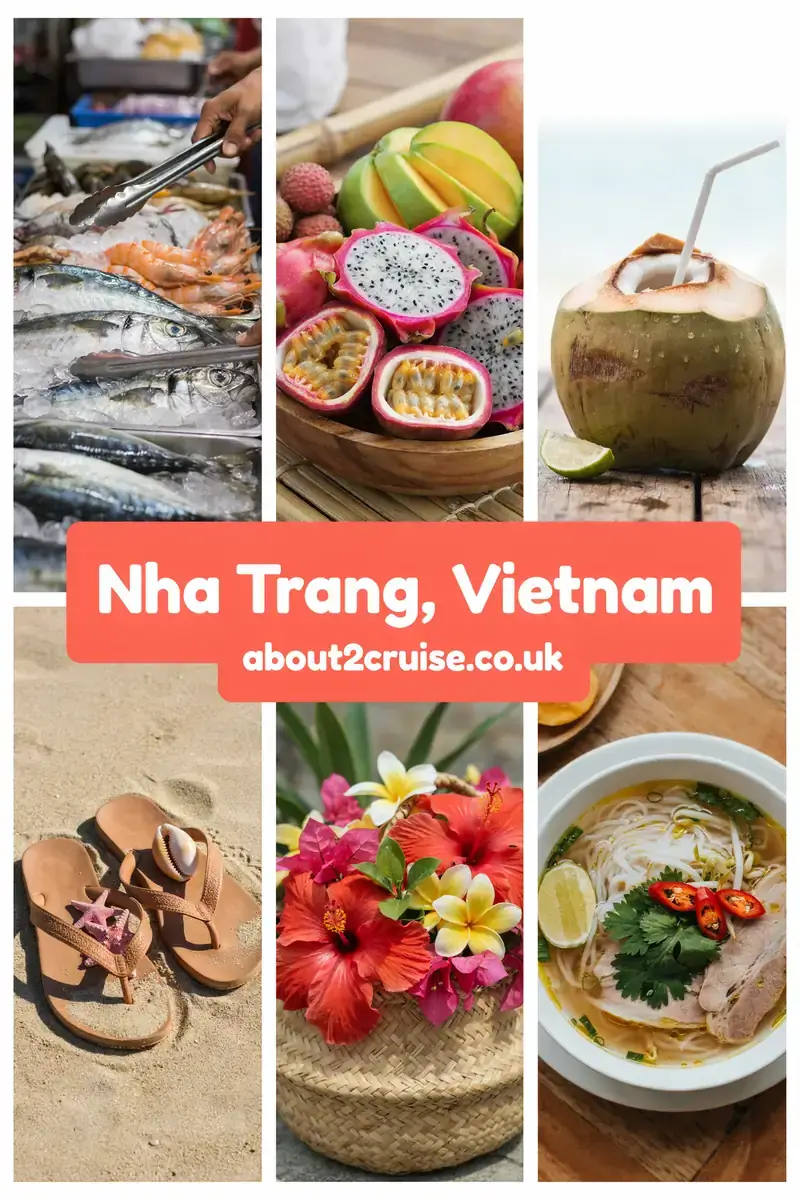
Nha Trang (Cau Da) and Cam Ranh
Nha Trang’s cruise berth is Cau Da Port on Tran Phu, a deep-water pier built for international cruise ships. Bigger ships anchor offshore and tender passengers in, and some landings run to Ana Marina instead.
Treat the distance into the city as a range, because it runs from 5 km to 11 km, and the beach is about 3.5 miles from the pier. Taxis and trishaws wait outside the port gate, Vietnam does not accept international driving licences, and there’s no self-drive option to fall back on.
The pier is right beside the National Oceanographic Museum and the Vinpearl cable car terminal.
Cam Ranh, 55 to 60 km and one to one and a half hours south, is the other berth cruise lines use for Nha Trang. For anyone with mobility limits it has the edge: ships come alongside with no tendering at all.
A new KN Cam Ranh international passenger port has been approved five minutes from the airport, so Cam Ranh on an itinerary can mean either facility. From either one, leave central Nha Trang with a two-hour cushion before all-aboard.
Phu My (for Ho Chi Minh City)
Ocean-going ships calling at Ho Chi Minh City dock at Phu My, also called Tan Cang Cai Mep. It’s a container terminal with no tourist attractions anywhere near it, and the transfer dominates the day: the city is 70 to 130 km away depending on the route, so plan on 1.5 to 2 hours each way, with the afternoon run back along the city highway the congested one.
A terminal shuttle takes you from the ship to the main security gate, where pre-booked drivers wait. Walking to the gate takes 15 to 20 minutes, so it’s not a realistic option.
Cruise lines sell a Saigon on your own transfer that’s essentially the bus in and back, usually dropping near the Rex Hotel.
Not every ship goes to Phu My. Smaller ones berth in the city at Nha Rong-Khanh Hoi Port in District 4, where the gate is an easy walk.
Hiep Phuoc, 45 minutes from District 1, has a free cruise line shuttle to Ben Thanh Market. Which pier your ship gets is often not confirmed until a day or two before arrival, so keep an independent tour’s pickup point flexible until the day before.
Phu Quoc
Phu Quoc is Vietnam’s island call, and it comes with the one immigration rule in the country that works in your favour. Arrive directly from another country and sail on to a different international destination rather than to another Vietnamese port, and you need no visa at all.
That matters most when Phu Quoc is your first Vietnamese stop, because the visa you would otherwise pick up at that first port isn’t required.
Where Vietnam cruises leave from
Vietnam has no port where British cruisers start or finish a cruise. Every Vietnamese call is a stop inside a longer Asia itinerary, not a place you join or leave the ship. The exception is Phu My, which has been used for round trips by Vietnamese passengers, with check-in at the Tan Son Nhat Convention Center in Ho Chi Minh City and a free shuttle down to the port.
If you’re booking from the UK, Vietnam supplies the ports while the sailing starts elsewhere in Asia. The Asia cruise ship ports guide covers the cities where those sailings start and finish.
If the sailing also calls in Thailand, the Thailand cruise ports guide covers those stops. Weighing up itineraries usually comes down to the ports, and the cruise port guides by country show what each stop gives you.
Do UK passengers need a visa for a Vietnam cruise?
No, you don’t need a visa for a Vietnam cruise on a British passport. Vietnam exempts UK citizens from visas, along with the citizens of 23 other countries, so you go ashore on your passport alone. British National Overseas passport holders aren’t on that list, and anyone whose passport isn’t among the 24 does need a visa.
Where you do need one, a Vietnam Transit Visa on Arrival is issued at the ship’s first Vietnamese port. It’s single entry, valid up to 15 days, with no advance application and no photographs, and it’s compulsory even for passengers who never leave the ship.
Carry two blank passport pages, and check every spelling on any visa paperwork, because Vietnamese immigration refuses eVisas where a name or passport number doesn’t match the passport exactly.
Vietnam cruise port FAQs
Do Vietnam’s cruise ports run free shuttles into the city?
Vietnam’s port shuttles stop at the gate rather than in town. Only at Ha Long can you walk to the market and museum from the ship, and everywhere else the run into Hue, Da Nang or Ho Chi Minh City is a booked transfer or a ship excursion.
What is there to do at Phu My port itself?
There’s nothing to do at Phu My itself. It’s a container terminal with no attractions nearby, so everything on that call happens in Ho Chi Minh City, and the port is only a place to meet a driver.
Can you see Hue and Hoi An on the same day from Chan May?
No, you can’t see Hue and Hoi An on the same day from Chan May. They sit in opposite directions from Chan May and are 130 km apart, so pick one: Hue for the citadel and royal tombs, or Hoi An for the old town.
Do Ba Na Hills and Hoi An fit in one call at Da Nang?
No, Ba Na Hills and Hoi An don’t fit in one call at Da Nang. A Tien Sa call has room for Ba Na or Hoi An but not both, and My Son plus Hoi An only works if the ship is in port for more than eleven hours.
How long before sailing is all-aboard in Vietnam?
All-aboard in Vietnam is usually 30 minutes before departure, and it’s the only deadline that matters on the day. Work backwards from it rather than from the published departure time.
Last Updated: 14 November 2026