
Alaska brown bear viewing from cruise ships offers passengers opportunities to observe these magnificent animals in their natural habitat. Most cruises include shore excursions to prime viewing locations like Pack Creek, Anan Creek, or coastal areas where bears fish for salmon. Experienced guides lead small groups to safe observation platforms, providing educational commentary while maintaining respectful distances from wildlife populations.
Quick Facts: Alaska Brown Bear Viewing
| Detail | Information |
|---|---|
| Best Viewing Season | Late June through September (peak: July-August during salmon runs) |
| Typical Excursion Length | 4-8 hours including transportation |
| Average Cost | $400-$800 per person |
| Group Size | Usually 8-12 people maximum |
| Minimum Safe Distance | 50 yards (some locations require 100 yards) |
| Success Rate | 95% during peak season |
Want to know more about Alaska wildlife viewing opportunities and what to expect during your cruise adventure?
Prime Viewing Locations Accessible From Cruise Ports
Not all bear viewing excursions are created equal. The location you choose dramatically affects your experience, crowd levels, and the number of bears you’ll see.
Pack Creek Bear Viewing Sanctuary
Located on Admiralty Island near Juneau, Pack Creek requires permits that limit daily visitors to just 24 people. This means you get intimate viewing without crowds pushing for position. The viewing platform sits overlooking a salmon stream where bears congregate during feeding times. Transportation involves a floatplane ride that’s an adventure in itself.
Anan Creek Wildlife Observatory
Accessible from Wrangell, the Anan Bear Observatory near Wrangell features both brown and black bears fishing side by side. The observatory deck gets you remarkably close to the action – you can hear the bears grunting and the splash of salmon jumping. A covered observation area means weather won’t ruin your day.
Kodiak Island
If your cruise stops at Kodiak, you’re visiting bear central. Kodiak brown bears are the largest brown bears in the world, with males weighing up to 1,500 pounds. Flight tours take you to remote coastal areas where bears dig for clams during low tide – a behavior you won’t see at salmon streams.
Icy Strait Point
This private cruise destination offers convenient access to wildlife viewing opportunities at Icy Strait Point including brown bears. The excursions here tend to book up fast because the port is less crowded than Juneau or Ketchikan.
What Makes Alaska Brown Bears Different
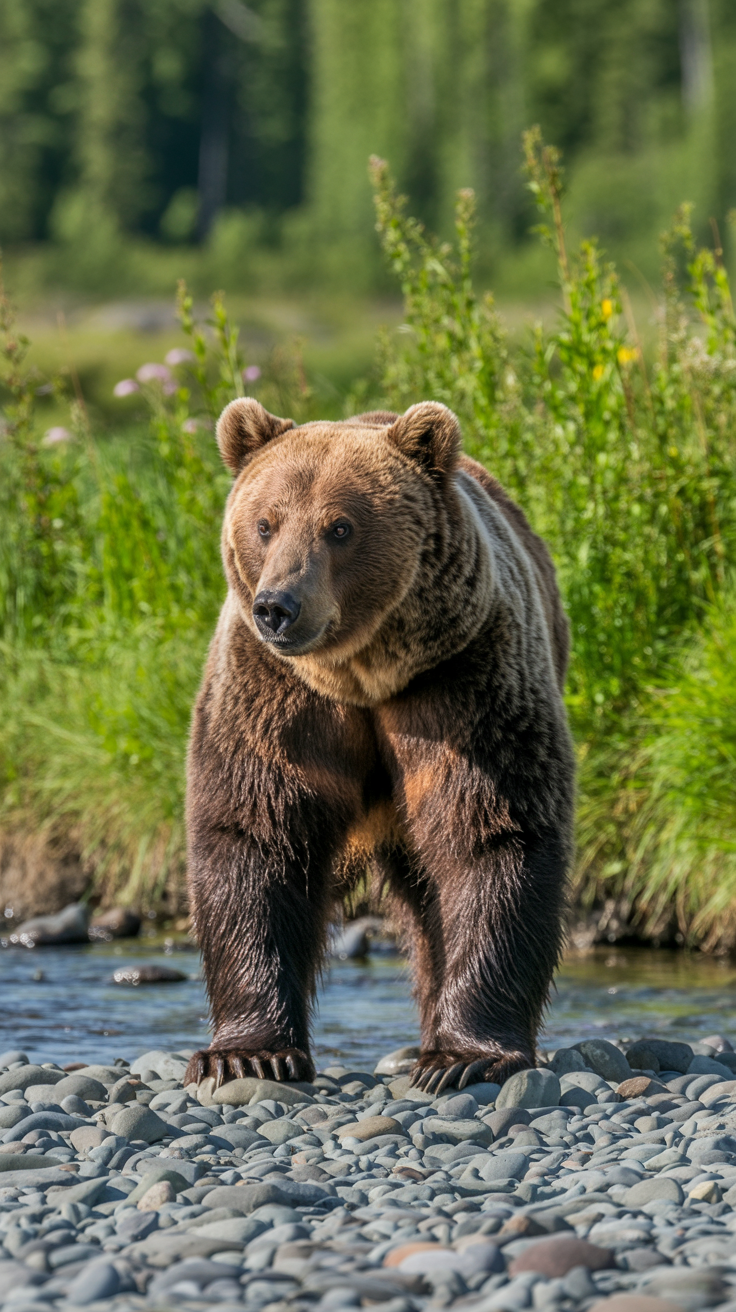
Here’s something most people don’t know: Alaska brown bears and grizzly bears are actually the same species (Ursus arctos). The difference is purely geographical and dietary. Coastal brown bears have access to salmon and grow significantly larger than their inland grizzly cousins. A mature male brown bear can weigh 900-1,500 pounds, while grizzlies typically max out around 700 pounds.
Brown bears have a remarkable hump of muscle on their shoulders – that’s their digging apparatus. They use those powerful shoulder muscles to flip over 100-pound rocks like you’d flip pancakes, searching for food underneath. When you see that distinctive hump, you’re looking at a brown or grizzly bear, not a black bear which has different characteristics.
Planning Your Bear Viewing Excursion
Booking Strategy
Don’t wait until you’re on the ship. Popular bear viewing excursions sell out months in advance, especially for July and early August departures. Book directly through specialized tour operators rather than the cruise line when possible – you’ll often save 20-30% and get smaller group sizes.
That said, cruise line excursions guarantee the ship won’t leave without you. If you book independently and your floatplane gets weathered in, you might watch your ship sail away. It’s a real risk that requires travel insurance with cruise interruption coverage.
What to Wear and Bring
- Layered clothing (mornings start around 45-50°F even in summer)
- Waterproof jacket and pants (viewing platforms can be wet and misty)
- Rubber boots or waterproof hiking boots
- Binoculars (8×42 or 10×42 magnification works well)
- Camera with telephoto lens (at least 200mm, preferably 300mm or more)
- Extra memory cards and batteries (cold drains batteries fast)
- Small backpack (some locations require short hikes)
- Bug spray (mosquitoes can be fierce in July)
- Snacks and water (excursions can run longer than scheduled)
Understanding the Schedule
Bears follow the salmon, and salmon runs peak at different times depending on location. Pink salmon run in late July and August, while silver salmon show up in August and September. Your understanding of Alaska salmon runs directly impacts your bear viewing success.
Early morning excursions (departing the ship around 6:00-7:00 AM) offer the best lighting for wildlife photography opportunities and more active bears. Yes, it’s painful to set that alarm on vacation, but the payoff is enormous.
Beyond Bears: What Else You’ll See
Bear viewing excursions deliver bonus wildlife you didn’t necessarily sign up for. During your adventure, you’ll likely encounter:
- Bald eagles perched in trees waiting to steal fish scraps from bears
- Tufted puffins and horned puffins bobbing in coastal waters
- Harbor seals lounging on rocks or floating ice
- Diverse Alaska marine life including sea otters and harbor porpoises
- Occasional whale watching opportunities during boat transfers
The floatplane or boat rides to viewing locations often produce sightings of humpback whales feeding in Alaska waters, orcas hunting in pods, or gray whales migrating along the coast. Keep your camera ready during transfers – sometimes the journey is as rewarding as the destination.
Safety and Etiquette
Bear viewing is incredibly safe when you follow your guide’s instructions. In decades of managed bear viewing at places like Pack Creek and Anan Creek, there hasn’t been a single bear attack on visitors. Bears at these locations are habituated to human presence – they know we’re not threats or food sources.
That said, respect the rules:
- Stay on designated platforms and trails
- Keep voices low (normal conversation is fine, but no shouting)
- Never eat or store food in viewing areas
- Don’t wear perfume or scented products
- Follow your guide’s positioning instructions exactly
- If a bear approaches the platform, stay calm and quiet
The bears have right-of-way, always. If a bear wants to walk where you’re standing, you move. Simple as that.
Maximizing Your Photography
You don’t need professional equipment to capture amazing bear photos, but a few techniques make a huge difference. For detailed advice, check out this comprehensive wildlife photography guide for Alaska cruisers.
Quick photography tips specific to bear viewing:
- Shoot in burst mode to catch action sequences
- Focus on the bear’s eyes for sharp, compelling images
- Include environmental context (the stream, mountains, forest) in some shots
- Watch for behavior moments: fishing strikes, cub interactions, scratching
- Don’t chimp (constantly review photos) – you’ll miss live action
- Bring a lens cloth; sea spray and mist fog lenses quickly
Phone cameras struggle with distant wildlife. If you’re serious about bear photography, rent a telephoto lens before your cruise or bring binoculars to enhance your naked-eye experience.
Cost Considerations and Value
Bear viewing excursions rank among the most expensive shore activities, typically $400-800 per person. That’s more than most cruise passengers spend on a full day of entertainment at home. Is it worth it?
Consider what you’re getting: charter transportation (often floatplane or boat), limited permit access to protected areas, expert guides, and virtually guaranteed sightings of North America’s largest land predators in the wild. When you break it down, you’re paying for exclusivity and expertise that creates a once-in-a-lifetime experience.
Budget-conscious alternatives exist. Some ports offer land-based general wildlife viewing excursions that cost $150-250 and include potential bear sightings, though success rates are lower. These broader wildlife tours covering multiple species work well for families or travelers wanting variety over specialization.
When Things Don’t Go As Planned
Alaska weather is famously unpredictable. Fog, rain, and wind can ground floatplanes or make boat travel unsafe. Most operators have a 48-hour cancellation window, and cruise-booked excursions get full refunds for cancellations. Independent bookings vary – read the fine print.
Even with perfect weather, bear sightings aren’t 100% guaranteed (though they’re close during peak season). Bears are wild animals with their own agendas. Occasionally they’re deeper in the forest, already fed and napping, or temporarily spooked by something. Reputable operators usually offer partial refunds or rebooking options if no bears appear.
The philosophical approach helps: you’re visiting the bears’ home, not a zoo. The uncertainty is part of the authenticity.
Bonus Tips Nobody Tells You
- Take seasickness medication before boat transfers even if you’re not prone to motion sickness – Alaska waters can be choppy and you don’t want to miss the experience feeling queasy
- Bring hand warmers in July and August; standing still on observation platforms gets cold even in “summer”
- Download offline maps of your excursion area before leaving the ship – cell service is nonexistent at remote viewing sites
- Pack a small towel to wipe down wet railings and benches on observation platforms
- Wear neutral colors (greens, browns, grays) rather than bright clothing that might alter bear behavior
- Charge all devices fully the night before; you’ll be using your camera way more than expected
- Eat a substantial breakfast before departure; excursions often run past their scheduled return time and ships serve breakfast early
- Book afternoon excursions if you’re not a morning person; you’ll enjoy it more alert and present
- Ask your guide about bear poop identification (seriously) – it tells fascinating stories about diet and behavior
- Consider travel insurance that specifically covers missed cruise connections if booking independent tours
Common Questions and FAQ
Can I go bear viewing if I have mobility limitations?
Most viewing platforms are wheelchair accessible and require minimal walking. However, getting to them may involve boarding small boats or floatplanes, which can be challenging. Contact tour operators directly to discuss specific accommodations. Some locations like Anan Creek require a half-mile walk on uneven terrain, while others like certain Kodiak viewing areas involve only stepping from a floatplane dock to a platform.
What happens if a bear charges our group?
True charges are extraordinarily rare at established viewing sites. What looks like a charge is usually a bear simply moving in your general direction. Guides are trained in bear behavior and carry deterrents (though they almost never need them). If a bear approaches, your guide will calmly instruct the group to move, and the bear will continue on its path. These bears encounter humans daily during salmon season and view us as harmless, uninteresting fixtures in their landscape.
Are brown bear viewing excursions appropriate for children?
Most operators set minimum ages between 5-8 years old. The bigger question is whether your child can stay quiet and relatively still for 2-3 hours. Bored, loud children stress both the bears and other guests. If your kids are nature enthusiasts who can follow instructions, they’ll have an incredible experience. If they need constant entertainment and movement, consider waiting a few years or choosing a shorter, more interactive excursion.
How close do bears actually get to viewing platforms?
Bears occasionally walk within 20-30 feet of platforms, especially at Anan Creek where the salmon fishing is prime. More commonly, you’ll view bears from 50-100 yards away. This might sound distant, but with binoculars or a decent camera zoom, you’ll see incredible detail – the texture of their fur, salmon scales in their teeth, and the expressions on their faces.
Do I need bear spray on a guided excursion?
No. In fact, many viewing locations prohibit bear spray because it’s unnecessary and could harm the experience if accidentally deployed. Your guide carries safety equipment appropriate to the location. At established viewing sites with habituated bears, spray would be overkill and potentially problematic if sprayed in confined observation areas with other people nearby.
What’s the difference between cruise line excursions and independent booking?
Cruise line excursions cost more but guarantee the ship waits if you’re delayed. They also provide seamless coordination and quick refunds if weather cancels your trip. Independent operators often offer smaller groups, longer viewing times, and lower prices, but you assume the risk if flights or boats are delayed. For expensive, weather-dependent excursions like bear viewing, many experienced cruisers actually prefer the cruise line’s guarantee.
Personal Experience
I never thought I’d be so thrilled to wake up at 5:30 in the morning, but when your cruise docks near Katmai National Park during peak salmon season, you don’t hit snooze. Our naturalist guide told us that July and early August are prime time for brown bear viewing because that’s when the salmon are running, and sure enough, we spotted our first bear within twenty minutes of arriving at the viewing platform. The key is bringing a good zoom lens or binoculars – these bears keep their distance, and you definitely want them to. What amazed me most was watching a mama bear teach her cubs how to fish. She’d stand perfectly still in the rushing water, then boom – her paw would come down and she’d have a salmon. The cubs kept belly-flopping into the water and coming up empty, which was both hilarious and incredibly sweet.
Our guide shared some great tips that made all the difference. Get to viewing areas early before other groups arrive, dress in layers because Alaska mornings are chilly even in summer, and keep your voice low so you don’t spook the bears. We also lucked out by visiting Pack Creek on Admiralty Island, which requires permits but means fewer crowds. The lighting is best in the early morning or late afternoon – that golden hour makes for stunning photos and the bears are most active then anyway. If you’re doing an Alaska cruise, I’d say the bear viewing excursions are absolutely worth the splurge. Seeing these massive, powerful animals in their natural habitat, just going about their daily routine, gives you a whole new appreciation for Alaska’s wilderness.