
Pack layers for Alaska cruises as June temperatures range from 50-65°F. Bring waterproof jackets, fleece or sweaters, long pants, and comfortable walking shoes. Include lighter clothes for warmer days and onboard dining. Don’t forget accessories like hats, gloves, and sunglasses. Most cruise lines maintain casual to smart-casual dress codes for evening meals.
Quick Facts: Alaska Cruise Packing for June
| Category | What You Need |
|---|---|
| Temperature Range | 50-65°F (10-18°C) |
| Precipitation | Moderate rain likely |
| Daylight Hours | 18-20 hours (nearly endless daylight) |
| Essential Layers | 3-4 layers including base, mid, and outer |
| Dress Code | Casual to smart-casual (formal nights rare) |
| Must-Have Item | Waterproof jacket with hood |
Want to know more about choosing the perfect outfits for your Alaska adventure?
The Layering Strategy That Actually Works
Here’s what seasoned Alaska cruisers know: you’ll be adding and removing layers constantly throughout the day. The secret isn’t packing more clothes but packing smarter pieces that work together. Start with a moisture-wicking base layer (yes, even in summer), add a fleece or insulated mid-layer, and top with a waterproof shell. This trinity will serve you better than any single heavy coat.
June sits in that sweet spot where Alaska transitions into its warmest season but still keeps you guessing. You might experience a balmy 65°F afternoon in Juneau and then find yourself in 45°F mist while watching the Hubbard Glacier calve. The key is versatility without overpacking.
Essential Pieces for Your June Alaska Cruise
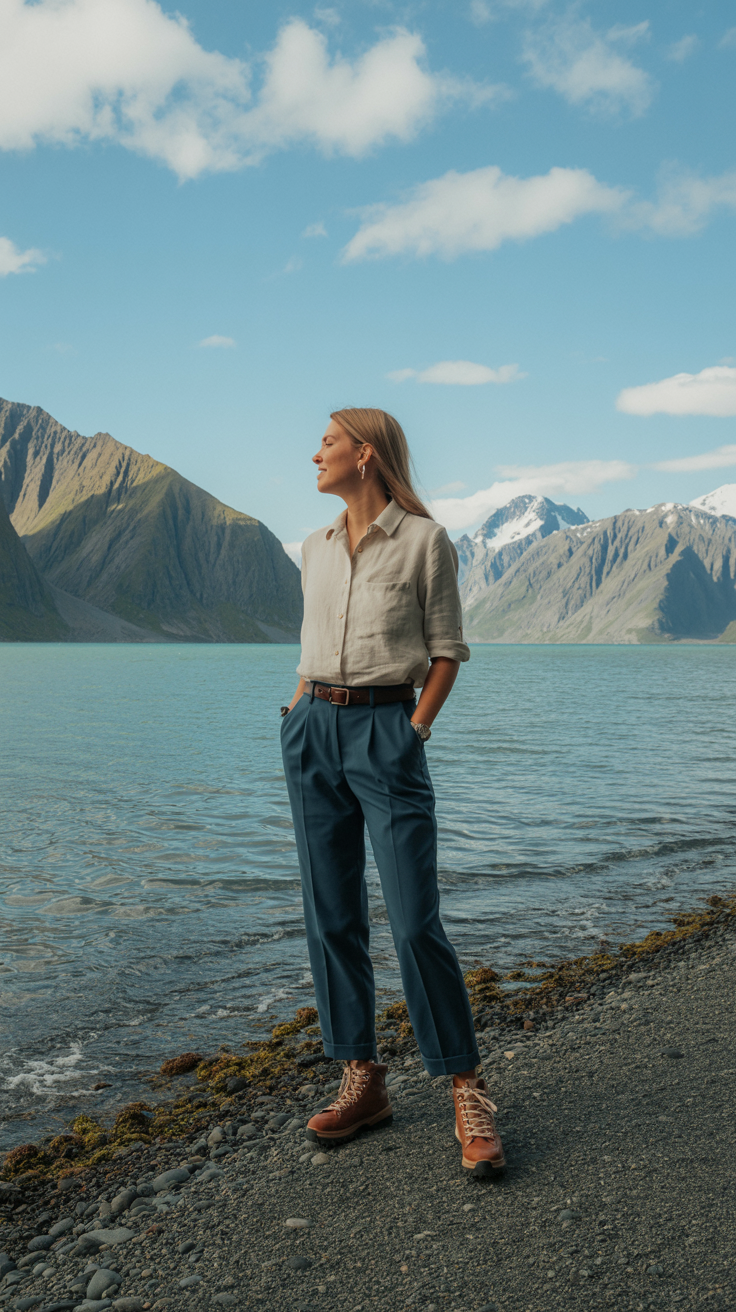
Outerwear
- Waterproof rain jacket with hood: Not water-resistant. Waterproof. There’s a difference and you’ll discover it the hard way if you skimp here.
- Fleece pullover or zip-up: Lightweight but warm, and it dries quickly if it gets damp
- Insulated vest: Perfect for layering without the bulk of a full jacket
- Light windbreaker: For those surprisingly pleasant days on deck
Bottoms
- Dark jeans or casual pants: 2-3 pairs that you can rewear without looking obvious in photos
- Leggings or thermal tights: Worn alone or under pants for extra warmth
- Comfortable shorts: Just one pair for gym use or unexpectedly warm days onboard
Tops
- Long-sleeve moisture-wicking shirts: 3-4 that can serve as base layers or standalone tops
- Short-sleeve t-shirts: 2-3 for layering or warmer indoor moments
- Thermal or merino wool base layers: Not sexy, but absolutely clutch for early morning wildlife viewing
Footwear
- Waterproof hiking boots or shoes: Your feet will thank you at every port
- Comfortable walking shoes: For onboard and less rugged excursions
- Casual shoes for dining: Something that doesn’t scream “I just hiked a glacier”
- Warm socks: Wool or synthetic blend, and pack more than you think necessary
The Accessories That Separate Pros from Rookies
Most first-time Alaska cruisers underestimate the power of small accessories. These items take minimal luggage space but dramatically improve your comfort level:
- Warm beanie or knit hat: Essential for glacier viewing when wind chill drops temperatures significantly
- Lightweight gloves: Waterproof or water-resistant preferred
- Buff or neck gaiter: Versatile for warmth and surprisingly useful for sun protection during long daylight hours
- Sunglasses with UV protection: The extended daylight and reflection off water and ice makes these non-negotiable
- Small backpack or daypack: For carrying layers as you shed them throughout the day
- Sunscreen: You’re closer to the Arctic Circle with nearly 20 hours of daylight
Evening Wear: What the Dress Code Really Means
Alaska cruises are notably more casual than Caribbean or Mediterranean sailings. The standard “formal nights” are often replaced with “smart casual” evenings. Translation: you can leave the ball gown and tuxedo at home.
For women, women’s Alaska cruise outfits typically include nice jeans or slacks paired with a blouse or sweater, maybe a casual dress with tights. For men, men’s Alaska cruise outfits usually mean khakis or dark jeans with a collared shirt or sweater. A sport coat is optional and honestly rare.
The beauty of Alaska cruising is that everyone’s in the same boat (literally) dealing with the same unpredictable weather. Nobody expects you to show up looking like you stepped off a Milan runway.
Month-Specific Considerations: Why June is Unique
If you’re sailing in June for your Alaska cruise, you’re hitting the shoulder season sweet spot. It’s warmer than May cruises require for outfits, but you’ll still need more layers than July Alaska cruise outfits or August Alaska cruise outfits demand. June is also distinctly different from September Alaska cruise outfits when temperatures start dropping again.
June offers nearly endless daylight, with some ports experiencing only 4-5 hours of twilight rather than true darkness. This means more time for activities but also more sun exposure than you’d expect at northern latitudes. Pack that sunscreen and consider bringing an eye mask for sleeping.
What Nobody Tells You About Packing
Here’s the insider knowledge that separates cruise veterans from newbies:
- Colors matter for photos: Jewel tones (emerald, sapphire, burgundy) and earth tones photograph beautifully against Alaska’s landscape. Pastels and whites can wash you out against misty backgrounds.
- Your cabin will be warm: Ships maintain comfortable temperatures, so you don’t need warm pajamas.
- Laundry is available: Most ships offer laundry services or self-service facilities, meaning you can pack less and rewear favorites.
- Dress for activities first: You’ll spend more time on deck and in ports than in dining rooms.
- Ziploc bags are gold: Pack electronics, important documents, and dry socks in waterproof bags.
For comprehensive guidance, check out what to pack for an Alaska cruise and explore Alaska cruise outfit ideas that work in practice.
Shore Excursion Outfit Strategy
Different excursions demand different approaches. A whale watching tour from the ship requires less gear than a glacier trek or kayaking adventure. Here’s the breakdown:
Wildlife and Glacier Viewing (from boat)
- All your layers – you’ll be standing still in wind
- Waterproof jacket and pants
- Warm hat and gloves
- Camera-friendly gloves (ones you can operate touchscreens with)
Hiking and Walking Tours
- Moisture-wicking base layer
- Waterproof hiking boots with good tread
- Light fleece (you’ll warm up while moving)
- Rain jacket tied around waist
- Backpack for shed layers
Active Adventures (kayaking, dog sledding)
- Tour operators often provide outer gear
- Wear moisture-wicking layers underneath
- Bring a complete change of clothes in a waterproof bag
- Secure footwear you don’t mind getting wet
Bonus Tips Alaska Cruise Veterans Swear By
- Pack a small clothesline and clips: For drying damp items in your cabin
- Bring hand warmers: Cheap, lightweight, and perfect for tucking in pockets during glacier viewing
- Merino wool is worth the investment: It regulates temperature, doesn’t smell after multiple wears, and dries quickly
- Test your rain gear before you go: Stand in the shower fully clothed (seriously) to ensure no surprise leaks
- Pack a small first aid kit with moleskin: New hiking boots plus port walking equals blisters
- Bring binoculars: Wildlife viewing is dramatically better with decent optics
- Download weather apps for port cities: Juneau, Ketchikan, and Skagway can have different weather on the same day
- Consider silk or synthetic long underwear: Thin enough to fit under jeans but adds surprising warmth
- Pack a small dry bag: For electronics during shore excursions when rain appears suddenly
The Luggage Reality Check
You’re probably thinking this sounds like a lot of stuff. It is, but here’s the thing: bulky winter coats take up way more space than multiple thin layers that achieve the same warmth. Roll your clothes, use packing cubes, and wear your bulkiest items (hiking boots and heaviest jacket) on embarkation day.
Most Alaska cruise cabins have limited closet space, so bringing pieces that mix and match is crucial. A capsule wardrobe approach works brilliantly here – choose a color scheme (navy, gray, and one accent color works well) so everything coordinates.
Timing Your Alaska Cruise
Still deciding when to go? Learn more about when to cruise Alaska to choose the best month for your travel style. June offers longer days and warming temperatures, but each month has distinct advantages.
Common Questions and FAQ
Will I really need gloves in June?
Yes, especially during glacier viewing. When you’re standing still on deck with wind whipping off massive ice formations, temperatures feel much colder than the ambient air temperature. Even lightweight gloves make the experience far more enjoyable and let you actually hold your camera steady.
Can I get away with just sneakers?
Technically yes, but you’ll regret it. Many shore excursions involve uneven terrain, wooden boardwalks that get slippery when wet, and potentially muddy trails. Waterproof hiking shoes with good tread provide stability and keep your feet dry. Wet feet in 50-degree weather ruins your day quickly.
How many layers should I actually wear at once?
Most comfortable configuration is three layers: a base layer (long sleeve moisture-wicking shirt), mid layer (fleece or light insulated jacket), and outer layer (waterproof shell). You can add or remove the mid layer as needed. Wearing more than three layers typically means you’ve packed the wrong items.
Do I need different outfits for formal nights?
Alaska cruises rarely have traditional formal nights like Caribbean cruises. Even on luxury lines, “elegant casual” is the highest dress code you’ll typically encounter. One smart-casual outfit for dining is sufficient – nice jeans or slacks with a sweater or blouse works perfectly. Save the cocktail dresses and suits for different cruise destinations.
What if I overpack and don’t have room for souvenirs?
Pack a collapsible duffel bag in your luggage. These take up almost no space when empty but expand to hold purchases for your return journey. Alternatively, ship purchases home from larger ports like Juneau or Ketchikan, though this can be expensive. Most people actually underpack for Alaska, not overpack, because they underestimate the weather variability.
Should I bring my nice camera or just use my phone?
Bring whatever camera you’ll actually use, but make sure it’s weather-sealed or you have a waterproof covering. The photography opportunities in Alaska are spectacular, but equipment won’t help if you’re too cold or wet to operate it. A smartphone in a waterproof case often gets better shots than a DSLR left in the cabin because you didn’t want to risk it in the rain.
Personal Experience
Planning outfits for my June Alaska cruise felt like preparing for four seasons at once, and honestly, that’s pretty much what it was. I packed lots of layers – think thermal tops, fleece pullovers, and a really good waterproof jacket that became my best friend. The weather shifted constantly, from chilly mornings watching glaciers to surprisingly warm afternoons on deck. My go-to outfit was leggings or jeans with a long-sleeve base layer, topped with a cozy fleece, and my rain jacket always within reach. I threw in a couple of those puffer vests too, which were perfect for adjusting to temperature changes without carrying around bulky coats.
The waterproof gear was absolutely worth the luggage space. Between the misty days and unexpected rain showers, my weather-resistant boots and that trusty rain jacket kept me comfortable while everyone else was ducking for cover. I also packed a warm beanie and waterproof gloves for glacier viewing – it gets seriously cold out on the water when you’re standing still. For photos, I stuck with neutrals and jewel tones that looked great against Alaska’s dramatic scenery without screaming “tourist.” My biggest tip? Bring more warm socks than you think you need, and don’t forget a scarf or neck gaiter. Those little extras made such a difference when the wind picked up, and I could enjoy every moment without shivering my way through the views.