
Sicily gets more cruise ships than almost anywhere in the Mediterranean, yet half the passengers who dock here spend their day wandering around a port car park wondering where to go. You’ll do better than that.
If you’re sailing to Sicily, you need to know that Catania and Messina are completely different ports despite both offering Mount Etna tours, that Palermo’s shuttle situation changes by cruise line, and that some ports aren’t actually in the towns they claim to serve. The island has seven cruise ports, each with its own quirks, and choosing the wrong excursion or misjudging walking distances can cost you half your day ashore.
Sicily offers some of the best cruise ports in Italy, with everything from active volcanoes to Greek temples, Arab-Norman architecture, and street food that puts most ship dining to shame. The ports themselves range from walk-off-the-ship city access to industrial terminals requiring shuttles or taxis. What matters is knowing which ports suit independent exploring and which need advance planning.
This guide covers all seven cruise ports in Sicily for 2026, with honest assessments of what you can realistically do in port, transport realities at each terminal, and which excursions are worth your time versus those you should skip.
Which Cruise Lines Call at Ports in Sicily
Sicily appears on most Mediterranean cruise itineraries, though the specific ports vary wildly by cruise line and route. The island sits in the middle of Western and Eastern Med routes, making it a natural stop for both seven-night loops and longer voyages.
The big players all include Sicily. Royal Caribbean, MSC, Norwegian, Princess, and Celebrity typically call at Messina or Palermo, occasionally both. Smaller luxury lines like Oceania, Azamara, and Seabourn favour Catania and Trapani for longer port days. Viking often overnights in Palermo. British cruise lines including P&O and Cunard use Messina as their Mount Etna gateway.
The frequency matters if you’re comparing itineraries. Messina sees the most calls overall, which means it can feel crowded when three ships dock simultaneously. Catania comes second, while Syracuse, Trapani, and Pozzallo remain quieter with fewer but longer calls. Porto Empedocle barely registers on most schedules outside specialist archaeology-focused cruises.
What Cruises Go to Sicily Look Like
Two main types of itinerary include Sicily. Western Mediterranean cruises usually combine the island with ports in mainland Italy, southern France, and Spain. You’ll typically get one Sicilian stop, most often Palermo or Messina. Eastern Mediterranean routes pair Sicily with Greece, Croatia, and sometimes Malta or Tunisia. These itineraries tend to include Catania or Syracuse.
Less common but increasingly popular are cruises around Sicily itself. These focus entirely on the island and neighbouring destinations, calling at three or four Sicilian ports in a single voyage. They’re offered by smaller ships and upscale lines, with port days often extending to ten or twelve hours instead of the usual eight.
The season affects which ports appear on your itinerary. Summer sees maximum calls at all seven ports, while spring and autumn focus on the major three: Palermo, Messina, and Catania. Winter sailings occasionally skip Sicily entirely in favour of North African or Middle Eastern routes.
Every Sicily Port for Cruise Ships
The island has seven ports that regularly accept cruise ships, though they’re not created equal. Some drop you in the heart of a city, others require substantial transfers to reach anything worth seeing. Here’s what each one actually offers.
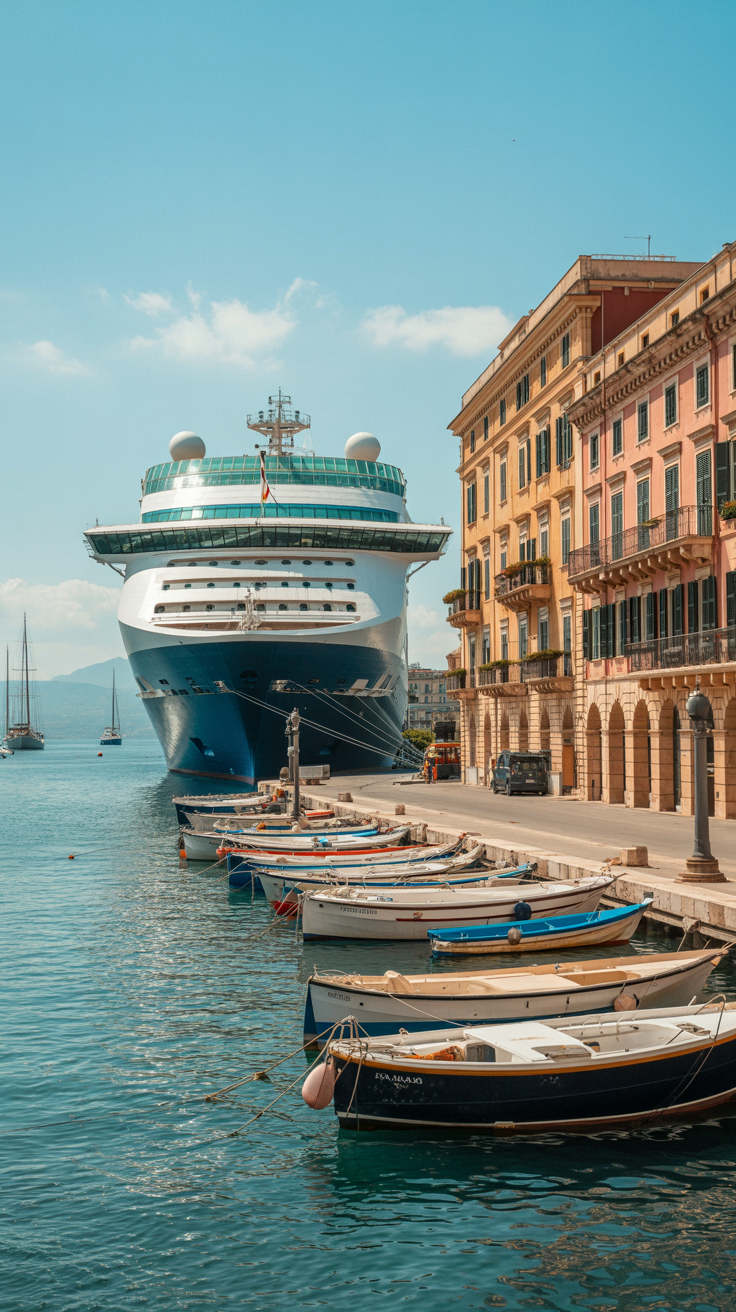
| Port | Location | Best For | Walking Distance to Town | Main Excursions |
|---|---|---|---|---|
| Palermo | Northwest coast, capital city | Markets, street food, architecture | Shuttle or 20-minute walk | City tours, Monreale, Cefalù |
| Messina | Northeast tip near strait | Gateway to Taormina and Etna | 10 minutes on foot | Taormina, Mount Etna, Savoca |
| Catania | East coast below Etna | Volcano access, Baroque city | 15-minute walk or shuttle | Mount Etna, Taormina, city walks |
| Taormina area | Accessed via Giardini Naxos | Ancient theatre, hilltop town | Not walkable, shuttle essential | Taormina only |
| Trapani | West coast near salt flats | Medieval town, Egadi Islands, Erice | 15-minute walk | Erice, Segesta, island ferries |
| Syracuse | Southeast coast | Greek ruins, Ortigia island | Depends on berth, often walkable | Archaeological park, Ortigia, Noto |
| Pozzallo | Far southeast | Gateway to Baroque towns | 5-minute walk to Pozzallo town | Ragusa, Modica, Noto |
The Ports Worth Getting Excited About
Three ports deliver excellent experiences with minimal fuss. Messina puts you closest to Taormina’s clifftop Greek theatre and boutique-lined streets, with frequent buses and taxis making independent visits straightforward. Catania combines a proper Sicilian city with the best access to Mount Etna’s higher elevations. Syracuse drops you near or on Ortigia island, which is small enough to explore thoroughly in half a day while still leaving time for the archaeological park.
Palermo frustrates some visitors because the terminal sits awkwardly between the port and city centre, but the markets and street life justify the effort if you get your transport sorted early. Trapani works beautifully for anyone wanting a quieter Sicilian experience, with the medieval centre close enough to walk and fewer cruise passengers competing for restaurant tables.
The Ports That Require More Work
- Pozzallo exists purely as a gateway to somewhere else. The town itself offers almost nothing for cruise passengers, and every excursion involves at least an hour’s drive to Ragusa or Modica. If your ship calls here, budget your day for a long tour rather than any independent wandering.
- Porto Empedocle has a similar problem. Ships berth here to reach the Valley of the Temples at Agrigento, which sits 20 minutes away by road. The port town has a pleasant harbour walk but nothing that justifies a cruise stop on its own. Most passengers book the Agrigento excursion and call it done.
- Giardini Naxos serves Taormina but isn’t really a port in its own right, it’s just where ships anchor when Taormina appears on the itinerary. You’ll tender ashore, then take a shuttle or taxi up the hill. Budget extra time for the tender queue if your ship is tendering three thousand passengers.
Cruises Around Sicily: What Full-Island Itineraries Look Like
A handful of cruise lines now offer itineraries that focus entirely on Sicily, calling at multiple ports in a single voyage. These typically run as seven-to-ten-night sailings, either round-trip from Palermo or Catania, or as part of a larger Mediterranean loop that dedicates substantial time to the island.
The typical pattern includes Palermo, Trapani, Catania, and Syracuse, sometimes adding Messina or Porto Empedocle. The advantage is longer port days, often ten hours or more, which gives you time to tackle Mount Etna properly or spend a full day in the Baroque towns without rushing back to the ship.
Azamara and Oceania run these itineraries most consistently, with occasional departures from Regent Seven Seas and small-ship operators like Ponant. Mainstream lines rarely dedicate an entire cruise to Sicily alone, though some Eastern Mediterranean sailings call at three Sicilian ports in sequence.
| Cruise Line | Typical Sicily Ports | Sailing Length | What Sets It Apart |
|---|---|---|---|
| Azamara | Palermo, Trapani, Catania, Syracuse | 7-10 nights | Late-night departures, overnights in Palermo |
| Oceania | Messina, Catania, Syracuse, Trapani | 7-12 nights | Longer port days, culinary focus |
| Regent Seven Seas | Palermo, Catania, Syracuse, Porto Empedocle | 7-10 nights | Included excursions, small ship access |
| MSC | Palermo, Messina, occasionally Catania | 7 nights | Most affordable, large ship amenities |
When These Itineraries Make Sense
Full Sicily cruises work best if you’ve already ticked off the Greek islands and Amalfi Coast, or if you’re specifically interested in archaeology, food, or getting beyond the usual Mediterranean highlights. They don’t make sense if this is your first Mediterranean cruise and you want variety, because a week of Sicilian ports can feel repetitive despite the island’s diversity.
The upside is you can skip the rushed eight-hour port calls and actually sit down for a proper lunch instead of grabbing a panino on the run. The downside is you’ll visit fewer countries, which matters if you’re trying to maximise your passport stamps or prefer more variety in architecture and culture.
Catania: Volcano and Baroque in One Stop
Catania handles its cruise traffic better than most Sicilian ports, with a modern terminal and straightforward access to both the city and Mount Etna. Ships berth directly alongside the terminal building, which sits about a kilometre from Piazza Duomo and the historic centre.
The port has the usual facilities, cafes, ATMs, tourist information, and a small selection of souvenir stalls. Free WiFi works intermittently. Taxis queue outside the terminal gates, and local buses stop at the port entrance, though most passengers either walk into town or join organised tours to Etna or Taormina.
Getting Into Catania From the Port
The walk into central Catania takes 15 to 20 minutes depending on your pace and the queue at the port security exit. The route follows Via Cardinale Dusmet north towards the fish market, then cuts through to Piazza Duomo. It’s flat, well-signposted, and perfectly safe, though the final stretch near the market gets hectic with fish stalls and motorbikes.
Some cruise lines offer shuttles to Piazza Duomo, dropping you by the cathedral. Budget similar time to walking once you account for waiting for the bus and loading passengers. Taxis cost more than mainland Italy for equivalent distances, so if there are three or four of you, it makes sense for the convenience. Buses into town are cheap but involve waiting for the right number and navigating stops, which eats into limited port time.
What You Can Do in Catania Itself
If you’ve got a full day or you’re skipping the big excursions, Catania rewards aimless wandering. Start at Piazza Duomo with the elephant fountain, then walk up Via Etnea for shopping and people-watching. The fish market behind the cathedral is as much theatre as commerce, worth seeing even if you’re not buying anything.
Castello Ursino sits a ten-minute walk from Piazza Duomo and houses a decent civic museum. Via dei Crociferi offers Baroque church overload, all within a couple of hundred metres. If you want Roman ruins, the amphitheatre on Piazza Stesicoro sits half-buried under modern Catania but remains visible and free to view from street level.
Mount Etna From Catania
Catania is the best port for getting high on Etna without spending your entire day in transit. Tours typically drive to Rifugio Sapienza at 1,900 metres, where you can take the cable car and jeep combination to reach nearly 3,000 metres, or stick to the lower craters and lava fields if you prefer solid ground under your feet.
Full-day Etna excursions take eight to nine hours including driving time. Half-day tours stay lower on the mountain, visiting lava caves or vineyards instead of pushing for the summit. If you’re booking independently, check that your return time leaves a buffer before all-aboard. Weather can delay cable cars, and coaches get stuck in summer traffic on the way down.
The volcano is active, which means occasional closures when seismic activity spikes. Your ship’s excursions will have contingency plans, but independent travellers can find themselves stranded at Rifugio Sapienza with no alternative if the cable car shuts unexpectedly.
Taormina From Catania
Some Catania port calls include Taormina excursions, though Messina sits closer and gets you there faster. The drive from Catania takes just under an hour each way, leaving three or four hours in Taormina if you’re on a ship-organised tour.
That’s enough time to see the Greek theatre, walk Corso Umberto, and grab lunch, but it’s rushed compared to doing Taormina from Messina. If your cruise calls at both Catania and Messina, save Taormina for the Messina stop and use Catania for Etna or the city itself.
Messina: Gateway to Taormina and the Northeast
Messina wins for convenience if you’re staying independent. The port drops you a ten-minute walk from the cathedral and city centre, with frequent buses and trains running to Taormina. Ships berth at one of several terminals along the harbour, some closer to town than others, but even the furthest berth leaves you within easy reach on foot.
The city itself isn’t Sicily’s most compelling. Messina was rebuilt after a catastrophic earthquake in 1908, so the architecture lacks the medieval layers you’ll find elsewhere. The cathedral and its astronomical clock are worth a look, and the waterfront promenade makes a pleasant stroll, but most passengers use Messina as a jumping-off point rather than a destination.
Getting to Taormina From Messina
Taormina sits 50 kilometres south of Messina, reachable by bus or train in under an hour. Interbus runs direct coaches from Messina to Taormina bus station, then you take the local shuttle up to the town itself. Trains from Messina Centrale stop at Taormina-Giardini station below the town, requiring a cable car or bus ride to reach the centre.
Independent travel to Taormina works well if your ship docks early and leaves late. Budget two hours minimum in Taormina to make the journey worthwhile, longer if you want to sit down for lunch without wolfing it. The town gets rammed when multiple cruise ships arrive simultaneously, so mornings are more bearable than midday.
Ship excursions to Taormina from Messina follow the same route but handle logistics for you. They’re more expensive than going independently but remove the stress of catching buses and watching the clock. Most include three to four hours in Taormina, which is enough to see the Greek theatre, walk the main street, and browse the boutiques without feeling hurried.
Mount Etna From Messina
Messina can also serve as an Etna gateway, though Catania is better positioned. Tours from Messina take longer because you’re driving around the volcano’s northern flank rather than approaching from the south. Expect a full-day commitment for any Etna excursion from Messina, and check whether the tour visits the same high-altitude areas as Catania-based options.
Some Messina excursions combine Etna with Taormina, which sounds great on paper but in practice means rushed visits to both. You’ll get an hour at Etna’s lower reaches and two hours in Taormina, barely enough to scratch the surface of either. If you want to do both properly, choose one from Messina and save the other for a Catania port call if your itinerary includes both.
Palermo: Markets, Mosaics, and Slightly Chaotic Transport
Palermo offers more in a single port day than most Mediterranean capitals, but the logistics require more attention than Catania or Messina. The cruise terminal sits along the commercial port, technically within walking distance of the centre but far enough that most passengers take shuttles or taxis.
The terminal itself is functional rather than impressive. Basic facilities, some tourist information, and the usual shuttle-bus chaos when three ships dock together. Cruise lines run shuttles to Piazza Politeama or Teatro Massimo, though schedules vary by line and aren’t always clearly communicated. Independent taxis queue outside the terminal, but you’re competing with everyone else who skipped the shuttle.
Getting Into Central Palermo
If you’re walking, follow the waterfront east towards the city, then cut inland near the Porta Felice gate. It takes 25 to 35 minutes depending on your pace and whether you stop for espresso. The route isn’t scenic but it’s straightforward, and you’ll pass a few local bars where you can grab a morning coffee without the cruise-port markup.
Shuttles drop you closer to the action but tie you to the cruise line’s schedule. If your ship offers a shuttle, check the return times before you commit. Missing the last shuttle means paying for a taxi, and Palermo taxis aren’t cheap. Some cruise lines charge for shuttles, others include them in your fare, so check before assuming it’s free.
What to See in Palermo
- The markets are non-negotiable. Ballarò and Vucciria offer the full Sicilian street food experience, with vendors shouting, octopus boiling, and panelle frying in oil that’s probably older than you are. Go hungry, bring cash, and don’t expect anyone to speak English. The cathedral sits nearby, impressive from the outside though the interior was over-restored and lost some character.
- Quattro Canti marks the city’s historic crossroads, worth a photo but not worth lingering. The Palatine Chapel inside the Norman Palace is the highlight if you’re into mosaics, with Arab-Norman gold work that rivals anything in Istanbul. Book ahead in summer or join a ship excursion, because the queue snakes around the block when multiple ships are in port.
- Teatro Massimo offers guided tours if you’re into opera houses. The Capuchin Catacombs are further out and involve taxis or buses, plus they’re morbid enough that not everyone finds them worthwhile despite the hype. If you’d rather relax, the Villa Giulia gardens provide green space near the port, though calling them a highlight would be generous.
Day Trips From Palermo
Monreale sits eight kilometres uphill from Palermo, reachable by bus or taxi in 30 minutes. The cathedral there is worth the trip for the Byzantine mosaics alone, and the town is quieter than central Palermo. Most ship excursions pair Monreale with a Palermo city tour, giving you three hours split between the two.
Cefalù appears on longer excursions, about an hour east along the coast. It’s a proper beach town with a Norman cathedral and a long stretch of sand. The downside is spending two hours in a coach for a destination that’s pleasant but not essential if you’re already stretched for time in Palermo itself.
Trapani: Western Sicily Without the Crowds
Trapani sees fewer ships than Palermo or Messina, which makes it immediately more appealing if you’re tired of fighting through cruise crowds. The port sits close enough to the old town that you can walk off the ship and be sipping Aperol in the historic centre within 20 minutes.
The terminal is small, basic facilities only, but it doesn’t need to be fancy when you’re this close to town. Some ships berth at the commercial dock further north, which adds walking distance but still keeps you within reach. Trapani is investing in port upgrades including shore power, so expect more calls here as cruise lines chase greener credentials.
What to Do in Trapani Itself
The old town is compact, ideal for a morning wander before lunch. The Cathedral of San Lorenzo anchors the centre, surrounded by narrow lanes and Baroque churches that feel more authentic than the polished-for-tourists versions you’ll find elsewhere. The waterfront promenade stretches north towards the salt flats, a flat walk that works well if you want exercise without climbing hills.
Trapani’s food scene is excellent and cheaper than Palermo. The fish couscous here reflects the town’s North African influences, and you’ll find it on most restaurant menus near the port. The morning market along Via Torrearsa sells produce and street food, worth visiting if you dock early enough.
Erice: The Hilltop Town Above Trapani
Erice sits 750 metres above Trapani, reachable by cable car or road in about 20 minutes. The medieval town is everything you imagine when you picture a Sicilian hilltop village, cobblestones, castle ruins, pastry shops, and views across to the Egadi Islands.
The cable car runs frequently but queues build when ships are in port. If you’re going independently, get there early or budget extra time. Most ship excursions drive up by coach, which is faster but less scenic. Budget two to three hours in Erice for a relaxed visit, less if you’re just hitting the main square and castle.
Erice is famous for its almond pastries, and every shop sells them. They’re all good, some are great, but none are cheap. The Pasticceria Maria Grammatico gets the most recommendations, deservedly, but expect queues.
Egadi Islands From Trapani
Favignana is the closest and most developed of the three Egadi Islands, 30 minutes by ferry from Trapani port. The island is small enough to bike around in a couple of hours, with rocky coves for swimming and a laid-back vibe that feels a world away from cruise-port chaos.
Independent ferry tickets are easy to book at the port, but check the return schedule against your ship’s departure time. The last ferry back doesn’t always align with late-afternoon all-aboards, and missing your ship because you were on an island is not a story you want to tell.
Ship excursions to Favignana handle the timing for you but give you less freedom. You’ll get two to three hours on the island, enough for a swim and lunch, but you’re tied to the group schedule. Levanzo is quieter and smaller but harder to reach, usually requiring private boat charters unless your ship offers a dedicated excursion.
Syracuse: Greek Ruins and Island Charm
Syracuse is the one port where the ancient history actually lives up to the hype. The Greek theatre here rivals anything in mainland Greece, and the island of Ortigia combines medieval charm with excellent seafood restaurants and a manageable size for cruise passengers on limited time.
Ships berth in one of two places. The closer terminal puts you within walking distance of Ortigia, the old town island connected to the mainland by bridge. The further berth at the industrial port requires a shuttle or taxi. Check your ship’s docking location before planning your day, because the difference is substantial.
Ortigia: The Old Town Island
Ortigia is small enough to cover on foot in two to three hours, though you’ll want longer if you’re stopping for lunch. The Piazza Duomo is the highlight, with a cathedral built into a Greek temple and enough Baroque drama to satisfy anyone’s Instagram needs. The Fountain of Arethusa sits nearby, a freshwater spring that’s more historically interesting than visually impressive.
The market along Via de Benedictis runs mornings only, selling fish, produce, and street food. It’s smaller than Palermo’s markets but less hectic, and you can actually move through without elbowing past three deep crowds. The waterfront promenade circles most of the island, ideal for a post-lunch stroll before heading back to the ship.
The Archaeological Park of Neapolis
The Neapolis park sits on the mainland side of Syracuse, about a ten-minute drive from Ortigia or 30 minutes on foot. The Greek theatre here is massive, still used for performances in summer. The Roman amphitheatre is smaller but well-preserved. The Ear of Dionysius, a cave with absurd acoustics, gets demonstrated by every tour guide with the same enthusiasm despite the joke being centuries old.
Budget two hours minimum if you’re visiting independently, longer if you want to sit in the theatre and soak up the atmosphere. Ship excursions usually pair the archaeological park with an Ortigia visit, splitting your day between ancient ruins and medieval streets. If you’re choosing one or the other, Ortigia is more immediately gratifying, but the park is more significant historically.
Noto: The Baroque Town South of Syracuse
Noto sits 40 minutes south of Syracuse, a UNESCO-listed town rebuilt entirely in Baroque style after the 1693 earthquake. The main street, Corso Vittorio Emanuele, is lined with honey-coloured churches and palazzi that glow in afternoon light.
It’s beautiful, and it’s also small. You can see the highlights in 90 minutes, which makes it a popular add-on for half-day Syracuse excursions. If you’re going independently, check bus schedules carefully because services aren’t frequent. Taxis cost more than you’d expect for the distance, so share if you can.
Taormina Area: The Town That Needs a Transfer
Taormina doesn’t have its own cruise port. Ships either berth at Messina or Catania and coach passengers in, or they anchor off Giardini Naxos and tender everyone ashore before shuttling them up the hill to Taormina itself. Either way, getting to Taormina involves transport rather than walking off the ship.
If you’re tendering at Giardini Naxos, budget extra time. Tender operations slow everything down, and when three thousand passengers need ferrying ashore, you’re looking at queues. The shuttle from the tender pier to Taormina takes another 15 minutes, assuming traffic cooperates.
What Makes Taormina Worth the Effort
The Greek theatre is the main draw, carved into the hillside with Mount Etna looming behind. It’s absurdly photogenic, and it’s also still in use for concerts and festivals. Get there early or late to avoid the midday crowds, because this is one of Sicily’s most-visited sites and it shows.
Corso Umberto, the main pedestrian street, runs the length of the old town. It’s lined with boutiques, jewellery shops, and cafes charging cruise-port prices for mediocre coffee. The side streets are quieter and more interesting, with glimpses of the coast below and actual locals going about their business.
Isola Bella sits at the base of the hill, reachable by cable car or a steep walk down. It’s a nature reserve connected to the mainland by a narrow sand bridge, worth visiting if you want a swim and you’ve already ticked off the main sights. The cable car queues get ridiculous when ships are in port, so walking down and riding up makes more sense.
Taormina’s Dining Problem
Lunch in Taormina is overpriced and underwhelming unless you know where to go. The restaurants along Corso Umberto serve the same tired menu at inflated prices, banking on tourists who won’t return. Side-street trattorias are better but still expensive by Sicilian standards.
If you’re on a ship excursion, you’ll get an hour for lunch, maybe 90 minutes. That’s enough time to eat but not enough to hunt for the good spots. Independent travellers can do better by asking locals or venturing further from the main drag, but you’re still paying more than equivalent meals in Catania or Palermo.
Pozzallo: Gateway to the Baroque Southeast
Pozzallo is a small port town in Sicily’s far southeast, mainly used by cruise lines as a jumping-off point for Ragusa and Modica. The town itself offers little for cruise passengers, a pleasant harbour, some beaches, and not much else. Ships berth close to the centre, but the centre isn’t the reason you’re here.
The port terminal is small and basic. There’s not much point walking into Pozzallo unless you’re killing time before an excursion departure. The real sights are inland, requiring coaches or taxis to reach.
Ragusa and Ragusa Ibla
Ragusa sits about 40 minutes inland from Pozzallo, split between the modern upper town and Ragusa Ibla, the older district clinging to a rocky spur below. Ibla is the one you want, a maze of Baroque churches and palazzi connected by steep lanes and staircases.
The Duomo di San Giorgio dominates Ibla’s main square, surrounded by cafes where you can sit and watch life unfold at Sicilian pace. The walk down into Ibla from the upper town takes 20 minutes and feels like descending into another century. Coming back up is less romantic.
Most ship excursions give you two to three hours in Ragusa, split between the upper town and Ibla. That’s enough to see the highlights but not enough to linger. Independent visitors can stay longer, but you’ll need to arrange a driver or navigate local buses, which run infrequently.
Modica: Chocolate and More Baroque
Modica sits 15 minutes beyond Ragusa, famous for its grainy chocolate made with an ancient Aztec recipe. The town itself is another Baroque showcase, built on multiple levels up a steep hillside.
The chocolate shops line Corso Umberto, and every one offers free samples. The texture is gritty because the sugar doesn’t fully dissolve, which takes some getting used to. Flavours range from traditional cinnamon to more adventurous combinations like chilli or orange.
Some excursions combine Ragusa and Modica, but that makes for a long day with a lot of coach time. If you’re visiting both independently, budget at least an hour in each town to make the travel worthwhile.
Porto Empedocle: The Valley of the Temples Gateway
Porto Empedocle exists for one reason: getting cruise passengers to Agrigento’s Valley of the Temples. The port town itself has a working harbour and some faded grandeur but nothing that justifies a cruise stop on its own merits.
Ships berth at the commercial port, which is exactly as charming as that sounds. The terminal has minimal facilities for cruise passengers, and the walk into town takes 15 minutes but leads nowhere particularly interesting.
The Valley of the Temples
Agrigento’s Valley of the Temples sits 20 minutes inland from Porto Empedocle, a sprawling archaeological site with some of the best-preserved Greek temples outside Greece itself. The Temple of Concordia is the star, nearly intact and absurdly photogenic against the Sicilian sky.
The site is large, and summer heat makes it brutal if you’re not prepared. Wear a hat, bring a collapsible water bottle that’s easy to carry, and accept that you’ll be walking uphill in full sun. Most ship excursions allocate three to four hours at the site, which is enough to cover the main temples and museum without collapsing from heat exhaustion.
Independent visits are possible using local buses or taxis, but the logistics eat into your time and the site is sprawling enough that having a guide helps. Ship excursions are more expensive but handle transport and provide context that makes the ruins more meaningful than a self-guided wander.
Shore Excursions vs Going Independent
Sicily’s ports split into two categories. Places like Messina, Catania, and Trapani are easy to navigate independently, with straightforward transport and walkable city centres. Pozzallo and Porto Empedocle are harder, requiring prearranged transport and significant travel time to reach the main sights.
Ship excursions remove the stress but add cost and limit flexibility. You’re tied to a group schedule, eating lunch where the coach stops rather than choosing your own restaurant. The upside is guaranteed timing, if the excursion runs late, the ship waits. Go independent and miss the all-aboard, and you’re paying your own way to the next port.
When to Book Ship Excursions
Mount Etna tours make sense as ship excursions because the volcano is unpredictable and weather-dependent. If the cable car shuts or roads close, the cruise line handles rebooking or refunds. Independent travellers can find themselves stuck with non-refundable tickets and wasted time.
Archaeological sites like the Valley of the Temples or Syracuse’s Neapolis benefit from guides who provide context. You can visit independently and read plaques, but you’ll miss the stories that bring ruins to life. Ship guides vary in quality, but they’re usually better than wandering solo.
City tours in Palermo, Catania, or Trapani are easy to skip. These cities reward independent exploration, and you don’t need a guide to point out the cathedral when it’s directly in front of you.
When Going Independent Works Better
Taormina from Messina is straightforward by bus or train, and the town is small enough to navigate without help. Save the excursion cost and spend it on lunch somewhere decent instead of the pre-arranged group restaurant.
Ortigia in Syracuse is perfect for independent wandering. The island is tiny, the sights are obvious, and getting lost is part of the appeal. Ship excursions to Ortigia rush you through in two hours when you’d be better off spending four.
Food and markets are always better independent. Ship excursions to Palermo’s markets involve standing in a group while the guide explains panelle, when you’d rather be eating them hot from the fryer without an audience.
What the Cruise Lines Don’t Mention About Sicilian Ports
Summer heat in Sicily is no joke, especially at archaeological sites with minimal shade. The Valley of the Temples and Syracuse’s Neapolis become outdoor ovens by midday, and cruise excursions don’t always schedule around that. Bring your own water because what they provide on coaches isn’t enough.
Port days in Sicily often coincide with local holidays or festivals, which can mean closed museums or inaccessible streets. Cruise lines rarely warn you in advance, and you only discover the cathedral is shut when you’re standing at locked doors. Ask your ship’s excursion desk about local closures before booking anything.
Traffic around Mount Etna and Taormina gets heavier every year as tourism grows. What’s advertised as a 90-minute excursion can stretch to two hours when coaches queue on narrow mountain roads. Budget extra buffer time before all-aboard if you’re going independent.
The Shuttle Situation
Not all cruise lines offer shuttles at Sicilian ports, and those that do often charge separately. Palermo shuttles can cost as much as a taxi if you’re travelling with others, but at least the taxi leaves when you’re ready rather than adhering to a fixed schedule.
Shuttle drop-off points aren’t always convenient. Some Palermo shuttles deposit you at Piazza Politeama when you’d be better off at Teatro Massimo or Quattro Canti. Check the drop-off location before assuming the shuttle gets you where you actually want to be.
Restaurant Timing and Cruise Passengers
Sicilian restaurants don’t open for lunch until 12:30 or 1pm, which conflicts with cruise ship schedules that have everyone ashore by 9am. If you’re planning an independent day, you’ll either eat lunch unfashionably early at tourist traps that open earlier, or awkwardly late, which risks missing your all-aboard.
Dinner reservations are impossible when your ship leaves at 5pm. Evening departures from Palermo or Catania sound great until you realise you’re boarding just as restaurants open and the city comes alive.
Where to Stay Before Your Sicily Cruise
If your cruise embarks from Palermo, stay in the city centre near Quattro Canti or Piazza Marina. Hotels here put you within walking distance of the port and the main sights. Budget hotels near the train station are cheaper but less atmospheric.
Catania pre-cruise stays work best in the area around Piazza Duomo or along Via Etnea. You’re close to the port and surrounded by restaurants and bars. Airport hotels are convenient if you’re flying in the night before, but you’ll miss the city itself.
Messina isn’t an appealing overnight stop unless your ship embarks there specifically. The city lacks the charm of Palermo or Catania, and most travellers prefer staying in Taormina and transferring to Messina port on departure day.
Weather Expectations at Sicily’s Ports
Summer in Sicily means heat, often brutal from July through August. Temperatures regularly hit 35°C, and archaeological sites offer almost no shade. Early morning or late afternoon excursions are more bearable, but cruise ship schedules don’t always cooperate.
Spring and autumn are ideal for Sicily cruises. May, June, September, and October bring comfortable temperatures for walking and fewer crowds at major sites. Rain is rare but possible in April and November.
Winter cruises to Sicily are uncommon, but when they do happen, expect cooler temperatures and occasional rain. Mount Etna can be snowcapped, which is visually spectacular but limits access to higher elevations, so pack a warm jacket for mountain visits.
Common Questions About Sicily Cruise Ports
Which Sicily port is best for Mount Etna?
Catania offers the quickest access to Mount Etna’s upper slopes, with tours reaching Rifugio Sapienza in under an hour. Messina also runs Etna excursions but involves longer travel time. Catania is the better choice if volcano access is your priority.
Can you visit Taormina from both Catania and Messina?
Yes, though Messina is closer. The drive from Messina takes 50 minutes, from Catania closer to an hour. If your cruise calls at both ports, save Taormina for Messina and use Catania for Etna or the city itself to maximise your time.
Is Palermo walkable from the cruise port?
Technically yes, but it’s a 25 to 35-minute walk and not particularly scenic. Most passengers take shuttles or taxis to the city centre, which saves time and energy for exploring Palermo itself rather than trudging along the waterfront.
Do I need to book excursions in advance for Sicily?
Popular excursions like Mount Etna and Taormina sell out, especially in summer. Book early for these. City walks in Palermo or Catania are easier to arrange last-minute or do independently without advance planning.
Which port has the best local food?
Palermo wins for street food and markets. Catania’s fish market is excellent for seafood. Trapani offers unique North African-influenced dishes. Syracuse on Ortigia combines quality with atmosphere. Skip dining near the port at Pozzallo or Porto Empedocle.
How much time do I need in Ortigia?
Two to three hours covers the main sights including the cathedral and Arethusa fountain. Four hours lets you add lunch and a leisurely waterfront walk. Ship excursions often rush Ortigia in 90 minutes, which feels cramped.
Can you swim at Sicily’s cruise ports?
Beaches near the ports are limited. Cefalù on a Palermo excursion has a long sandy beach. Favignana from Trapani offers excellent swimming. Taormina’s Isola Bella works if you’re there independently. Catania and Messina ports aren’t near swimmable beaches.
What happens if Mount Etna closes while I’m visiting?
Volcanic activity occasionally closes cable cars or access roads. Ship excursions typically have alternative plans, like visiting lower elevations or switching to Taormina. Independent travellers may lose their booking fees unless they purchased flexible tickets.
Are Sicily’s ports wheelchair accessible?
Modern terminals at Palermo, Catania, and Messina have level access and facilities. Archaeological sites like the Valley of the Temples and Syracuse’s Neapolis have limited accessibility with steep paths and uneven ground. Confirm access details with excursion providers before booking.
Why Trust About2Cruise
- I’m Jo. I’ve personally visited all seven Sicily cruise ports across multiple seasons, testing independent options and ship excursions to compare what actually works versus what sounds good in brochures.
- We update this Sicily guide whenever port facilities change, new excursion operators launch, or shuttle arrangements shift. Major changes come from reader reports and cruise line announcements, minor tweaks from seasonal visits.
- About2Cruise doesn’t take payment from tour operators or cruise lines. When we say a port works well independently or needs a ship excursion, that assessment reflects genuine experience, not who’s paying for promotion.
Part of our full cruise port guides index.
Last Updated: 9 August 2026