
Bologna is a realistic DIY day from Ravenna cruise port if you accept the two-hour journey each way and set a hard return-to-ship buffer. Spend the day walking under UNESCO porticoes from San Petronio to the Quadrilatero, eating tortellini or tagliatelle al ragù, and pre-book the port shuttle or a taxi. For the terminal itself and what to do if you stay in Ravenna, see our Ravenna cruise port guide.
Bologna day trip from Ravenna at a glance
| Cruise terminal to Ravenna station | Shuttle or bus 90; around 30 min; shuttle from €20 one way |
| Ravenna to Bologna train time | Fastest 59 min; most 1 hr–1 hr 15 |
| Train fare | €7–€8.50 one way |
| Bologna Centrale to centre | 15–18 min walk, free |
| Time you need | About 2 hours each way door-to-door |
| Must-sees | San Petronio, Neptune Fountain, Quadrilatero, Due Torri |
| When to head back | Aim Ravenna station 2.5–3 hours before all-aboard |
Why Bologna? Three Nicknames, One Very Walkable City
Bologna wears three nicknames. La Dotta (“the learned”) comes from the University of Bologna, traditionally dated to 1088 and often called the oldest university in the Western world. La Grassa (“the fat”) is the food reputation: ragù, mortadella, tortellini, lasagne, piadina. La Rossa (“the red”) partly describes the terracotta rooftops and arcades, partly its political history. You won’t find a beach or gondola here. You get a dense, walkable, food-obsessed university city.
Ravenna sits among the cruise ports on Italy’s Adriatic coast, but Bologna is inland and usually reached by train.
Is Bologna Worth the Train Ride from Ravenna?
For many cruisers, yes, especially if you’ve already seen Ravenna’s Byzantine mosaics or you’re craving a big-name Italian food city. The train is direct, and the historic centre is only a 15–18 minute walk from Bologna Centrale. A ship or private excursion removes train stress but costs much more and locks you into a fixed route. If eating well and walking a beautiful medieval city sounds like a perfect port day, Bologna delivers.
Getting from Porto Corsini Cruise Terminal to Ravenna Station
Ships dock at Porto Corsini cruise terminal, about 13 km from Ravenna station. You can’t walk it; the port roads aren’t pedestrian-friendly.
The official Visit Ravenna shuttle runs from the terminal to a drop-off on Viale Luigi Carlo Farini beside Piazza Anita Garibaldi, about 300 m from Ravenna station. It takes around 30 minutes. One-way transfers start from €20, round-trip terminal–Ravenna transfers from about €36. Book before you cruise: transfer@visitravenna.it or WhatsApp +39 348 4504049.
Start Romagna bus 90 also runs between the cruise terminal and Ravenna station in about 30 minutes. Tickets are sold via the Roger/Muver/DropTicket/myCicero apps or at ticket counters. It’s usually cheaper, but queues can build on busy cruise days, so build in extra time.
RadioTaxi Ravenna is available 24/7 at +39 0544 33888. Expect roughly €50 to Ravenna station. Taxis can be in short supply on busy cruise days, so book or share if you can.
Ravenna to Bologna by Train: Times, Fares, and Tickets
Take the direct Trenitalia/Tper regional train from Ravenna to Bologna Centrale. It’s not high-speed, the fast trains start from Bologna, but it’s straightforward. Fastest journeys are about 59 minutes; most take between 1 hour and 1 hour 15. Trains run roughly hourly from about 05:00 to 22:00, with 17–22 direct departures a day. One-way Regionale fares start around €7–€8.50.
Bologna Centrale is also a hub for connections towards Venice, Florence and Milan, but on a Ravenna port day you are almost always using the direct regional line back.
| Leg | Typical time | Frequency | Cost from |
|---|---|---|---|
| Porto Corsini to Ravenna station | 25–35 min | Ship-day shuttle or bus | €20 shuttle, bus cheaper |
| Ravenna to Bologna Centrale | 59 min–1 hr 15 | About hourly | €7–€8.50 |
| Bologna Centrale to Piazza Maggiore | 15–18 min walk | On foot | Free |
Digital regional tickets bought through Trenitalia validate automatically at the scheduled departure and can be changed until the train is activated. Paper tickets from the station must be stamped in the green machine before boarding; an unvalidated paper ticket can be fined. Screenshots or printouts of digital regional tickets are not valid.
If there’s a national rail strike, regional trains usually have guaranteed windows from 06:00–09:00 and 18:00–21:00 on weekdays. Operators publish lists of guaranteed trains. Refunds on regional tickets during a strike are only available up to midnight the day before. For a port day, your contingency is taxi back from Ravenna or a ship excursion if available.
Bologna Centrale to Piazza Maggiore: The Easy 15-Minute Walk
From the platform, follow signs for the main exit and Via dell’Indipendenza. It’s about 1.2–1.5 km to Piazza Maggiore, a flat 15–18 minute walk under porticoes. The street is straight, hard to get wrong.
If you want to save steps, Tper urban buses 25 or 30 run from the station towards the centre in about 10–13 minutes. A single urban bus ticket is €2.30 for 75 minutes; a day ticket is around €9. Some buses accept contactless bank cards on board.
A Realistic One-Day Bologna Itinerary from a Cruise Ship
Assume a ship that docks at 07:00 and all-aboard at 16:30. The goal isn’t to see everything; it’s to protect the return.
- 07:30–08:00: Shuttle or taxi from Porto Corsini to Ravenna station.
- 08:20–09:20: Direct train to Bologna Centrale.
- 09:40: Walk Via dell’Indipendenza to Piazza Maggiore.
- 09:45–10:30: San Petronio, Neptune Fountain, Piazza Maggiore.
- 10:30–11:15: Archiginnasio courtyard or Quadrilatero food lanes.
- 11:15–12:00: Walk to the Due Torri, then a short portico stretch.
- 12:00–13:00: Lunch in the Quadrilatero: tortellini, tagliatelle al ragù or market food.
- 13:00–13:45: Coffee, gelato, final photo stops.
- 14:00: Walk back to Bologna Centrale.
- 14:35: Train to Ravenna.
- 15:45: Shuttle or taxi back to the ship.
If your all-aboard is later, shift everything later but keep the same buffer: arrive back at Ravenna station at least 2.5 hours before all-aboard.
What to See in Bologna on a Short Day
Start on Piazza Maggiore. San Petronio is Europe’s sixth-largest church, free to enter, open daily 10:00–18:00 with last entry at 17:50. It has an unfinished façade and a 67.7 m meridian sundial in the aisle. Cover shoulders and knees, take off hats, and don’t bring suitcases or large luggage; the church will refuse them.
Next door in Piazza del Nettuno, the Neptune Fountain is a Giambologna bronze, free to see and recently restored.
Walk through the Archiginnasio, the former seat of the university. The building entrance is free, but the Anatomical Theatre and Stabat Mater Hall need tickets; it’s closed on Sundays. The student quarter around Via Zamboni is the living La Dotta and a usual meeting point for food tours.
If you have time, Piazza Santo Stefano is a quieter triangular square enclosed by porticoes, and Via Pescherie Vecchie in the Quadrilatero is the most photographed lane in the city.
The Two Towers: Check Before You Climb
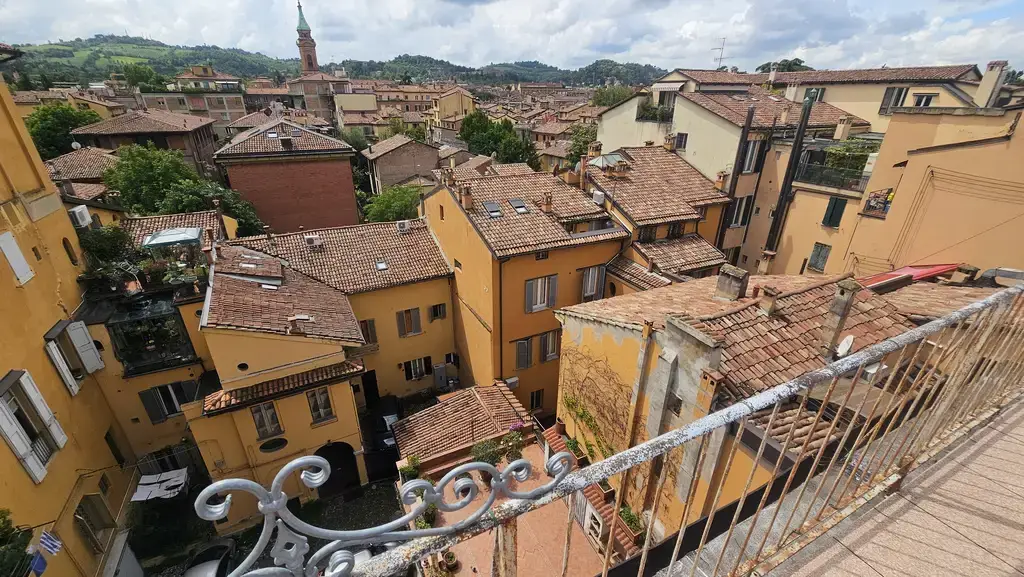
The Two Towers at Piazza di Porta Ravegnana are Bologna’s signature skyline. Asinelli is 97.2 m and 498 steps, normally €5 full or €3 reduced with compulsory booking, but at the time of writing it’s closed because of safety works around the leaning Garisenda.
The Garisenda itself is fenced and part of the square is closed while micropiles and tie-rods are installed, with works scheduled to about 2028. Don’t plan a tower climb without checking the current status close to your sailing date.
For a view while Asinelli is closed, use the Clock Tower at Palazzo d’Accursio in Piazza Maggiore: €10 full or €7 reduced, audio-guided, entered through Sala Farnese. It has a narrow staircase, no under-8s, and no bulky bags; closed shoes or back-strapped sandals only.
Porticoes and the San Luca Walk Without Wiping Out Your Port Day
Bologna has 62 km of porticoes, and 12 stretches are UNESCO-listed. The one you’ll notice first is the continuous cover along Via dell’Indipendenza and the centre. The most famous is the San Luca portico: 3,796 m and 666 arches climbing to the Sanctuary of San Luca, which is free and open daily 07:00–19:00, later in summer.
The full walk is a real hill climb to about 300 m above sea level, not a gentle stroll. Many day-trippers photograph a section of the arcade rather than walk the whole thing. If you want the full experience, wear trainers and carry water.
Where and What to Eat in the Quadrilatero
The Quadrilatero is the medieval food market grid just south-east of Piazza Maggiore. Via Pescherie Vecchie is the most photographed lane, and the whole area is where Bologna’s La Grassa side becomes edible.
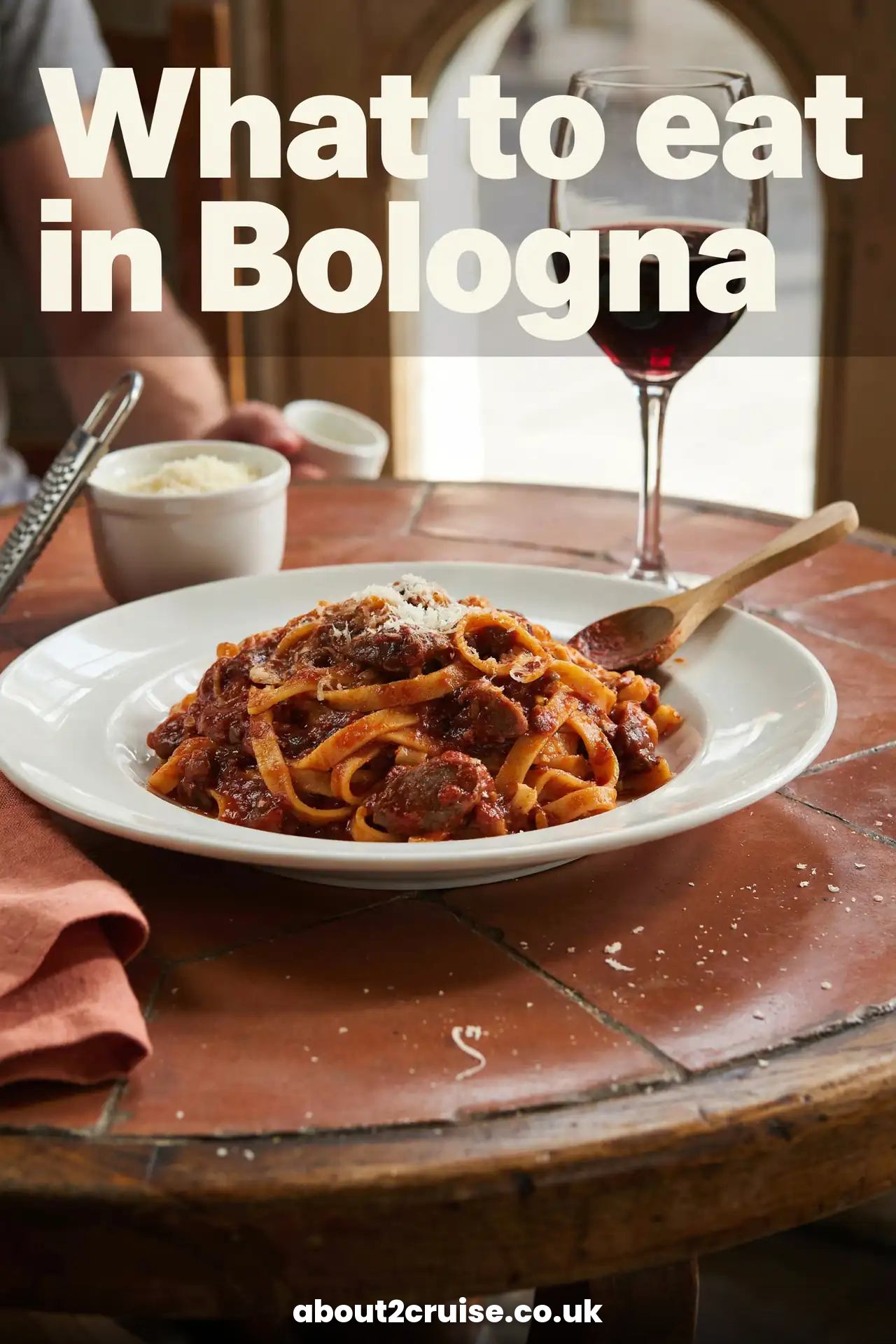
Dishes to look for: tagliatelle al ragù, which in Bologna is never served with spaghetti; lasagne alla bolognese; tortellini in brodo; gramigna con salsiccia; passatelli; and cotoletta alla bolognese. Mortadella is the native salume, and piadina is the flatbread you’ll see for quick lunches.
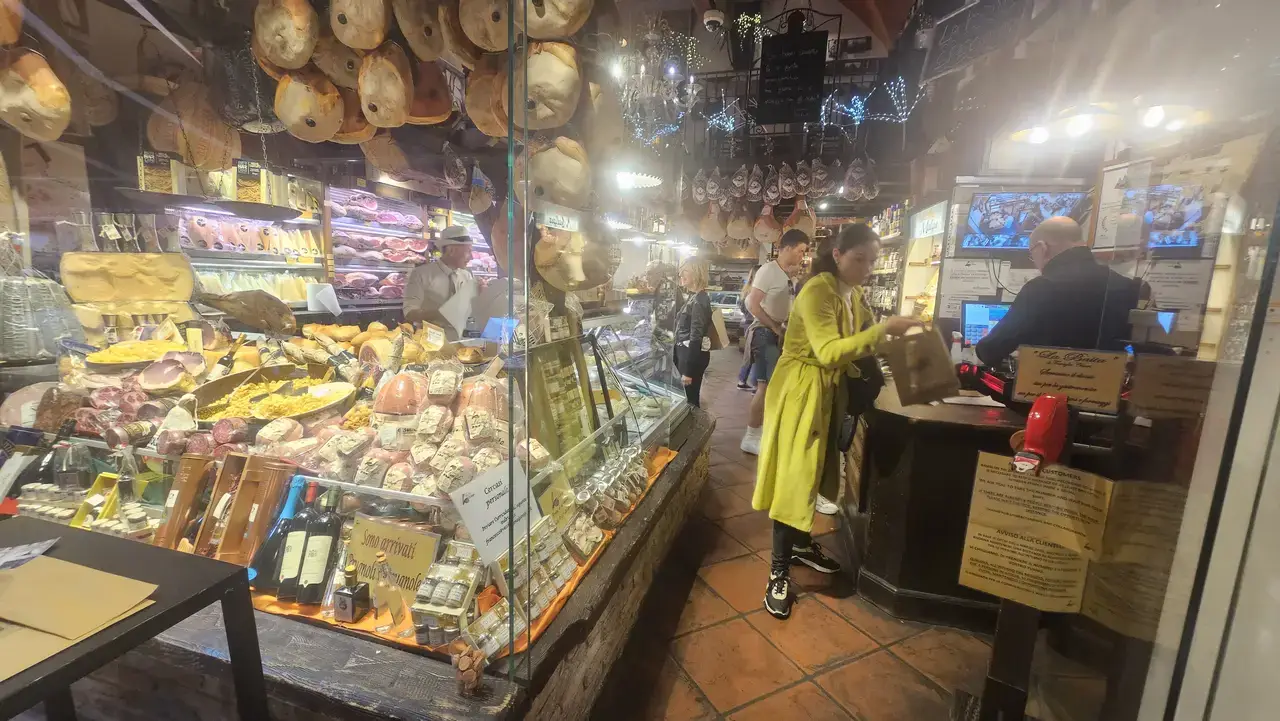
For a market lunch, buy mortadella sliced at a counter, fresh egg pasta and tortellini by weight, Parmigiano Reggiano, tigelle or crescentine, and a small bottle of Pignoletto or Lambrusco. Some stalls are cash-only, so keep a few euro coins.
For a sit-down lunch, avoid the most tourist-heavy tables facing the main square and walk two streets into the Quadrilatero. A typical plate of tortellini or tagliatelle al ragù is not cheap but is usually excellent.
Bologna Food Tours and Dietary Needs
If you want a guided line-up, Taste Bologna’s classic tour is four hours from about €95 per adult, Monday–Saturday, max 10 people, and can be adapted for gluten-free, vegetarian or dairy-free diets. Secret Food Tours Bologna runs 3.5 hours from €89.99 but cannot cater for gluten intolerance.
Eating Europe’s Bologna food and wine tour is three hours from about €69, vegetarian-friendly but limited for vegan, gluten-free and kosher. Bologna Welcome’s own Taste of Bologna walk is two hours from €55 with three tastings, but not suitable for coeliacs.
Sunday group tours are limited: some operators, like Taste Bologna, reserve Sundays for private tours. If you’re vegetarian, vegan or have allergies, book ahead and tell the operator before paying.
If you are coeliac, our guide to staying gluten-free on a cruise holiday covers eating safely on board and ashore.
Ship Excursion vs DIY Bologna: Which Is Right for You?
Ship excursions are return-guaranteed but pricey and often pair Bologna with another stop. Princess, for example, has sold “The Region’s Queens: Bologna & Ferrara” and “Best of Ravenna, Basilica di San Vitale & Bologna”, both 9 hours and marketed as strenuous, from about $114.95 and $239.95 respectively. Private shore excursions from Ravenna port start near $250 for a driver-only Bologna tour and rise for guided group options.
DIY Bologna is cheaper: shuttle from €20, train about €7–€8.50 each way, food and a few paid sights. The risk is the return train. If you’re nervous about strikes, mobility, or simply want someone else to manage the day, the excursion is worth the premium. If you’re comfortable with trains and time buffers, DIY gives you freedom to eat at your own pace.
For how ship excursions are priced and when to book them, see our guide to booking cruise excursions.
Return Timing: Protect Your All-Aboard
No public page states your ship’s all-aboard cut-off, so work backwards from the latest time printed on your daily programme. Aim to be at Ravenna station at least 2.5–3 hours before all-aboard. That means if all-aboard is 16:30, leave Bologna on a train that arrives in Ravenna no later than 14:00–14:30.
Bologna Centrale to the platform is 15–18 minutes on foot, so leave the centre by 13:30–13:45. Build in at least one buffer train; if the next train after your intended one is cancelled or late, you take the earlier one, not the later one.
If you miss the last safe train, taxis from Bologna to Ravenna are expensive and not guaranteed. The ship excursion exists for that reason.
Museum and Attraction Opening Days: Sunday and Monday Matter
The day you call matters. San Petronio and the Sanctuary of San Luca are open every day. The Archiginnasio is closed on Sundays. The Municipal Art Collections in Palazzo d’Accursio close on non-holiday Mondays, and some other museums close on Mondays or Tuesdays. If you have a must-see indoor sight, check that attraction’s own calendar before setting out.
Bologna with Limited Mobility
The central route from the station to Piazza Maggiore is mostly flat and porticoed, but side streets and the Quadrilatero are cobbled. The Asinelli tower has no lift, only 498 steps, and is not recommended for heart or asthma sufferers, vertigo or claustrophobia.
The Clock Tower terrace has a narrow staircase and no under-8s. The Archiginnasio has step-free access via Via de’ Foscherari 2 by lift to a fully accessible first floor; the Piazza Galvani 1 entrance has steps.
Bologna in Rain
Bologna is one of the better rainy-day cities in Emilia-Romagna because the porticoes cover a lot of the walking route. San Petronio, the Archiginnasio, food shops and covered markets work indoors. The San Luca walk is covered but long and uphill; in heavy rain, skip the full version and photograph a section.
Bologna with Kids
The Clock Tower terrace bars under-8s, and the Asinelli climb only lets under-18s go with an adult when it is open. Younger kids often prefer the San Luca Express mini-train or the City Red Bus hop-on hop-off loop. Food is easy: tortellini, mortadella and gelato are hard to refuse. Keep the day shorter and add a park or a slow stop in Piazza Maggiore.
Planning a family sailing around Italy? Our Mediterranean family cruises guide covers which ships and ports work best with children.
What a Bologna DIY Day Actually Costs
Base DIY cost is roughly €20–€36 for the port shuttle round trip, €14–€17 for the train round trip, about €2.30 if you use one urban bus, and whatever you spend on food. Most central sights are free, so paid extras such as the Clock Tower or a food tour dominate the budget. A cheap market lunch keeps the day below €60; a full guided food tour plus sit-down lunch pushes it well past €150.
| Item | Cost |
|---|---|
| Port shuttle round trip | €20–€36 |
| Train round trip | €14–€17 |
| Urban bus single | €2.30 |
| Clock Tower | €10 full, €7 reduced |
| Food tour | €55–€95 |
| Total range | Under €60 to over €150 |
Pickpockets, Safety, and Toilets
Italian crime levels are generally low, but bag-snatching and pickpocketing are higher at train stations, on public transport and around main monuments. Use only licensed taxis with a roof sign and a company name or number, and carry photo ID at all times. Eating or drinking next to major churches and monuments can lead to a fine, and sitting on some monument steps is banned.
Public toilets in Bologna are often paid, so keep coins. Reliable options include the attended toilets at Sala Borsa in Piazza del Nettuno 3, the attended toilet on Via IV Novembre beside Palazzo d’Accursio, and the attended facility at Piazza de’ Calderini. Bologna Centrale station toilets are paid. Free water is available from many public fountains and acqua del Sindaco distributors; bring a refillable bottle.
Food Souvenirs and Local Shopping
Best food souvenirs: mortadella sliced at the counter, fresh egg pasta and tortellini by weight, Parmigiano Reggiano, tigelle and crescentine, and a bottle of Pignoletto or Lambrusco. If you’re flying straight after the cruise, check what you can carry; if the ship allows food to be brought back on board, wrapped market purchases are fine. Keep in mind San Petronio and some museums will refuse large luggage.
Left Luggage, Offline Maps, and Language Basics
Left luggage: if your cruise ends in Ravenna and you’re spending a day in Bologna before flying home, book luggage storage near Bologna Centrale and see the city without dragging your cases around.
Ravenna station has a luggage service in front of the station, next to the Infopoint and taxi rank. If you’re passing through Ravenna only for the day and don’t need cruise luggage, leave it in your cabin or use the cruise line’s left-luggage arrangement if one exists.
Download offline maps and the Trenitalia or Tper app before arrival. A handful of Italian phrases helps, but most central food shops and restaurants can handle an English order.
Arriving the night before your cruise? Our Ravenna cruise port guide covers luggage storage near Ravenna station and the transfer to the terminal.
Hop-On Hop-Off and the San Luca Express
The City Red Bus hop-on hop-off costs about €16 adult and €8 child 6–10; under-5s €3. The San Luca Express mini-train is about €13 adult and €6 child 6–10, under-5s €3. A two-route combo is about €24. These are useful for saving steps or reaching the San Luca viewpoint without the full portico climb, but they run to a timetable and can eat into a short port day.
Sunday and Public Holiday Travel
Regional trains still run on Sundays and most public holidays, but frequency can be slightly altered and some city buses reduce service. San Petronio and San Luca stay open. The main risk is shops and some markets closing, plus food tours not running as group walks. If your cruise call falls on a Sunday or a public holiday, confirm museum opening hours and any food tour before you commit.
Quick Questions from Cruisers
Can you walk from Ravenna Cruise Port to Ravenna station?
No. The terminal is 13 km from the station, along port roads with no pedestrian route designed for cruise passengers. Use the shuttle, bus 90 or a taxi.
How long does Bologna take from Ravenna Port?
Realistic DIY door-to-door each way is about two hours: 30 minutes from terminal to Ravenna station, plus 10–20 minutes waiting, plus about an hour on the train, plus 15–18 minutes walking to Piazza Maggiore. In practice, plan around two hours each way and add buffer on the return.
Do I need to book the Ravenna–Bologna train in advance?
Regional tickets don’t have seat reservations, so booking early mainly gives you a mobile QR code and avoids queueing. You can buy on the day, but paper tickets must be validated. During strike periods, refunds are only available before midnight the day before.
Can I store cruise luggage at Bologna Centrale?
Yes, KiPoint at the Piazzale Ovest entrance offers left luggage. San Petronio will not admit suitcases, so store bags before sightseeing.
Is the Asinelli Tower open?
At the time of writing it is closed because of Garisenda safety works, with no official reopening date. Check before you plan the climb.
What if I miss the last safe train back?
Taxis from Bologna to Ravenna are possible but expensive and not guaranteed. Always take an earlier train than the mathematical last one.