
The ABC Islands, Aruba, Bonaire and Curaçao, form a three-island Dutch Caribbean chain in the far southern Caribbean, outside the main hurricane belt. Aruba delivers hassle-free resort beaches, Bonaire is a shore-diving capital with a protected marine park, and Curaçao pairs a UNESCO-listed waterfront with coves and culture. All three cruise ports, Oranjestad, Kralendijk and Willemstad, sit alongside the ship with no tendering.
ABC Islands cruise ports map
The ABC Islands have 3 cruise ports: Oranjestad in the west, Willemstad in the middle and Kralendijk in the east. Tap a pin to open that port’s guide.
What Are the ABC Islands?
Let’s clear up the basics first. The ABC Islands are Aruba, Bonaire, and Curaçao, the three westernmost islands in the Leeward Antilles. They sit roughly 15 to 50 miles north of Venezuela. Despite the catchy acronym, they don’t run in alphabetical order from west to east. Aruba is the westernmost, then Curaçao in the middle, and Bonaire sits closest to Venezuela.
“ABC” is simply a handy way to group the three names. You’ll often see them sold together as an “ABC islands cruise,” but each island is its own entity within the Kingdom of the Netherlands. Aruba and Curaçao are autonomous constituent countries, while Bonaire is a special municipality of the Netherlands.
Locals speak Papiamento alongside Dutch, and English is widely spoken, especially in Aruba, where many people speak four or more languages, including Spanish. You won’t have any trouble getting around with English alone. The islands share a Dutch Caribbean feel: pastel gabled buildings, tidy streets, and a strong European influence. But don’t mistake them for interchangeable stops.
Weather: Why These Islands Sit Outside the Hurricane Belt
One of the biggest reasons cruisers love this trio is the weather. Because these islands lie so far south, they sit outside the main Atlantic hurricane track. Most storms pass well to the north, which is why Southern Caribbean cruises that include Aruba, Bonaire, and Curaçao run year-round instead of only in winter.
The climate is dry and cooled by steady trade winds. Aruba averages around 28°C all year and only gets about 16 inches of annual rain, mostly between October and January. Bonaire and Curaçao follow a very similar pattern. Humidity tends to be lower than in the northern Caribbean, and the east-to-northeast breeze keeps things comfortable even when the sun is strong. Sea conditions are generally calmer on this southern route, though you may still feel some movement on the open-water stretches from Florida, Barbados, or Panama.
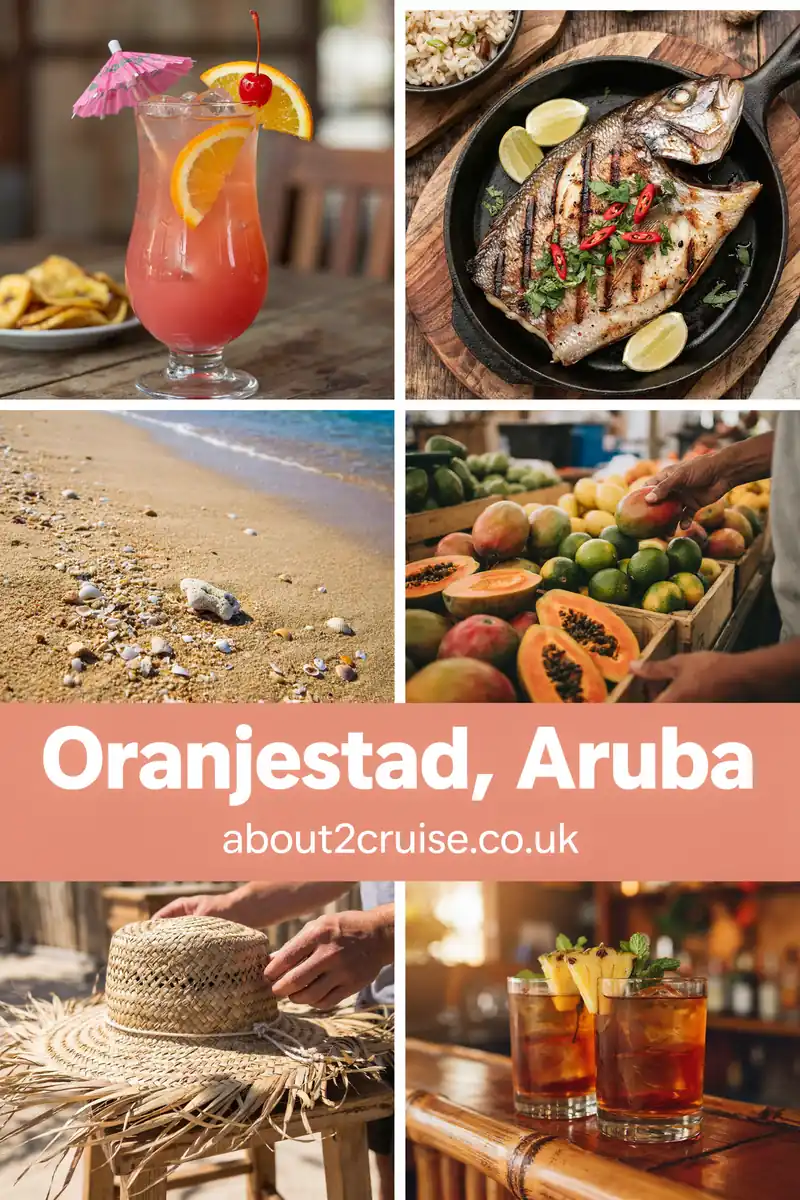
Aruba: Beaches and Resort Vibes
If you want a no-stress beach day, Aruba is the obvious pick. It’s the best-known of the three and the easiest to plan. The island is flat, dry, and built for beach tourism. Eagle Beach and Palm Beach are the two star attractions, wide stretches of white sand, calm water, and a resort strip packed with bars, shops, and watersports. Baby Beach sits at the quieter southern tip for a more laid-back feel.
For something different, Arikok National Park covers nearly 20% of the island and mixes cliff views, caves, and desert-like scenery. The port area in Oranjestad is compact and walkable, with a free trolley looping through downtown. If you want to head to the beach on your own, the public Arubus runs from the cruise terminal up the hotel strip to Eagle and Palm Beaches for about $2.60 per ride. Aruba is also the most developed of the three when it comes to shopping and casinos, so it suits cruisers who like a lively, resort-style day.
Bonaire: Diving, Snorkeling, and Quiet Charm
Bonaire is the small, focused one, and if you’re into diving or snorkeling, it’s probably the highlight of your cruise. The entire coastline around Bonaire and the uninhabited islet Klein Bonaire is part of the Bonaire National Marine Park. There are 86 dive sites, most of them reachable straight from shore and marked by yellow-painted stones along the coastal road. The park protects more than 57 species of soft and stony coral and over 350 recorded fish species. Cruise passengers pay a $10 day nature fee instead of the $40 annual fee.
You don’t have to be a diver to enjoy Bonaire. Klein Bonaire is a short water taxi ride from Karel’s Pier near the cruise terminal and offers fantastic snorkeling. On land, the southern salt pans, orange-painted slave huts, and flamingo colonies make a memorable drive. Kralendijk itself is flat, quiet, and walkable, with a waterfront lined with low-key bars and restaurants. If you plan to dive, book early and tell the operator your exact ship time. The marine park also has strict rules: no gloves, no knee pads, and no touching coral.
Curaçao: UNESCO Streets, Food, and Coves
Curaçao is the cultural heavyweight of the three. Willemstad’s historic core, Punda, Otrobanda, Pietermaai, and Scharloo, is a UNESCO World Heritage Site built around a natural deep-water harbor. The famous Handelskade row of brightly colored facades facing the water is the postcard shot everyone goes home with. The Queen Emma pontoon bridge swings open to let ships pass through Sint Anna Bay, which is a neat sight on its own.

Away from the city, you’ll find beaches like Mambo Beach and Blue Bay, along with a string of small coves that offer good snorkeling. Curaçao feels more like a small country than a resort island, it has a working capital, a strong food market culture, and its own local dishes like keshi yena, stobá, and funchi. For cruise visitors, it’s the culture-plus-beach port. Spend the morning walking UNESCO streets, grab lunch at Plasa Bieu market in Punda, and then take a 10–15 minute taxi to Mambo Beach before it’s time to sail.
The Three Cruise Ports at a Glance
Oranjestad (Aruba)
Every ship that calls on Aruba docks at the Aruba Cruise Terminal on L.G. Smith Boulevard at the edge of downtown Oranjestad. There are five berths, and it’s always an alongside docking, no tenders. You step off into the capital, where a free open-air trolley loops through the shopping streets. Surfside Beach is about 15 minutes on foot, while Eagle and Palm Beaches are a short taxi or bus ride away. This is the best port for first-time beach cruisers, shoppers, and anyone who wants an easy independent day.
Kralendijk (Bonaire)
Ships dock at one of two central piers: the North Pier (Town Pier) opposite Wilhelmina Park or the South Pier next to South Pier Mall. Both are alongside and open straight onto Kralendijk’s flat, step-free waterfront. The marine park, Klein Bonaire water taxis, and dive shops are all within walking distance. This is the best port for divers, snorkelers, and people who want a quiet, unspoiled stop without crowds.
Willemstad (Curaçao)
Large ships use the Mega Cruise Terminal just outside the mouth of Sint Anna Bay. Smaller ships use Mathey Wharf inside the bay on the Otrobanda side. From the Mega Pier, it’s a 5–10 minute walk to the Queen Emma Bridge and Rif Fort. A free passenger ferry runs across the bay while the bridge is open for marine traffic. This is the best port for UNESCO architecture, local food, culture, and adding a beach stop.
Which Island Fits Your Cruise Style?
If your priority is an easy beach day with sunbeds and a resort feel, Aruba is the most polished. If you want the best snorkel or dive you can fit into a port call, Bonaire wins. If you want a real city, a UNESCO-listed waterfront, local food, and a beach as a secondary stop, Curaçao is the answer.
Ships don’t always visit the islands in the same order. West-to-east is Aruba, Curaçao, Bonaire, but itineraries often mix it up, sometimes Curaçao first, then Bonaire, then Aruba. Don’t assume “ABC” means the ship follows the alphabet.
Cruise Lines and Itineraries
The list of cruise lines that call at these islands is long. You’ll see Celebrity Cruises, Royal Caribbean, Princess Cruises, Holland America Line, Carnival Cruise Line, Norwegian Cruise Line, MSC Cruises, Regent Seven Seas, Azamara, Cunard, Marella, P&O Cruises, AIDA, Oceania, Windstar, Ponant, and Royal Clipper, among others.
Typical patterns you’ll come across:
- 7-night Southern Caribbean from San Juan calling at Aruba and Curaçao, Norwegian Prima and Norwegian Viva run this pattern, along with some Royal Caribbean Vision-class sailings.
- 7-night from Colón, Panama or Cartagena, Royal Caribbean’s Grandeur of the Seas calls at Willemstad, Kralendijk, and Oranjestad.
- 9-night from Port Canaveral, Royal Caribbean’s Adventure of the Seas calls at Oranjestad, Kralendijk, and Willemstad.
- 8-night from Miami, Carnival Horizon runs 8-day Southern Caribbean sailings calling at all three islands.
- 9-day from Florida, Holland America’s 9-day Southern Caribbean and ABC Islands itinerary calls at Willemstad, Kralendijk, and Oranjestad.
- 7- to 15-night from Fort Lauderdale, Miami, San Juan, Boston, Cape Liberty, or San Diego, Celebrity Cruises markets a wide ABC range across different embarkation ports.
- 21-night Caribbean from Miami, MSC Poesia calls at all three on longer sailings.
- 10- to 11-night smaller-ship routes, Azamara and Oceania call at all three, often with late stays in port.
Not every ABC cruise calls at all three islands. Some visit two of the three. Check the itinerary map before you book if all three are the point.
How to Cruise the ABC Islands from the UK
For UK cruisers, there are two practical ways to reach the ABC Islands. The most common is a fly-cruise. Marella Cruises runs all-inclusive 7-night Caribbean itineraries from Barbados that call at Aruba, Bonaire, and Curaçao aboard Marella Explorer 2, plus 14-night fly-cruises from La Romana that visit Bonaire, Curaçao, and Aruba on Marella Discovery. Gratuities and service charges are included in the fare. Winter itineraries have started around £1,104 per person.
P&O Cruises also offers Britannia fly-cruises from Barbados calling at Aruba and Curaçao, and its Aurora ship runs a 75-night no-fly Caribbean Grand Tour from Southampton that includes Kralendijk and Willemstad. If you like smaller ships, Azamara offers 10- and 11-night ABC itineraries from Panama with drinks, gratuities, and laundry included, but flights are extra, prices typically start around £2,549 per person.
If you join a US-based line, you’ll fly to Florida, San Juan, Panama, or Barbados to board. That adds to your flight budget and may require a US ESTA if you transit through a US airport.
When to Go: ABC Islands Cruise Season
Because the islands sit outside the main hurricane belt, the “when to go” question is more about heat, rain, and pricing than storms. December to April is the busiest and most expensive period, thanks to North American snowbird traffic. May and November are good shoulder months, still warm and dry but with fewer ships in port.
June to November is the official Caribbean hurricane season, but historically the ABCs see far fewer impacts than islands further north, and cruises run year-round. Aruba gets most of its rain from October to January, and Bonaire and Curaçao follow similar patterns, but rain usually comes in short, sharp bursts rather than all-day washouts. Trade winds keep temperatures steady around 28°C, with evenings in the mid-20s.
Entry Requirements for UK Passengers
UK passport holders do not need a visa for tourist visits to the ABC Islands. Aruba allows stays of up to three months, Curaçao up to 90 days in a calendar year, and Bonaire, as a special Dutch municipality, also allows visa-free short tourist stays. Your passport should be valid for the duration of your stay on all three islands.
There are a few online formalities to sort before you arrive. Aruba requires an embarkation card completed up to seven days before arrival. Curaçao requires a digital immigration card completed 48 hours before arrival through the official government portal at dicardcuracao.com, stick to that official site and avoid any third-party site that tries to charge a fee. Bonaire charges a visitor entry tax of $75 per adult and $10 per child under 13, paid online before travel.
If your cruise starts from a US port and you fly through the United States, you’ll need an ESTA under the Visa Waiver Program. It costs about $40, lasts up to two years, and covers multiple entries. If your cruise starts in Barbados, Panama, or the Dutch Caribbean, you won’t need US paperwork for the cruise itself, but your flight may still connect through a US hub.
Money, Tipping, and Costs
US dollars are accepted on all three islands, and they’re the currency you’ll see on most tourist price tags. Aruba’s official currency is the Aruban florin, pegged at US$1 = Afl 1.80. Curaçao uses the Caribbean guilder, pegged at US$1 = Cg1.79. Bonaire uses the US dollar outright.
Cards are widely accepted, but carry some cash. On Bonaire you’ll need it for food trucks and small snack bars, and in Curaçao the Plasa Bieu market stalls prefer cash. ATMs are available in all three capitals.
Tipping follows Caribbean cruise norms. On Bonaire, a 10–15% service charge is usually already included in restaurant bills, and rounding up is appreciated. On Aruba and Curaçao, check the bill for service before adding more. Taxi fares are fixed on all three islands, but negotiation isn’t appropriate, ask to see the rate card and agree the fare before you ride.
As a rough budget, allow $25–30 for a short taxi ride to a beach, $3–5 for a local snack, $20–35 per person for a casual lunch with a drink, $50–80 per person for a half-day snorkel or jeep excursion, and around $150 for a two-tank dive.
Getting Around Aruba, Bonaire, and Curaçao
Aruba has the strongest public transport of the three. The Arubus L10 runs from downtown Oranjestad along the hotel strip to Eagle Beach, Palm Beach, and beyond for about $2.60 per ride. Taxis are fixed-fare per car for up to four passengers, around $28 to Eagle Beach and $33 to Palm Beach. There’s no Uber or Lyft.
In Curaçao, taxis are government-regulated with license plates starting “TX,” and most don’t use meters. Expect to pay about $23 per car each way from the Mega Pier to Mambo Beach. Public buses exist but are harder to use as a cruise visitor, so taxis and fixed-rate private transport dominate.
On Bonaire, taxis run on a government rate card that every licensed driver must carry, ask to see it. Typical fares are about $30 each way to 1000 Steps and $35 to Washington Slagbaai National Park. There’s no public bus system suitable for tourists. Rental cars start around $35 per day, with 4×4 pickups around $60–75.
Safety and Health
All three islands sit at US State Department Level 1, exercise normal precautions. The UK Foreign Office advice for each island warns about petty theft and occasional street crime, so keep valuables out of sight, avoid isolated beaches after dark, and don’t leave bags visible in rental cars. Drug-related violent crime does exist because the islands sit on a trafficking route, but the main tourist areas are generally safe.
Carry ID: on Aruba you must carry a copy of your passport by law, and Curaçao and Bonaire require the same. Health-wise, there’s a risk of dengue and a low risk of Zika on some of the islands. Tap water on Bonaire is desalinated and safe to drink. Travel insurance that covers cruise diversions and medical evacuation is essential for UK citizens, an EHIC or GHIC won’t cover most private care in the ABC Islands. Reef-safe sunscreen is strongly advised on all three, especially Bonaire, where marine park rules discourage harmful sunscreen ingredients.
Accessibility at the Cruise Ports
No ABC port requires a tender, which is good news for anyone with mobility concerns. Aruba docks directly at Oranjestad with a flat pier walk. Bonaire’s two piers open straight onto the flat, step-free Kralendijk waterfront. Curaçao’s Mega Cruise Terminal rents wheelchairs and mobility scooters, and the walk into Punda is flat but can be hot and unshaded. Some streets in central Willemstad have uneven paving and kerbs.
If you’re booking a snorkel trip on Bonaire, ask the operator about entry conditions, some entries are sandy and gradual, while others are rocky or reached by stairs. Dive operators are generally well set up for experienced disabled divers, but always check availability before paying.
Extending Your Trip
Most ABC ports are day calls, not embarkation points, so if you want extra time, you’ll usually need to fly in and stay before or after your cruise. Aruba’s Queen Beatrix International Airport has British Airways flights from Gatwick via Antigua and KLM flights via Amsterdam. Bonaire has limited flights, mostly KLM from Amsterdam plus some US connections.
For hotels within walking distance of the cruise piers, consider the Renaissance Wind Creek Aruba Resort in Oranjestad (about five minutes from the terminal), the Renaissance Wind Creek Curaçao Resort in Willemstad (five minutes from the Queen Emma Bridge), or Divi Flamingo Beach Resort in Kralendijk, which is walkable to downtown and has its own dive operation.
ABC Islands Cruise FAQs
Is it worth booking a Bonaire dive if I have a short port call?
Yes, if you use a ship-approved operator and a shore entry near the pier. Many of Bonaire’s dive sites sit along the coast road within 10–20 minutes of Kralendijk. Tell the operator your exact ship departure time and let them plan the site and return window. The $10 day nature fee is usually arranged through the operator or cruise line.
Should I book shore excursions through the cruise line or independently?
If a Bonaire dive or a tight long-distance tour is on your list, the cruise line’s guarantee that the ship waits for late-returning excursions is worth the premium. For beaches, walking tours, and taxis, independent planning usually works well and saves money, just build in a two-hour buffer before all-aboard time.
Do any of the ABC ports have luggage storage?
No official left-luggage facility exists at the Oranjestad, Kralendijk, or Willemstad cruise terminals, nor at the main airports. These are day-call ports, not embarkation points, so pack light and leave bulky items on the ship.
Which island is best for a first-time cruiser?
Aruba. The port is walkable, the beach infrastructure is the most familiar, and the public bus and fixed-fare taxis make independent exploring straightforward. Curaçao is the next best for confident walkers who enjoy city sightseeing. Bonaire suits more independent travellers and divers.
Do I need a visa or ESTA if my cruise starts in Florida?
UK citizens need an ESTA to enter the United States under the Visa Waiver Program, even for a one-night pre-cruise stay or airport transit. It costs about $40, lasts up to two years, and covers multiple entries. If your ABC cruise embarks in Barbados, Panama, or San Juan, a US ESTA is not needed for the cruise, but check your flight routing.
Is Aruba to Bonaire feasible as a day trip during a cruise?
No. The islands are separated by open water and are not connected by passenger ferry. Each is visited as its own port call. Don’t book independent inter-island transport on a cruise day.
What should I carry in cash for a port day?
US dollars are easiest. A sensible port-day float is $60–100 per person: $25–35 for a taxi return to a beach, $5–15 for beach entry or chairs, $20–35 for lunch, plus small bills for stalls, snacks, and tips. Cards cover most larger purchases.
Are cruise ships still going to all three islands?
Yes. Aruba’s port authority publishes a full season of cruise berths, Bonaire’s cruise schedule lists calls from major lines through the season, and itineraries from Royal Caribbean, Celebrity, Holland America, Carnival, Marella, P&O, and others continue to include the ABCs. Occasional itinerary substitutions happen, but the trio remains a core Southern Caribbean route.