
Alaska cruises in May require versatile layering for temperatures ranging from 40-60°F. Pack waterproof jackets, fleece or sweaters, long pants, and comfortable walking shoes. Include thermal underlayers for glacier viewing, sun protection, and casual evening wear for onboard dining. Moisture-wicking fabrics and accessories like gloves, hats, and scarves are essential for unpredictable weather conditions.
Quick Facts: May Alaska Cruise Packing
| Category | Details |
|---|---|
| Temperature Range | 40-60°F (4-15°C) |
| Daylight Hours | 17-19 hours (near summer solstice) |
| Precipitation | Moderate to high, expect rain |
| Dress Code | Casual to smart casual |
| Layering Strategy | Base + mid + outer layer |
Want to know more about Alaska outfits for your cruise?
Why May is Unique for Alaska Cruises
May sits in that sweet spot between Alaska’s winter and summer seasons. You’re getting longer daylight hours without the peak crowds, but the weather hasn’t fully committed to being warm yet. Think of it as Alaska’s moody teenager phase – beautiful but unpredictable. The landscapes are waking up with spring blooms, wildlife is active, and you’ll see fewer tour buses clogging up the ports. However, this also means Mother Nature hasn’t decided if she’s done being grumpy.
Understanding May Alaska cruises helps you plan better for the unique conditions of this shoulder season month.
The Layering System That Actually Works
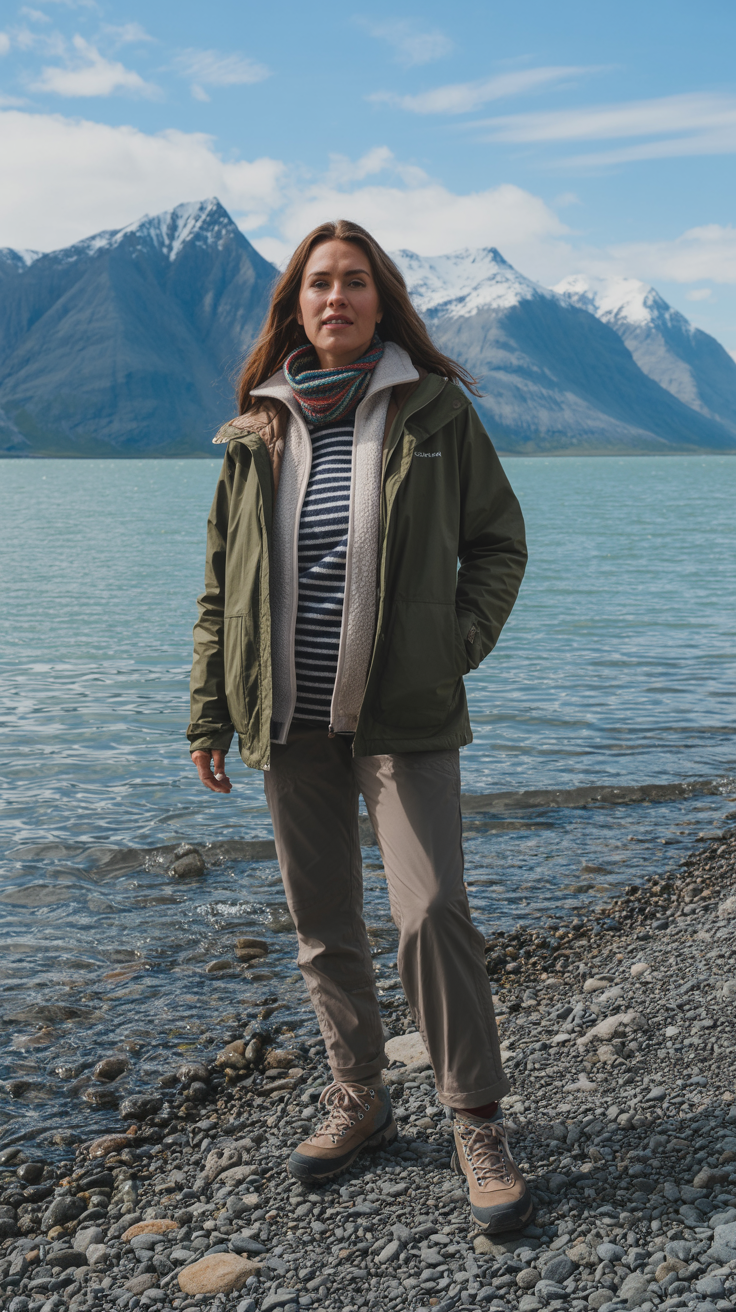
Forget fashion – function is your best friend in May. The three-layer system isn’t just outdoor industry marketing; it genuinely works when you’re dealing with Alaska’s schizophrenic weather patterns.
Base Layer (The Foundation)
- Merino wool or synthetic moisture-wicking fabrics keep sweat away from your skin
- Pack 3-4 long-sleeved base layer tops (you’ll wear them every day)
- Thermal leggings or long underwear for early morning excursions
- Skip cotton entirely – it stays wet and makes you colder
Mid Layer (The Insulation)
- Fleece jackets are lightweight and dry quickly
- Down vests pack small and add warmth without bulk
- Wool sweaters work but weigh more in your luggage
- Bring at least two options so you can wash one
Outer Layer (The Shield)
- Waterproof and windproof jacket with a hood (non-negotiable)
- Look for breathable fabrics like Gore-Tex to prevent sweat buildup
- Longer jackets protect better but can be bulky for photos
- Bright colors help you stand out in group excursion photos
Bottom Half Essentials
Everyone obsesses over jackets and forgets about pants until they’re standing in the rain wishing their jeans weren’t soaked.
- Quick-dry hiking pants or travel pants (2-3 pairs minimum)
- One pair of jeans if you must, but they take forever to dry
- Waterproof pants for kayaking or extended outdoor excursions
- Avoid shorts unless you’re particularly cold-resistant
- Leggings work great as a base layer under pants
For more options, check out these Alaska outfit ideas that work across different activities.
Footwear Strategy
Your feet will make or break your trip. Literally. Wet, cold feet on a glacier hike is nobody’s idea of fun.
- Waterproof hiking boots with good ankle support (break them in before the cruise)
- Trail running shoes as a backup pair
- Wool or synthetic socks (pack more than you think you need)
- Slip-on shoes for the ship (you’ll be walking a lot)
- Nicer casual shoes for dinner if you care about that sort of thing
Pro tip: Bring a second pair of insoles. If your boots get wet inside, you can swap the insoles and at least have dry inner soles while the boots finish drying.
Accessories That Pull Their Weight
These small items pack light but deliver serious comfort upgrades:
- Warm beanie or fleece headband (you lose 30% of body heat through your head)
- Lightweight gloves or mittens for glacier viewing
- Neck gaiter or scarf (more versatile than scarves)
- Sunglasses with UV protection (the glare off water and glaciers is intense)
- Brimmed hat for surprise sunny days
- Hand warmers (the disposable kind are clutch for early morning wildlife watching)
Onboard Dress Code Reality
Alaska cruises are the most casual of all cruise destinations. The cruise lines know you’re there for nature, not to parade around in formal wear. Most ships have one or maybe two “smart casual” nights maximum.
- Casual dining: your cleanest hiking pants and a non-athletic top work fine
- Smart casual nights: khakis or dark jeans with a button-down or blouse
- Specialty restaurants: slightly nicer but still relaxed
- Nobody wears heels (the ship rocks and decks can be wet)
For comprehensive guidance, see what to pack for an Alaska cruise beyond just clothing.
Gender-Specific Considerations
While layering principles work for everyone, there are some gender-specific outfit nuances worth mentioning.
Women often appreciate having women’s Alaska cruise outfits that balance practicality with style, like athletic dresses with leggings for onboard casual dining or fleece-lined leggings that work as both base layers and standalone pants.
Men benefit from focusing on men’s Alaska cruise outfits with functional pockets and relaxed fits that accommodate layering without looking bulky.
The Packing List Nobody Tells You About
Beyond the obvious clothing, these items make life easier:
- Laundry detergent packets (sink washing saves luggage space)
- Clothesline or travel hangers (things will get wet)
- Large zip-lock bags (protect electronics from rain and spray)
- Small backpack or daypack (for shore excursions)
- Binoculars (wildlife viewing from the ship is incredible)
- Reusable water bottle
- Seasickness medication (even calm waters can get choppy)
How May Compares to Other Months
Understanding seasonal differences helps set proper expectations and explains why packing for May differs from peak summer.
If you’re considering other months, compare June outfits for Alaska, July Alaska cruise outfits, August Alaska cruise attire, or September Alaska cruise clothing to see how weather patterns shift. May is cooler and wetter than summer months but offers better pricing and fewer crowds. July and August require less heavy layering but bring more tourists.
Learn more about when to cruise Alaska based on your priorities and weather preferences.
Shore Excursion Outfit Planning
Different activities demand different outfit strategies. Here’s what works:
Glacier Viewing and Hiking
- All three layers including waterproof outer shell
- Warm accessories (gloves, hat, scarf)
- Waterproof boots with traction
- The temperature drops significantly near glaciers
Wildlife Watching Tours
- Warm layers (you’re standing still in wind)
- Waterproof jacket (boat spray is real)
- Neutral colors (bright colors can spook animals)
- Hand warmers in pockets
Town Walking Tours
- Comfortable walking shoes
- Medium layering (you’ll warm up while walking)
- Packable rain jacket
- Small backpack for shopping finds
Weather Wildcards in May
May throws curveballs that catch even seasoned travelers off guard:
- Snow is still possible, especially at higher elevations
- Rain can be horizontal thanks to wind (side-zip jackets fail here)
- Sunny days can actually happen (pack that sunscreen)
- Temperature swings of 20 degrees in one day are normal
- Glacier wind creates its own microclimate (always colder near ice)
Bonus Tips
- Pack outfits in complete sets inside packing cubes – grab and go each morning without thinking
- Wear your bulkiest items on the plane to save luggage space
- Hotel shower caps make excellent waterproof shoe covers in your suitcase
- Take photos of your outfits before the trip to remember what goes together
- The ship’s laundry service is expensive; cruise lines know you’ll need it and price accordingly
- Deck 7 (or wherever outdoor viewing decks are) is always windier and colder than you expect
- Buy a cheap poncho at the first port – locals know when rain is coming
- Keep a set of dry clothes in your cabin – coming back to warmth after a wet excursion is glorious
- Merino wool doesn’t smell even after multiple wears (your cabin mate will thank you)
- That “waterproof” jacket you bought five years ago probably isn’t anymore – test it before you go
What Not to Bring
Luggage space is valuable. Skip these common mistakes:
- Formal wear (unless you really want that fancy dinner photo)
- More than one pair of jeans
- Cotton anything as a base layer
- Umbrella (wind makes them useless and you need both hands free)
- White or light-colored pants (mud, boat grime, and rain)
- Non-waterproof camera without protection
- Excessive jewelry
Common Questions and FAQ
Can I wear sneakers instead of hiking boots?
You can, but waterproof hiking boots provide better protection and traction. If you only own sneakers, at least treat them with waterproofing spray and bring extra socks. Athletic shoes work fine for ship days but struggle on wet trails and boardwalks.
How many jackets should I actually pack?
Two is ideal – your main waterproof shell and one fleece or insulated jacket. If one gets soaked, you have a backup while it dries. Three jackets is overkill unless you’re doing serious backcountry excursions.
Will my regular winter coat work?
Probably not. Heavy winter parkas are too warm for active movement and often lack breathability. You’ll overheat hiking then freeze when you stop. Alaska in May requires versatile layering, not one heavy coat.
Do I need special pants for glacier hiking?
Regular hiking pants or quick-dry travel pants work fine for most glacier viewing. Tour operators provide crampons if needed. Only invest in specialized gear if you’re doing advanced ice climbing or extended glacier treks.
What if I forget something important?
Alaskan port towns have excellent outdoor gear shops – they live off tourists who underpacked. Prices are higher than at home, but you’ll find quality stuff. Ketchikan, Juneau, and Skagway all have good options.
Should I pack different outfits for each port?
No need. You’ll likely wear the same layering combinations throughout the cruise, just mixing and matching. Pack 4-5 tops, 2-3 bottoms, and layer combinations give you plenty of variety without overpacking.
Are there laundry facilities on the ship?
Most ships have self-service laundromats (bring quarters or check if they use cards). Some cruise lines removed them in favor of expensive laundry service. Check your specific ship’s amenities before assuming you can wash clothes cheaply.
Personal Experience
I just got back from my May Alaska cruise, and let me tell you – packing the right clothes made all the difference. The weather was absolutely wild, changing from sunny and mild to cold and drizzly sometimes within the same hour. I lived in layers the entire trip, usually wearing a moisture-wicking base layer, a fleece or sweater, and a waterproof jacket. That combo meant I could peel things off when the sun came out on deck and bundle back up when we were cruising past glaciers. My waterproof jacket with a hood was probably my most-worn item – it rained at least a little bit almost every day, and the mist coming off those massive glaciers is no joke.
The key thing I learned is that you really need to be ready for anything in May. I packed a mix of short and long-sleeved shirts, a couple pairs of comfortable pants (jeans and hiking pants), and thank goodness I brought my waterproof hiking boots. They kept my feet dry during shore excursions and gave me good traction on wet boardwalks. I also wore my warm beanie and gloves more than I expected, especially during early morning wildlife watching – standing still on the deck at 6 AM looking for whales gets chilly fast! A scarf was great too since I could stuff it in my bag and pull it out whenever the wind picked up. The casual dress code on most Alaska cruises is perfect because you really do need practical, comfortable clothes that can handle whatever Mother Nature throws at you.