
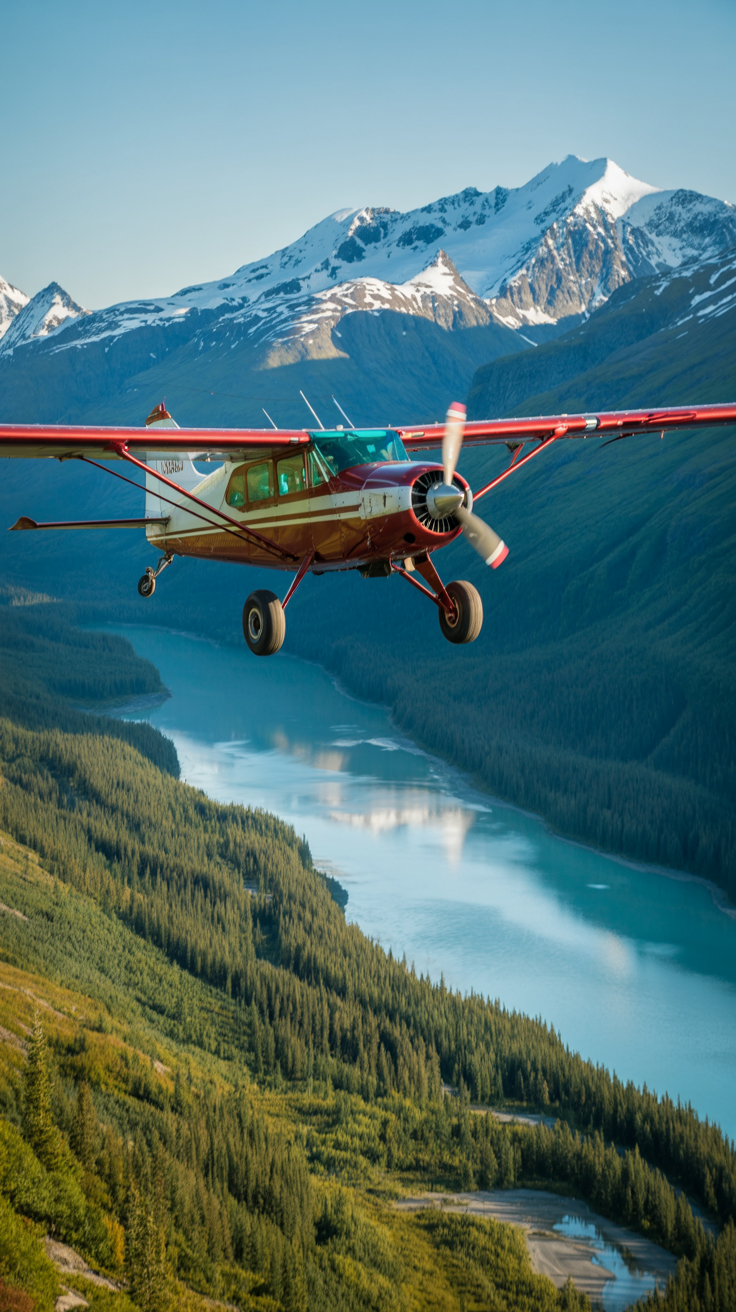
Alaska flightseeing tours offer aerial views of glaciers, wildlife, and remote wilderness areas inaccessible by road. Popular destinations include Denali, Glacier Bay, and the Kenai Fjords. Tours range from 30 minutes to several hours, with options for glacier landings. Small aircraft and helicopters accommodate different group sizes and provide optimal viewing through large windows.
Quick Facts
| Feature | Details |
|---|---|
| Tour Duration | 30 minutes to 4+ hours |
| Average Cost | $200-$600 per person |
| Best Months | May through September |
| Weight Limits | Typically 250-300 lbs per passenger |
| Group Size | 3-10 passengers depending on aircraft |
| Minimum Age | Usually 2+ years (lap infants sometimes allowed) |
Want to know more about Alaska shore excursions and activities beyond flightseeing?
Types of Flightseeing Aircraft
The aircraft you fly in dramatically changes your experience. Fixed-wing planes hold more passengers and cover larger distances efficiently, making them ideal for longer tours over massive areas like Denali National Park. They’re also slightly less expensive per person.
Helicopters provide unmatched maneuverability and can land in spots planes can’t reach. When you’re exploring helicopter tours in Alaska, you’ll find they excel at glacier landings and getting into tight valleys. The downside? They’re pricier and have shorter flight times due to fuel consumption.
Floatplanes combine the range of fixed-wing aircraft with the ability to land on remote lakes and coastal areas. They’re particularly popular for bear viewing tours and accessing fishing spots.
Top Flightseeing Destinations
Denali and the Alaska Range
Flying around North America’s tallest peak gives you perspective that ground-based visitors simply can’t get. On clear days you’ll see the mountain’s full 20,310-foot rise from base to summit. Most tours departing from Talkeetna circle the peak and fly through the Ruth Glacier’s Great Gorge, where granite walls tower over a mile high on either side.
Glacier Bay National Park
This UNESCO World Heritage Site contains sixteen tidewater glaciers. Flightseeing here reveals the intricate network of fjords and inlets while offering stellar chances to spot humpback whales, sea otters, and brown bears along the shoreline. The aerial view shows you just how rapidly these glaciers are retreating, with clearly visible vegetation lines marking where ice stood decades ago.
Kenai Fjords and Prince William Sound
These coastal routes showcase the dramatic meeting of mountains, glaciers, and ocean. You’ll fly over the Harding Icefield, where dozens of glaciers flow outward like frozen rivers. The contrast between deep blue water, white ice, and green coastal forests creates stunning photography opportunities.
Misty Fjords National Monument
Near Ketchikan, Misty Fjords features volcanic cliffs rising 3,000 feet straight from the water. Waterfalls cascade down near-vertical walls into narrow fjords below. This area sees significant rainfall so clouds often hang low, creating the “misty” conditions that gave it its name.
Understanding Weather Policies
Here’s what they don’t always advertise upfront: flight cancellation rates in Alaska hover around 20-30% depending on location and season. Weather can change in minutes and pilots won’t fly if conditions aren’t safe.
Most reputable operators offer flexible rebooking if they cancel your flight. However, if YOU cancel, you’re often looking at losing your deposit or paying hefty change fees. This is why booking a flightseeing tour early in your Alaska trip makes sense – it gives you backup days if weather doesn’t cooperate.
Morning flights typically offer calmer conditions and better visibility. Afternoon thermal activity can create bumpy rides and clouds that obscure views. Check the Alaska weather guide before you go to understand seasonal patterns.
Glacier Landing Tours
These premium experiences add 20-30 minutes of standing on ancient ice to your flight. You’ll wear provided boot covers for traction and protection. The silence up there is profound – just wind, the occasional crack of moving ice, and your own thoughts.
Glacier landings cost $100-$200 more than flightseeing-only tours but they transform the experience from observational to participatory. Some operators combine glacier landings with dog sledding on glaciers for an even more memorable adventure.
The ice is genuinely slippery and uneven. Anyone with mobility issues should think carefully about whether climbing in and out of the aircraft on an icy surface is manageable.
What to Wear and Bring
- Layers: Temperatures drop about 3 degrees for every 1,000 feet of elevation. Even on warm ground-level days, bring a fleece or light jacket.
- Sunglasses: Non-negotiable. The glare off snow and ice at altitude can be painful and will ruin your photos if you’re squinting the whole time.
- Camera with charged battery: You’ll be shooting through windows or open doors, so a camera that handles glare well helps. Keep your camera warm because cold drains batteries fast.
- Polarizing filter: If you’re into photography, this cuts through reflections and makes glacial blue pop.
- Motion sickness medication: Take it 30-60 minutes before flight time if you’re prone to queasiness. Small aircraft in mountain conditions do bounce around.
- Avoid baggy clothes: You’ll be in tight quarters with other passengers. Puffy jackets can be compressed before boarding.
Booking Smart
Prices vary wildly based on departure location, season, and tour length. Tours from Juneau and Ketchikan tend to cost less than those from remote lodges or Denali area operators. Cruise passengers booking through shore excursion booking channels often pay premiums of 20-40% compared to booking directly with operators.
That said, cruise-booked tours come with a significant advantage: if your tour runs late, the ship will wait. If you book independently and weather delays your return, you could watch your cruise ship sail away without you.
Weight distribution matters in small aircraft. Operators will ask your weight when booking and this isn’t negotiable or optional. They need accurate numbers for safety and balance calculations. Lying about your weight can actually create dangerous flight conditions.
Wildlife Viewing from Above
Flightseeing offers unique opportunities for glacier viewing and wildlife spotting that complement ground-based activities. Brown and black bears show up as dark spots against green vegetation or light-colored beaches. Moose are surprisingly easy to spot from above since their dark bodies contrast with tundra or forest.
Marine mammals like whales, seals, and sea lions become visible in clear coastal waters. You’ll see their shadows below the surface before they breach.
Mountain goats cling to cliffsides that look impossibly steep from above. Dall sheep often hang out on high ridges where their white coats blend with remaining snow patches.
Keep in mind that federal regulations prohibit aircraft from flying below certain altitudes near wildlife. Responsible operators maintain proper distances even when animals are visible.
Combining Flightseeing with Other Activities
Many operators package flightseeing with complementary experiences. Popular combinations include:
- Fly-out fishing excursions to remote streams and lakes
- Glacier landing followed by kayaking on glacial lakes
- Aerial tour combined with hiking excursions in backcountry areas
- Flightseeing plus gold panning at historic mining sites
- Day trips that include cultural excursions to Native villages
These combination tours maximize your time in remote areas and often provide better value than booking activities separately.
Safety Considerations
Alaska’s flightseeing safety record is generally good but accidents do happen. Check that your operator has proper certification from the FAA and good safety ratings. Pilots should have extensive mountain flying experience specifically, not just general aviation hours.
Don’t fly with operators who seem to push weather limits or pressure pilots to fly in marginal conditions. A canceled flight is disappointing but much better than the alternative.
Most aircraft carry survival gear, emergency locator transmitters, and communication equipment. Don’t be shy about asking what safety equipment is aboard.
Alternative Perspectives on Alaska
While flightseeing provides unmatched aerial views, it’s worth considering how it fits into your overall Alaska experience. Some travelers find that railway excursions through Alaska offer more intimate encounters with landscapes at a slower pace. Others prefer the adrenaline of ATV adventures or the thrill of zipline adventures through the rainforest.
For those exploring specific ports, checking out the best shore excursions in Juneau can help you compare flightseeing against other premium activities.
Bonus Tips
- Window seats aren’t created equal – pilots typically rotate the aircraft during flight so everyone gets good views regardless of initial seating
- Ask about “flightseeing guarantees” where operators refund or heavily discount tours if weather severely limits visibility
- Small groups sometimes get upgraded to larger aircraft for free, giving you more personal space
- Tipping your pilot 10-15% is customary for excellent service, particularly if they went out of their way to spot wildlife or provided great commentary
- Video often captures the experience better than still photos due to the constantly changing scenery
- Some operators offer “standby” rates at discounted prices if you can fly last-minute when they need to fill seats
- Carbon offset programs are available through some operators if environmental impact concerns you
- Taking antihistamines can help with motion sickness but avoid ones that cause drowsiness – you don’t want to sleep through this
- Phone cameras actually work pretty well through aircraft windows if you turn off flash and shoot at an angle to reduce glare
- If you’re traveling with non-flyers or those on a budget, some operators allow them to wait at scenic locations like pilot lounges with viewing areas
Common Questions and FAQ
Can I open the window or door during flight?
Some aircraft have removable doors or windows specifically for photography, but this is specified in advance and usually costs extra. Standard tours keep everything closed for safety, noise reduction, and climate control.
What happens if I get sick during the flight?
Pilots carry airsickness bags and are trained to handle this situation. If it’s severe, they can land earlier than planned. Don’t feel embarrassed – it happens regularly and pilots would rather you use the bag than try to tough it out.
Are there bathroom facilities on the aircraft?
No. Use facilities before boarding and avoid excessive liquids beforehand. Tours under 90 minutes are generally manageable for most people.
Can I request specific routes or extended time over certain areas?
Private charters allow complete customization but cost significantly more. Scheduled tours follow set routes though pilots often linger over particularly scenic spots or wildlife sightings when time and fuel allow.
Is flightseeing safe during pregnancy?
Most operators allow pregnant passengers through the second trimester but require medical clearance after that. The turbulence and changes in cabin pressure are the primary concerns. Consult your doctor before booking.
What if my weight exceeds the limit?
Operators may accommodate heavier passengers by purchasing two seats or by arranging private flights with weight limits that work. Be honest when booking so they can find solutions rather than turning you away at flight time.
Do children need their own seats?
Lap infants under two are sometimes allowed free or at reduced rates, but they must be able to sit safely during the flight. Most operators recommend individual seats for children over one year for safety and comfort.
Can I fly if I’m afraid of heights?
Many people with height anxiety find flying less triggering than standing at cliff edges because you’re enclosed in the aircraft. However, if you have severe anxiety, the confined space and turbulence might be challenging. Consider starting with a shorter flight.
Personal Experience
Last summer, I finally checked off something that had been on my bucket list forever – a flightseeing tour over Alaska’s glaciers. I booked a route out of Juneau that took us over the Mendenhall Glacier and into the heart of the Juneau Icefield. The pilot was this laid-back guy who’d been flying these routes for years, and he kept pointing out mountain goats on the cliffs and explaining how the glaciers were carving through the valleys below us. What caught me off guard was how different everything looked from above – those massive ice formations that seem impressive from the ground turned into these sprawling blue rivers of ice that stretched as far as I could see. We even got to do a quick landing on a glacier, and stepping out onto that ancient ice with nothing but mountains around us was pretty surreal.
The whole experience ran about $350 per person for a 90-minute tour, which felt steep at first, but honestly worth every penny once we were up there. My biggest tip? Book early in your trip because weather can be unpredictable, and you might need a backup day. Also, bring your sunglasses – the glare off all that ice and snow is no joke. The company provided headsets so we could hear the pilot’s commentary over the engine noise, which made a huge difference in understanding what we were seeing. If you’re debating whether to splurge on this, just do it. There’s really no other way to grasp the sheer scale of Alaska’s wilderness.