
Alaska helicopter tours offer breathtaking aerial views of glaciers, mountains, wildlife, and remote wilderness areas inaccessible by road. Popular destinations include Juneau’s Mendenhall Glacier, Denali National Park, and the Misty Fjords. Tours range from short flightseeing trips to extended adventures with glacier landings, dog sledding experiences, and wildlife viewing opportunities across Alaska’s diverse landscapes.
Quick Facts
| Category | Details |
|---|---|
| Average Tour Duration | 30 minutes to 4 hours |
| Price Range | $250 to $800+ per person |
| Weight Restrictions | Typically 250-300 lbs per passenger, 500-600 lbs combined |
| Best Weather Window | May through September |
| Minimum Age | Usually 2+ years (varies by operator) |
| Cancellation Rate | 20-30% due to weather conditions |
| Advance Booking | Recommended 2-4 weeks ahead for peak season |
Want to know more about planning your Alaska shore excursions and activities?
What Makes Helicopter Tours Different
Unlike fixed-wing flightseeing tours, helicopters can hover, fly lower, and most importantly, land in places that simply aren’t accessible any other way. That glacier you see from the cruise ship deck? A helicopter can put you right on top of it. The trade-off is higher costs and stricter weight limits, but the intimacy of the experience is unmatched.
Here’s what cruise passengers often don’t realize: helicopter tours operate on tighter weather windows than most excursions. If visibility drops below about three miles or cloud ceilings get too low, flights get cancelled. This happens more frequently than anyone wants to admit, so having flexibility in your schedule helps tremendously.
Types of Helicopter Tours
Basic Flightseeing
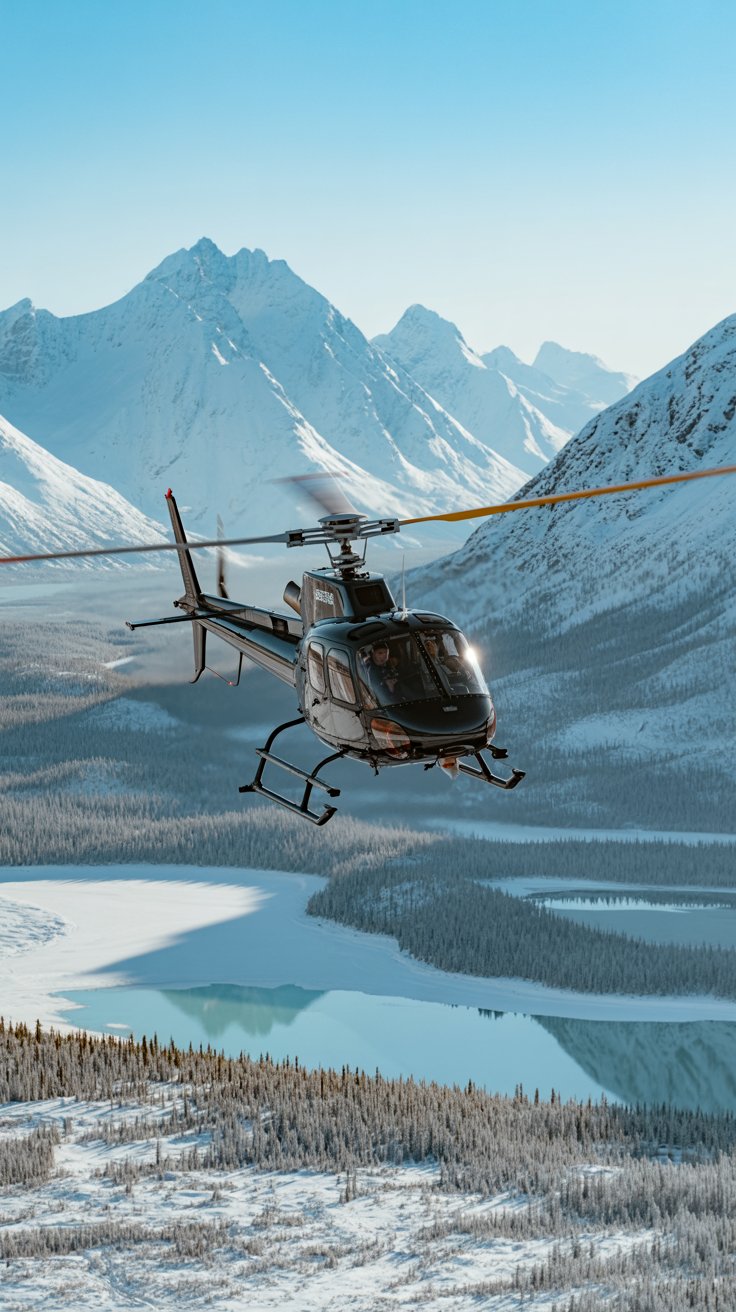
These 30 to 60-minute tours keep you airborne the entire time. You’ll circle glaciers, fly through mountain passes, and get incredible photo opportunities through the windows. The pilot provides narration, and most companies ensure everyone gets a window seat by limiting capacity. Expect to pay $250 to $400 per person.
Glacier Landing Tours
The crown jewel of Alaska helicopter experiences. You’ll fly to a remote glacier and spend 15 to 45 minutes walking on ancient ice. Guides provide boot traction devices called crampons and explain glacier formation. This is where you’ll get those jaw-dropping photos standing next to impossibly blue crevasses. Budget $450 to $650 per person.
Combination Adventures
These pair helicopter access with activities like dog sledding on glaciers or ice climbing. Some operators offer guided hiking excursions in remote alpine areas accessible only by air. These run $600 to $900+ and typically last three to four hours total.
Best Locations by Port
Juneau
The helicopter capital of Alaska cruise ports. Nearly a dozen operators compete here, which keeps prices relatively reasonable. Most tours focus on the Juneau Icefield, home to over 40 glaciers. The best shore excursions in Juneau frequently include helicopter components because the infrastructure is so well-developed.
Insider tip: The Taku Glacier tours that include a salmon bake landing at a remote lodge offer the best bang for your buck. You get the flight, glacier views, and a meal for about the same price as a basic landing tour elsewhere.
Skagway
Smaller operation with spectacular scenery. Tours here often venture into the Yukon Territory and offer glacier viewing opportunities with less tourist traffic. Skagway’s shore excursions lean heavily on gold rush history, so helicopter tours provide a nice contrast.
Ketchikan
The Misty Fjords flights out of Ketchikan showcase dramatic volcanic formations and cascading waterfalls rather than glaciers. These tours feel completely different from the typical ice-focused experiences and offer incredible rainforest canopy views.
Seward and Whittier
If you’re doing a land portion of your cruise, these gateways to Kenai Fjords National Park offer helicopter access to remote fishing lodges and wildlife viewing platforms. Some operators specialize in fishing excursions by helicopter for serious anglers.
Booking Smart
Your cruise line will heavily promote their partnered helicopter tours, often at a significant markup. Here’s the truth: booking independently usually saves 15 to 30 percent, and you can often choose better time slots. The risk is that if your ship is delayed and you miss your tour, you’re out the money. Cruise-booked excursions guarantee the ship won’t leave without you.
Check out this comprehensive booking guide for Alaska shore excursions to understand the trade-offs better.
Direct Booking Benefits
- Lower prices (operators don’t pay cruise line commissions)
- More departure times available
- Better selection of tour types
- Direct communication with operators about special requests
Cruise Line Booking Benefits
- Guaranteed return to ship policy
- No-hassle transportation coordination
- Single point of contact for issues
- Pre-vetted operators (though independent research helps)
What to Wear and Bring
Temperature drops about 3 to 5 degrees for every thousand feet of elevation, and glaciers create their own microclimates. That pleasant 60-degree day in town becomes a chilly 35-degree experience on the ice. Layering is non-negotiable.
Essential Items
- Warm jacket (windproof and water-resistant)
- Long pants (jeans work fine, yoga pants don’t)
- Closed-toe shoes with good tread (hiking boots ideal)
- Polarized sunglasses (glacier glare is intense)
- Sunscreen (reflection off snow/ice doubles UV exposure)
- Small backpack or secure pockets for phone/camera
- Hand warmers (the shake-to-activate kind)
What NOT to Bring
- Loose scarves or hats that can blow off
- Selfie sticks (rotor wash and limited space make these dangerous)
- Large camera bags (space is extremely limited)
- Drones (prohibited on all commercial helicopter tours)
Weight Restrictions Reality
This is the awkward topic nobody wants to discuss but everyone needs to know. Helicopters have strict weight and balance requirements for safety. Most operators set individual passenger limits at 250 to 300 pounds, with some flexibility for distribution across the aircraft.
Here’s what actually happens: when you book, you’ll be asked your weight. Be honest. Operators weigh passengers before flight, and if you’ve significantly understated your weight, you might be bumped to a different flight or charged for an additional seat. Some companies use six-passenger helicopters but only sell five seats to accommodate varying weights comfortably.
If you’re close to or over the limit, call the operator directly. Some have larger helicopters or can make special arrangements. Getting surprised at check-in is miserable for everyone.
Weather Considerations
Alaska weather is famously unpredictable. Your tour can be cancelled due to fog, low clouds, high winds, or poor visibility even when it looks perfectly nice from your cruise ship. Understanding the Alaska weather patterns for shore excursions helps set realistic expectations.
Early morning flights have the best weather success rates. Afternoon tours get cancelled more frequently as clouds build up. If your schedule allows it, book the first departure of the day.
Most operators offer full refunds or rebooking for weather cancellations, but this doesn’t help if you’re on a cruise with limited port time. Some travelers book for their first port day with backup plans like kayaking adventures or scenic railway excursions that operate in more marginal conditions.
Safety Track Record
Alaska helicopter tour operators have excellent safety records overall, but due diligence matters. All commercial operators must hold FAA Part 135 certification, which requires rigorous maintenance schedules and pilot training standards.
Questions to Ask Before Booking
- How many hours does your pilot have flying in Alaska?
- What’s your aircraft maintenance schedule?
- Do you carry survival gear on glacier landings?
- What’s your weather minimum policy?
- Are guides trained in glacier travel safety?
Operators with decades of experience and pilots who’ve logged thousands of Alaska hours are your safest bet. Newer companies aren’t necessarily unsafe, but experience counts when weather changes rapidly.
Photography Tips
Helicopter windows create reflection issues, and vibration can blur photos. Here’s how the pros get those stunning shots:
- Shoot through open doors if available (photographer-specific tours offer this)
- Use a fast shutter speed (1/500 or higher minimizes vibration blur)
- Polarizing filters cut glare from windows and ice
- Avoid flash (reflects off windows and bothers other passengers)
- Wear dark clothing for glacier landing photos (contrast against white ice)
- Ask the pilot about the sun angle for your time slot
- Bring lens wipes (condensation happens when going from warm to cold)
Alternative Adventures
If helicopter tours don’t fit your budget or schedule, Alaska offers plenty of other incredible experiences. The zipline adventures through temperate rainforest provide adrenaline without the price tag. For history buffs, cultural excursions exploring Native Alaskan heritage offer deep dives into indigenous traditions.
Adventurous spirits might prefer ATV adventures through backcountry trails, while those wanting a taste of gold rush history can try gold panning experiences. Each offers unique perspectives on Alaska’s diverse character.
Bonus Tips
- Helicopters are LOUD. Operators provide headsets, but they’re primarily for hearing the pilot’s narration, not noise cancellation. If you’re sensitive to noise, take that into account.
- Motion sickness affects some passengers. If you’re prone to it, take medication 30 minutes before flight and request a front seat where you can see the horizon.
- Tip your pilot and guide. Standard is 15 to 20 percent of tour cost, split between crew members if there are multiple.
- Battery life drains faster in cold. Bring a spare camera battery and keep it warm in an inner pocket.
- Some operators offer “standby” discounts for last-minute bookings if they have empty seats. If your schedule is flexible, ask about this option.
- Video often captures the experience better than photos. The scale and movement of glaciers translates well to short clips.
- Children under a certain weight don’t always count toward passenger limits. Ask about family pricing.
- Private charters cost about double but give you complete control over route, landing time, and pace. Worth considering for special occasions.
- Glacier color varies by time of day. Midday sun brings out the deepest blues in the ice.
- Wedding and proposal packages are surprisingly popular. If you’re planning something special, operators can usually accommodate with advance notice.
Common Questions and FAQ
Can I open the helicopter door during flight?
No. Doors remain closed during flight for safety. Some specialty photography tours use helicopters with removable doors, but these are booked far in advance and cost significantly more.
What happens if someone in my group gets sick or scared?
Pilots can and do return early if a passenger is in distress. You won’t get a refund for shortened flights unless there’s a medical emergency. If someone in your group has anxiety about flying, discuss it with the operator beforehand.
Are there bathroom facilities on glacier landings?
No. Use facilities before your tour. Seriously. There are no options once you’re on a remote glacier, and tours don’t typically include stops at locations with bathrooms.
Do I need hiking experience for glacier landing tours?
Not at all. You’ll walk on relatively flat sections of the glacier, and guides provide all necessary safety equipment. Mobility concerns should be discussed when booking, as uneven ice can be challenging for some.
Can I request a specific seat in the helicopter?
Weight distribution determines seating assignments for safety. Pilots make final decisions, though they try to accommodate preferences when possible. Everyone gets a window view regardless.
What if I’m traveling solo?
Most operators don’t charge single supplements since they’re filling seats anyway. You might get paired with other travelers to balance the helicopter, which often leads to making new friends with shared interests.
Are there age restrictions beyond the minimum?
No maximum age, but passengers need to be able to board the aircraft independently and follow safety instructions. Operators have accommodated passengers well into their eighties and nineties.
How far in advance should I take motion sickness medication?
Thirty to sixty minutes before flight. Non-drowsy formulas work best since you want to be alert and enjoy the experience. Ginger candies are a natural alternative some passengers swear by.
Personal Experience
I booked my first Alaska helicopter tour last summer after weeks of research, and honestly, the preparation made all the difference. I went with a glacier landing package in Juneau, and the guide’s advice about layering clothing was spot-on – it was 65°F at the base but felt like 40°F on the ice field. I saved about $80 by booking directly through the tour company’s website instead of through my cruise ship, and going with the early morning flight meant clearer skies and way better photos. The pilot pointed out crevasses and ice caves I would’ve completely missed on my own, so that commentary was worth every penny.
What surprised me most was how much the route mattered. Some companies fly over the same glaciers but from different angles, and after talking to other travelers, the ones who chose tours with multiple landing spots had more incredible experiences. I packed my good camera, polarized sunglasses, and those hand warmers you activate by shaking – total lifesaver when we landed on the glacier. The whole thing lasted about an hour and a half, but standing on thousand-year-old ice with mountain peaks all around felt surreal. If you’re considering it, don’t overthink it too much, just make sure you check weight restrictions ahead of time and wear dark colors for photos against all that white snow.