
Alaska cruises offer excellent puffin viewing opportunities, particularly for Tufted and Horned Puffins. Prime viewing locations include Kenai Fjords National Park, Resurrection Bay near Seward, and various coastal islands. These seabirds are best observed during summer months when they nest on rocky cliffs. Binoculars enhance viewing, and many cruise itineraries include dedicated wildlife excursions to puffin colonies.
Quick Facts: Puffins in Alaska
| Fact | Details |
|---|---|
| Species in Alaska | Tufted Puffins and Horned Puffins |
| Best Viewing Season | May through August |
| Prime Locations | Kenai Fjords, Resurrection Bay, Chiswell Islands |
| Distance for Viewing | 50-200 feet from boat |
| Diving Depth | Up to 200 feet |
| Flight Speed | 55 mph (they’re surprisingly fast!) |
Want to know more about Alaska wildlife viewing opportunities on your cruise?
The Two Puffin Species You’ll Encounter
Alaska hosts two distinct puffin species, and they’re easier to tell apart than you might think. Tufted Puffins sport dramatic blonde head plumes during breeding season that make them look like they’ve had a bad hair day at a punk rock concert. Their beaks glow bright orange-red, and their bodies are entirely black. Horned Puffins, on the other hand, have white bellies and black backs with a small fleshy “horn” above each eye. Both species are about the size of a football and have that comically serious expression that makes them instant favorites with photographers.
Here’s something most people don’t realize: puffins are terrible fliers. They have to flap their wings about 400 times per minute just to stay airborne, and they often crash-land into the water. But underwater? They’re torpedoes, using their wings to “fly” through the ocean while chasing fish.
Best Viewing Locations on Alaska Cruises
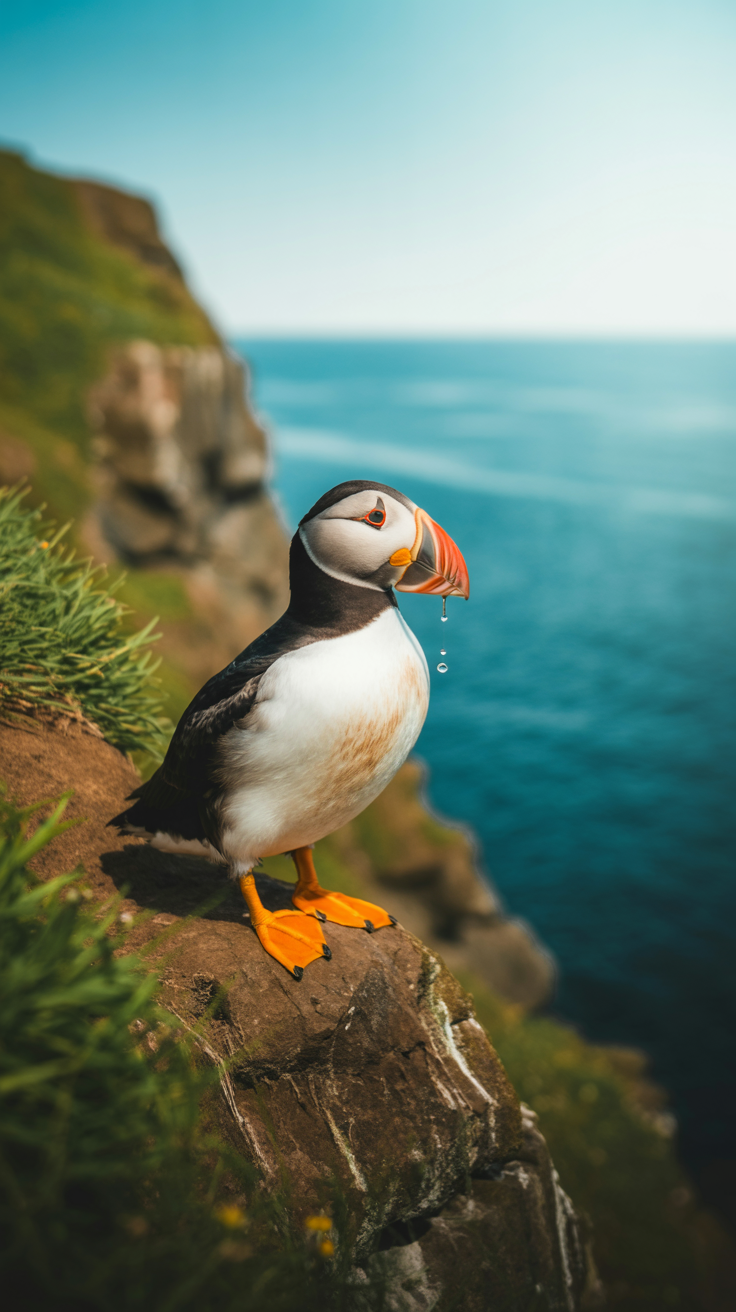
Not all Alaska cruise itineraries offer equal puffin opportunities. The Kenai Fjords National Park near Seward consistently delivers the best sightings. Day excursions from Seward take you directly to the Chiswell Islands, where thousands of puffins nest on rocky cliffs alongside other seabirds.
Other reliable spots for puffin encounters include:
- Resurrection Bay during early morning departures from Seward
- Aialik Bay within Kenai Fjords
- The outer coast near Homer
- Remote islands in Prince William Sound
- Barren Islands (though fewer cruises visit here)
The cruise lines won’t always announce puffin colonies in advance because they’re focused on promoting whale watching opportunities and brown bear sightings. But savvy cruisers know that the same rocky outcrops where you spot bald eagles perched often host puffin colonies below.
Timing Your Puffin Viewing
Puffins arrive at Alaska’s coastal colonies in May and stay through August. Peak viewing happens from mid-June through July when adults are actively feeding chicks hidden in burrows. During this time, you’ll see puffins shuttling back and forth with beaks full of small fish—sometimes carrying up to a dozen fish at once, all lined up like tiny silver sardines.
Early morning and evening hours produce the most activity. Puffins tend to rest on the water or in their burrows during midday, which is exactly when most cruise ships pass through. If you’re booking an independent excursion, push for morning departures.
By late August, puffins begin abandoning their colonies. The chicks leave their burrows at night, waddle to the cliff edge, and take their first flight directly out to sea where they’ll spend the next few years before returning to breed.
What to Bring for Optimal Viewing
The right gear makes all the difference between “I think I saw something” and capturing frame-worthy moments:
- Binoculars (8×42 or 10×42) – Essential because boats maintain safe distances from nesting colonies
- Camera with zoom lens (200mm minimum) – Phone cameras work for closer encounters but you’ll want reach for cliff colonies
- Polarized sunglasses – Cuts water glare and helps spot puffins bobbing on the surface
- Layered clothing – Mornings on the water are cold even in summer
- Seasickness medication – Smaller excursion boats can be bouncy in open water
- Waterproof bag or cover – Spray and sudden rain are common
Understanding Puffin Behavior
Puffins spend most of their lives at sea and only come ashore to breed. They mate for life and often return to the same burrow location each year. These burrows can be up to three feet deep, dug into cliff-side soil or hidden under boulders.
Watch for these behaviors during your wildlife viewing excursions:
- Billing – Pairs rub their beaks together as a greeting ritual (adorably awkward)
- Water landings – They hit the water like stones and often tumble forward
- Takeoff struggles – They need a running start on water, flapping frantically before becoming airborne
- Fish deliveries – Adults bring whole fish to burrows, carrying multiple fish crosswise in their beaks
- Colony socializing – Groups float together on the water near nesting areas
Cruise Excursions vs. Ship-Based Viewing
Large cruise ships sail past puffin habitat but rarely slow down enough for quality viewing. The real magic happens on smaller excursion vessels. Most Alaska cruise itineraries offer day trips from Seward specifically designed for comprehensive wildlife encounters.
These dedicated wildlife cruises through Kenai Fjords last six to eight hours and position you much closer to puffin colonies than your main cruise ship ever could. The captains know exactly where birds congregate and adjust routes based on daily conditions.
The trade-off? These smaller boats bounce more in open water, and you’ll sacrifice amenities like full dining rooms and stabilizers. But for puffin enthusiasts, it’s absolutely worth the temporary discomfort.
Combining Puffins with Other Wildlife
The same Alaska cruise excursions that showcase puffins also deliver spectacular opportunities to observe other wildlife. During a typical Kenai Fjords tour, you might encounter humpback whales breaching, orcas hunting in pods, gray whales feeding, and various species of seals and sea lions.
Rocky shorelines where puffins nest often attract black bears foraging during salmon spawning seasons. Keep your binoculars handy and scan both the cliffs for birds and the shoreline for bears.
Photography Tips for Puffin Encounters
Capturing quality puffin images from a moving boat presents challenges, but these insider techniques help:
- Use burst mode or continuous shooting—puffins move unpredictably
- Increase your ISO to 800-1600 to maintain fast shutter speeds
- Pre-focus on the water where puffins float rather than trying to track birds in flight
- Position yourself on the shaded side of the boat to avoid lens flare
- Brace your arms against the rail or use a monopod for stability
- Shoot from a seated position on smaller boats to reduce bounce impact
The best wildlife photography opportunities in Alaska often come when you least expect them. Keep your camera ready and powered on throughout the excursion.
Conservation Context
Alaska’s puffin populations remain relatively stable compared to Atlantic puffin colonies that face significant challenges. However, changing ocean temperatures affect the small fish species that puffins depend on. Warmer water pushes prey species deeper or farther offshore, forcing parent puffins to travel greater distances to feed their chicks.
Responsible wildlife viewing means maintaining proper distances. Reputable tour operators follow federal guidelines that prohibit approaching nesting seabirds closer than specified distances. This protects birds from disturbance that could cause them to abandon nests or expend unnecessary energy.
Bonus Tips
- Book excursions before boarding – Popular Kenai Fjords tours sell out weeks in advance during peak season
- Check the tide tables – Low tide concentrates fish and increases puffin feeding activity
- Bring snacks – Excursion boats offer limited food options and you’ll be out for hours
- Download a bird ID app – Helps distinguish puffins from other alcids like murres and auklets
- Ask about guarantee policies – Some operators offer partial refunds if wildlife viewing is poor
- Position yourself midship – Less boat motion means steadier photography
- Chat with naturalist guides – They know current hotspots and share fascinating behavior insights
- Watch for diving behavior – When multiple puffins dive simultaneously, a bait ball is likely below
- Scan the horizon during transits – Puffins often appear in open water between viewing locations
- Bring hand warmers – Even summer mornings on Alaska waters can numb fingers quickly
What Cruise Lines Won’t Tell You
Large cruise ships prioritize glaciers and whales in their marketing because these draw bigger crowds. Puffins get mentioned as an afterthought despite being just as spectacular. The reality is that your main cruise ship will likely sail past prime puffin habitat without slowing down or making announcements.
Shore excursions generate significant revenue for cruise lines, and the best wildlife viewing happens on these add-on trips. The base cruise fare gets you transportation along Alaska’s coast, but meaningful wildlife encounters require investing in additional excursions.
Also, cruise line photographers rarely capture quality puffin images because they’re focused on formal portraits and glacier backdrops. If you want puffin photos, you’ll need to take them yourself.
Weather and Sea Conditions
Alaska’s weather is famously unpredictable. Rain, fog and wind can appear within minutes even on days that start sunny. Puffins don’t care about weather—they’re out there regardless—but visibility matters tremendously for viewing.
Fog particularly impacts puffin viewing since colonies are often located on outer coastal islands. Some days you’ll motor right past prime habitat without seeing anything beyond 50 feet. There’s no predicting this, and excursion operators won’t cancel trips for fog alone.
Rougher seas actually improve puffin viewing in some ways. Choppy conditions bring nutrients and baitfish closer to the surface, triggering feeding frenzies. You might get bounced around more, but the bird activity increases.
Common Questions and FAQ
Can I see puffins from my cruise ship balcony?
Occasionally, yes, but don’t count on it. Large cruise ships maintain channels and speeds that keep them distant from puffin nesting colonies. Your best odds come during early morning departures from Seward when the ship transits through Resurrection Bay where puffins feed. Keep binoculars on your balcony and scan rocky outcrops as you pass.
Are puffins scared of boats?
Puffins tolerate boats remarkably well as long as vessels don’t approach nesting cliffs too closely. They’ll continue feeding and floating even with boats nearby. However, sudden loud noises or rapid approaches can cause them to flush from the water. Reputable operators know how to position boats for optimal viewing without causing disturbance.
What’s the difference between puffins and other seabirds I’ll see?
Puffins are members of the alcid family along with murres, auklets and guillemots. The distinctive colorful beak sets puffins apart—no other Alaska seabird has that bright orange bill. Murres have darker, pointed beaks and longer necks. Auklets are smaller with stubby beaks. Once you spot your first puffin, the difference becomes obvious.
Do puffins make sounds?
Yes, but you’ll rarely hear them from a boat. Puffins produce low growling sounds in their burrows that sound more like chainsaws than birds. On the water, they’re generally silent. If you happen to visit a colony during a shore walk (rare on cruise itineraries), you might hear their bizarre vocalizations.
How long do puffins live?
Puffins can live 20 years or more in the wild. They don’t breed until they’re three to five years old, and successful pairs return to the same nesting sites for decades. The oldest recorded puffin lived to 36 years, though most don’t reach that age.
What if I don’t see puffins on my excursion?
While puffins are common in Alaska waters during summer, sightings aren’t guaranteed. Weather, timing and location all factor into viewing success. If puffins are a priority, book multiple excursions in different areas to increase your odds. Tours departing from Seward into Kenai Fjords have the highest success rates.
Can I visit a puffin colony on foot?
Most puffin colonies in Alaska are accessible only by boat and protected from land access to prevent disturbance. A few locations allow distant viewing from shore, but these aren’t typically part of standard cruise itineraries. Boat-based viewing provides the best and most ethical way to observe puffins without impacting their nesting success.
Personal Experience
Spotting my first puffin during our Alaska cruise felt like finding a hidden treasure. We were sailing through Kenai Fjords National Park in late June when our guide pointed toward a rocky outcrop near the shore. There they were—a whole colony of tufted puffins with their signature orange beaks and wild yellow head plumes, bobbing on the water like little floating ornaments. The captain slowed the boat, and everyone rushed to the rail with cameras ready. My best tip? Keep your camera on burst mode because these birds are constantly moving, diving for fish and popping back up in the most unexpected spots.
The lighting that evening was perfect—that soft golden glow you get around 8 PM in Alaska’s summer—and I managed to capture some shots that still make me smile. What surprised me most was how close we could get without disturbing them. They seemed perfectly content doing their thing while we watched from the boat. If you’re planning an Alaska cruise, bring a zoom lens if you have one, but honestly, even phone cameras can catch some great moments when the boat drifts close enough. The puffins are most active during feeding times in early morning and evening, so skip the buffet breakfast if you have to—these quirky seabirds are worth the sacrifice.