
Alaska cruise ships offer excellent salmon viewing opportunities during spawning season. Passengers can observe multiple salmon species including king, sockeye, pink, chum, and coho from ship decks near streams and rivers. Popular viewing areas include Ketchikan’s Herring Cove, Juneau’s Mendenhall Glacier, and various coastal waterways where salmon return upstream to spawn.
Quick Facts About Alaska Salmon Viewing
| Detail | Information |
|---|---|
| Best Viewing Months | Late June through September |
| Peak Season | Mid-July through mid-August |
| Number of Salmon Species | Five (king, sockeye, pink, chum, coho) |
| Average King Salmon Size | 20-50 pounds (up to 100 pounds) |
| Cost to View from Shore | Free at most public viewing areas |
| Best Equipment | Binoculars, polarized sunglasses |
Want to know more about Alaska wildlife viewing opportunities?
Understanding the Five Salmon Species
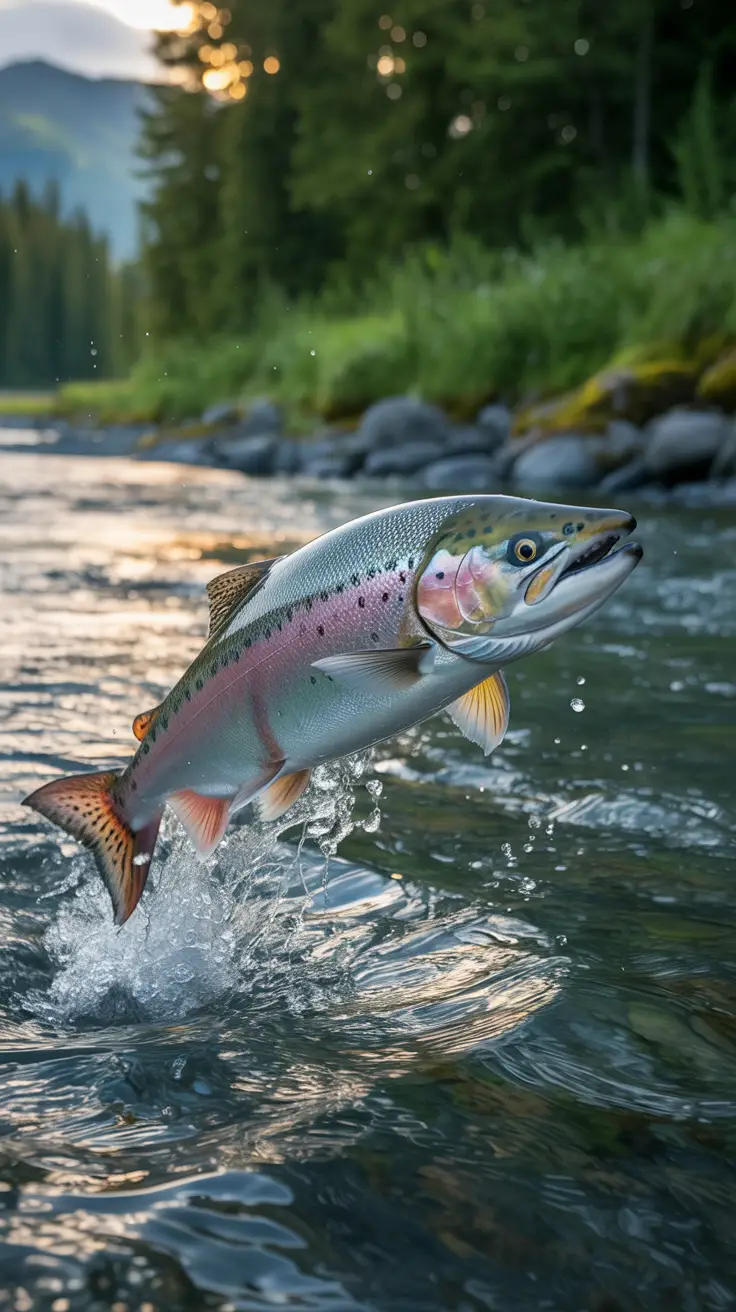
Each salmon species has its own schedule and personality. King salmon (also called Chinook) are the heavyweight champions and arrive first, typically peaking in late June through July. These fish can weigh over 50 pounds and put on quite a show fighting upstream currents.
Sockeye salmon turn brilliant red during spawning and travel in massive schools that literally change the color of the water. Pink salmon are the most abundant and run on odd-numbered years in most Alaskan streams, creating spectacular viewing opportunities. Chum salmon are often overlooked but they’re fascinating to watch with their distinctive tiger-stripe patterns. Coho salmon arrive last in the season and are known for their acrobatic leaps.
Where to See Salmon From Your Cruise Ship
Ketchikan
Creek Street runs right through downtown and offers some of the best urban salmon viewing anywhere. The historic boardwalk sits directly over Ketchikan Creek where you can watch salmon from wooden platforms. Herring Cove, accessible by taxi or excursion, features viewing platforms where you might also spot brown bears fishing for salmon alongside black bears doing the same.
Juneau
Steep Creek near Mendenhall Glacier provides extraordinary viewing from mid-July onward. The viewing platform is wheelchair accessible and about 30 minutes from the cruise docks. Many visitors come hoping to see bears but get equally thrilled by the salmon spectacle. The combination of glacier backdrop and thrashing fish makes for incredible photographs.
Sitka
Indian River offers easy access right from town with a short walk from the cruise terminal. The Sitka National Historical Park has salmon viewing areas where you can also see impressive totem poles. Less crowded than other ports, Sitka provides a more intimate viewing experience.
Haines
The Chilkoot River sees one of Alaska’s largest concentrations of salmon and consequently attracts numerous bears. While fewer large cruise ships dock here, those on smaller vessels get treated to spectacular wildlife interactions centered around salmon runs.
Timing Your Cruise for Maximum Salmon Viewing
The timing dilemma for Alaska cruisers is real. July Alaska cruises catch the beginning of peak salmon season with kings and early sockeye. August Alaska cruises hit the absolute peak with multiple species running simultaneously and bear activity at its highest.
Each port has slightly different peak times based on water temperature and specific salmon populations. Your ship’s naturalist or port lecturer usually provides current conditions for salmon viewing at upcoming stops. Don’t be shy about asking crew members or locals at each port which streams are running hot that particular week.
What Makes Salmon Viewing Special
Unlike spotting whales during your cruise which requires luck and patience, salmon viewing is virtually guaranteed during peak season. The fish are concentrated in shallow, clear water where you can observe every detail of their journey. You’ll witness nature’s determination in its rawest form as exhausted salmon push forward despite waterfalls, rapids and predators.
The salmon you’re watching have traveled thousands of miles from the ocean back to the exact stream where they were born. Their internal GPS system remains one of nature’s great mysteries. After spawning, all five Pacific salmon species die, providing crucial nutrients to the ecosystem and feeding everything from bald eagles to bears to the very trees along the riverbanks.
Practical Viewing Tips
- Polarized sunglasses eliminate surface glare and let you see beneath the water surface where salmon are swimming
- Arrive at viewing platforms early morning or late afternoon when fish are most active and crowds are smaller
- Look for deeper pools and slower water where salmon rest between rapids
- Watch for splashing and fins breaking the surface which indicate heavy activity
- Bring a small towel if it’s misty since you’ll want to protect camera equipment
- Wear layers because you’ll stand still longer than you expect once you start watching
- Ask locals about recent bear sightings at salmon streams for added excitement
Beyond Salmon: The Connected Ecosystem
Salmon viewing inevitably leads to spotting other wildlife. Wildlife viewing in Alaska centers around salmon during summer months. Where there are salmon, you’ll often find orcas hunting in nearby waters, gray whales feeding offshore, and humpback whales breaching in the same bays.
Eagles perch in trees above salmon streams waiting for easy meals. Puffins nest on coastal cliffs near salmon-rich waters. The entire Alaska marine life ecosystem depends on these annual salmon runs. Understanding this connection enriches your entire Alaska cruise experience beyond just checking off species on a wildlife viewing checklist.
Excursions Versus Independent Viewing
Most salmon viewing locations are accessible without booking excursions. Creek Street in Ketchikan is a five-minute walk from the docks. However, some premier locations like Herring Cove or Pack Creek require either excursions or advance planning. Fishing excursions in Alaska sometimes include salmon viewing components where guides explain the lifecycle while you’re on the water.
The advantage of excursions is transportation and expert guidance. The advantage of independent viewing is flexibility and cost savings. Many cruise passengers do both, taking one guided bear-and-salmon excursion and then exploring accessible viewing spots on their own at other ports.
Photography Challenges and Solutions
Photographing salmon presents unique challenges. The fish move quickly through reflective water often in dappled light. Here’s what works:
- Use a fast shutter speed (1/500th second minimum) to freeze motion
- Shoot in burst mode to capture multiple frames
- Polarizing filters are worth their weight in gold for cutting glare
- Video often captures the energy better than still photos
- Include environmental context like waterfalls or forests rather than just close-ups of fish
- Dawn and dusk provide the best lighting with fewer harsh shadows
Bonus Tips
- Download a salmon identification app before your cruise since species can be tricky to distinguish once they start changing color
- Bring hand sanitizer since you’ll inevitably touch railings that dozens of other excited viewers have grabbed
- Check tide tables because salmon activity increases during tide changes
- Local fishing shops near cruise ports have current reports on which streams are producing
- Dead and dying salmon along banks aren’t sad, they’re completing their purpose and feeding the ecosystem
- Some viewing platforms get slippery from mist so wear appropriate footwear
- Cruise ship gift shops rarely sell polarized sunglasses so buy them before your trip
- The “fishy” smell at popular viewing areas is normal and unavoidable during peak season
- Rangers and volunteers at viewing platforms love sharing knowledge if you ask questions
- Baby salmon (fry) heading downstream in spring are equally fascinating but few cruise passengers know to look for them
What About Missing the Runs?
Alaska’s unpredictability means salmon timing varies. Warm water temperatures accelerate runs while cold water delays them. If your cruise hits during a slow period, you still have options. Hatcheries near most ports raise salmon and release them, often maintaining viewing areas with fish year-round. While not wild salmon completing their epic journey, hatcheries provide education and guaranteed viewing.
Climate variations increasingly affect salmon timing so the traditional peak dates shift. This actually works in favor of cruise passengers since runs now spread across longer periods. Early June cruises that once rarely saw salmon now sometimes encounter the beginning of runs.
The Unexpected Emotional Impact
Many cruise passengers anticipate being moved by glaciers or whales but don’t expect salmon to hit them emotionally. Yet watching these fish demonstrate absolute determination while literally falling apart physically creates powerful moments. Salmon viewing sparks conversations about life cycles, purpose and nature’s design that resonate long after cruises end.
Kids especially connect with the salmon struggle in ways that abstract wildlife concepts don’t achieve. The fish are visible, accessible and their mission is easy to understand. Families often report salmon viewing as unexpected highlights that rivaled more famous Alaska attractions.
Common Questions and FAQ
Can you eat the salmon you see in streams?
No. Once salmon enter freshwater to spawn, their flesh begins deteriorating as their bodies prioritize reproduction over survival. These fish are not suitable for eating. Additionally, taking salmon from streams without proper licenses and during closed seasons is illegal. Fresh Alaska salmon in restaurants comes from ocean fishing or managed harvests at specific locations.
Why do salmon jump out of the water?
Salmon jump to clear obstacles like waterfalls and rapids, but they also leap to shake off sea lice, communicate with other salmon, and simply because the behavior is instinctive. Not every jump has an obvious purpose. Sometimes they’re testing routes or building momentum for upcoming obstacles.
Do all the salmon die after spawning?
Yes, all five Pacific salmon species die after spawning. This is different from Atlantic salmon which can spawn multiple times. The death is programmed genetically. Their bodies shut down non-essential functions to pour all energy into reproduction. Within days or weeks after spawning, all adults perish.
How close can you get to salmon in streams?
This depends on the location. Designated viewing platforms keep visitors at appropriate distances. In areas without structures, stay at least 50 feet from active spawning areas to avoid disturbing fish. Walking in salmon streams is prohibited in most areas during spawning season. Check posted regulations at each location.
What if I see someone bothering the salmon?
Report it to rangers, dock authorities or cruise ship personnel. Harassing spawning salmon is illegal under state and federal wildlife protection laws. This includes blocking their path, touching them, or throwing objects. Most violations result from ignorance rather than malice, but protecting salmon runs is taken seriously in Alaska.
Are the streams safe for children?
Established viewing platforms are safe and many are designed for families. However, bears frequent salmon streams so always maintain awareness. Never let children run ahead out of sight. Stream banks can be slippery and currents stronger than they appear. Supervision is essential even at developed viewing areas.
Personal Experience
I never expected watching fish swim to be one of the most captivating things I’d see on my Alaska cruise, but there I was, completely mesmerized by thousands of salmon thrashing their way upstream. We were docked in Ketchikan in late July, and our guide mentioned the creek near Creek Street was at peak viewing time. Sure enough, the water was practically boiling with bright red sockeye and massive king salmon, all determined to reach their spawning grounds no matter what rocks or rapids stood in their way. The sheer power and persistence of these fish is something you have to see in person to really appreciate.
What made it even better was how accessible everything was right from the ship. Most ports have viewing platforms built along salmon streams, so you don’t need to book an expensive excursion or hike anywhere remote. If you’re planning an Alaska cruise, aim for late July through August for the biggest runs, and bring binoculars if you have them. The locals at each port always know which streams are running hot on any given day, so just ask around. Watching bears fish for salmon is obviously spectacular, but honestly, seeing the salmon themselves complete this incredible journey is equally amazing and something most passengers walk right past without realizing what they’re missing.