
Alaska cruise whale watching offers opportunities to see humpback, orca, and gray whales in their natural habitat. Peak viewing occurs during summer months when whales migrate to feed. Excursions range from small boat tours to kayaking adventures. Inside Passage, Glacier Bay, and Icy Strait Point are prime locations. Binoculars and warm clothing are essential.
Quick Facts: Alaska Whale Watching
| Category | Details |
|---|---|
| Best Viewing Months | May through September |
| Most Common Species | Humpback whales, orcas, gray whales |
| Top Viewing Locations | Inside Passage, Glacier Bay, Icy Strait Point, Frederick Sound |
| Excursion Types | Small boat tours, kayaking, ship-based viewing |
| Average Excursion Cost | $150-$300 per person |
| What to Bring | Binoculars, layers, waterproof jacket, camera with zoom lens |
Want to know more about Alaska wildlife viewing opportunities beyond whales?
Understanding Alaska’s Whale Species
Alaska’s waters host three primary whale species that cruise passengers encounter regularly. Humpback whales steal the show with their acrobatic breaching and unique bubble-net feeding technique where they work cooperatively to trap schools of herring. These 40-ton giants reach up to 50 feet long and are surprisingly agile for their size.
Orcas or killer whales patrol Alaska’s waters in two distinct groups. Resident orcas stick to predictable routes and dine primarily on salmon, while transient orcas roam more widely hunting seals and sea lions. You can tell them apart by their behavior – residents travel in larger pods and vocalize more while transients hunt in smaller groups and stay quieter to avoid alerting their prey.
Gray whales pass through Alaska during their migration between Mexico and the Arctic. Unlike humpbacks and orcas, grays are bottom feeders who scoop up sediment and filter out tiny crustaceans. They’re typically spotted earlier in the season during their northbound journey.
Ship-Based Viewing vs Shore Excursions
Your cruise ship provides excellent whale watching opportunities without spending extra money. Most Alaska cruise ships have naturalists onboard who announce sightings over the intercom and congregate on open decks with spotting scopes. The ship’s height gives you a commanding view and stability that smaller boats can’t match.
However dedicated whale watching excursions in ports like Juneau offer distinct advantages. Smaller boats can approach whales more closely while following strict wildlife protection guidelines. Captains know where whales were feeding yesterday and communicate with other boats about current sightings. The guides provide detailed commentary about individual whales they recognize by tail fluke patterns and behavior.
Kayaking adventures put you at water level where whale encounters feel incredibly intimate. The silence of paddle power means you won’t disturb the animals. That said, kayaking requires decent physical fitness and acceptance that you’ll cover less territory than motorized tours.
Prime Viewing Locations
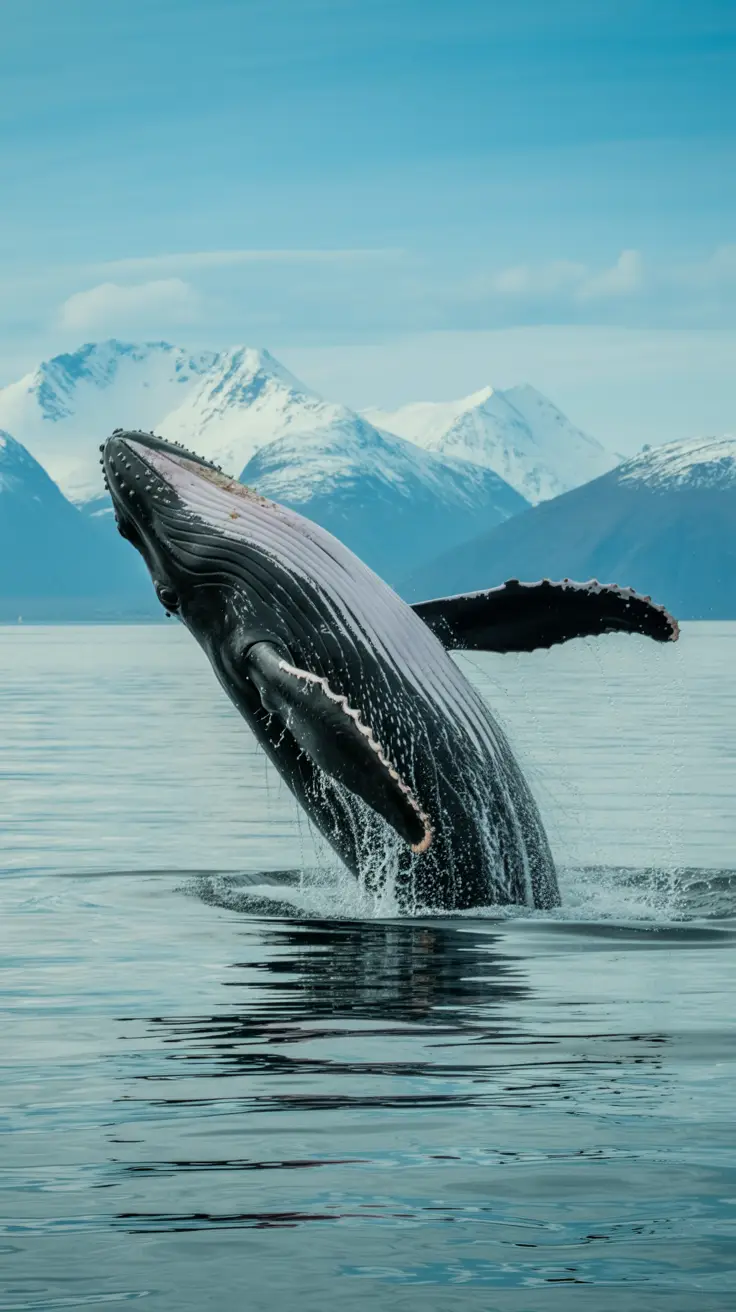
The Inside Passage funnels whales through relatively narrow channels where nutrient-rich waters support massive salmon runs and other prey. Cruise ships navigate slowly through these waters making it easier to spot blows and dorsal fins.
Glacier Bay National Park restricts the number of vessels allowed daily which reduces crowds and improves viewing quality. The park’s protected status means whales feed undisturbed. Point Adolphus near the entrance to Glacier Bay hosts dense concentrations of humpbacks drawn by huge schools of herring.
Icy Strait Point provides access to some of Alaska’s most productive feeding grounds. Frederick Sound nearby is legendary among whale researchers for its high density of humpbacks and regular orca sightings.
Timing Your Cruise for Best Sightings
Understanding the best month to cruise Alaska significantly impacts your whale watching success. May sees the first major wave of humpbacks arriving from Hawaii and Mexico. The whales are hungry after their long migration and actively feeding but weather can be unpredictable with more rain and occasional rough seas.
June through August represents peak season when whale numbers reach their maximum. The weather improves dramatically with longer daylight hours giving you more opportunities to spot wildlife. This period also brings more cruise ships and higher excursion prices.
September offers a sweet spot that savvy cruisers exploit. Whale numbers remain strong as they’re fattening up before migration. Crowds thin out after schools resume. The downside is shorter days and increased rainfall but you’ll find better deals on excursions.
What to Bring and Wear
Even summer temperatures on deck hover between 50-60°F and drop further when the ship moves. Layer with a moisture-wicking base, insulating fleece, and waterproof outer shell. Skip cotton which stays damp and chills you. Bring a warm hat since you’ll lose significant heat from your head during extended deck time.
Binoculars transform whale watching from spotting distant blows to observing behavior. Look for 8×42 or 10×42 magnification which provides good detail while maintaining a wide enough field of view to track moving animals. Image-stabilized binoculars cost more but eliminate the shaking that makes viewing from a ship challenging.
For capturing Alaska’s wildlife photo opportunities, bring a camera with at least 300mm zoom for ship-based viewing. Faster shutter speeds freeze action when whales breach. Keep your camera in a waterproof bag between shots since salt spray damages electronics.
Spotting Techniques That Actually Work
Most amateur whale watchers scan the horizon randomly and miss nearby whales. Instead, systematically divide your viewing area into segments and scan each section slowly from near to far. Watch for blows that appear as brief puffs of mist when whales exhale. Humpback blows reach 15 feet high while orca blows are shorter and bushier.
Seabird activity provides crucial clues. Circling gulls and diving puffins indicate baitfish near the surface which attracts feeding whales. Bald eagles perched along shorelines often watch the same prey concentrations that interest whales.
Calm water makes spotting easier since blows and dorsal fins show up clearly against smooth surfaces. Early morning typically offers the best conditions before afternoon winds pick up. Position yourself on the ship’s bow for unobstructed forward views or along the rails where you can see both ahead and to the sides.
Understanding Whale Behavior
Bubble-net feeding ranks among the most spectacular behaviors you might witness. A group of humpbacks dives deep and one whale blows a circular curtain of bubbles that traps fish in a shrinking column. The whales then rocket up through the center with mouths wide open engulfing thousands of herring in one gulp. This cooperative hunting requires coordination and experience making it relatively rare but unforgettable when it happens.
Breaching serves multiple purposes scientists still debate. Whales might breach to communicate with distant pod members, remove parasites, or simply because it feels good. Whatever the reason, watching a 40-ton animal launch itself completely out of the water defies belief.
Tail slapping and pectoral fin slapping likely serve as communication. The sounds travel long distances underwater. When you see repeated slapping, other whales in the area are probably “listening” and may respond.
Responsible Viewing Guidelines
Federal law prohibits approaching whales within 100 yards and orcas within 200 yards. Reputable tour operators follow these rules strictly because harassment charges can end their business. If a whale approaches your stationary vessel that’s perfectly legal and magical.
Never chase whales or attempt to swim with them during excursions. Even gentle giants like humpbacks can injure humans accidentally with their flukes. Orcas are apex predators despite their “friendly” appearance at marine parks.
Resist the urge to touch whales during close encounters. Human contact can transfer bacteria and oils that damage their skin. Simply observe and photograph these incredible moments.
Beyond Whales: Complete Wildlife Experience
Your time scanning for whales will reveal Alaska’s broader ecosystem. Keep your wildlife guide handy to identify the diverse marine life you’ll encounter. Sea otters float on their backs cracking shellfish on rocks balanced on their chests. Harbor seals haul out on ice floes and rocky beaches. Dall’s porpoises zoom alongside ships riding the bow wave.
The shoreline offers equally impressive viewing. Brown bears and black bears feed along beaches turning over rocks for crabs or grazing on sedge grass. Mountain goats navigate impossibly steep cliffs. The comprehensive wildlife viewing strategies that work for whales apply to spotting these land animals too.
Choosing the Right Excursion
Small boat tours typically carry 25-50 passengers and last 3-4 hours. These represent the most popular choice offering a good balance of price, comfort, and whale proximity. Boats have heated cabins and restrooms but you’ll spend most time on deck.
Luxury tours limit passengers to 6-12 people and charge premium prices. The advantage is personalized attention from naturalists and flexibility to follow whales longer if you’re having good sightings. Some include gourmet snacks and beverages.
Budget-conscious cruisers should consider the free ship-based viewing seriously. Alaska cruises deliberately route through prime whale habitat and slow down for sightings. You’ll sacrifice the close encounters that small boats provide but you won’t miss out entirely.
Understanding Your Excursion’s Guarantee
Many operators advertise “whale watching guarantees” but read the fine print carefully. Most guarantees only offer a future cruise credit rather than cash refunds if you don’t see whales. Some require you to rebook within a tight timeframe that doesn’t help if you won’t return to Alaska soon.
The good news is that whale sightings on Alaska cruises during summer months approach 95% success rates. Operators wouldn’t offer guarantees if they routinely failed to spot whales. Still, wildlife remains wild and unpredictable. Accept that small possibility of disappointment as part of the authentic experience.
Photography Tips That Improve Your Shots
Consult a detailed wildlife photography guide before your cruise to master the techniques that capture Alaska’s animals effectively. For whales specifically, use continuous shooting mode to capture breach sequences. Whales breach without warning so keeping your camera ready and finger on the shutter button is essential.
Focus on the water where you just saw a blow. Whales typically surface 3-5 times in the same general area before diving deep for several minutes. Anticipating their next surfacing location improves your odds of getting focused shots.
Shoot in RAW format if your camera supports it. This gives you maximum flexibility to adjust exposure and color balance later since lighting on the water changes rapidly as clouds pass.
Bonus Tips
- Download a whale identification app before sailing since ship internet is expensive and slow. Apps like “Whale Alert” work offline once downloaded.
- Bring seasickness medication even if you don’t typically get motion sick. Smaller whale watching boats move differently than large cruise ships and hit choppier water.
- Pack hand warmers in your pockets during shoulder season months. They make extended deck time much more comfortable.
- Set up a “whale watch” schedule with your travel companions so someone monitors the water while others rest. Whales don’t operate on human convenience schedules.
- Ask naturalists about recent sightings and where to position yourself on the ship. They track patterns and can guide you to the most productive viewing spots.
- Keep your phone or camera in a waterproof case or bag. One rogue wave over the rail can destroy expensive electronics instantly.
- Book excursions for the middle or end of your cruise rather than the first port. This gives you time to assess weather patterns and get recommendations from other passengers.
- Bring snacks and water on excursions since food options on small boats are limited. Low blood sugar and dehydration diminish the experience quickly.
- Join online Alaska cruise forums before your trip and search for recent whale watching reports. Recent firsthand accounts provide more useful information than generic promotional materials.
- Consider motion sickness wristbands as a non-medication alternative if drugs make you drowsy. Many people report success with these acupressure bands.
Common Questions and FAQ
Can you see whales from your cruise ship balcony?
Yes, balcony cabins provide private viewing opportunities though you’ll still want to head to open decks for better sightlines. Whales can surface on either side of the ship and announcements help you position yourself quickly. The main advantage of a balcony is immediate access to outside space when announcements come over the cabin speakers.
Do whale watching tours ever get cancelled?
Tours cancel primarily due to high winds and dangerous sea conditions rather than lack of whales. This happens occasionally in May and September more than peak summer months. If your excursion is cancelled, you’ll receive a full refund but limited options to rebook if you’re leaving port that day.
Should you book whale watching excursions before the cruise or onboard?
Booking through your cruise line before departure guarantees availability and means the ship will wait if your excursion runs late. However, independent operators often charge 20-30% less for identical experiences. The tradeoff is risk – if your independent excursion returns late the ship departs without you and you’re responsible for catching up at the next port at your own expense.
What happens if whales approach closer than 100 yards to your boat?
Boats must stop and allow whales to pass if they approach within the legal distance. This results in some of the most memorable encounters since curious whales sometimes surface right beside stationary vessels. Operators cannot pursue whales into this zone but whales frequently choose to investigate boats on their own terms.
Are whale sightings better on one side of the ship?
It depends on your specific itinerary and direction of travel but generally both sides offer equal opportunities. Northbound and southbound cruises pass the same whale habitat from opposite directions. Stay flexible and be willing to move quickly when announcements indicate which side currently has activity.
Do you need a telephoto lens for whale photography?
A telephoto lens dramatically improves your shots but modern smartphones with digital zoom can capture decent photos during close encounters. If you’re serious about wildlife photography invest in at least 300mm focal length. For casual documentation of your experience, phone cameras work adequately especially for breaching whales.
Personal Experience
Last summer, my family and I took an Alaska cruise specifically hoping to see whales, and the experience exceeded everything we imagined. We booked a mid-June departure through the Inside Passage, and our naturalist onboard told us this timing was perfect since humpbacks migrate to Alaska’s waters from May through September to feed. She wasn’t wrong – on our third day near Icy Strait Point, we spotted a pod of humpbacks bubble-net feeding. Watching them work together to corral fish was absolutely mesmerizing. The key was staying on deck during the early morning hours when the water was calmest and keeping our eyes peeled in areas where seabirds were circling, since they usually mean fish are nearby.
The highlight came in Frederick Sound when a group of orcas passed right alongside our ship. Our guide explained that this area is known for both resident and transient orca populations, making it one of the most reliable spots for sightings. My biggest tip? Bring binoculars and dress in layers – even in summer, it gets chilly on deck, but you’ll want to stay outside as much as possible. Also, don’t just stick to one side of the ship. We almost missed the orcas because we were camped out on the port side all morning. Download a whale identification app before you go too, because being able to distinguish between a humpback’s blow and an orca’s dorsal fin makes the experience so much richer.