
Buenaventura is Colombia’s main Pacific cargo port, not a polished cruise resort. Ships call here rarely, usually small expedition-style vessels, and berth inside a working commercial port. Most passengers take organised excursions to Pacific rainforest, Afro-Colombian culture or whale-watching areas. Independent exploration is possible, but only with strict safety and logistics planning.


What Buenaventura Is Really Like
Buenaventura is Colombia’s principal Pacific port and the registry port for Colombian-flagged ships. It sits on Cascajal Island, about 15 km up the Dagua river from the open ocean, and moves roughly 60% of Colombia’s maritime imports and exports. The port has 14 berths and around 2 km of quay.
This is a working waterfront with containers, bulk cargo, trucks, security gates and serious Pacific humidity. It isn’t a resort strip. The city itself is overwhelmingly Afro-Colombian, with a Pacific music, food and craft culture that’s completely different from Cartagena or Mexico’s resort ports.
How Cruise Calls at Buenaventura Actually Work
This is a rare cruise stop. The modern cruise era here began with Plantours Kreuzfahrten’s MS Hamburg, a 144 m, 420-guest ship. The city rolled out folkloric music, platoneras selling traditional goods and police escorts along tourist routes.
But there’s no regular cruise schedule. Mainstream Caribbean-focused lines like Carnival, Royal Caribbean, Princess, Norwegian, Holland America, Celebrity, MSC and AIDA call at Cartagena and Santa Marta, not Buenaventura. ProColombia has discussed starting with small ships of 300–500 passengers, then gradually moving to vessels up to 2,000–3,000, and Silversea has talked with regional authorities about upgrading the tourist pier. For now, treat any Buenaventura visit as a small-ship or expedition-style call.
Docking, Tenders and the Port Setup
Expect to dock, not tender, but you’ll be alongside a commercial cargo berth. The Sociedad Portuaria Regional de Buenaventura handles the ship. There’s no dedicated cruise terminal. The separate Muelle Turístico is only licensed for small boats up to 12 m long and 4 m beam, so cruise ships can’t use it.
Some third-party sites claim ships tender to the tourist pier, but the documented call had the ship berthed in the commercial port. Confirm the setup with your cruise line before you sail.
Port limits are a maximum deadweight of 40,000 tonnes, length of 210 m and draft of 10 m. That’s one reason this is a small-ship call, not a megaship destination.
- Where you dock: Sociedad Portuaria Regional de Buenaventura, about 2.8 km from the city centre.
- What there is: cargo terminal facilities, not passenger lounges, shops or reliable Wi-Fi.
- Passenger handling: arranged by the ship and its local agent. You may be bussed from the gangway to a port gate, or a tour vehicle may be allowed inside.
- Tourist pier: Muelle Turístico, used for coastal boat trips. It has a waiting room, toilets, showers, a café/restaurant and security, but you’ll need a transfer from the commercial berth to reach it.
- On the water: life jackets are mandatory for the whole boat journey. Swimming near moving or anchored boats and excessive alcohol on boats are prohibited.
Buenaventura cruise port map
Ships dock at Sociedad Portuaria Regional de Buenaventura. From there, Mercado de Pueblo Nuevo is about a 24-minute walk and Malecón Bahía de la Cruz about 30 minutes. Tap a pin for directions.
- Sociedad Portuaria Regional de BuenaventuraWhere ships dock
- Muelle TurísticoWhere ships dock
- Mercado de Pueblo NuevoMarket · About 24 min walk from Sociedad Portuaria Regional de Buenaventura
- Malecón Bahía de la CruzWaterfront promenade · About 30 min walk from Sociedad Portuaria Regional de Buenaventura
- Escuela Taller de BuenaventuraCraft school · About 2 km from Sociedad Portuaria Regional de Buenaventura
- La BocanaMangrove beach area · About 15 km from Sociedad Portuaria Regional de Buenaventura
- Bahía MálagaBay · About 31 km from Sociedad Portuaria Regional de Buenaventura
- JuanchacoBeach area · About 32 km from Sociedad Portuaria Regional de Buenaventura
- LadrillerosBeach area · About 34 km from Sociedad Portuaria Regional de Buenaventura
- Cascada La SierpeWaterfall · About 19 km from Sociedad Portuaria Regional de Buenaventura
- San CiprianoRainforest reserve · About 19 km from Sociedad Portuaria Regional de Buenaventura
Getting from the Ship into Town
Don’t assume you can walk. The port is a working cargo area with heavy freight traffic and no real pedestrian route into the centre. Use a ship shuttle if offered, or a licensed taxi. Official taxi fares are fixed by zone. The port and downtown fall in Zone 1, with a fare of about COP 6,200–6,500. The minimum city fare is around COP 2,300–2,500, the airport fare around COP 24,000–25,200, and a taxi by the hour is around COP 22,000. Carry small peso notes.
| Taxi journey | Approximate fare |
|---|---|
| Port/downtown Zone 1 | COP 6,200–6,500 |
| Minimum city fare | COP 2,300–2,500 |
| Airport | COP 24,000–25,200 |
| Taxi by the hour | COP 22,000 |
Don’t hail taxis on the street. Use licensed taxis from an authorised rank, book by phone/app, or have your hotel, restaurant or tour operator call one. Confirm the return ride before you part with your driver. If your ship has arranged a shuttle to the Malecón or Muelle Turístico, use it rather than improvising.
Allow much more time than the distance suggests. The Cali road and port access roads carry heavy cargo traffic and can jam. If all aboard is 17:30, aim to be back at the port gate by 16:30, not just in town at 17:15.
Safety and Security: Get This Right
The UK Foreign Office advises against all but essential travel to the western part of Valle del Cauca department, including Buenaventura. It names Buenaventura, Turbo and Tumaco as places where the risk from illegal armed groups and criminal gangs is particularly significant. Travelling against FCDO advice can invalidate your travel insurance.
City and national authorities have put strong police, Navy and Dimar patrols along tourist corridors, beaches and piers, especially around early cruise calls, but this isn’t a Caribbean beach port’s security picture.
- Use a ship excursion or a vetted private operator with a local guide.
- Don’t hail street taxis. Use a licensed, phone- or app-booked taxi.
- Don’t use ATMs after dark. Use them during business hours inside a bank or shopping centre.
- Watch out for express kidnapping, often by people posing as taxi drivers and targeting people near ATMs.
- Keep phones, cameras and jewellery discreet; don’t wander into unfamiliar barrios.
- If you go independently, stick to central, supervised areas: the Malecón, market with a guide, tourist pier area and the port gate.
- For beaches and rainforest, go with an organised group rather than trying to reach Juanchaco, Ladrilleros or San Cipriano on your own.
Organised Excursions vs. Going It Alone
Buenaventura is a port where an organised excursion is almost always the better choice. You get the transfer from the commercial berth, local guidance, safety in numbers and a clear all-aboard plan. Local tours are often guided in Spanish only, so set your expectations accordingly.
A short independent visit to the Malecón or market can work if you take a licensed taxi both ways and stay in the busy central area. Don’t try to sort out boat transport to remote beaches on the day unless you’re experienced, speak Spanish and are travelling with a vetted contact.
- Ship or vetted tour: safest and easiest. Transfer, route, guides and timing are handled.
- Short central stop: taxi from the port to the Malecón or market, eat, take photos, taxi back. Keep it to an hour or two.
- Stay on board: if the security advisory or industrial setting worries you, there’s no shame in treating Buenaventura as a sea day.
Top Things to Do from the Port
Before you sail
- Book a ship or vetted private excursion before arrival; local tours often run in Spanish only.
- Check FCDO Colombia travel advice and confirm your insurance cover for western Valle del Cauca.
- Bring small peso notes and use authorised money exchanges only; avoid street exchange.
Short port day: under 6 hours
- On dockingLicensed taxi to the MalecónDo not walkUse a ship shuttle if offered or a licensed taxi. The cargo port has no pedestrian route; keep small peso notes for the fixed Zone 1 fare.
- +15 minMalecón Bahía de la CruzWalk the waterfront promenade. Early morning is best, when fishermen and ceviche stalls are out.
- +45 minEscuela Taller de BuenaventuraA short walk inland. The craft school trains young people in traditional Pacific crafts and is a more ethical place to buy a souvenir.
- +1 hr 30 minOld market in Pueblo NuevoAbout 10 minutes further. Browse tropical fruit, local produce and Pacific crafts; keep valuables discreet.
- +2 hrs 30 minLunch near the old marketTry atolladoOrder the market-famous mixed atollado of piangua and prawn or encocado de camarón. Drink bottled water.
- +4 hrsWalk back to the waterfrontWalk from the old market back to Malecón Bahía de la Cruz, about 15 minutes on foot.
- All-aboard minus 1 hrLicensed taxi to the port gateConfirm return rideFrom the Malecón, take a licensed taxi or your booked return ride. Do not hail taxis; port traffic can jam.
This map shows the taxi ride from the ship. The time is the drive only, not your time ashore.
Open the taxi route in Google Maps
If plans change: If the central streets feel unsafe or no licensed taxi appears, return to the port gate and treat the call as a sea day.
Long port day: 8 hours or more
- On dockingTransfer to Muelle TurísticoBoat trips leave hereYour ship excursion or vetted operator should run a short transfer from the cargo berth to the tourist pier. Do not try to walk or hail taxis.
- +15 minBoard the speedboat to Bahía MálagaLife jacket requiredBoat excursions leave from Muelle Turístico. Bahía Málaga is about 2 hours by boat; wear your life jacket for the whole journey and keep valuables in a dry bag.
- +2 hrs 30 minWhale watching in Bahía MálagaJuly to OctoberHumpback whales peak August-September. The guide is likely Spanish-speaking, so confirm languages before booking.
- +3 hrs 45 minLunch in JuanchacoTry encocadoOrder Pacific seafood such as shrimp in coconut or cazuela de mariscos. Drink bottled water and avoid ice.
- +5 hrsBeach or mangrove pause at JuanchacoWatch the timeTake a short walk or beach break near the landing. Do not wander far from your group; the boat back takes two hours.
- +5 hrs 30 minSpeedboat back to Muelle Turístico2-hour rideBack on the boat with life jackets. You need to be back at the port gate in good time, so do not let anyone delay departure.
- All-aboard minus 1 hrTour van to the port gateFrom the tourist pier, your tour vehicle returns you to the commercial port. Port roads can jam; if delayed, contact the ship's agent.
This map shows the taxi ride from the ship. The time is the drive only, not your time ashore.
Open the taxi route in Google Maps
If plans change: If the boat trip is cancelled or no vetted guide arrives, fall back to a short licensed-taxi visit to the Malecón and market, or stay on board.
San Cipriano Rainforest and River Tubing
San Cipriano is a rainforest reserve reached by a wonderfully odd form of transport: a wooden platform called a ‘brujita’ that runs on an abandoned railway line and is pushed by a motorcycle. The ride takes about 30 minutes into the reserve. Once there, most people tube down the clear Río Danubio.
Wear closed-toe shoes or strapped sandals, a swimsuit and quick-dry clothing, and take a dry change for the return. It’s not wheelchair accessible. Tours often set a minimum age of five and don’t recommend it for pregnant travellers or people with back problems.
Whale Watching and Bahía Málaga
Humpback whale season runs from July to October, peaking in August and September. Boat excursions leave from the Muelle Turístico, not the commercial berth, so a tour needs to include your transfer. A typical whale-watching day trip from the tourist pier to Bahía Málaga or Juanchaco is sold as a 7h 30m speedboat outing with a Spanish-speaking guide and lunch, from about US$162. Expect a long, wet day.
Boat times from the tourist pier are roughly: La Bocana 30 minutes, Juanchaco 1 hour, Ladrilleros 1 hour plus 10 minutes by land, Cascada La Sierpe 1 hour 20 minutes, and Bahía Málaga 2 hours.
City Culture, Food and the Malecón
The real reason to be curious about Buenaventura is its Afro-Colombian Pacific culture. Marimba music and traditional chants of Colombia’s South Pacific are on UNESCO’s Representative List of the Intangible Cultural Heritage of Humanity. The signature rhythm is currulao.
You may see platoneras, Afro-Colombian women who sell traditional products, near the port and waterfront. A good city loop takes in the Malecón Bahía de la Cruz, the mural on the Distrito Administrativo building, the Escuela Taller craft school and the old market in Pueblo Nuevo. The Malecón is best in the early morning, when fishermen and ceviche stalls are out.
Mangroves, Beaches and Waterfalls
For a shorter coastal taste, La Bocana is the closest mangrove and dark-sand beach area, about 15–30 minutes by boat from the tourist pier. It’s known for Pacific sunsets and fresh seafood. Further out, Juanchaco and Ladrilleros offer a wider beach, cliffs and more than 3 km of sand at low tide. Cascada La Sierpe in Bahía Málaga is a waterfall dropping directly into the sea. All of these require a boat from the tourist pier and a guide.
Cali isn’t a realistic independent day trip. It’s about 115–121 km away and takes roughly 3–3.5 hours by road, with heavy port traffic on the Cali road. Consider Cali only if the ship offers an official overland tour and the call is unusually long.
Food, Drink and Local Specialities
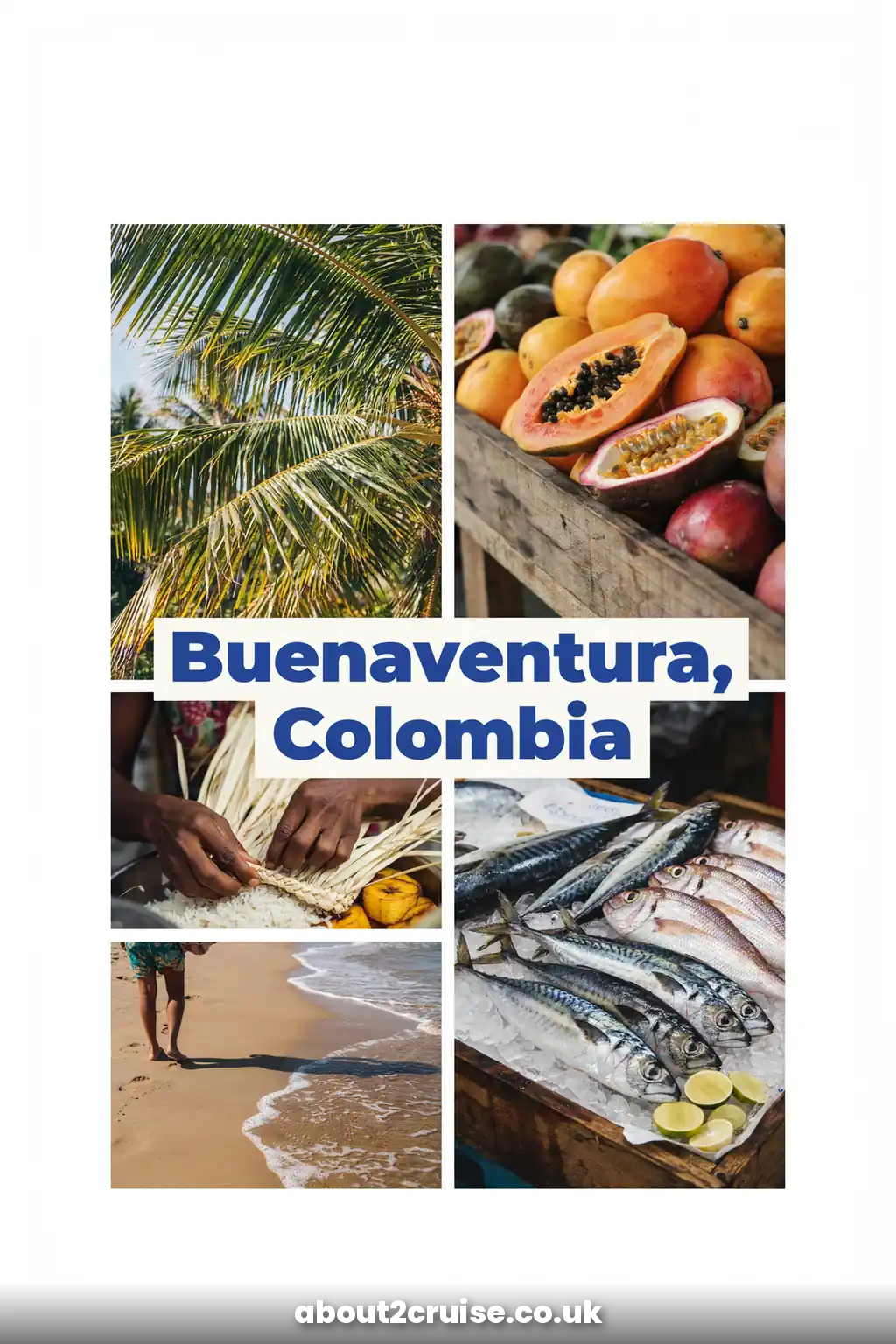
Pacific Colombian seafood is the food story here. Look for piangua, a small mangrove shellfish usually cooked in coconut; encocado de camarón, shrimp in coconut; arroz con toyo; cazuela de mariscos; sancocho de pescado; and the market-famous atollado of piangua and prawn.
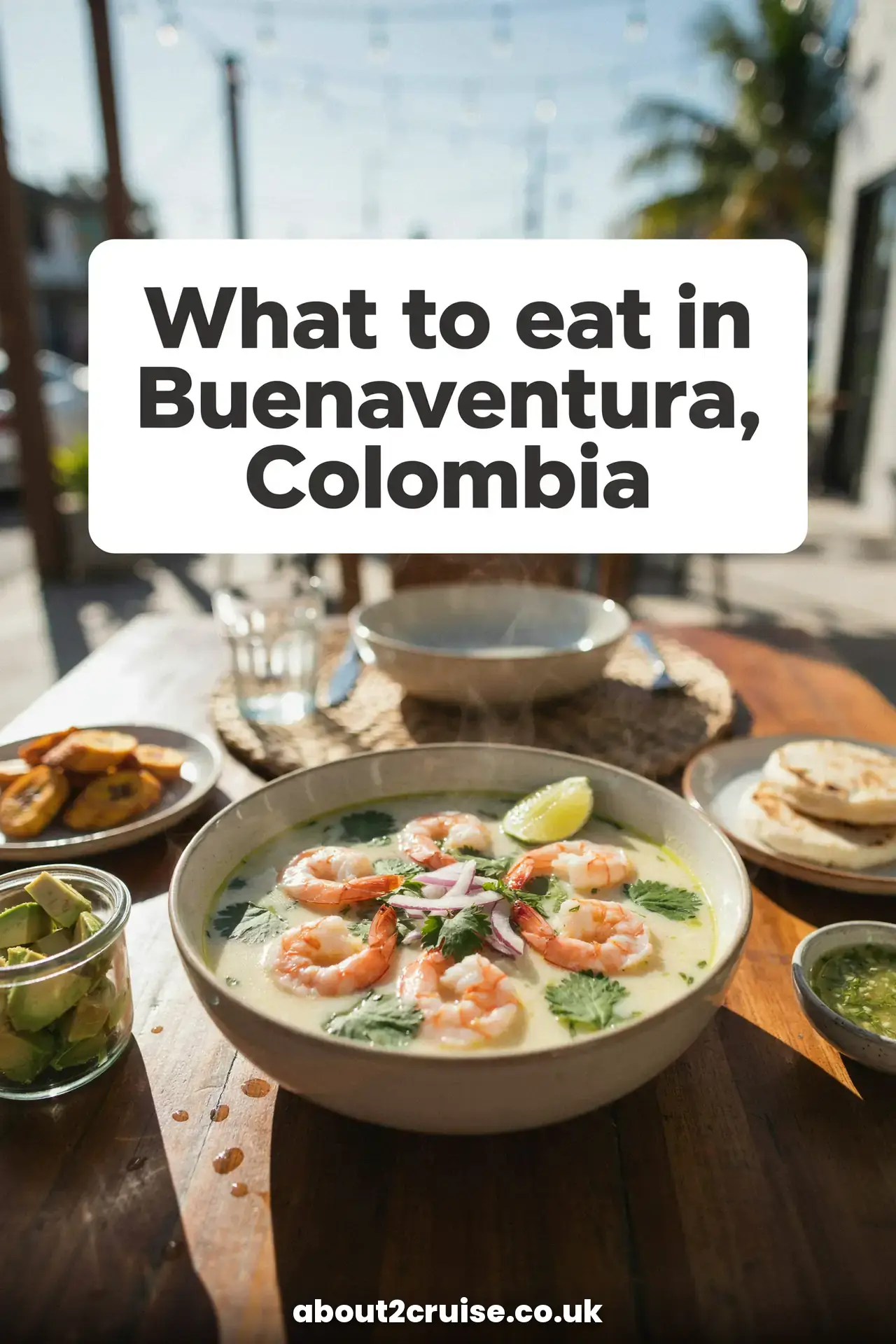
Typical plate prices run around COP 60,000–70,000 for encocados, COP 50,000–65,000 for rice dishes, COP 40,000–60,000 for sancocho, COP 40,000–50,000 for cazuela and COP 30,000–40,000 for ceviche. Local artisanal drinks include viche, curado, arrechón and tumba catre. Public drinking is illegal in Colombia, so stick to licensed restaurants or bars.
Shopping, Markets and Souvenirs
This isn’t a duty-free shopping stop. The best purchases are local food products, Pacific crafts and fruit from the market. Platoneras sell traditional regional products near the port reception and along the waterfront. The Escuela Taller de Buenaventura trains young people in traditional Pacific crafts and is a more ethical place to buy a souvenir. The old market is where to buy tropical fruit and local produce, and the Malecón is where the seafood and drinks sellers are. Use pesos and small notes.
Money, Cards, Tipping and Small Notes
The currency is the Colombian peso. Credit and debit cards are widely accepted in proper hotels, malls and formal restaurants, but market stalls, taxis and pier-side food sellers need cash. Exchange US dollars or euros only at banks or authorised money exchanges, never on the street. Avoid ATMs after dark; use them during business hours inside a bank or shopping centre.
Taxis work on fixed zone fares, so there’s no need for a meter. Tipping isn’t as institutionalised as in the United States. Round up taxi fares, tip 10% in restaurants if service isn’t already included, and tip guides or drivers in cash for good service.
Language, Etiquette and Useful Spanish
Spanish is the working language. Don’t expect English in Buenaventura, even on many local excursions. A few phrases will make independent travel much easier. Greet people with buenos días or buenas tardes before asking a question, ask before photographing people, and dress modestly away from the beach.
| English | Spanish |
|---|---|
| How much is it? | ¿Cuánto cuesta? |
| I need to go to the port | Necesito ir al puerto |
| Can you take me to…? | ¿Me puede llevar a…? |
| Do you accept cards? | ¿Aceptan tarjeta? |
| The bill, please | La cuenta, por favor |
| No ice, please | Sin hielo, por favor |
Weather and Best Time for a Port Call
Buenaventura is hot, humid and wet all year. Mean highs are around 30–31°C, lows around 21–23°C, and relative humidity is about 88%. There’s no real dry season. The driest window is roughly December to March. The wettest months are September and October, when monthly rainfall can be around 785 mm and there can be 26 rain days. February is one of the drier months at around 277 mm and 17 rain days.
This coast doesn’t have a hurricane season, but flooding and landslides are risks after heavy rain. Whale season from July to October overlaps with the wetter months, so prepare for rain on whale-watching trips.
What to Wear and Pack
Pack for hot, wet, tropical conditions. Light, quick-drying clothing, a rain layer, sun protection and insect repellent are essential. For San Cipriano and waterfall or river trips, take closed-toe shoes or secure strapped sandals, a swimsuit and a dry change of clothes. You will get wet. A small dry bag is useful for phones, cards and cash on boat trips. In town, keep clothing modest and avoid flashy jewellery.


Entry, Passports and Immigration
For UK citizens, Colombia allows tourism visits of up to 90 days without a visa, at the immigration officer’s discretion. You must be able to show an onward or return ticket within 90 days. Your passport must be valid on entry, and Colombian authorities recommend six months’ validity beyond your planned departure.
If you enter Colombia by sea, make sure immigration stamps your passport so you aren’t fined on departure. The Check-Mig pre-registration form can be completed between 72 hours and one hour before travel and may speed up entry, but it isn’t mandatory.
Health, Vaccinations and Medical Facilities
Tap water isn’t safe to drink in Buenaventura. Drink bottled water and avoid ice unless you know it’s treated. A yellow fever vaccination certificate may be required if you’re arriving from certain countries with transmission risk, and it may be asked for when travelling to high-risk areas of Colombia.
The emergency medical number is 123. Medical facilities are limited. The main hospital, Hospital Luis Ablanque de la Plata, has at times been under health-superintendency intervention and reduced to vital emergencies only. The UK Foreign Office warns that public facilities and smaller cities are generally ill equipped and ambulance services in remote areas can be unreliable. Bring personal medications and any necessary medical supplies.
Families and Limited Mobility
Buenaventura isn’t an easy port for limited mobility. You may be walking on an industrial quay, climbing into tour buses from a cargo area, or stepping on and off small boats at a floating tourist pier with a tidal range of 3–10 m.
San Cipriano isn’t wheelchair accessible, often has a minimum age of five, and isn’t recommended for pregnant travellers or people with back problems. Families can enjoy a short guided Malecón and market visit, but keep children close. If you have mobility concerns, arrange an accessible vehicle through the ship before arrival and confirm exactly how passengers will get from the gangway to the port gate.
How Buenaventura Compares with Mexico and Other Cruise Ports
Buenaventura is the opposite of Puerto Vallarta, Mazatlán and Cabo San Lucas. Those are established Mexican Riviera cruise ports with resort beaches, long cruise seasons, shopping zones and tender or pier infrastructure built for passengers.
Buenaventura has one documented small-ship operator, no dedicated cruise berth, a working cargo environment and a UK foreign office advisory over the city itself. If your search started with Mexican Riviera ports, adjust your expectations completely.
For a Caribbean-side Panama call, see Colón, Panama cruise ship port guide. For a more established South American Pacific gateway, see Valparaíso (Santiago), Chile cruise ship port guide.
Our Peru and Ecuador cruise ports guide covers the other ports in the region.
FAQ: Cruise Questions People Ask About Buenaventura
Can I go ashore without an excursion?
Yes. Going ashore independently is normally allowed, but in Buenaventura it should be limited and carefully planned. The ship won’t wait for you, so be back at the port gate well before all aboard. Independent travellers should use licensed taxis, stay in central supervised areas and avoid remote beaches or forest trips without a vetted guide.
Does Carnival cruise to Buenaventura?
No current regular Carnival schedule calls at Buenaventura. Carnival and other mainstream Caribbean cruise lines visit Cartagena and Santa Marta on Colombia’s Caribbean coast. If you’re researching a Carnival cruise, you’re probably looking at Caribbean Colombia, not this Pacific port.
There’s no official worst cruise line. In one Cruise Critic overall ratings snapshot, the lowest-scoring lines were Costa, MSC and P&O Cruises, with Carnival, NCL and Princess mid-pack. Ship age, itinerary, food style and expectations usually matter more than the brand alone.
Last Updated: 20 November 2026