
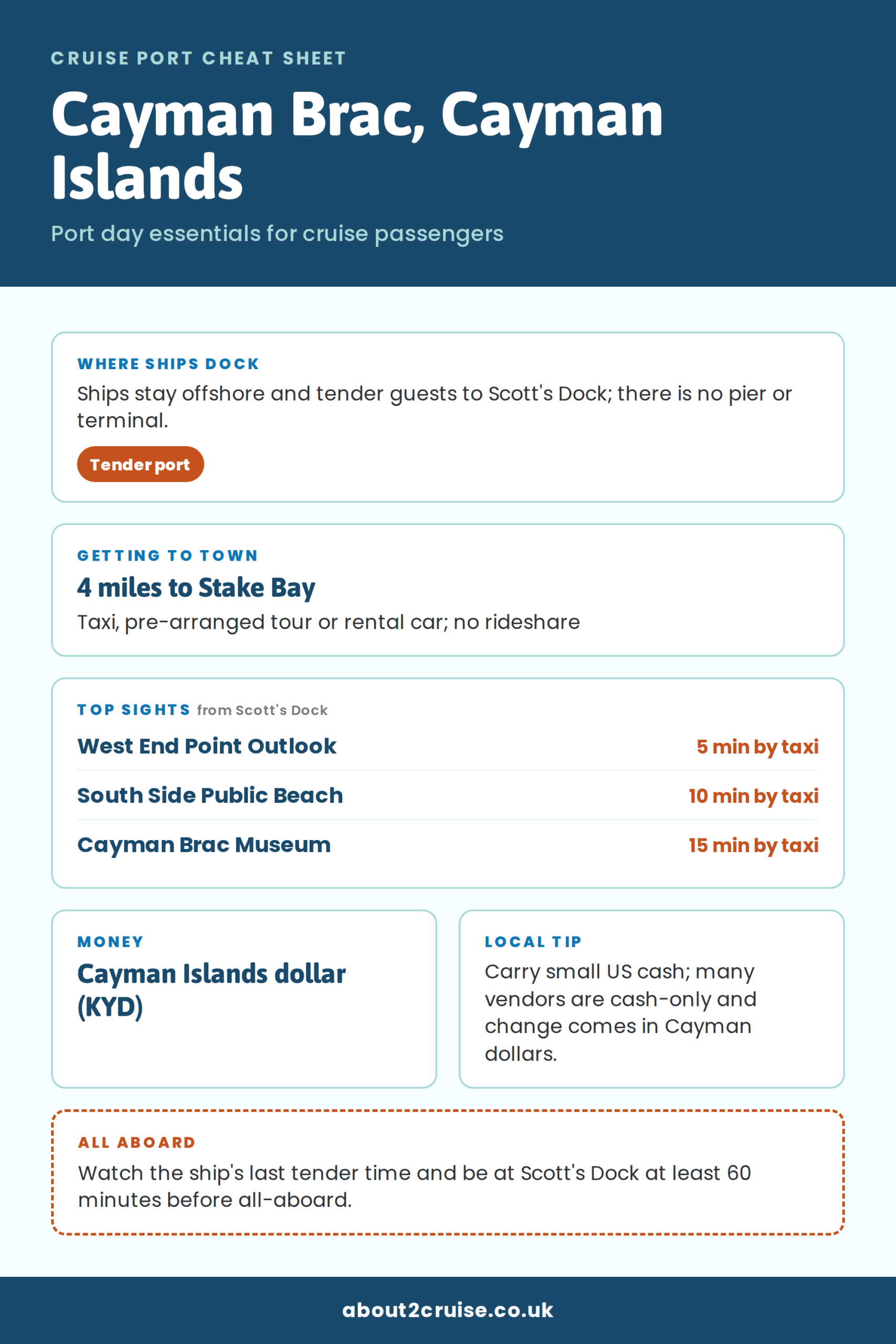
Cayman Brac is a genuine but rare tender-only cruise call at Scott’s Dock on the island’s West End. Ships do not dock; passengers come ashore in the ship’s own tenders. The island is known for the Bluff, caves, wall diving and the Cayman Brac parrot. If your itinerary says George Town, that is Grand Cayman, not the Brac.
Cayman Brac vs Grand Cayman: Which Island Is on Your Itinerary?
Many cruise searches for “Cayman” are really about Grand Cayman. The two islands are about 90 miles apart. Grand Cayman’s George Town also has no cruise pier; ships anchor and tender to the Royal Watler, North or South terminals, or to Spotts Bay in heavy swell. Cayman Brac is a different island, a different tender point and a much rarer call.
If your itinerary or cruise ticket says George Town or Grand Cayman, not Cayman Brac or West End, use our George Town, Grand Cayman cruise port guide instead for that day. Grand Cayman handles more than a million cruise passengers a year; Cayman Brac averages about one cruise visit a year. Both are part of the wider Caribbean cruise scene; for regional context, see our cruise ports guide.
What Makes Cayman Brac Worth Visiting
Cayman Brac is the second-largest of the three Cayman Islands, about 12 miles long and 1.2 miles wide. The name comes from the Gaelic word for bluff, and the limestone Bluff runs the length of the island, rising to 140 feet, the highest point in the Cayman Islands. Travellers come for the Bluff viewpoints and caves, wall and wreck diving, rock climbing, birdlife and a quiet, local island feel that is nothing like the busier George Town tender piers.
So, Is Cayman Brac Actually a Cruise Ship Port?
It is a real port of call, but a boutique one. There is no permanent cruise pier and no terminal building. Ships lie offshore under engine rather than anchoring, to avoid coral damage, and passengers are tendered to Scott’s Dock, also called Cemetery Pier, at the West End. The island averages only about one cruise visit a year. The older government dock at the Creek was used in the past, but it was too high and not considered safe for tenders. A small-ship pier has been discussed but not built, so for now every call is tender-only. Cayman Brac is not an embarkation port; no cruise starts or ends here.
Which Cruise Ships Call at Cayman Brac?
The ships that do call are small by modern cruise standards. Reported calls include Explora Journeys’ Explora I with 651 passengers, Windstar’s Wind Surf with 386 passengers, Star Clippers’ Star Clipper with 104 passengers, and Star Flyer on earlier sailings. Swan Hellenic’s SH Vega, with 152 passengers, has been announced as an expected call. Seabourn also lists West End, Cayman Brac as a Caribbean port.
The largest recent call carried around 650 guests, so do not expect a big-ship experience. Tender lines are short, and the island feels correspondingly uncrowded.
Cayman Brac Cruise Schedule: Why You Need to Check Carefully
Cayman Brac does not have a reliable weekly or monthly cruise schedule. It typically averages one visit a year, and some years may have none. Calls can be added or removed at short notice because of weather. If you are looking for a 2026 or 2027 Cayman cruise schedule, make sure the itinerary actually says “Cayman Brac” or “West End, Cayman Brac”. If it says George Town, you are looking at the Grand Cayman schedule, which is published day by day and has many more ships.
Several cruise-schedule aggregators currently show no Brac calls even when a call has been reported, so the safest method is to check the official Cayman Port Authority ship schedules at caymanport.com/ship-schedules, then confirm on board. Port times are subject to change, and the ship’s onboard daily programme is the final word.
If Mexico is on your itinerary, our Cozumel cruise port guide compares terminals, walking and taxi options.
If your itinerary includes Falmouth, Jamaica, see our Falmouth Jamaica cruise port guide for the town walk and excursion options.
For a Cuban call, see our Cienfuegos cruise port guide for port navigation and the town.
If your cruise also includes Montego Bay, see our Montego Bay cruise port guide for shuttle, taxi and beach-day detail.
Where Cruise Ships Actually Stop at Cayman Brac
Ships do not berth and do not drop anchor. They stay under engine in the designated offshore anchorage area on the island’s northwest side, about 1,100 feet off the shore and in water more than 100 feet deep. The arrangement protects the coral.
The landing point is Scott’s Dock, a rubble-filled rock spit about 410 feet long and 25–65 feet wide, built of locally quarried armour stone. It is a working dock used for rock aggregate and the regular Thompson Shipping barge, with a public boat ramp beside it. It sits on the north side near the airport and is also known as Cemetery Pier.
What the Tender Dock Looks Like, and What It Doesn’t Have
Don’t expect a cruise terminal. Scott’s Dock is a working rock and barge dock, not a passenger building. On call days, the District Administration and Department of Tourism may set up an information table, craft market and perhaps music, but there is no left-luggage, no indoor waiting area, no duty-free mall and no shore-power. Toilets and shade are limited, so plan for sun, bring water, and use facilities at a café, bar or public beach once you are away from the dock.
Cayman Brac cruise port map
Tenders bring you ashore at Scott’s Dock (Cemetery Pier). Tap a pin for directions.
- Scott’s Dock (Cemetery Pier)Where tenders land
- Cayman Brac Community ParkCommunity park · About 16 min walk from Scott’s Dock (Cemetery Pier)
- Cayman Brac Beach ResortBeach resort · About 27 min walk from Scott’s Dock (Cemetery Pier)
- Cayman Brac MuseumMuseum · About 5 km from Scott’s Dock
- Heritage HouseHistoric house · About 14 km from Scott’s Dock
- The Bluff and lighthouseClifftop viewpoint and lighthouse · About 17 km from Scott’s Dock
- Brac Parrot ReserveParrot reserve · About 10 km from Scott’s Dock
- West End Point OutlookViewpoint · About 2 km from Scott’s Dock
- Rebecca’s CaveCave · About 2 km from Scott’s Dock
- Peter’s CaveCave · About 16 km from Scott’s Dock (Cemetery Pier)
- Great CaveCave · About 16 km from Scott’s Dock (Cemetery Pier)
- Bat CaveCave · About 4 km from Scott’s Dock (Cemetery Pier)
- Public BeachBeach · About 3 km from Scott’s Dock (Cemetery Pier)
Tender Times and Port Day Logistics
Because the ship uses its own tenders or lifeboats, tender capacity and frequency depend on the ship. Tickets are usually issued on board, and the daily programme will list the last tender time. Treat that as a hard back-on-board time, not a suggestion.
In the Cayman Islands, cruise operations run from 06:00 to 18:00 seven days a week, except Good Friday and Christmas Day, when the port is closed. Some calls are half-day: Wind Surf, for example, was alongside in the morning and left shortly after 1pm after an island coach tour and cave stop. The anchorage is around 1,100 feet offshore, so the tender ride is normally brief, but it is still open water. If the sea picks up or the ship decides conditions are unsafe, the call can stop early.
Getting from the Tender Point into the Rest of the Island
The tender comes ashore at the West End, near the airport, shops, post office, beaches and a few hotels. The island’s main settlement, Stake Bay, is about 4 miles east. There is no town right at the dock; the immediate area is a working waterfront. For anything beyond the West End, take a taxi, pre-arranged tour or rental car.
Can You Walk Around Cayman Brac from the Port?
The West End waterfront is walkable for a short stroll, but the island is not a practical self-guided walking port. The caves, museum, parrot reserve, lighthouse and Bluff viewpoints all require road transport. A conventional walking tour from the tender is not recommended. If you want independence, rent a car or scooter; if not, book or join a taxi tour.
Taxis, Car Hire and Local Transport at the Port
Taxis in the Cayman Islands use government-set zone fares rather than meters, and licensed taxis can carry up to 15 passengers. The taxi fare from the dock to Stake Bay is roughly CI$9–14, or US$11–17. Rideshare is not available. Mossy Taxi Services is one local operator, and Carter’s Taxi & Tours has the only wheelchair-accessible van on the Brac.
Arrange a taxi as soon as you know you are going ashore, because there are few vehicles and a rare call can be busy. Car hire gives the most flexibility but should be booked early. Guidebook rates include B & S Motor Ventures cars from US$40 a day, SUVs from US$46, scooters from US$30 a day; Four D’s Car Rental has cars from about US$35 a day and vans from US$45. You must present a passport and your home driving licence to get a temporary local licence, handled by the rental agency. Driving is on the left. Rental agencies can meet arriving flights if booked, but on a cruise call you may need to get from the dock to the agency by taxi or arranged pickup.
Shore Excursions: Keep It Simple
There is no large shore-excursion infrastructure. On a call day, the simplest and safest option is usually an organised island tour. Past call-day tours have used a local school bus or coach with a local guide and covered a museum stop, a coastal viewpoint, the lighthouse and one cave in about two hours. This fits the short call window and removes the stress of finding a taxi or navigating.
Independent travellers can pre-book a taxi tour, rent a car or scooter, or go diving with one of the dive operators. If you want a specific cave, dive site or birding walk, arrange it before the ship arrives; do not expect to browse options at the dock.
Best Things to Do on a Cayman Brac Cruise Stop
Before you sail
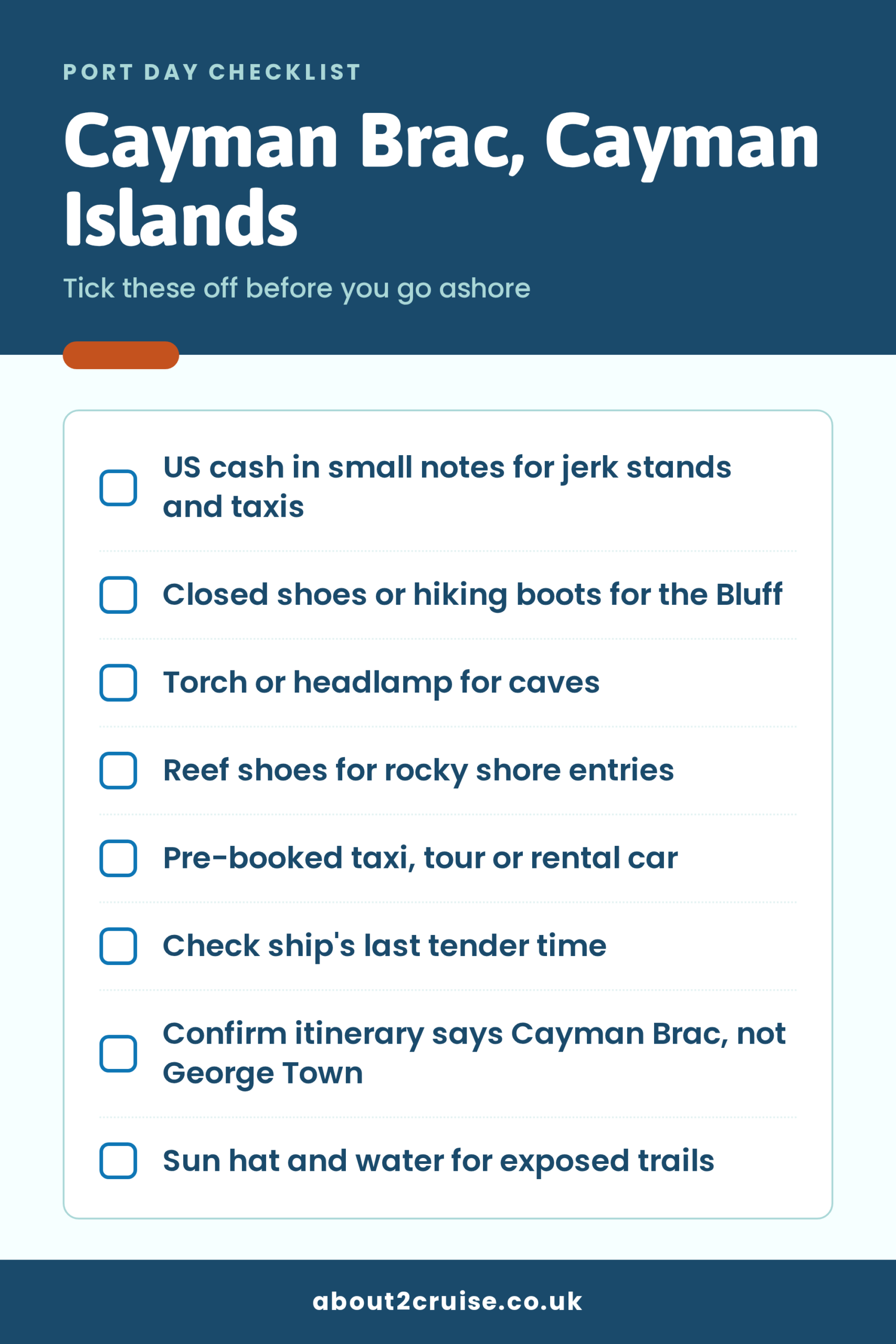
- Confirm the itinerary says Cayman Brac or West End, not George Town.
- Pre-book a taxi, island tour or rental car before embarkation.
- Check the Cayman Port Authority schedule and your ship's daily programme.
Short port day: under 6 hours
- On dockingTender ashore at Scott's DockTender onlyShips stay offshore and use their own tenders to the rock dock. If your itinerary says George Town, check our George Town Grand Cayman port guide instead.
- +15 minJoin your pre-arranged tour or taxiBook aheadFew taxis are available and there is no rideshare, so confirm an island tour or taxi before you arrive. Tours often use a local bus or coach with a guide.
- +45 minCayman Brac MuseumAbout 4 miles by taxi to Stake Bay. The island's oldest museum is free; check if it has opened specially for the call.
- +1 hr 30 minHeritage HouseA short drive further east in North East Bay. Free cultural stop, sometimes with crafts and local food on call days.
- +2 hrs 30 minSouth Side Public BeachThe island's most practical beach: cabanas, picnic tables, restrooms and a mobi-mat. The south coast is calmer for swimming and shore snorkelling.
- +3 hrs 30 minLunch at a jerk stand or bakeryCash onlyNear the airport, roadside jerk stands cook chicken and pork over charcoal and the bakery sells Brac bread. Bring US cash; change may come in Cayman dollars.
- All-aboard minus 1 hrBack at Scott's DockCheck the ship's last tender time and aim to be at the dock before it. Returning tenders get busy late in the day.
This map shows the taxi ride from the ship. The time is the drive only, not your time ashore.
Open the taxi route in Google Maps
If plans change: If the island tour or taxi falls through, stay near Scott's Dock: visit the craft market, buy Brac bread, and take a short West End waterfront stroll.
Long port day: 8 hours or more
- On dockingTender ashore at Scott's DockNo pierShips stay offshore and use their own tenders to the rock dock. Have your shore bag ready and be at the tender boarding point early.
- +15 minCollect your pre-booked rental carDriving licenceRental agencies are few, so book early. You must show your passport and home driving licence for a temporary local licence; driving is on the left.
- +45 minBrac Parrot Reserve and Bluff lighthouseDrive about 25 to 35 minutes to the eastern end. The reserve is free; a boardwalk starts before the trail turns rocky, and the lighthouse marks the Bluff edge.
- +1 hr 30 minWalk the parrot reserve boardwalkClosed shoesStay on marked trails; the karst is sharp and there are hidden sinkholes. Early morning is the realistic time to see the endemic Cayman Brac parrot.
- +3 hrsSouth Side Public BeachDrive around to the south side for a swim or shore snorkel. The beach has cabanas, restrooms and a mobi-mat; the south side is calmer.
- +4 hrsLunch near the beach or West EndTry fish rundownLook for fish rundown, conch fritters or heavy cake. Cash is safer; small vendors may not take cards.
- +5 hrs 30 minWest End Point OutlookDrive back to the western tip near the airport for a final photo stop over the coast, then return the car.
This map shows the taxi ride from the ship. The time is the drive only, not your time ashore.
Open the taxi route in Google Maps
If plans change: If the rental car falls through, switch to a taxi tour of the museum, Heritage House and South Side Public Beach instead.
The Bluff and the Lighthouse
The Bluff is the island’s defining feature, a 140-foot limestone ridge. The road to the top runs through the parrot reserve to the lighthouse at the eastern end. Trails reach the cliff edge with wide views. The surface is jagged limestone with hidden sinkholes, so stay on marked paths and wear proper shoes. Sunrise and late afternoon are the best photographic times.
Caves
Named caves include Rebecca’s Cave, Peter’s Cave, Bat Cave, Skull Cave and Great Cave. They range from roadside stops to rough walking and ladders. Rebecca’s Cave contains the shell-marked grave of a child from the 1932 hurricane. Take a torch or headlamp; none have installed lighting. Do not enter if mobility is limited.
Cayman Brac Museum and Heritage House
The Cayman Brac Museum in Stake Bay is the oldest museum in the Cayman Islands and is free. It is usually open Monday to Friday 9am–12pm and 1–4pm, Saturday 9am–12pm, but on a cruise call check whether it has opened specially. Heritage House in North East Bay is also free and is usually open Monday to Friday 8:30am–12pm and 1–5pm. Both are low-effort cultural stops.
The Brac Parrot Reserve
The National Trust Parrot Reserve protects about 282 acres of dry forest on the Bluff for the endemic Cayman Brac parrot. Entry is free. A boardwalk section is easier before the trail turns rocky. Early morning or late afternoon are the realistic birding times. Bring water and sun protection.
MV Captain Keith Tibbetts Wreck
This 330-foot former Soviet warship was deliberately scuttled and later torn in two by Hurricane Ivan. It lies about 180 metres offshore on the northwest side, with the bow at about 26 metres and the stern about 18 metres. It is accessible by boat or a long surface swim on a calm day. This is popular with divers, but less suitable for a quick port-day stop unless you have a pre-booked dive.
Rock Climbing and Guided Nature Tours
The Bluff has nearly 150 bolted sport climbs. Rock Iguana Ltd is the island’s climbing outfitter. Free guided nature tours through Nature Cayman cover ponds, trails, caves, the parrot reserve, heritage sites and beach walks, but transport is not included.
Beaches Near the Cruise Landing
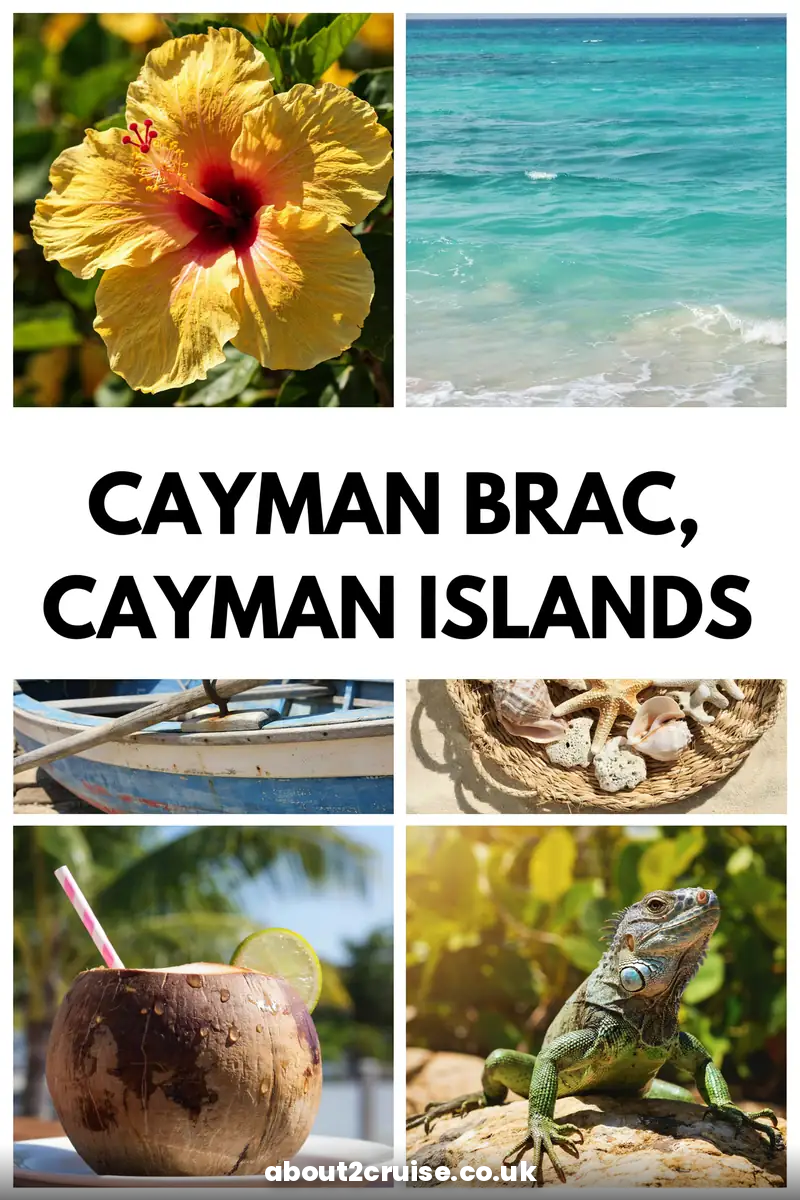
South Side Public Beach is the most practical beach stop. It has concrete cabanas, picnic tables, restrooms and a flat, accessible beach with a mobi-mat for wheelchair users. The south coast is calmer and better for swimming and shore snorkelling. The north coast near the dock is rockier and rougher. For a view rather than a swim, West End Point Outlook at the western tip works well.
Diving and Snorkelling on a Cruise Stop
Cayman Brac diving is wall diving: shallow reef drops from around 25–60 feet to a vertical wall at roughly 60–70 feet. The MV Captain Keith Tibbetts is the signature wreck. Dive prices guidebook examples include Brac Scuba Shack at about US$88 for one tank and US$145 for two tanks. Reef Divers operates from Cayman Brac Beach Resort with morning and afternoon boat dives.
For cruise passengers, diving only works if you pre-book, confirm the operator can meet near the dock, and accept that a delayed tender or rougher sea can cost the dive. Snorkelling from shore is more practical on the south side, but shore entries can still be rocky, so bring water shoes.
Weather, Sea Conditions and Tender Cancellation Risk
Cayman Brac has a dry season from roughly December to April and a wet season from May to November. Hurricane season normally runs June to November. Winds are strongest November to January. Small-craft warnings and marine warnings for rough seas and cold fronts are routine. The north side, including the wreck and the anchor area near Scott’s Dock, can be exposed to northerly swell.
Tender operations can be affected by wind and sea state; the ship’s master decides whether it is safe. Explora II had a Brac call cancelled at the last minute because the crew judged conditions too rough for safe tendering. If the ship cannot tender, you will have an extra sea day.
Time Zone, Currency and Tender Return Time
Local time is Eastern Standard Time, UTC−5, all year; the Cayman Islands do not observe daylight saving. Follow the ship’s time, not your phone, particularly if the ship changes clocks.
The local currency is the Cayman Islands dollar, pegged at CI$1 = US$1.20. US dollars are widely accepted, but change is often returned in Cayman dollars. Card acceptance is more limited than on Grand Cayman, so bring small cash for taxis, bakeries, jerk stands and market vendors. If in doubt, carry at least US$100 in mixed notes for a day ashore.
Accessibility and Mobility at the Port
Tendering itself is the first barrier. Scott’s Dock is a working rock dock, and there is no documented wheelchair tender boarding or passenger gangway terminal. Passengers with limited mobility should speak to the ship’s accessibility team before booking an excursion.
On land, South Side Public Beach has a mobi-mat and accessible restrooms; Carter’s Taxi & Tours has the island’s only wheelchair-accessible van. The terrain beyond the beach and museum is often sharp limestone or unpaved trail, so many natural sights are not step-free.
Cruise Passenger Facilities and Amenities Near the Landing
There is no left-luggage or passenger car park at the dock, no terminal lounge and no rental-car desk immediately at the landing. On call days you may find a small local market with crafts, music or cultural displays, but do not count on indoor shelter or places to charge devices.
The nearest practical facilities are in the West End settlement: shops, a post office, places to eat, and a few hotels. Use a café or restaurant if you need a restroom and a drink after tendering ashore.
Safety, Health and Local Practicalities
Travellers should use normal precautions; crime is low but not zero, and many shops, banks and services close on Sundays. Driving is on the left, and the drink-drive limit is 0.07%. Faith Hospital in Stake Bay is an 18-bed community hospital with 24-hour emergency care. Grand Cayman and Cayman Brac both have hyperbaric facilities, which matters to divers.
On the Bluff, stay on marked trail: the surface is jagged uplifted reef, there are deep hidden sinkholes and the edges are unstable. There are no pedestrian or car ferries between Grand Cayman, Cayman Brac and Little Cayman; flights are the only inter-island option.
Shopping, Food and Drink Near the Port
On a call day, a small craft market may be set up at Scott’s Dock, with Caymanian crafts and souvenir vendors. Away from the dock, the food to seek out is local. Brac bread is a coiled round loaf similar to Jamaican hardough; the bakery on Creek Road usually bakes it from about 10am and it often sells out by lunchtime. Cash only. Roadside jerk stands in the West End near the airport cook chicken and pork over charcoal, cash only and only a few days a week. Fish rundown, conch fritters or chowder, and heavy cake are the Caymanian dishes to try.
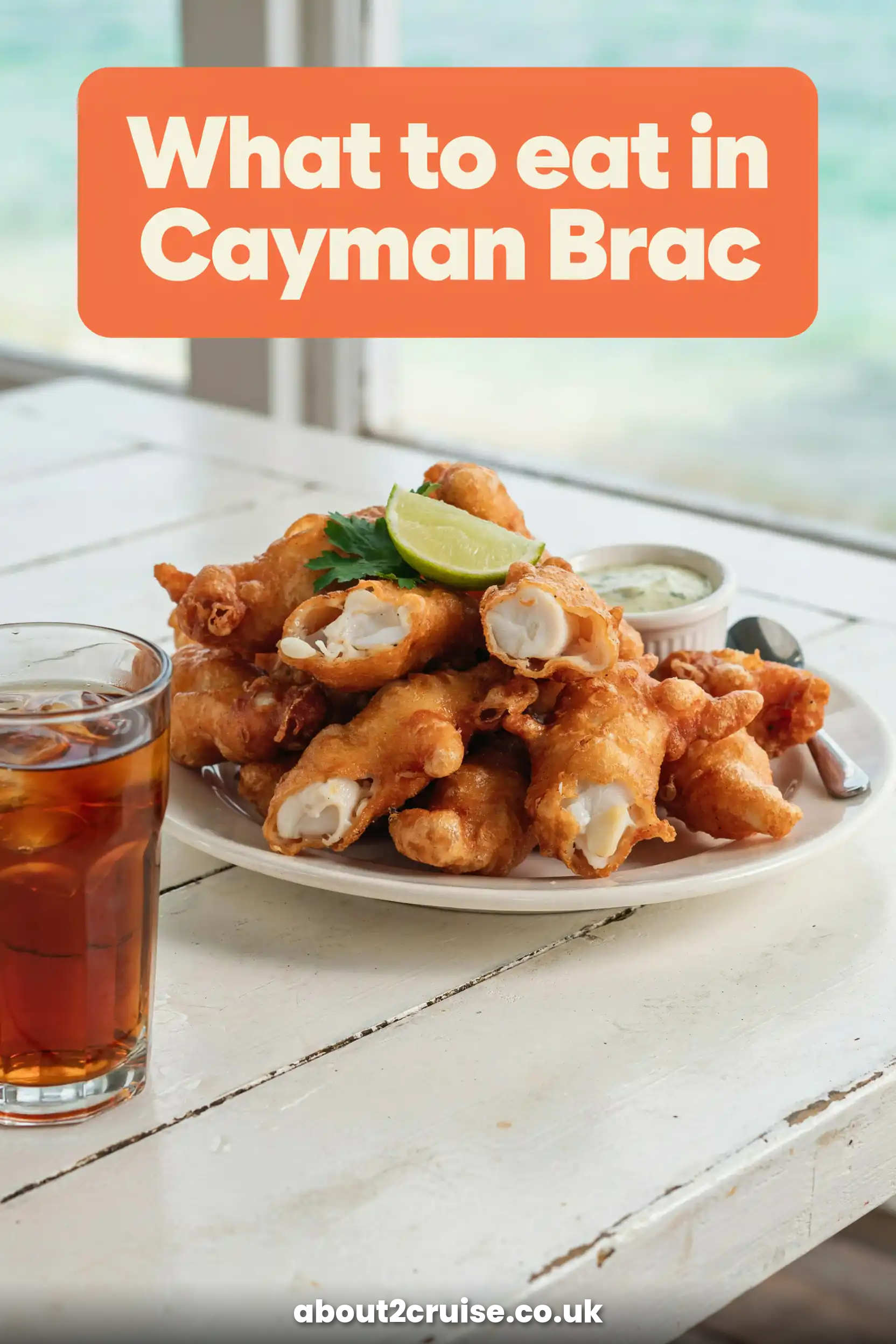
There are restaurants and hotels in the West End, but on a short call the market and a bakery or jerk stop are the easiest food-and-drink targets.
What to Pack for a Cayman Brac Port Day
Bring closed, sturdy shoes or hiking boots for the Bluff, parrot reserve and caves; the karst is sharp. A torch or headlamp is essential for caves. Reef shoes or water shoes help on rocky shore entries. Pack sun protection, insect repellent, a hat or sun hoodie and more water than you think you need; trails are exposed and there is no water on the reserve.
Bring cash. If you plan independent snorkelling, carry your own mask and a reef-safe sunscreen. A small dry bag is useful for the tender.
Best Time of Year to Actually Get Ashore at Cayman Brac
Because Cayman Brac receives only occasional cruise calls, the best time is usually whenever your ship can safely tender. Weather-wise, December to April is the dry season and generally has calmer conditions, lower rainfall and better odds for tender operations. Hurricane season runs June to November, with the wettest months around October. Winds are often strongest November to January, which can make the north side rough. If you have a choice of cruise dates and a Brac call matters to you, a winter or spring call gives the best chance of getting ashore.
Family and Easy Day Options
This is not a splash-park port, but it can work for families who are comfortable in small places. The simplest mix is a taxi or tour to the Cayman Brac Museum, a short stop at Heritage House, and time at South Side Public Beach. The parrot reserve has a boardwalk section before the trail gets rocky, but young children need close supervision near the Bluff edge. If any member of the group cannot do steps, ladders or uneven limestone, choose the museum, beach and a panoramic drive rather than a cave tour.
When Staying Onboard Makes Sense
Stay onboard if the tender is called off, obviously, but also consider treating it as a sea day if you have limited mobility, are travelling with small children who can’t manage rough trails, or if you only want a big beach-club experience. Cayman Brac is wonderful for independent travellers, divers, birders and people who enjoy a quiet, unpolished Caribbean island. If none of that appeals, or if the call is very short and the sea is marginal, staying on the ship is a perfectly rational choice.
Common Questions About Cayman Brac Cruise Calls
Do cruise ships dock at Cayman Brac?
No. Ships stay offshore and tender guests to Scott’s Dock. There is no cruise pier or terminal.
Is Cayman Brac the same as Grand Cayman?
No. Grand Cayman is about 90 miles southwest and receives most of the Cayman Islands’ cruise traffic. Cayman Brac is a separate, much quieter island.
How do I know if my ship is calling at Cayman Brac?
Your itinerary will say “Cayman Brac” or “West End, Cayman Brac”. If it says George Town or Grand Cayman, you are not coming here.
Can I just walk to the main sights?
Not practically. The dock area is a short waterfront stroll at best. Caves, the museum, parrot reserve, lighthouse and Bluff viewpoints need wheeled transport.
What is the easiest way to see the island?
A pre-arranged island tour or taxi tour. There are few taxis and no rideshare, so don’t leave it until you step off the tender.
Why doesn’t my cruise app or schedule aggregator show Cayman Brac?
Several schedule sites do not reliably list rare Brac calls. Check the Cayman Port Authority schedule and the ship’s itinerary on board.
Is Cayman Brac worth leaving the ship for?
Yes, if you can handle a tender step and uneven terrain. It offers caves, Bluff viewpoints, local food, a museum and excellent diving without the crowds of Grand Cayman.