
Hiroshima gives your ship a choice of two wharves, and neither one drops you at the city centre. Smaller and mid sized ships tie up at Ujina Foreign Trade Wharf, a short tram or taxi from Peace Memorial Park. The bigger ships get sent out to Itsukaichi Wharf, where there’s no public transport at all, so a shuttle bus or a transfer isn’t optional, it’s the only way off the dock.
Which one you land at comes down to nothing more glamorous than the size of your ship. Itsukaichi is the deep water berth, built for the larger, heavier vessels, while Ujina, known locally as the ten thousand ton berth, takes everything else. Work out which applies to your sailing before you leave the cabin and you’ll save yourself a confused ten minutes at the gangway.
Port of Hiroshima, a quick overview
The Port of Hiroshima sits on the delta of the Ota River, on the Inland Sea coast of Honshu, roughly halfway between the Kansai and Kyushu regions. It carries the UN/LOCODE JPHIJ, the code shipping uses to log ports worldwide, and it’s the largest port in the Chugoku region, the western end of Honshu island.
The port complex sprawls across several separate areas, Ujina, Itsukaichi, Hatsukaichi, Kaita, Dejima and Motoujina, plus its own international ferry terminal. This is a working cargo harbour first and a cruise stop a distant second, shifting around 12,200,000 tonnes of freight and 210,000 TEU a year according to ShipNext Port Data. Don’t go looking for a purpose built cruise precinct at either berth. There isn’t one.
Hiroshima cruise terminal, Ujina Foreign Trade Wharf
Ujina Foreign Trade Wharf runs 280 metres long with a depth of 10 metres, and according to the Cruise Port Guide of Japan, published by Japan’s Ministry of Land, Infrastructure, Transport and Tourism, it puts you within easy reach of both Itsukushima Shrine on Miyajima and the Atomic Bomb Dome. The passenger terminal sits right on the berth, with an information centre next door handing out foreign language help, free wifi and currency exchange.
What’s in port at Ujina
- An information kiosk with English language tourist support
- Free wifi covering the terminal building
- Currency exchange facilities
- Shuttle buses laid on for some sailings
- The Tower of Paradise, a silver spire built for a Sea and Lands Expo held in the late 1980s, marking Hiroshima’s ambitions as a port city
There’s no coffee shop inside the terminal and nowhere to refill a water bottle, so if you’re out for several hours, especially in the warmer months, a collapsible bottle for refills on the go earns its space in your bag.
The wharf is a five minute walk from Hiroshima Port Station, the tram terminus, and the Ujina ferry port for Miyajima boats is about ten minutes on foot from the passenger terminal.
Itsukaichi Wharf, the berth for larger ships
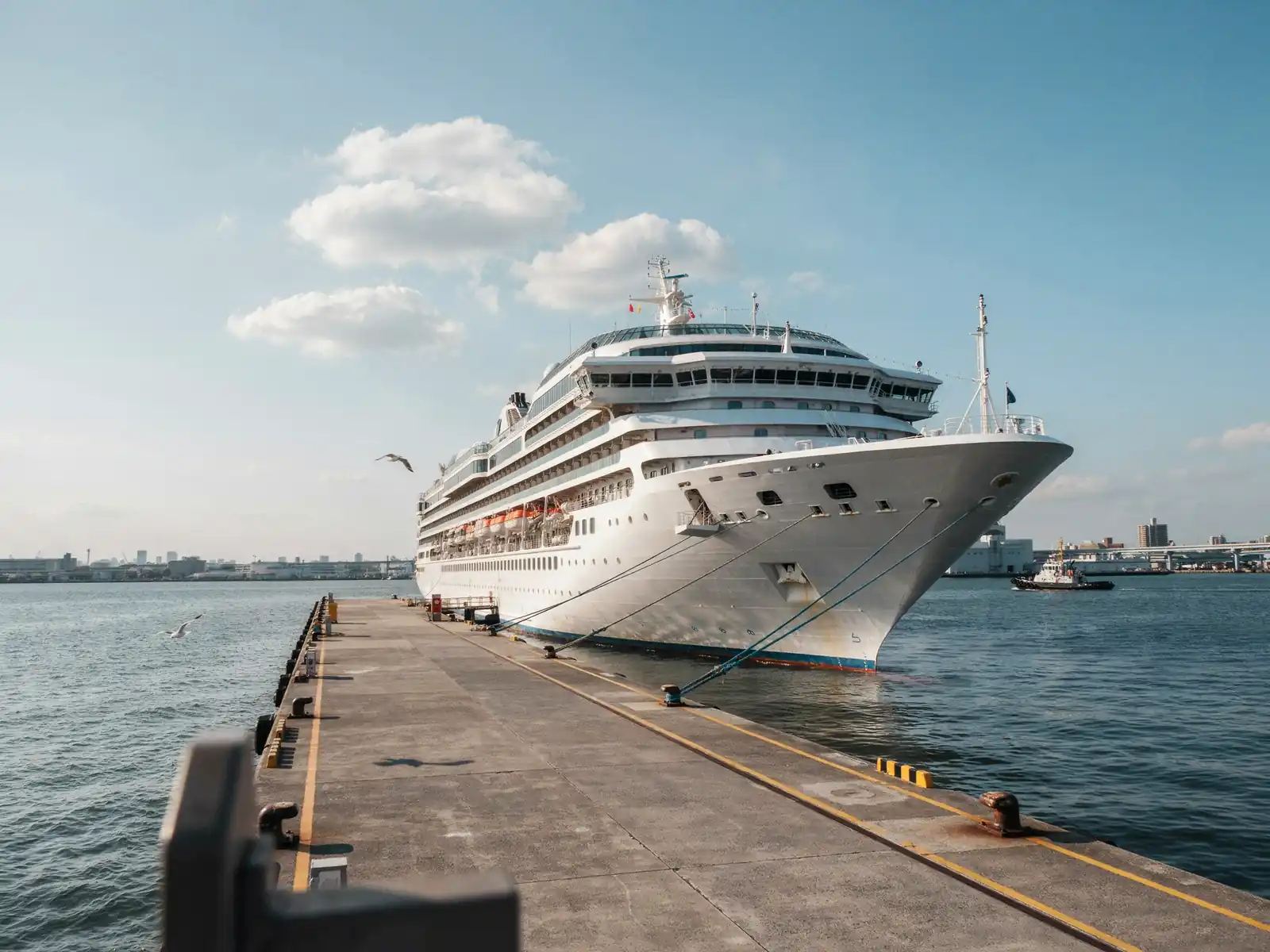
Itsukaichi is the newer, deeper berth, opened a little over a decade ago specifically to handle bigger cruise ships. At 430 metres long with a maximum draft of around 12 metres, it can take vessels of roughly 100,000 gross tonnes, well beyond anything Ujina can manage, according to the same Cruise Port Guide of Japan.
| Feature | Ujina Foreign Trade Wharf | Itsukaichi Wharf |
|---|---|---|
| Berth length | 280 metres | 430 metres |
| Depth | 10 metres | Up to 12 metres |
| Suits | Smaller and mid sized ships | Larger, heavier ships |
| Public transport | Tram, taxi and bus available on foot | None, shuttle or transfer required |
| Terminal facilities | Wifi, currency exchange, information desk | None described, restricted port zone |
The catch: Itsukaichi sits inside an import and export restriction zone that needs entry permission, and there’s no public transport running from it at all. The usual fix is a shuttle bus, arranged by the cruise line, to JR Itsukaichi or Hatsukaichi station, where trains pick up the rest of the trip. Some passengers skip the shuttle queue entirely and book a private transfer straight to the Atomic Bomb Dome instead, which tends to beat the train anyway.
How to get from Hiroshima cruise port to Peace Park
From Ujina, Peace Memorial Park and the Atomic Bomb Dome, sometimes called Genbaku Dome, sit around 3 miles off. You’ve got three realistic ways to close that gap, and the sources don’t agree on how long the tram takes.
- Tram: runs every 10 minutes from Hiroshima Port Station, part of the Hiroshima Electric Railway network known locally as Hiroden. The journey is sometimes clocked at around 23 minutes, though it can take closer to 40 once you factor in finding the stop and waiting, since the port area is sprawling and the surrounding streets carry heavy traffic.
- Taxi: the fastest option by a mile, around 6 minutes door to door, and worth the fare if your time ashore is tight.
- Bus: a direct service runs from Hiroshima ko Sambashi to Chuden mae roughly every 20 minutes and takes around 15.
Hiroshima Port Station has form, if you’re navigating by name. It opened as a tram stop called Ujina in the early 1950s, got renamed Hiroshima Port around the turn of the millennium, then was rebuilt at its current spot a couple of years after that.
Hiroshima cruise port to Miyajima
Miyajima, home to Itsukushima Shrine, is a big part of why people book a Hiroshima call in the first place, and there are three different ways to reach it depending on which berth your ship lands at.
- Direct from Ujina: a high speed ferry runs straight from Hiroshima Port to Miyajima in around 22 minutes, the quickest route going if your ship docks here.
- Via Peace Park: Aquanet Hiroshima runs the World Heritage Sea Route, a direct boat from Peace Memorial Park to Miyajima in about 45 minutes with no transfers, threading past the Honkawa and Motoyasu rivers before it opens out into Hiroshima Bay. The pier sits about 150 metres south of the Atomic Bomb Dome. Services run between 8am and 7pm, but the tide has a say too, so check the timetable on arrival rather than trusting a fixed one. There’s a small per person visitor tax added to Miyajima tickets, and the boat takes cash and major credit cards but not IC transit cards.
- From Itsukaichi: passengers sailing from here report a free shuttle to the railway station, a train on to Miyajimaguchi, then a short ferry hop across, a route several describe as painless.
There are cobbled approaches to Itsukushima Shrine and a fair bit of walking between the park, the pier and the shrine itself, so shoes built for long days spent walking will serve you better than sandals.
Cruises to Hiroshima, planning your visit
Which berth your ship gets isn’t fixed from one season to the next. It’s assigned per sailing, based on the vessel’s size, so the only way to know for sure is to ask your cruise line directly rather than trust last year’s itinerary. Hiroshima usually turns up paired with other Japanese calls on the same route, and our wider guide to Japan’s cruise ports covers how those itineraries typically fit together.
Ships working this coastline often combine Hiroshima with calls further along, so it’s worth a read of the Kyoto and Osaka cruise port guide or the Nagasaki cruise ship port guide if either shows up on your itinerary. The logistics at each are their own thing, nothing like what you’ll find here.
Common Questions
Which berth will my cruise ship use in Hiroshima?
It comes down to your ship’s size and gets arranged per sailing. Smaller and mid sized ships usually get Ujina Foreign Trade Wharf, larger ones go to Itsukaichi Wharf. Ask your cruise line rather than guessing.
Is there wifi at the Hiroshima cruise terminal?
Ujina’s terminal has free wifi and an information kiosk with foreign language support. Itsukaichi sits in a restricted port zone with no facilities to speak of, so plan around that.
Can I walk to Peace Memorial Park from the cruise port?
No. From Ujina it’s around 3 miles, a tram or taxi job, and Itsukaichi has no public transport link at all. Walking isn’t realistic from either berth.
Do I need cash or can I use a card in Hiroshima?
Carry some cash. The Aquanet World Heritage Sea Route boat to Miyajima takes cash and major credit cards but not IC transit cards, and trams, by most accounts, prefer coins.
Is there a fee to visit Miyajima?
Yes, a small per person visitor tax gets added when you buy a ticket to Miyajima, whether that’s the direct ferry from Ujina or the World Heritage Sea Route boat.
What happens if the tide is low when I want to reach Miyajima by boat?
The Aquanet World Heritage Sea Route answers to the tide, and some sailings simply don’t run. Check on arrival rather than banking on the timetable.
How do I get from Itsukaichi Wharf into the city?
There’s no public transport straight from Itsukaichi. Most cruise lines run a shuttle bus to JR Itsukaichi or Hatsukaichi station, and a private transfer is the other option worth weighing up.
Does Peace Memorial Park connect directly to Miyajima?
Yes, the Aquanet World Heritage Sea Route runs straight from just south of the Atomic Bomb Dome to Miyajima, no transfers needed.
Why Trust About2Cruise
This guide draws on official sources, including the Cruise Port Guide of Japan published by Japan’s Ministry of Land, Infrastructure, Transport and Tourism, JNTO terminal listings, and Hiroden’s own station history, checked against traveller reports where the official data ran thin. Where sources disagreed, on tram times and exact fares especially, we’ve said so rather than picking a number to sound sure of ourselves. We haven’t sailed into Hiroshima ourselves, and we’re not pretending otherwise. You can read more about how we research and fact check our port guides on our about us page.
Last Updated: 25 October 2026