
Cruise ships berth at Matsugae Pier, part of the Nagasaki Port Matsugae International Terminal, and it sits right against the city centre. No tenders, no standing on deck watching everyone else queue for a boat. You step off the gangway straight onto Oura Kaigan-dori Street, with Glover Garden, Chinatown and Dejima all within walking distance.
This guide runs through what’s at the Nagasaki cruise port, from the terminal itself to the walk into town, so you know the lay of the land before the ship even ties up.
Nagasaki port at a glance
Nagasaki sits inside one of Japan’s most sheltered natural harbours, hills on three sides, with the terminal built right into the edge of downtown. Ships slide under the Venus Wing Bridge on the way in and tie up close enough that most people just walk into town, no shuttle bus needed. It’s a busy stop too, the third busiest cruise port in Japan behind Hakata and Naha, according to Ministry of Land, Infrastructure, Transport and Tourism data reported by Nippon.com.
| Detail | What to expect |
|---|---|
| Main terminal | Nagasaki Port Matsugae International Terminal, at Matsugae Pier |
| Alternative berth | Dejima Pier, used by some smaller ships and domestic ferries |
| Docking type | Alongside berth, not a tender port |
| Nearest tram stop | Ourakaigan-dori, on Nagasaki Electric Tramway line 5, a short walk from the terminal |
| Nearest airport | Nagasaki Airport, roughly 40 minutes away by bus |
| On site facilities | Free Wi-Fi, restrooms, tourist information and currency exchange on the day a ship calls |
Matsugae Pier cruise terminal, explained
You might see this place called Matsugae Pier, Matsugae International Terminal or Nagasaki International Cruise Ship Terminal, depending on which guide you’re reading. They’re all the same building. Its proper name is the Nagasaki Port Matsugae International Terminal, it’s got a grass roof and solar panels, and it sits directly on Oura Kaigan-dori Street in the middle of the city.
A handful of smaller ships and domestic ferries use a second berth close by, Dejima Pier, which lands you even nearer to Dejima Island and Chinatown. Cruise lines don’t announce which berth your sailing will use ahead of time, so check the ship’s daily programme or ask at guest services once you’re aboard. Nobody’s hiding it from you, the port just doesn’t publish it in advance.
Nagasaki cruise port map
Here’s where Matsugae Pier sits against the rest of the city.
Getting from the terminal into the city
Getting from the terminal into the city is easy, because ships dock at Matsugae Pier and you just walk off. The tram stop is a short walk away, metered taxis wait outside, and sights like Glover Garden are close enough to reach on foot.
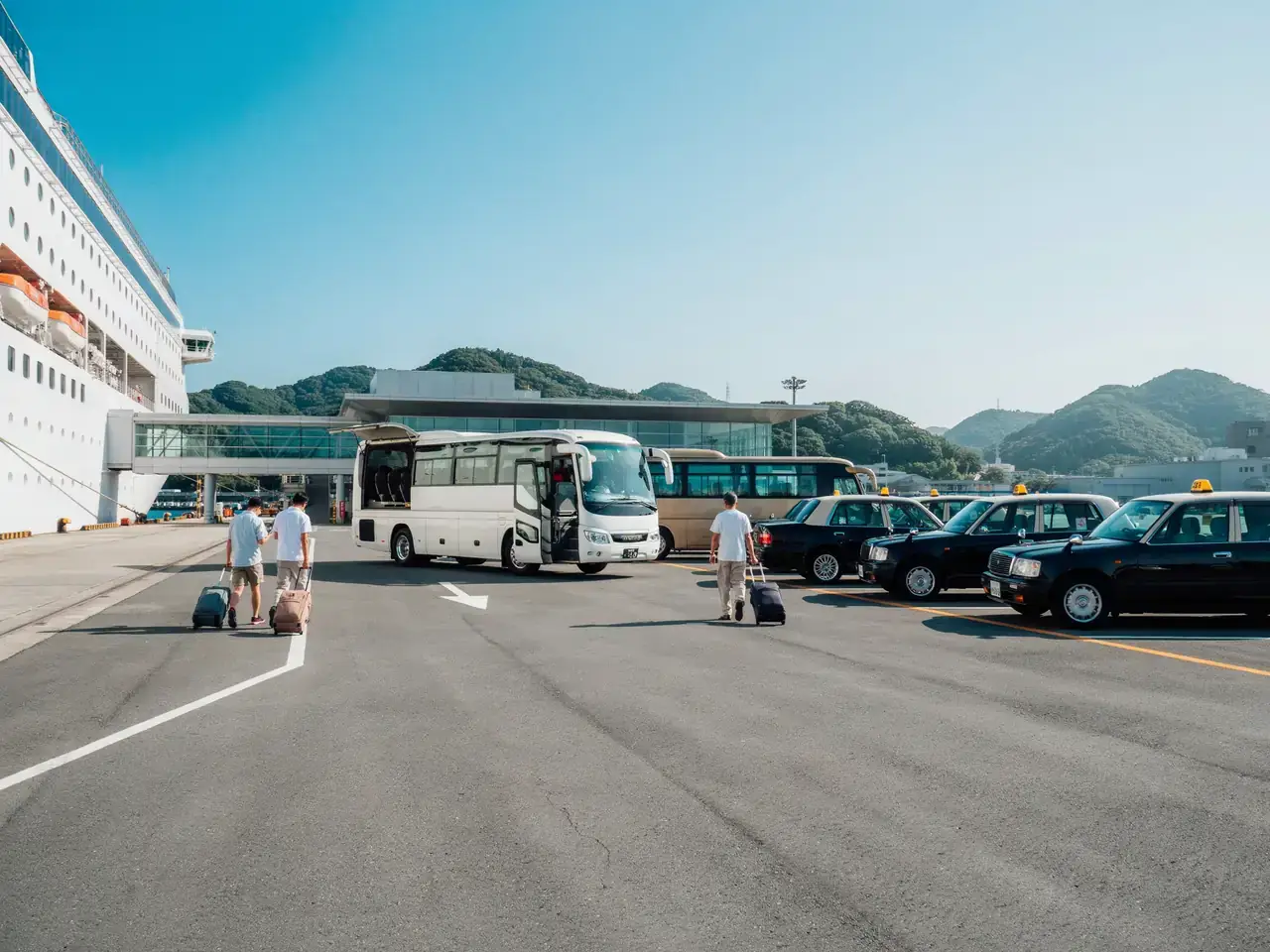
Because Matsugae Pier is a docking port, not a tender port, you walk off the ship and you’re already exploring. No tender boats, no shuttle queue, no standing around waiting for your number to be called.
- Tram: the Ourakaigan-dori stop on Nagasaki Electric Tramway line 5 is a short walk from the terminal. Grab a one day pass if you’re planning to hop on and off a lot.
- Taxi: there’s always a line of them outside the terminal, metered, and drivers here have a reputation for not taking the scenic route to pad the fare.
- On foot: central Nagasaki, including Glover Garden and Oura Cathedral, is close enough that most people just walk for their first stop and save the tram for later.
One thing to flag: tram fares and day pass prices you’ll find online don’t always agree with each other, and might be out of date by the time you’re there. Keep some coins spare and check the current fare at the tram stop or the terminal’s tourist information desk. Don’t take any guide’s word for it, ours included.
What’s in port at Nagasaki: things to do near the terminal
You don’t need a tour bus for Nagasaki’s best known sights. Most of them are within a short walk or a quick tram hop from Matsugae Pier.
- Glover Garden, a hillside former merchant’s residence with harbour views, reachable on foot in well under half an hour.
- Oura Cathedral, a World Heritage site and one of Japan’s oldest churches, sitting close to Glover Garden.
- Oranda zaka, a cobbled slope lined with old Dutch influenced buildings from Nagasaki’s trading past.
- Dejima, the reconstructed former Dutch trading post, within comfortable walking distance.
- Shinchi Chinatown, good for lunch, roughly a 20 minute walk from the pier.
- Local shopping arcades and restaurants scattered along the route between the terminal and the city centre.
A day spent photographing Glover Garden, the harbour and the arcades will drain your phone battery faster than you’d think, so pack a portable charger for a full day ashore before you leave the cabin. If walking everywhere isn’t your idea of a good time, bus tours booked through the ship or locally will get you out to Huis Ten Bosch, nearby onsen (hot spring) resorts, or Shimabara Castle. Just book ahead, these aren’t the sort of thing you can turn up for on the day.
Walking from the cruise terminal to Nagasaki Peace Park
Nagasaki Peace Park marks the city’s history as the second place hit by an atomic bomb in the Second World War, and plenty of passengers want to fit it into their day ashore.
Nobody quite agrees on how long it takes to get there. Some say a 20 to 25 minute walk, others reckon the tram works out closer to 40 minutes once you count the walk to and from the stops at each end. With a spread like that, build in extra time rather than cutting it fine, especially if you’ve still got to walk back to the ship afterwards.
- On foot: budget at least 20 to 25 minutes each way, more if you’re stopping for photos.
- By tram: often faster overall, but factor in walking time to the nearest stop at both ends, which can push the total closer to 40 minutes door to door.
Nagasaki cruise terminal to the Mount Inasa Ropeway, step by step
The Mount Inasa Ropeway hauls you up the mountain west of the city in about five minutes flat. It’s famous for its night views over the harbour, but even on a daytime port call it’s worth the trip.
- Take Nagasaki Bus Route 4, bound for Shimoohashi, from the stop outside the terminal.
- Ride for around 20 minutes to the Ropeway mae stop.
- Walk about 2 minutes to the ropeway station.
- Or skip the bus, take the tram to Takaramachi and walk roughly 15 minutes to the station, or just grab a taxi directly, agreeing the fare with the driver before you set off.
Both routes involve hills, so this is one stop where comfortable, broken in footwear earns its keep. Shoes built for hilly walking days make the climb to the station a lot less of a grind than smooth soled travel shoes.
When more than one ship is in port
Nagasaki is a regular stop on Japan and wider Asia Pacific itineraries, and it pulls in domestic cruise and ferry traffic as well, so the pier area can get busy on peak days. Tourist information and currency exchange desks at the terminal only open on days a ship is calling, so don’t count on them being staffed any other time.
Taxis and trams generally soak up the extra numbers without much drama. The whole point of this pier is getting people into the city quickly, not holding them at the dock.
A few things that catch passengers out
- Currency exchange at the terminal is only available on the day your ship calls, not every day, so don’t assume it’ll be open if you arrive early or stay late.
- Glover Garden’s entrance really is close to the pier, but walking times quoted by different guides range from around 5 to 15 minutes, so treat any single figure as a rough guess.
- Nagasaki has an odd shipbuilding link for cruise fans: both Diamond Princess and Sapphire Princess were built here, at the Mitsubishi Heavy Industries yard, which makes a call feel a bit different if you happen to be sailing on either ship.
Other Japan ports worth knowing about
Nagasaki’s just one stop on a much bigger map. If your itinerary also takes in Hakata, Japan’s busiest cruise port, our guide to the Fukuoka Hakata cruise terminal covers what to expect there, and the Hiroshima cruise ship port guide is worth a look if that’s also on your route. For the bigger picture of how Japan’s cruise ports connect, our guide to cruise ports across Japan is a decent place to start.
Common Questions
Is Nagasaki a tender port?
No. Ships dock alongside at Matsugae Pier, so it’s straight off the gangway, no tender boat involved.
How far is Glover Garden from the ship?
Guides differ, with estimates ranging from around 5 to 15 minutes on foot. Either way, it’s close enough to walk, no need for transport.
Will my ship dock at Matsugae Pier or Dejima Pier?
Cruise lines don’t confirm this ahead of time for every sailing. Check your ship’s daily programme or ask guest services once you’re aboard to be sure.
Is there Wi-Fi at the Nagasaki cruise terminal?
Yes, the Nagasaki Port Matsugae International Terminal has free Wi-Fi, along with restrooms and space for tour buses and taxis.
Can I exchange currency at the port?
Yes, but only on the day your ship is calling. The terminal’s currency exchange and tourist information desks are closed any other day.
Do I need to pre-book bus tours from Nagasaki?
For longer trips such as Huis Ten Bosch, nearby onsen resorts or Shimabara Castle, yes. Book ahead through the ship or a local operator.
Is Nagasaki cruise port wheelchair accessible?
Specific accessibility details for the routes from the pier aren’t independently confirmed, so if you’ve got mobility needs, check with your cruise line before you travel.
Why do sources give different walking times to Nagasaki Peace Park?
Estimates run from roughly 20 to 25 minutes on foot up to around 40 minutes once you factor in a tram journey, so plan extra time whichever way you go.
What’s the Mitsubishi Heavy Industries connection in Nagasaki?
Diamond Princess and Sapphire Princess were both built at the Mitsubishi Heavy Industries shipyard in Nagasaki, a nice detail if you happen to be sailing on either one.
Why Trust About2Cruise
This guide draws on official Japanese port authority information, terminal operator details and a stack of independent port guides, cross checked against each other rather than lifted from one source. Where sources disagreed, on walking times to Nagasaki Peace Park or exact tram fares, we’ve said so rather than guessed. You can read more about how we research and fact check our port guides on our about us page.
Last Updated: 19 October 2026