
Planning a day off the ship in Ibiza? The currency is the euro, same as the rest of Spain, same notes and coins as the mainland. No island quirks, no separate tokens, cards work almost everywhere and euros are the only cash worth carrying in your pocket.
Currency in Ibiza, Spain: The Short Answer
Ibiza belongs to the Balearic Islands, Spain, so its currency is exactly what you’d guess, the euro. There’s no island token system hiding round the corner, and turning up with dollars or any other currency won’t get you far in shops, bars or taxis.
One euro breaks down into 100 cents. You’ll mostly handle 5, 10, 20 and 50 euro notes, plus 1 and 2 euro coins for the smaller stuff.
Notes, Coins and What Shops Will Take
Anything from a 50 euro note upwards gets a raised eyebrow in small shops, bars and taxis, especially if you’re only buying a coffee. Break the big notes at a bank or a larger shop early in the day, not at the counter of a beach bar.
A small stash of coins and low value notes saves you faff later, particularly for tips, market stalls and bus fares, where change isn’t always on offer.
ATMs, Currency Exchange and Card Acceptance
Does Ibiza Use Euros Everywhere, Including at the Port?
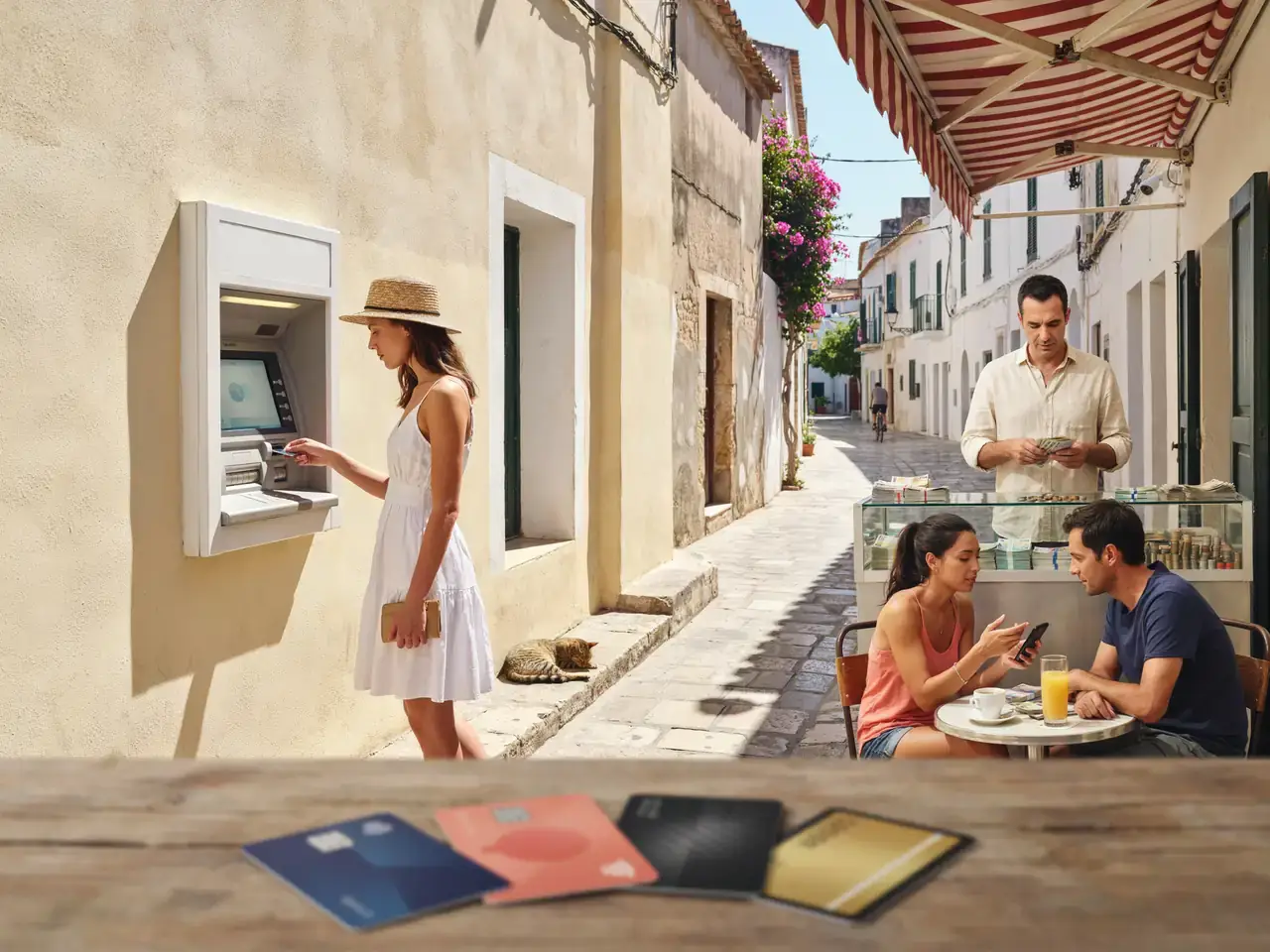
Ibiza doesn’t complicate things, everywhere takes euros, full stop. The port has a handful of machines for withdrawing or changing money, and more are dotted through Ibiza Town. ATMs are usually your cheapest option, but check with your own bank first, since some UK banks still charge for the privilege of withdrawing abroad.
Cards get you through restaurants, taxis and most small shops without a fuss, and spending ashore tends to happen in small, forgettable amounts. Data from Dataestur puts the average card payment by foreign visitors in Spain at around 34 euros, so there’s no need to walk around with a fat wallet for one transaction.
Land without a euro to your name and you’re still fine, the terminal’s onboard shops take cards, so you won’t be stuck before you’ve found a machine. When two ships are in port on the same day, ATM queues near the terminal and the bus into town both stretch out, so sort your money early rather than waiting until you’re due back.
Cards, spare euros and your passport all end up in the same bag for the day anyway, so an RFID blocking passport holder keeps the lot together instead of you patting down four pockets in a queue.
Do You Need Cash in Ibiza? A Venue by Venue Checklist
Visitors to the Balearics, Ibiza included, spend at a fairly steady clip, averaging 217 euros a day according to Spain’s National Statistics Institute Tourist Expenditure Survey (Egatur). A mix of cash and card covers a day ashore easily enough, it just helps to know which one to reach for where.
- Restaurants and cafes: cards work almost everywhere, even in the small places tucked near the port
- Taxis: some have card machines, not all, so keep cash and small change handy for the fare
- Local markets and market stalls: cash is still king here, especially for smaller buys from independent sellers
- Beach clubs and world-class nightlife venues: cards are widely taken, but cash smooths tips, cloakrooms and small bar tabs
Contactless, Apple Pay and Digital Wallets
Tapping your card or phone instead of inserting it is the norm across Spain, with the same 50 euro contactless limit as the rest of the eurozone. Apple Pay, Google Pay and Samsung Pay all work wherever you see the contactless symbol, so if a machine takes tap and go, it’ll take your phone too.
You’ll spot fewer iPhones among locals than you would back home, but that has nothing to do with whether it works, any terminal reading contactless cards reads Apple Pay just as happily.
Paying for Ibiza’s Buses: A Currency Quirk
This is one spot where the official guidance flatly contradicts itself. ALSA, the island’s main bus operator, lists card and QR code payment as options on board and at self-service machines at the airport, port and Ibiza Town. The regional transport authority, TIB, separately says one specific on-board ticket type can only be paid for in cash, banknotes up to 20 euros only.
Neither one explains which rule applies to which route or ticket, so the sensible move is to carry a handful of small notes and coins as backup even if you’re planning to tap your card. If a driver shakes their head at your card or the machine’s down, you’ll still have a fare in your pocket.
Tipping in Ibiza
Nobody in Ibiza expects a tip, and how much you leave is entirely your call. Taxi drivers tend to get 5 to 10 percent, and in restaurants and bars, rounding up or leaving loose change is appreciated, not expected.
Is Ibiza’s Tap Water Safe to Drink?
Mains tap water in Ibiza meets EU and Spanish safety standards, most of it drawn from desalination plants, so an occasional glass won’t do you any harm. The taste is a different story, and water around Playa d’en Bossa can come out noticeably salty, thanks to seawater working its way into the underground supply.
Orientation: From the Port to Ibiza Town
The cruise terminal sits close enough to the old fortified quarter that walking there is a real option, though the port bus or a taxi will drop you in Ibiza Town in a few minutes if your legs would rather not bother. Dalt Vila’s steep, cobbled lanes are worth the climb, and our Old Town walking routes cover the gentlest paths up.
The terrain is properly hilly in places, so if mobility’s a concern, check our wheelchair accessibility guide before you plan your route from the ship.
Sant Antoni de Portmany, better known as San Antonio, sits further round the coast, and walking there from the port isn’t realistic for anyone. If you’re weighing up independent excursions versus ship tours for a trip that far, you can usually book direct and save compared with booking through the ship.
A few hours ashore is enough to reach some of Ibiza’s best beaches without straying far, though summer heat turns midday queues and longer walks into harder work than you’d like. Check our best time to cruise Ibiza guide if you’re still deciding when to sail.
A longer call gives some passengers time to bolt on a day trip to Formentera, which shifts the money plan a little, since you’ll want euros in hand rather than betting on a card machine at every single stop.
Ibiza is often just one stop on a longer Mediterranean cruise, and the money habits that work here, mostly cards with a little cash tucked back, carry over neatly to other Spanish and Balearic ports.
Why Trust About2Cruise
This guide draws on currency information from cruise lines, UK travel and currency specialists, and Ibiza’s own transport authorities, cross-checked against each other wherever they disagreed. Where the picture simply wasn’t clear, like exactly how Ibiza’s buses handle card payments, we’ve said so rather than guessing. Read more about how we research and fact-check our guides on our about us page.
Common Questions
Does Ibiza use euros?
Yes. As part of Spain, Ibiza runs on the euro alone, no separate island currency, no need to change money again anywhere else in the Balearics.
Can I use my UK debit or credit card in Ibiza?
Yes, cards work almost everywhere. Check with your bank first though, some still charge for withdrawals or purchases made abroad.
Are US dollars accepted anywhere in Ibiza?
No. The euro is the only currency in play, and turning up with dollars or anything else won’t get you far in shops, bars or taxis.
Can you use Apple Pay in Ibiza?
Yes. Anywhere that takes contactless cards takes Apple Pay, Google Pay or Samsung Pay too, even if Apple devices are less common among locals.
Do Ibiza’s buses take card payment?
Some machines and routes do, but the official sources can’t agree whether it’s universal. Carry a bit of cash as backup in case a driver or machine says no to your card.
Should I tip in Ibiza?
It isn’t obligatory. Around 5 to 10 percent is typical for taxi drivers, and rounding up in restaurants is appreciated, never expected.
Is Ibiza’s tap water safe to drink?
Yes, it meets EU standards and comes mostly from desalination plants, though the taste varies and can turn noticeably salty around Playa d’en Bossa.
What’s the cheapest way to get euros in Ibiza?
ATMs, generally. Currency exchange booths and banks near the port and in Ibiza Town are an option too, but their rates tend to be less kind.
Do I need cash for local markets?
Often, yes. Cards are fine at restaurants and larger shops, but smaller stallholders at local markets usually prefer cash, it’s quicker for everyone.