
Manzanillo is Mexico’s busiest Pacific cargo port and the Sailfish Capital of the World, but for cruise passengers it’s a walk-off downtown pier with no terminal. You can walk to the historic centre in about five minutes, then choose a seafood lunch, a taxi to La Audiencia or Miramar beach, or a Las Hadas day pass.


Why Manzanillo Isn’t Your Typical Cruise Port
Manzanillo is a Pacific port city of about 185,000 people in the state of Colima. It wraps around two big bays, Bahía de Manzanillo and Bahía de Santiago, separated by the Península de Santiago. That geography gives the city a split personality: a busy commercial harbour on one side and a relaxed Mexican beach town on the other.
The headline activity here is sportfishing. Manzanillo calls itself the Sailfish Capital of the World, and the offshore waters are home to around 70 game-fish species. Sailfish and dorado show up year-round, and the city has hosted national and international fishing tournaments since the mid-20th century. The biggest event is the International Sport Fishing Tournament at the end of November, which runs alongside Manzanillo a las Brasas, a free outdoor seafood festival in the historic centre.
When you wander into town, you’ll probably spot the blue El Pez Vela sailfish sculpture on the malecón, created by artist Sebastián. The main square is Plaza Juárez, also known as Jardín Álvaro Obregón. Many visitors also recognise the white Moorish-style towers of Las Hadas, the resort on the Santiago peninsula that appeared in the movie 10. For most cruise passengers, the usual priorities are the sailfish statue, a good seafood lunch, a beach or resort day, and maybe a fishing, snorkelling or lagoon trip.
Manzanillo cruise port map
Ships dock at Muelle de Cruceros (cruise pier). From the pier, Malecón del Espíritu Santo is about a 9-minute walk, Jardín Álvaro Obregón about 10 minutes and Playa San Pedrito about 16 minutes. Tap a pin for directions.
- Muelle de Cruceros (cruise pier)Where ships dock
- Malecón del Espíritu SantoSeafront promenade · About 9 min walk from the pier
- Jardín Álvaro ObregónMain square · About 10 min walk from the pier
- Playa San PedritoBeach · About 16 min walk from the pier
- Museo Universitario de ArqueologíaArchaeology museum · About 18 min walk from the pier
- Playa La AudienciaBeach · About 7 km from the pier
- Playa MiramarBeach · About 10 km from the pier
- Playa La BoquitaBeach · About 11 km from the pier
- Las Hadas by BrisasResort · About 6 km from the pier
- Cerro de la CruzHilltop viewpoint · About 5 km from the pier
Arriving at the Manzanillo Cruise Pier
Ships dock at the downtown cruise pier, the Muelle de Cruceros, at roughly 19.0555, -104.3143. It sits on the edge of the historic centre, about half a kilometre from the main square and the sailfish monument. You walk off the ship: no tender is needed.
The pier is a converted customs pier with enough space for two Panamax-sized cruise ships at once. But there is no terminal building. Don’t expect an air-conditioned hall, café, left luggage, or passenger services at the berth. On ship days a small craft market sets up on the quay selling pottery, crochet, wood carvings, dolls, cigars, soaps, coconut sweets and coffee.
For security, the port closes the pier to the general public on cruise-ship days. If your ship is allocated to a cargo berth instead, which does happen on some calls, you’ll usually take a cruise-line or independent shuttle into the centre. The cargo berth is about 2 km east of downtown. Manzanillo is on Mountain Standard Time, UTC-5.

Can You Walk Into Manzanillo From the Ship?
Yes, and this is one of the easiest Mexican Riviera ports for walking off. The centre is compact and flat along the waterfront. From the pier, the big Manzanillo letters sign is about 198 m (2 minutes), Jardín Álvaro Obregón about 295 m (4 minutes), the sailfish statue about 299 m, and the malecón about 334 m. The Mercado 5 de Mayo is roughly 630 m, or an 8-minute walk.
The historic streets around the centre are cobbled, and some pedestrian lanes have been repainted white. Avenida México is the main commercial street running perpendicular to the malecón. The malecón itself stretches about 1.5 km along the shore. You don’t need a tour for the historic centre, and an hour or two is enough to see the monuments, market and waterfront.
What isn’t practical to walk to is the beach. The closest beach, Playa Las Brisas, is about 1.4 km or 18 minutes on foot, but the beaches most cruise passengers really want, La Audiencia, Miramar and La Boquita, are 6.5 km to 10.4 km away and require a taxi or bus.
Taxis, Shuttles, and Getting Around Without Hassle
Taxis line up outside the port exit. They don’t use meters; Manzanillo taxis run on negotiated or zone pricing, so agree the fare before you get in. In-town trips are usually well under MXN 150. Realistic taxi times from the pier are roughly:
- Playa La Audiencia: 6.5 km, about 16 minutes
- Playa Olas Altas: 8.3 km, about 21 minutes
- Playa La Boquita: 10.4 km, about 26 minutes
- Miramar and the peninsula beaches: allow 20 to 35 minutes
Drivers sometimes price-gouge on trips to beaches and the city market, so agree a round-trip or return pick-up time before you leave the pier. A local bus is the budget alternative: buses marked Santiago, Miramar, Las Hadas or Centro run from the centre along the coast road for a few pesos. Uber and DiDi coverage is thin and unreliable, especially in the evening, so don’t count on app rides.
Some calls have an independent shuttle operator at the pier charging a few dollars into town and under US$15 to Miramar. If your ship uses the cargo berth, expect a cruise-line shuttle at a fee. For reboarding, be back on board at least 30 minutes before departure, and leave a 60-minute buffer for independent trips because port access checks can slow you down.
The Best Beaches Near the Cruise Port
Manzanillo’s beaches are split between the two bays. The one you choose depends on whether you want calm swimming, food shacks or water sports.
Playa La Audiencia is the easiest all-round choice. It’s a sheltered cove on the Península de Santiago with calm water, free access, sunloungers to rent, kayaks, jet skis, banana boats and party boats. It’s also a lovely sunset spot. It lies 6.5 km from the pier, about 16 minutes by taxi.
Playa Miramar is over 8 km of golden sand northwest of the port with moderate surf. It has surfboard and jet-ski hire and ramadas serving ceviche colimote, camarones al ajillo and the local speciality pescado zarandeado. It’s free to enter and best from 08:00 to 19:00. Allow 20 to 30 minutes from the ship.
Playa La Boquita is calm and shallow at the mouth of the Juluapan lagoon, good for families, with ramadas, boat trips, kayaks and jet skis. Just off La Boquita lies the wreck of the San Luciano, a 300 ft cargo ship in about 25 ft of water, used as a local snorkel/dive site with puffer fish, turtles and octopus.
Avoid swimming at Playa Olas Altas; currents are strong. Some beaches are unpatrolled, so follow local advice on whether it’s safe to enter the water. Bring swimwear, a towel, sun protection and enough pesos for food and loungers because facilities are simple.
Las Hadas Day Pass: What You Get
Las Hadas by Brisas is the landmark resort on the Península de Santiago, known for its white Moorish architecture and the movie 10. You can visit as a day guest:
- Day use: MXN 1,800 per adult, MXN 1,180 per child aged 7 to 12
- Hours: 10:00 to 18:00
- Includes: food and drinks during the visit
- Phone: +52 314 331 0101
The beach at Las Hadas is public and free to enter; the day pass covers the resort services, pool and food and drink. There’s no published online booking channel, so the day pass is normally bought at the resort on the day. The resort is built down a hillside with many stairs, although a golf-cart service is available.
If you prefer an organised version, Princess Cruises sells a five-hour beach resort getaway with coach transfer, buffet lunch and pool/beach use from US$114.95. Other resort options on the same peninsula include Barceló Karmina and Vista Playa de Oro. A taxi to Las Hadas is the same peninsula run as La Audiencia, so you can combine it with a beach morning or a photo stop.
What to Eat and Drink in Manzanillo
The dish that defines Manzanillo is pescado zarandeado: a whole butterflied fish, usually snapper, marinated and grilled over wood or coals. Seafood is the reason to eat near the port. Local styles include ceviche colimote (finely chopped fish with tomato, onion and carrot on a tostada), tiritas (thin strips of fish cured in lime), aguachile, smoked marlin empanadas and smoked sailfish tacos.
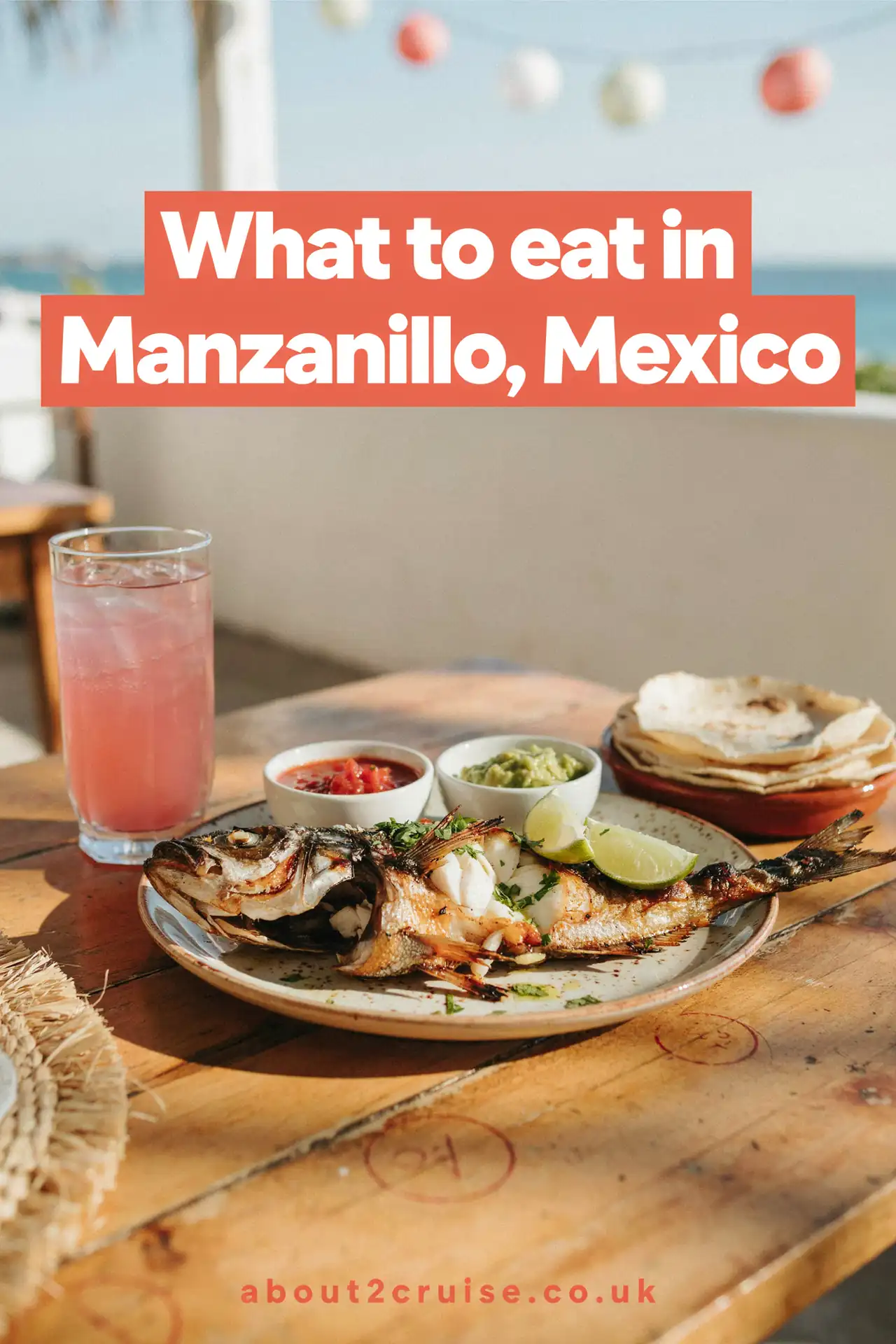
Colima-only dishes worth trying are sopitos colimenses, fried masa bases with beef, cabbage and a thin tomato broth, and tatemado, pork in guajillo chilli. Local drinks include tuba, a lightly fermented coconut-palm sap served cold with apple and peanuts, and tejuino, a fermented maize drink. Tuba sellers often appear around the Pez Vela sculpture.
Good places to eat near the ship include the marisquerías and market stalls around the Mercado Municipal and Jardín Obregón, the fish stalls on the malecón, and the ramadas at Playa San Pedrito, Miramar and La Boquita. Price guide: street tacos and marlin empanadas MXN 25–60, a ceviche tostada MXN 40–80, a whole shared zarandeado MXN 300–550, and a plate of camarones MXN 180–320.
A Low-Stress Walking Route Through Historic Manzanillo
This is the easy shore day if you want to stay close to the ship. A workable route is:
- Pier exit → Manzanillo letters sign: 198 m, 2 minutes
- Letters sign → Jardín Álvaro Obregón / Plaza Juárez: 295 m total, 4 minutes
- Plaza → El Pez Vela sailfish sculpture: 299 m total
- Sailfish sculpture → Malecón / Paseo del Espíritu Santo: 334 m total
- Malecón → Mercado 5 de Mayo: 630 m total, about 8 minutes
The malecón features a sculpture trail by Sebastián, including the sailfish, El Estibador, La Pescadora, the pilot boat and a whale skeleton. The Museo Universitario de Arqueología has about 1,800 pre-Hispanic pieces and opens Tuesday to Saturday 10:00–14:00 and 17:00–20:00, Sunday 10:00–13:00. For a view, climb Cerro de la Cruz, about 183 m above the centre; it’s a medium-difficulty half-hour walk on cobbled streets and a final dirt path, giving panoramas over the bay, lagoon and inner port. The Iguanario Archundia, a family-run animal attraction on Calle 21 de Marzo, is free with donations.
Shore Excursions That Fit a Port Day
Manzanillo isn’t a tender port with 12-hour days, so excursions need to be chosen around typical 8 to 10-hour calls. The options below all fit if you keep an eye on all-aboard time.
Isla Navidad and Barra de Navidad. The resort island is about 52 km north, around 52 minutes’ drive. A short water taxi crosses to the town of Barra de Navidad. Princess sells a 5.75-hour boat and plantation tour from US$119.95.
Juluapan lagoon and La Boquita. Boat trips from La Boquita visit the Espinazo del Diablo, Piedra del Elefante, Arco Marco and Playa Carrizales for snorkelling. The lagoon itself is shallow and calm, with stand-up paddleboard rental and lessons around MXN 400–800.
Cuyutlán turtle sanctuary. The Tortugario is about 50 minutes southeast. Entry is MXN 60 adult and MXN 30 child, with estuary boat rides 10:00–16:00 and hatchling releases on Saturdays at 15:00 from mid-August to December. It’s closed Wednesdays except holidays. Princess runs the turtle sanctuary with a salt museum from US$99.95.
Colima city, Comala and La Campana. Colonial Colima is about 1.5 hours inland, so this is best as a ship-organised full day. The La Campana archaeological zone in Villa de Álvarez has streets, drainage, a ball court and petroglyphs; it opens daily 09:00–17:00 and charges MXN 145 for foreign visitors. Princess’s 6.75-hour Colonial Colima tour costs from US$129.95 adult and US$119.95 child.
Tepalcates reality check. You may see Tepalcates ruins advertised, but there is no visitable archaeological zone there. The finds came from salvage work around a canal, railway yard and gas terminal on the Cuyutlán lagoon: burials, ceramics and floors, not standing ruins. Treat it as a phantom attraction.
Botanical gardens. Ola Brisa Gardens, a terraced hillside garden above Santiago Bay, takes tours by appointment only, Monday to Saturday at 09:00 or 09:30. Viveplants orchid nursery in El Naranjo gives a 45-minute guided tour and sells plants.
ATV, catamaran, snorkelling, surfing and paragliding. Guided ATV tours run 2.5 to 3 hours to Peña Blanca beach and viewpoints from about US$110, with drivers aged 16 or over. A 2.5-hour Santiago Bay catamaran with a snorkel stop, drinks and equipment costs from MXN 350 and departs around 15:00. Group surf lessons at Playa Miramar start around MXN 625 an hour. Paragliding exists near El Toro, but the launch is a steep 4×4 track and flyable on only a small fraction of days; there’s no reliable commercial tandem operator with pier pickup worth planning around.
Manzanillo Weather: Hot, Humid, and Hurricane Season
Manzanillo is hot and humid all year. Average maximum temperatures run from about 28 °C in the winter cruise months to 29.5 °C in May. October has 28.6 °C, November 28.7 °C, December 28.3 °C, January 28.2 °C, February 28.0 °C, March 28.0 °C and April 28.6 °C. October averages 13 rainy days, but November drops to 3 and December to 1; March and April are essentially dry. Humidity is high, from roughly 70% in early spring to 86% in September, so the heat feels sticky even when the sky is clear.
Sea temperatures run from about 25 °C in March to 30 °C in August. The eastern Pacific hurricane season runs 15 May to 30 November, peaking July to September. Tropical cyclones affect the Manzanillo region about once every 2 years 9 months, roughly a 38% chance in any year. Cruise lines concentrate calls from October to May, which is also the sailfish peak. During hurricane season, schedule changes and missed calls are possible, so have a flexible mindset on a late-autumn sailing.
Money, Tipping, and Practical Bits
The currency is the Mexican peso. Many vendors, taxis, restaurants and shops accept US dollars, but cards are not accepted everywhere. Carry MXN 1,000 to 1,500 per person for a taxi, beach lunch and small purchases. ATMs are the cheapest way to get pesos; you’ll find them in the town centre, including Banorte on Calle México and HSBC branches near the centre. Use ATMs in daylight and inside banks or shops where possible.
Tipping is the same as the rest of Mexico: 10–20% in sit-down restaurants, about 20 pesos per drink at a bar, and taxi fares rounded up or 10 pesos if the driver handles luggage. Tip in pesos; dollars are not ideal. Bring swimwear, a towel, sunglasses, a hat and decent sun protection for beach excursions. The historic centre is cobbled, so flat shoes beat flip-flops if you plan to walk beyond the malecón. For Cerro de la Cruz or ATV tours, closed shoes, water and insect repellent are sensible.
Is Manzanillo Safe for Cruise Passengers?
Colima is one of Mexico’s stricter advisory states, so it’s fair to be cautious. The UK FCDO advises against all but essential travel to the whole state of Colima, with a specific exception for the city of Manzanillo reached by sea or by air via Manzanillo-Costalegre International Airport, plus direct travel on road 200 from the airport to Manzanillo. Do not travel by other routes. The US advisory is also high, with a carve-out for Manzanillo’s central tourist and port areas: the historic centre and malecón, the hotel zone, Península de Santiago / Las Hadas and Club Santiago.
Royal Caribbean suspended calls to Manzanillo after the advisory was raised, but other lines continue to call and coordinate security with the port authority. The standard advice for cruise passengers is to use ship-sponsored excursions for anything inland and to stay in the central tourist and beach zones for independent time. Pickpocketing and theft are common in crowded places, and scammers sometimes pose as police to extract fines. Use regulated taxi ranks, agree the fare before a journey, and don’t wander into areas around the container port at night.
Respect warning signs around lagoons and coastal water: crocodiles live in some lagoons and estuaries. Adventure-sports equipment may not meet UK safety standards, so check your travel insurance before booking jet skis, diving or paragliding.
Shopping, Souvenirs, and Staying Connected
On ship days there is a small craft market at the pier. In the centre, the Mercado 5 de Mayo is the working municipal market for produce, prepared food, pottery, leather and textiles. Avenida México is the main shopping street for clothing, jewellery and souvenirs. The Miramar flea market is a standard stop on city tours. Plaza Manzanillo is a large air-conditioned mall about 6 km, or 15 minutes, from the pier if you want a modern shopping fix.
Wi-Fi isn’t reliably available at the cruise terminal, so don’t count on it outside the ship. If you need data ashore, use the ship’s roaming package or buy a local SIM before leaving the port area. Some hotels near the centre offer free Wi-Fi, but that doesn’t help on a day call unless you stop for a drink.
Accessibility, Luggage, Hotels, and Getting There
The pier is a walk-off berth with wheelchair access at the dock, and the waterfront route into town is flat. The historic centre is compact, but the side streets are cobbled. Las Hadas is steeply terraced with many stairs, though a golf-cart service exists. If you are staying overnight, there is no port parking because this is a day-call port. Hotels near the pier include the Real Naviero Hotel Ejecutivo on Avenida México, about a three-minute walk to the malecón, Hotel Colonial on Calle México about 0.4 miles from the cruise terminal, and Hotel Carrillo Puerto about a 14-minute walk away. On the beach side, Las Hadas and Barceló Karmina are the resort-zone options.
There is no left luggage at the cruise pier because there is no terminal building, and none at the airport. Some city hotels advertise luggage storage, but don’t plan your port day around leaving bags ashore. Manzanillo is a port of call, not a turnaround port.
Playa de Oro International Airport (ZLO) is about 20 km, or 40 minutes, northwest of the centre. A private airport taxi to downtown runs about MXN 350, and shared colectivo about MXN 130–155 per person. The central bus station has first-class coaches to Guadalajara in about 5 hours, Colima city in about 1.5 hours and Puerto Vallarta in about 5 hours.
Manzanillo vs Other Mexican Riviera Ports
Manzanillo is a different animal from the Caribbean-side calls like Cozumel, Costa Maya or Progreso. It’s a working Pacific port first and a tourist port second. The cruise facilities are thin, a pier but no terminal building, while Mazatlán’s terminal handles more than a million passengers a year and Ensenada’s terminal can receive ships of the same size. The reward here is a genuine Mexican port city, not a purpose-built cruise village.
The nearest other cruise port within 300 km is Puerto Vallarta, roughly 276–286 km and about 4.5 hours by road northwest. Zihuatanejo, the next cruise port down the coast, is about 435–439 km, or 6.75–7.5 hours’ drive. Manzanillo sits between Acapulco and Puerto Vallarta on the Mexican Riviera.
Cruise Lines, Ship Calls, and Shore Excursion Prices
Lines that call or market Manzanillo include Princess Cruises, Holland America Line, Carnival, Oceania, Crystal, Norwegian and Cunard. A recent season brought 17 cruise calls and 57,539 travellers, including 39,440 passengers and 18,099 crew. Named ships have included Ruby Princess, Koningsdam, Carnival Firenze, Grand Princess and Pacific World. Typical port times are 09:00–18:00 or 10:00–18:00, with some calls to 19:00. Cruise activity generates roughly MXN 53 million for the state of Colima.
Shore-excursion prices from cruise lines are ballpark for a Mexican Pacific call. Princess lists a beach resort getaway from US$114.95, Cuyutlán turtle sanctuary and salt museum from US$99.95, Tropical Fruit Plantation and Barra de Navidad from US$119.95, and Colonial Colima from US$129.95 adult / US$119.95 child. Norwegian’s coastal highlights tour is around US$49.99 for 3.5 hours, and their Colonial Colima with lunch from US$169 adult / US$119 child. Independent operators are cheaper: a 3.5-hour city tour from about US$48, a waterfall tour from about US$80, horse riding from about US$95, and a guided ATV tour from about US$110.
How to spend a port day in Manzanillo
A port day in Manzanillo works best if you pick one: a short walk around the centro and seafood lunch, or a taxi to La Audiencia and Las Hadas before all-aboard.
Before you sail
- Check the UK FCDO Mexico travel advice for Colima before you sail.
- Carry enough pesos in small notes for taxis and beach vendors.
- Book inland or turtle excursions through the ship or a reputable operator.
Short port day: under 6 hours
- On dockingWalk off to the Manzanillo letters signNo shuttle neededThere is no terminal building, but you can walk off. The sign is about 200 m from the ship.
- +15 minSailfish statue and malecónTry tubaA 4-minute walk from the pier. The El Pez Vela sculpture is the city emblem, with a sculpture trail along the malecón.
- +45 minJardín Álvaro ObregónMain square one block behind the waterfront, with kiosk and dancing fountains; Avenida México runs from here.
- +1 hr 15 minMercado 5 de MayoMarket dayFive-minute walk from the square. Look for produce, pottery, leather, textiles and prepared food.
- +2 hrsLunch near the marketTry zarandeadoOrder pescado zarandeado or ceviche colimote at a marisquería around the market, or smoked marlin empanadas.
- +3 hrs 30 minCerro de la Cruz viewpointClosed shoesA medium half-hour climb from the centro on cobbled streets and a dirt path; views over the bay and inner port.
- All-aboard minus 90 minWalk back to the pierReturn along the flat waterfront. Port access checks can add time, so allow a 60-minute buffer.
The time on the map is the whole walk, every stop added together.
Open this walking route in Google Maps
If plans change: If the market is closed, walk the sculpture trail and eat at Playa San Pedrito, the closest beach to the old town.
Long port day: 8 hours or more
- On dockingWalk off to the Manzanillo letters signNo shuttle neededNo shuttle needed for the main pier. The sign is about 200 m from the ship.
- +15 minSailfish statue and malecónA 4-minute walk. See the Sebastián sculpture trail and fishing boats along the shore.
- +45 minMercado 5 de MayoHead inland five minutes from the square to the municipal market for food, pottery and crafts.
- +2 hrs 30 minLunch near the marketTry zarandeadoOrder pescado zarandeado or ceviche colimote at a marisquería around the Mercado Municipal.
- +3 hrs 30 minTaxi to Playa La AudienciaAgree fare firstAbout 16 minutes by taxi. Arrange your return or a later pickup before you settle in.
- +5 hrs 30 minLas Hadas viewpoint or day passMany stairsTaxi on from La Audiencia to Las Hadas. The day pass includes food and drink, or stop for the Moorish architecture photo.
- All-aboard minus 90 minTaxi back to the pierReturn from the peninsula to the pier. Port access checks can add time.
This map shows the taxi ride from the ship. The time is the drive only, not your time ashore.
Open the taxi route in Google Maps
If plans change: If the Las Hadas day pass is sold out, use the free public beach at La Audiencia and stay longer, then taxi back.
This is one of Mexico’s Pacific coast cruise ports. Our Mexico cruise ports guide covers the others on the Pacific and the Caribbean.
Frequently Asked Questions
Do I need a shore excursion in Manzanillo?
No. The historic centre, malecón, sailfish statue and market are all walkable from the pier. You only need an excursion or taxi for the beaches, Las Hadas, lagoons, turtle sanctuary or inland Colima.
Is there a beach within walking distance?
Playa Las Brisas is about 1.4 km, or 18 minutes, on foot, but it’s not the best beach. La Audiencia and Miramar are much better and are a short taxi ride away.
Can I use US dollars in Manzanillo?
Many shops, taxi drivers and restaurants take US dollars, but cards are not accepted everywhere and change may come back in pesos. Carry pesos for small vendors, ramadas and local buses.
How far is Las Hadas from the cruise port?
Las Hadas is on the Península de Santiago, beyond La Audiencia. Allow roughly 20 to 30 minutes by taxi from the pier. The interior has many stairs, but a golf-cart service is available.
Is Manzanillo safe for cruise passengers?
The safest approach is to stay in the central tourist area, malecón, hotel zone and Santiago peninsula, and to use ship excursions for inland trips. Follow the same precautions you would in any busy Mexican port: licensed taxis, agree fares in advance and keep valuables low-key.
Will my ship tender in Manzanillo?
No. Cruise ships dock at the downtown pier, and you walk off. If your ship is assigned to a cargo berth, a shuttle will normally take you to the centre.
Is Manzanillo worth getting off the ship for?
Yes, but it rewards a simple day. Walk to the sailfish statue and malecón, eat fresh seafood or zarandeado, then either spend time at La Audiencia or do a lagoon or turtle excursion. It’s not a shopping-mall port, which is precisely the appeal.
What should I carry in Manzanillo?
Take your ship card, a photo ID if required by your cruise line, sun protection, swimwear and a towel for the beach, and enough pesos for taxis, food and small purchases. There is no terminal building to leave a bag in.
Last Updated: 15 November 2026