
Progreso is a quiet Gulf coast town on Mexico’s Yucatán Peninsula, and you get there along the longest pier on the planet. Most people treat the port as a stepping stone, heading inland to Mérida or the ruins rather than sticking around by the ship. Expect a short shuttle ride, a lively craft market, and a pace far gentler than the Caribbean side of the peninsula.
Progreso sometimes turns up spelled with two s’s, as Progresso, though it’s the same port either way. Locally the town goes by Puerto de Progreso, and a stop here is nearly always one call on a longer Western Caribbean cruise itinerary, often alongside stops at Cozumel’s cruise ship port or the Costa Maya cruise port guide.
Progreso port at a glance
Here’s the port boiled down to the essentials before you dock.
| Detail | Information |
|---|---|
| Location | Gulf of Mexico coast, Yucatán Peninsula, Mexico |
| Nearest city | Mérida, roughly 35 to 43 kilometres away |
| Pier length | 6.5km commonly quoted by cruise sources; 8,019m as the full Guinness World Records certified structure |
| Draft depth | 12.19 metres |
| Berths | 10 |
| Terminal | Cruise Terminal Remota, at the end of the pier |
Progreso cruise port map
The terminal sits right at the tip of the pier, well over four miles from the beach and town centre it’s meant to serve. Have a look at the map below before you get off, it’ll save you some confusion.
Getting off the ship at the Progreso cruise ship terminal
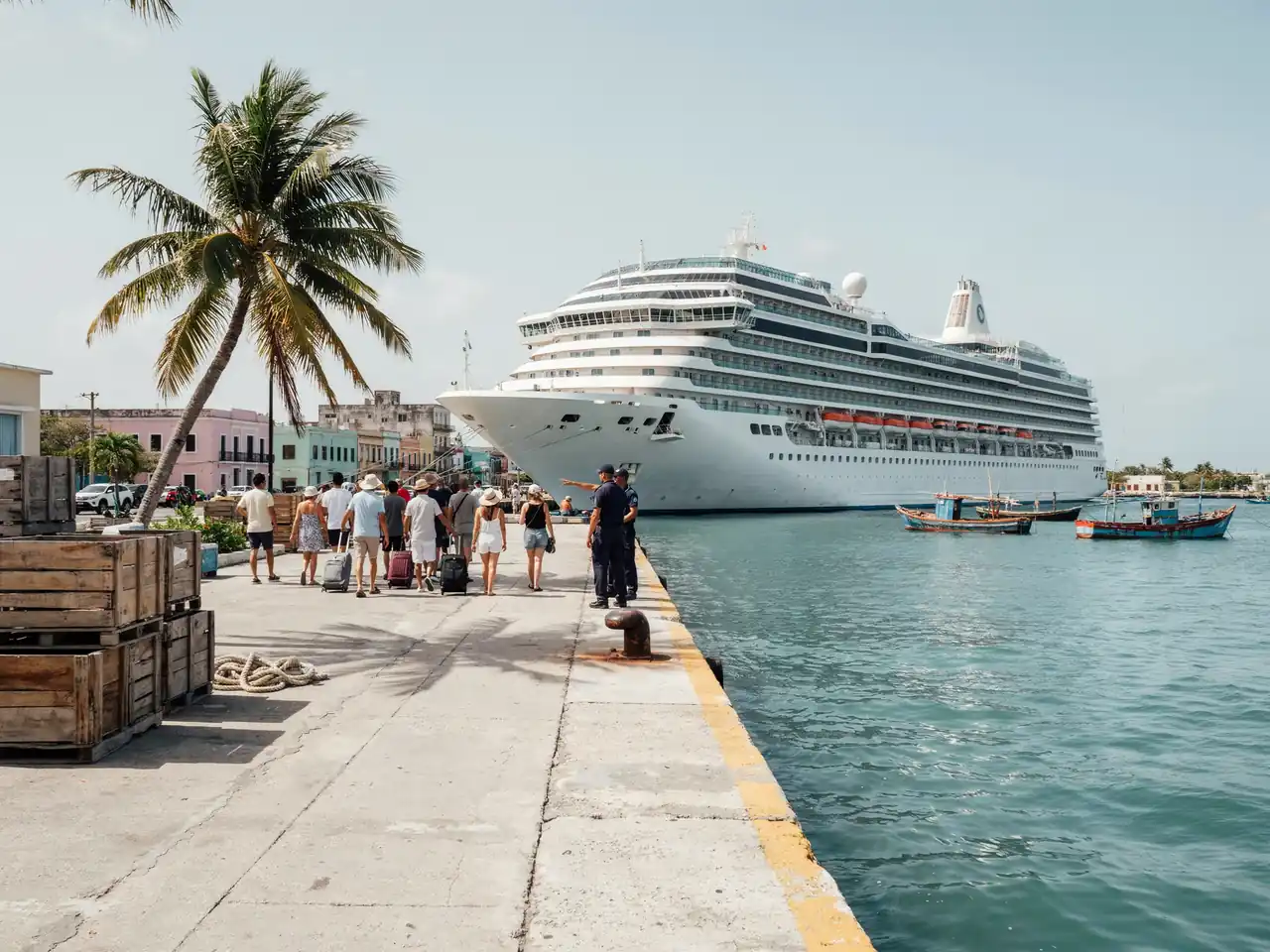
Ships dock at Cruise Terminal Remota, right at the end of the pier. It opened in the late 1980s and has been extended a fair bit since, and now handles up to a million cruise passengers a year, with room for two ships alongside at once, according to Yucatán’s Ministry of Tourism Development, Sefotur.
Inside you’ll find a small internet café and a few car rental desks, though most people walk straight past both for the free shuttle. Cut through the terminal and the outdoor craft market and you’ll hit the pickup point, where a shuttle run by a local tour company ferries everyone into town.
The shuttle doesn’t run to any published timetable. Departures are said to come roughly every 20 minutes, more often when a ship first ties up, but there’s nothing official to check beforehand. If the queue looks long, just walk. The Malecón is about a 17 minute stroll from the edge of the pier, and on a dry day your own two feet will beat the queue most times.
Once you’re in town, a separate tourist bus loops the seafront roughly every 10 minutes, picked up from the same craft market where the shuttle dropped you off.
On days when two ships share the pier, the craft market and shuttle queue get noticeably busier, and the popular Malecón restaurants fill up around midday. If you’re sharing the dock that day, get ashore early.
The world’s longest pier, explained
Progreso’s whole reputation rests on that pier. Guinness World Records certifies the full structure at 8,018.98 metres, officially the longest pier anywhere. Most cruise-focused sources quote a shorter 6.5km figure instead, which is really just the vessel-handling section built up over the years, not the full record-certified length.
The original pier was only 2.1km when it went up in the late 1930s and early 1940s. Builders bolted on another 4km by the late 1980s, and further extensions since have brought it up to its certified length. The reason for going to such lengths, literally, comes down to geography. The seabed here slopes at roughly 1 to 1000, and a permanent coastal current keeps silting up the shipping channel, according to Wikipedia and NASA Earth Observatory. Without that long reach out to sea, bigger ships simply couldn’t get close enough to dock.
The port’s next chapter
Puerto Progreso isn’t done growing yet. A few years back the Italian shipbuilder Fincantieri signed a letter of intent with the state of Yucatán to build a new shipyard here, with two drydocks planned to be the largest in the Americas, big enough for vessels up to 400 metres long. It says a lot about how seriously the region is taking its cruise ambitions.
What to do in Progreso Mexico cruise port
With only a few hours ashore, most people stay close to the seafront rather than wandering off. Here’s what fills a typical port day:
- Walk the Malecón de Progreso, a kilometre-long promenade lined with restaurants, souvenir stalls and Gulf views
- Browse the craft market by the shuttle drop-off for hammocks woven from cactus fibre and local jewellery
- Rent a lounge chair or grab a palapa-shaded table at one of the beachfront restaurants
- Take an independent trip to El Corchito, a popular natural swimming spot with cruise passengers
- Visit the Mayan ruins at Dzibilchaltún, closer to Progreso than most other archaeological sites on the peninsula
Progreso Mexico beaches near the cruise port
Progreso really has just the one beach, though it runs the length of most of the town’s Malecón. Between the pier and the public sand, a few resorts, including Tecnohotel, Silcer Beach Club and Costa Club, run their own private beach clubs.
Don’t expect Caribbean turquoise here. This is the Gulf side of the peninsula, so the water runs shallower, warmer and often greener, with rocky patches near the pier. Clarity swings a lot with the currents and weather, clear one day, distinctly murky the next.
The Malecón and pier also took a battering from Hurricane Milton in a recent storm season, so conditions along parts of the beachfront still vary. There’s little natural shade and plenty of sun, so pack sunscreen that won’t harm the reef before you head off the ship.
Getting to Mérida from the cruise port
Mérida has no cruise port of its own. It’s the state capital, sitting well inland, and Progreso is just the coastal town ships use to get there. Distances vary depending on who you ask, anywhere from 35km to 43km, and driving takes 30 to 45 minutes depending on traffic and route.
By car, the usual route is Federal Highway 261. If you’d rather skip a ship excursion, Auto-Progreso runs frequent second-class buses between the two towns, seven days a week, roughly every 10 minutes through the day, with a journey time of about 55 minutes.
Once you’re in Mérida, the highlights lean colonial: the Gran Museo del Mundo Maya, the House of Montejo, and a cluster of well-preserved buildings and museums dating back centuries, including one of the oldest cathedrals in the Americas. Mérida’s cobbled streets are where a pair of shoes built for a lot of walking earns its keep.
Chichen Itza from Progreso: is it realistic?
Opinions differ here. Some list Chichen Itza among the sites reachable from the port, alongside Uxmal, Dzibilchaltún and Mérida city, while others reckon it’s simply too far for a typical port call, given the extra distance beyond Mérida.
If Chichen Itza is on your list, book it through the ship rather than going it alone, since those excursions are timed against your ship’s departure and build in the return journey. Dzibilchaltún, being much closer to Progreso, is the safer bet if you’re travelling under your own steam and want proper Mayan ruins without cutting it fine.
Money and practical tips near the port
Plenty of vendors around the craft market and Malecón speak limited English, and some only take pesos, even though cards work fine in the bigger restaurants and shops. One quirk to watch for: the peso symbol looks identical to the US dollar sign, and it trips up plenty of visitors glancing at a menu.
Yucatán’s only real cruise gateway
Yucatán’s coastline runs for almost 235 miles, according to Sefotur, and Progreso is the only working cruise pier on the whole stretch. Ships calling here are the main way in to the state’s interior, while the Caribbean side of the peninsula, home to ports like Playa del Carmen’s cruise port guide and Cozumel, is built around reef diving and beach clubs rather than colonial cities and ruins.
Progreso often turns up on short three to five night cruises out of Galveston, Texas cruise port guide, the New Orleans cruise port guide and the Mobile, Alabama cruise port guide, itineraries that stick to Mexican ports rather than crossing into the wider Caribbean. If you’re comparing further afield, Progreso sits in a different category to stops such as Colón, Panama’s cruise port guide, which is a gateway to the Panama Canal rather than a beach or ruins day.
Common Questions
Is Progreso the same place as Mérida?
No. Progreso is the coastal town where ships dock. Mérida is the state capital, roughly 35 to 43km inland, and has no cruise port of its own.
How long does it take to walk from the ship into town?
About 17 minutes from the edge of the pier to the Malecón, which makes walking a solid option when the shuttle queue is long.
How long is the Progreso pier really?
Guinness World Records certifies the full structure at just over 8,000 metres, though most cruise sources quote a shorter 6.5km figure for the vessel-handling section.
Can I visit Chichen Itza on a port day?
Possible, but tight, and opinions differ on whether it’s realistic. A ship-organised excursion is the safer choice, since it’s timed against your ship’s departure.
Do I need Mexican pesos in Progreso?
Some smaller vendors near the market only take pesos, even though cards work fine in the larger restaurants. Watch out for the peso symbol, it looks identical to the US dollar sign.
Is the beach at Progreso worth a full day?
Fine for a few hours, but don’t expect Caribbean blue. The Gulf side here is shallower, warmer, and can turn murky depending on the currents.
What happens if two ships dock on the same day?
The terminal can handle two ships at once, so expect a busier craft market, longer shuttle queues and fuller restaurants along the Malecón.
Is there wifi or an ATM at the terminal?
There’s a small internet café at the terminal along with a few car rental desks, but check ATM availability on the day rather than relying on it.
Why Trust About2Cruise
This guide was pulled together using port authority data, cruise industry reporting and multiple independent travel sources, cross-checked against each other since details like pier length and journey times vary between publications. Read more about how we research our cruise guides.
Last Updated: 23 August 2026