
Pigeon Island Beach sits about 11 kilometres north of the St Lucia cruise port in Castries, a 20 to 30 minute taxi ride depending on how the traffic feels that day. Inside the Pigeon Island National Landmark you get two sheltered beaches, the ruins of a couple of colonial forts and enough shaded picnic spots to make it one of the go to half day trips for anyone stepping off a ship in Castries.
How Far Is Pigeon Island Beach From The Cruise Port?
Before you book anything, you’ll want the actual numbers rather than a vague “it’s not far”. Pigeon Island sits about 11 kilometres north of Castries, tucked onto the northern edge of Rodney Bay in Gros Islet. Getting there and back by road takes roughly 20 to 30 minutes each way, though that shifts a bit depending on the traffic through Castries and Gros Islet.
The island itself was cut off from the mainland until a causeway, built from material dredged to create Rodney Bay Marina, joined it to the west coast. Today the 44 acre site functions almost as its own peninsula, with its own jetty, though most cruise ships still dock in Castries itself rather than tendering directly to Pigeon Island.
Is Pigeon Island The Closest Beach To The Ship?
Not quite, but it’s close enough to fit into a normal day ashore without any drama. At around 11 kilometres out it’s much the same distance as the rest of Rodney Bay, and most passengers pick it as their default beach stop anyway, because where else gives you swimming, forts and shade in one go?
The St Lucia Cruise Port At Castries
Ships calling at St Lucia dock at one of two adjoining terminals in Castries, and which one you land at changes your starting point for getting to Pigeon Island.
| Terminal | Berths | Notes |
|---|---|---|
| Pointe Seraphine | Two berths, handles full sized ships | Most commonly used terminal, around a 20 minute waterfront walk to central Castries |
| La Place Carenage | One berth | Sits right downtown, with exit gates opening onto the main street |
A water taxi links the two piers, which is a nice, unhurried way to cross to downtown Castries if you’re docked at La Place Carenage, or the other way round if you fancy browsing Pointe Seraphine. Taxi fares here are government controlled but not metered, so agree the price with your driver before the doors close, not after.
Pointe Seraphine’s two berths mean two full sized ships can sit alongside at once, and with La Place Carenage taking a third, Castries can have quite a crowd in port on the same morning. Saint Lucia’s visitor numbers have been climbing too, with stay-over arrivals up 14 per cent to more than 435,959 in the most recent year reported by the Saint Lucia Air and Sea Ports Authority (SLASPA), so on a busy call day you’re competing with a few thousand other people for the same taxis and water taxis heading to Pigeon Island. Our complete guide to the Castries cruise ship port covers both terminals and what’s within walking distance, and it’s worth a read before you head down the gangway.
Getting To Pigeon Island From The Ship
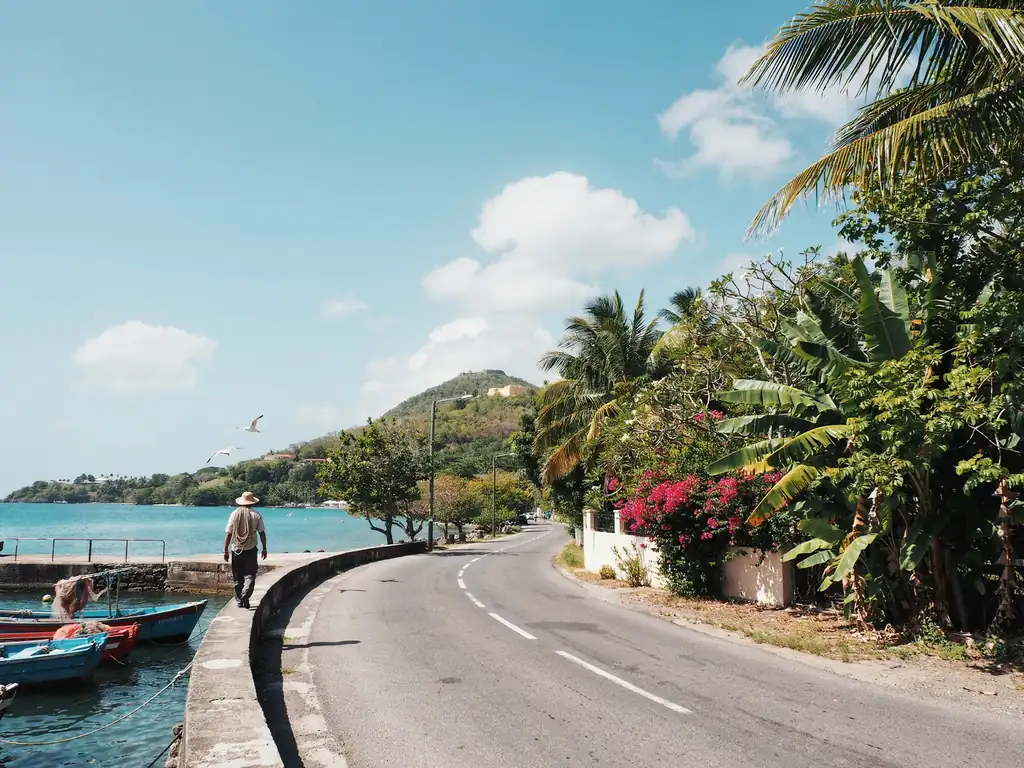
- Taxi: the simplest option by a mile, drop off and pickup time arranged straight with the driver
- Water taxi: leaves from Rodney Bay beach near Bay Gardens Beach Resort, with operators like Saluna Watersports running you over to Pigeon Island’s jetty, a 5 to 10 minute crossing that usually takes cash or card
- Local bus: the Gros Islet route 15 leaves from behind the market in Castries, but it stops short of Pigeon Island itself, so you’ll still need a taxi for the last bit
- Self drive: follow the Gros Islet Highway toward Cap Estate, turn off after Gros Islet, and keep going past the Sandals Grande Saint Lucia Beach Resort & Spa until you hit the entrance
Pigeon Island Beach Or Pigeon Beach? Two Different Things
The names here trip a lot of people up, so let’s untangle it before you go. Pigeon Island Beach usually means one of the two beaches inside the paid Pigeon Island National Landmark, run by the Saint Lucia National Trust (SLNT). Pigeon Beach, also known as Pigeon Point, is the free public strip of sand just outside the gate, along the approach to the causeway.
| Feature | Pigeon Island Beach (inside the landmark) | Pigeon Beach (public, outside the gate) |
|---|---|---|
| Access | Requires paying the entrance fee at the gate | Free to walk onto |
| Facilities | Clean toilets, a shop, a restaurant and pub, hiking trails | A toilet with an attendant who may ask for a small contribution, sunbeds owned and rented by vendors |
| Setting | Quieter, sheltered water, decent reported snorkelling | Busier, sits alongside the causeway road |
If you’ve seen it listed as a separate place entirely, our guide to Pigeon Point in Saint Lucia covers this public stretch of sand properly.
Inside Pigeon Island National Landmark
Pigeon Island was named a National Park not long after Saint Lucia gained independence, became a National Landmark a decade or so later, and has been leased and run by the Saint Lucia National Trust ever since. This isn’t a cruise line’s private beach day, the kind covered in our guide to private cruise line destinations. It’s a public national park, open to anyone, cruise passenger or not.
The site is built around two peaks and the ruins of an 18th century British fort. The British navy used Fort Rodney to keep watch for French ships slipping out of neighbouring Martinique, a rivalry that eventually came to a head at the Battle of the Saints, the naval fight that settled who controlled these waters. The novelist James A Michener called the bay here the most beautiful in the Caribbean, and standing at Fort Rodney or Signal Peak on a clear day, with Martinique sitting on the horizon, it’s not hard to see his point.
- Fort Rodney and the ruins of the 18th century British fort
- A small museum, generally open on weekdays from mid morning to late afternoon
- Trust Island Life, a shop selling local gifts and souvenirs
- Hiking trails leading up to Fort Rodney and Signal Peak
- A restaurant and a pub within the grounds
- Shaded picnic areas dotted around the site
Best Beaches Near The St Lucia Cruise Port
If a beach day is the whole point of getting off the ship, Pigeon Island gives you two proper choices without needing to leave the same stretch of coast.
| Beach | Distance from cruise port | Cost | Best for |
|---|---|---|---|
| Pigeon Island Beach (inside the landmark) | About 11km, 20 to 30 minute drive | Entrance fee applies | Calmer water, better reported snorkelling, shade, history |
| Pigeon Beach (public, outside the gate) | About 11km, 20 to 30 minute drive | Free to enter, small toilet charge may apply | No entry cost, busier atmosphere |
If you’re stitching together several Caribbean beach days across one itinerary, it’s worth weighing Pigeon Island against other port stops. Our guides to the Carambola Beach Club cruise ship port guide in St Kitts and the Malfini Beach cruise ship port guide in Haiti cover two other options along the way. Closer to home, the sheltered anchorage in our Marigot Bay cruise ship port guide is the usual fallback if you’d rather keep the excursion short.
Entry Fees, Opening Hours And The Catch Worth Knowing About
There’s an entrance fee to get into Pigeon Island National Landmark, with a lower rate for children and free entry for the very youngest. The Saint Lucia National Trust says these figures are under revision, so treat any price you’ve seen quoted as a rough guide rather than gospel, and ask the rangers at the gate what’s being charged on the day.
Opening hours are where it gets messy. Some sources list a standard daily schedule with last entry in the late afternoon, others mention a later opening on Tuesdays, and on top of that the park can close for a spell for maintenance later in the year, then again for several weeks while it’s set up for the Saint Lucia Jazz & Arts Festival.
The workaround: none of these schedules are guaranteed, and your day ashore isn’t long enough to gamble on one. Check with the Saint Lucia National Trust or your ship’s shore excursion desk on the morning you’re in port, and keep the free public beach outside the gate in your back pocket in case the landmark’s shut or closing by the time you arrive.
Weather And What To Bring
St Lucia sits well within the hurricane belt, so if your cruise lands in the wetter stretch of the year, pack for short, heavy downpours rather than all day rain. They blow through fast, then it’s back to sunshine. The rest of the year is drier and hotter, and the beaches themselves offer barely any natural shade, so pack reef safe sunscreen before you leave the ship.
A waterproof dry bag earns its keep too if you’re taking the water taxi from Rodney Bay. It’s an open boat, so a bit of spray is more or less guaranteed.
Common Questions
Is Pigeon Island Beach free to visit?
No. The beaches inside the Pigeon Island National Landmark carry an entrance fee. The public beach just outside the gate is free, though there’s often a small charge for the toilet.
Can I book a water taxi to Pigeon Island in advance?
Not really. Operators like Saluna Watersports run from Rodney Bay beach on a walk up basis rather than taking bookings, and they’ll take cash or card for the short crossing.
Do local buses go to Pigeon Island?
No. The Gros Islet route 15 runs from behind the Castries market but stops short of the site, so you’ll still need a taxi for the last stretch.
Is Pigeon Island suitable for a short cruise stop?
Yes. Most people treat it as a three to four hour excursion, pairing a swim with the forts, the museum and the viewpoints.
What’s the swimming like at Pigeon Island?
Visitors describe calm, sheltered water with decent snorkelling, especially around the beaches inside the National Landmark rather than the public one.
Does Pigeon Island close for events?
Yes. It can close for maintenance later in the year, then again for several weeks around the Saint Lucia Jazz & Arts Festival, so check ahead if you’re travelling then.
Which cruise terminal in Castries is closer to Pigeon Island?
Neither, really. Pointe Seraphine and La Place Carenage both sit in Castries, and it’s roughly the same 20 to 30 minute drive from either one.
Is there shade at Pigeon Island’s beaches?
The National Landmark has shaded picnic spots dotted around the grounds, but the beaches themselves offer very little natural shade, so pack your own sun protection.
Can you see Martinique from Pigeon Island?
On a clear day, yes. The viewpoints at Fort Rodney and Signal Peak look out over St Lucia’s northern coast towards Martinique.
Why Trust About2Cruise
This guide was pulled together from Saint Lucia National Trust information, port authority data and visitor reports, and cross checked against each other where the details didn’t line up rather than just repeating one source. We haven’t sailed to Pigeon Island ourselves, but this page was built the way we build every port guide on the site, focused on what costs a passenger time or money rather than filling space with generic description. You can read more about how we put these guides together on our about us page.
Last Updated: 19 October 2026