
Yes, cruising is one of the safest ways to get about. The industry data backs this up: serious incidents, fires, groundings, all of it, have gone down even as ships have got bigger and busier. Overboard rates sit at historic lows too, and every ship runs under strict international rules on stabilisation, medical care and emergency drills that go further than anything your average package holiday bothers with.
How the numbers actually stack up
Ask anyone who’s cruised a fair bit about safety and you’ll usually get a shrug rather than a worried look, and the numbers back that up more than most people expect. CLIA reviewed more than a decade of industry data and found an average of just over 18 significant operational incidents a year across the entire global fleet, a figure that covers everything from fires and technical breakdowns to storm damage, groundings, overboard accidents and collisions.
The trend line is the interesting bit. Global fleet capacity grew by more than two-thirds over the period CLIA looked at, and the number of significant incidents still fell rather than climbed. The final year on record had just 13 significant incidents across the whole industry, with no passenger or crew fatalities reported.
An older comparison, still widely quoted, comes from the Daspit Law Firm, which put the death rate for cruise ship travel at 0.08 per billion passenger miles. Compare that with 0.8 for commercial flying, 3.3 for cars and trucks, and 11.9 for rail. Nobody has published an updated version of that breakdown, but the gap between transport modes was not close. For context, the National Safety Council puts the odds of dying in a car accident at around 1 in 103, against roughly 1 in 11,000 for a plane crash, and cruising sits further along the safer end of that scale still.
So if you’re weighing up cruising against, say, the drive to the airport that got you there, the driving part of your trip carries more statistical risk than the week at sea that follows.
The safety systems built into every modern ship
None of this happens by chance. Cruise ship safety is governed by the International Convention for the Safety of Life at Sea (SOLAS), a framework maintained by the International Maritime Organization (IMO), a United Nations agency, and it’s enforced by coast guards and port authorities at every stop a ship makes.
| Safety feature | What it actually does |
|---|---|
| SOLAS regulations | Sets the minimum global standard for how ships are built, what safety gear they carry and how crew are trained, checked at every port |
| Muster drill | The mandatory briefing before or right after you leave port, showing you your lifeboat station and how the life jacket actually works |
| Deck railings | Minimum 1.1 metres on passenger decks, though most modern ships build higher than that anyway |
| Stabilisers | Fin-like structures that extend from the hull and cut side-to-side rolling by up to 90% |
| Watertight doors and bulkheads | Keep any water that gets in contained to one section instead of letting it spread through the ship |
| Redundant electrical systems | Backup power for propulsion, steering and anything safety-critical if the main system packs in |
| Onboard medical centre | Staffed round the clock by licensed physicians and registered nurses on every major ship |
The muster drill rule itself got tightened after the Costa Concordia disaster, when the ship capsized off the Italian coast. Musters now have to happen before the ship leaves port or right on departure, rather than sometime within the first 24 hours of the voyage, which was the old, looser rule. If you want a feel for what the drill involves and how passengers are expected to behave once you’re on deck, our guide to cruise ship etiquette covers it.
The redundant electrical systems rule has an equally specific backstory. A fire aboard Carnival Cruise Line’s Triumph left the ship without propulsion for days, drifting until it could be towed in, and the industry’s response was to insist on backup systems that keep propulsion, steering and safety equipment running even when the primary system fails.
What happens if someone goes overboard
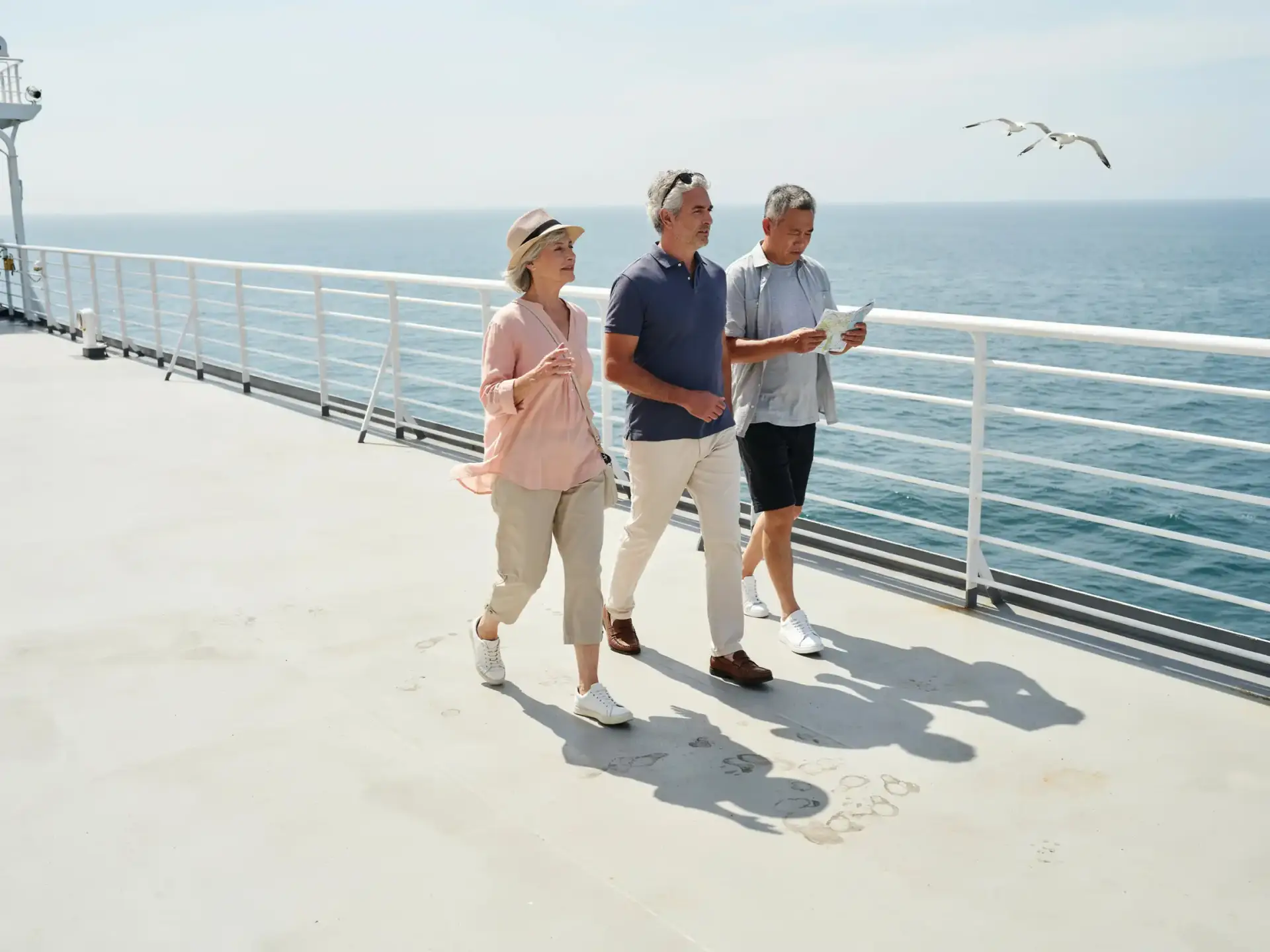
Overboard incidents get outsized attention because they’re dramatic, not because they’re common. CLIA’s review of more than a decade of data found the rate had fallen to roughly 0.00004 overboard reports per active lower berth, about 64% of what it was at the start of that period, and the final two years logged 14 and 15 incidents respectively, the lowest of the whole stretch.
Across the whole review, 212 overboard incidents were recorded among guests and crew combined, and 48 of those people survived. A more recent CLIA report put the figure at 19 individuals overboard in the latest full year it covered, which is a small number against the tens of millions of passengers carried every year.
Modern ships build in physical deterrents too, from the minimum 1.1 metre railing height to glass balcony barriers on newer builds. Balconies are designed to make climbing over deliberately awkward rather than just tall.
Crime on board: what the reporting actually shows
Under the Cruise Vessel Security and Safety Act (CVSSA), every cruise line sailing from a US port has to report criminal allegations to the FBI every quarter, covering homicide, missing US nationals, kidnapping, serious assault and sexual assault. The US Department of Transportation publishes the figures, and they bounce around more than any single headline number suggests.
One recent quarter logged 48 alleged crimes across all reporting lines, including 23 rapes, 10 sexual assaults and 7 assaults. The following quarter added another 43, taking the running total for that year past 90. A more recent quarterly filing recorded 50 crimes across all lines under the same rule, which tells you the count moves from quarter to quarter rather than settling into any flat trend.
Full-year totals reportedly hit the highest number on record at one point, 181 incidents, of which 121 were classed as sexual in nature, roughly double the total from around a decade earlier, having dropped sharply during the pandemic before climbing back up. CLIA pushes back on reading rising raw counts as evidence of declining safety, with a spokesperson saying crime is extremely rare on cruise ships thanks to member lines’ security measures, hiring protocols and training, which the organisation argues makes cruising one of the safest holiday options going.
The CVSSA only covers ships sailing from US ports though, so none of this reporting reflects cruises leaving the UK or Europe, which is a gap we come back to further down. Cabins lock with keycards and most corridors sit under CCTV, and some passengers add an extra layer of reassurance for their own cabin door with a portable door lock, though it’s an extra rather than something you need given the security already built into every ship.
Norovirus and other illnesses: how big a risk
The Centers for Disease Control and Prevention (CDC) inspects passenger ships twice a year through its Vessel Sanitation Program (VSP) and makes cruise lines report any gastrointestinal outbreak affecting 3% or more of passengers and crew. That’s a low bar, low enough that it catches outbreaks most restaurants and hotels would never have to admit to. The most recently reported year logged more outbreaks than any year since the programme began roughly three decades ago, and the two years before it also rank among the highest ever recorded.
Context helps here. The CDC separately estimates around 2,500 norovirus outbreaks and somewhere between 19 and 21 million cases across the wider United States every year, with November to April the highest-risk stretch generally. CLIA has previously cited a roughly 1 in 5,500 chance of gastrointestinal illness for an individual cruise passenger, against around 1 in 15 for people on land. That per-passenger figure sits alongside the rising outbreak counts above rather than contradicting them, since one measures how likely you personally are to get ill and the other just counts how many outbreaks were logged across the whole industry.
In practice, the outbreaks that make headlines usually get contained fast because of the sanitation measures already in place, from extra handwashing stations to quickly isolating affected cabins. Bringing your own hand sanitiser and actually using it before meals is a small habit that measurably cuts your own risk.
How ships handle storms and rough seas
Stabilisers, those large fin-like structures that extend from the hull, cut side-to-side rolling by up to 90%, so a 20 degree roll can end up closer to 5 degrees. They read the angle of the ship automatically and pivot to counter it, much like the flaps on an aircraft wing.
What stabilisers don’t touch is pitching, the front to back motion you feel heading into a swell rather than side to side. That’s part of why modern ships get built with a longer, narrower bow, designed to cut through waves rather than ride over the top of them.
Behind the scenes, major lines run weather command centres tracking every ship in the fleet around the clock, and the standing rule across the industry is simple: nobody sails into a hurricane once it’s formed. Ships reroute or delay instead.
How dangerous is a cruise, and what can you actually control?
Given all of that, a cruise isn’t dangerous by any reasonable measure. There are still sensible habits that shave your own risk down further though, both on board and in port.
- Go to the muster drill properly instead of treating it as a box to tick, so you really know your way to your lifeboat station if it’s dark or the corridor’s rammed.
- Use the cabin safe for passports, cards and cash rather than leaving them out on the side, and lock the balcony door at night.
- Keep an eye on the ship’s all-aboard time at every port and build in a buffer. Missing it is a real cost and headache rather than a safety issue, but panicking on the dock rarely ends well either.
- Stick to well-lit, busy areas on deck late at night, especially near the railings, and don’t climb on furniture near the edge of the ship for a photo.
- Follow crew instructions straight away during any drill or real alert, even if it means abandoning dinner or a show halfway through.
In port, the same common sense that applies to any unfamiliar city applies here too. Our guide to staying safe during time ashore covers the specifics of docking days, from keeping the ship’s contact details on you to what to do if you get separated from your group.
Cruise safety tips for before you even leave home
Good cruise safety starts before you even board, not once you’re already at sea.
- Take out travel insurance with proper cruise cover, including onboard medical treatment and emergency disembarkation, since standard policies don’t always stretch that far.
- Carry a printed copy of your booking confirmation and passport details separately from the originals, in case anything goes astray.
- Pack a basic first aid kit and any regular medication in your hand luggage rather than the checked bags, so it stays with you whatever happens to your suitcase.
- Register your emergency contact details with the cruise line at check-in, and make sure someone at home knows your itinerary and the ship’s name.
- New to all this? Our guide for first-time cruisers runs through the basics of what to expect before you’ve even reached the terminal.
What about solo travellers, older passengers or anyone with a disability
There’s no single dataset that breaks cruise safety down specifically for solo travellers, older passengers or people with disabilities, so we won’t pretend one exists. What we can say is that the muster drill, medical centre and general safety systems described above apply equally to every passenger, whoever they’re travelling with.
If you’re weighing up cruising alone, our piece on the benefits of cruising for solo travellers covers the practical side of travelling without a companion. If accessibility is your main concern instead, our guide to cruising with a disability looks at what to check before you book.
A gap in the data worth knowing about
One real problem has cropped up recently: reports surfaced that all full-time staff working on the CDC’s Vessel Sanitation Program were let go, which has prompted concern from US lawmakers about who’s actually left to run the twice-yearly inspections and outbreak reporting this page relies on for illness data. If that staffing gap sticks around, the public outbreak figures cruise lines and passengers have used for years could end up less current or less complete.
Until that’s sorted, the practical workaround is not to lean solely on VSP inspection scores when choosing a ship. Check a cruise line’s own published health and safety statements directly, and treat historic outbreak data as a general pattern rather than a promise about your specific sailing.
Does any of this apply if you’re cruising from a UK port
Almost all the crime and incident reporting on this page comes from US sources, specifically the CVSSA reporting regime and the CDC’s inspection programme, because no equivalent, publicly detailed dataset exists for CLIA UK & Ireland or ABTA member sailings. That’s a gap in the available data, not something to read anything sinister into.
What does carry across, wherever you sail from, is SOLAS, since it’s a global maritime convention rather than a US-specific rule. The muster drills, stabilisers, medical centre staffing and redundant electrical systems described above apply just as much to a ship leaving Southampton as one leaving Miami. If you’re sailing from the UK, the environmental impact of cruising is regulated on a similarly international basis too, enforced at the port rather than varying by whichever country’s flag the ship happens to fly.
Common Questions
Are cruises safe for families with young children?
Yes. Ships run dedicated kids’ clubs with wristband check-in systems, muster drills cover every age group, and railings and balcony designs meet the same minimum safety standards no matter who’s on board.
What’s the safety drill I have to attend before departure?
That’s the muster drill, a mandatory briefing before or immediately after leaving port that shows you your lifeboat station, where your life jacket is and how to get out. Skipping it isn’t an option.
Is the water safe to drink on a cruise ship?
Yes. Ships treat and test their own water supply continuously, and it typically meets or beats the standards required on land. Bottled water’s there too if you’d rather stick with that.
What happens if I get seasick?
Most ships barely roll thanks to the stabilisers, but the medical centre stocks seasickness remedies anyway, and plenty of passengers pack their own preferred tablets or patches as backup for rougher crossings.
Are cruise ships safer than flying or driving?
Older comparative data put cruising’s death rate well below flying, driving and rail travel per mile travelled, though nobody’s published a fully up-to-date breakdown since to confirm exactly how big that gap still is.
Do cruise lines cancel sailings for hurricanes?
Ships reroute or delay rather than sail into a formed hurricane. Itinerary changes for weather are common in storm season, and they’re a safety measure, not a sign anyone got the planning wrong.
Can I bring my own medication on board?
Yes. Pack it in your hand luggage with enough for the whole trip plus a few extra days, keep it in the original packaging, and carry a copy of the prescription in case a port asks to see it.
What should I do if I witness or experience a crime on board?
Report it to ship security straight away and ask for it to be logged formally. Under the CVSSA, ships departing from the US have to report qualifying incidents to the FBI, so there’s a formal paper trail behind you.
Why Trust About2Cruise
This page draws on published data from CLIA, the US Department of Transportation, the CDC and maritime safety reporting rather than anecdote, and it’s written to answer the questions people considering a cruise really have, not to promote any particular cruise line. You can read more about how this site is put together on our about us page.
Last Updated: 19 October 2026