
Saga Cruises operates two sister ships, Spirit of Discovery and Spirit of Adventure, each carrying 999 passengers with 100 dedicated solo balcony cabins (20% of total capacity), no single supplement on those cabins, and a fully all-inclusive fare covering drinks, dining, shore excursions and a complimentary chauffeur from your door to the port. All passengers must be 50 or over.
Saga has one structural advantage over every other cruise line in the UK market: every single passenger on board is at least 50 years old. That’s not a niche feature buried in the small print. It’s the entire business model, and for solo travellers who’ve spent time on mainstream ships feeling like the odd one out among families and groups of twenty-somethings, it changes everything.
That said, Saga is not without its complexities for solo cruisers. The solo cabin grades are genuinely impressive , but they sell out fast and the hierarchy between Standard, Superior, Deluxe and Suite categories confuses first-time bookers. The all-inclusive fare looks expensive until you itemise what’s in it. And the demographic, while consistent, means the atmosphere is emphatically not for everyone.
This guide covers the specifics that actually matter: exactly what’s included, which solo cabin grade is worth the upgrade, how the social infrastructure works in practice, and where Saga’s solo proposition has genuine gaps.
For the broader solo cruise picture, the singles cruises hub covers all the major lines. For age-specific context, see the singles cruises over 50 guide and singles cruises over 60 guide.
The Saga Solo Proposition: What Makes It Different
Most cruise lines treat solo travellers as an afterthought , a segment to be accommodated rather than designed for. Saga built their new ships around the opposite assumption. On Spirit of Discovery and Spirit of Adventure, 20% of all cabins are solo cabins. Not interior boxes squeezed into awkward corners of the ship. Balcony cabins, purpose-designed for one person, in four distinct grades from Standard through to Suite level.
The numbers are specific. Each ship carries 100 dedicated solo cabins, all with private balconies, across the following grades:
- Standard Single with Balcony: 185 sq ft excluding balcony , 85% of the size of a Standard Twin, with a double bed, armchair, coffee table and vanity desk
- Superior Single with Balcony: 220 sq ft, king-size bed, two armchairs
- Deluxe Single with Balcony: 279 sq ft, larger balcony, seating area and walk-in wardrobe
- Single Suite with Balcony: Double balcony, separate lounge and bedroom, bathtub and rainfall shower, full butler service
Zero single supplement on all four grades. The fare is built for one person from the start.
What does “all-inclusive” actually mean on Saga?
Saga’s all-inclusive fare covers: house wine, beer, spirits and soft drinks throughout the sailing; all specialty restaurant dining (no cover charges); Wi-Fi; gratuities; shore excursions at every port; a complimentary shuttle bus to the nearest town centre at most ports; and the complimentary chauffeur service to and from your departure port. Premium spirit brands, spa treatments and certain shore excursion upgrades are charged separately.
The Two Ships: Spirit of Discovery vs Spirit of Adventure
Both ships are near-identical in layout, capacity and solo cabin inventory. The distinctions are subtle but worth knowing before you book.
| Spirit of Discovery | Spirit of Adventure | |
|---|---|---|
| Launched | 2019 | 2021 |
| Passenger capacity | 999 | 999 |
| Solo cabins | 100 (all with balcony) | 100+ (all with balcony) |
| Interior style | Art deco-inspired, lighter palette | Bolder, more contemporary |
| Signature restaurant | La Vie en Rose at The Club | Khukuri House (world’s first Nepalese restaurant at sea) |
| Specialty dining | Grand Dining Room, East to West, Coast to Coast, La Vie en Rose | Dining Room, Khukuri House, Amalfi, The Supper Club |
| Accessible cabins with solo interconnecting door | Yes , 10 adapted cabins | Yes , 10 adapted cabins |
Insider detail: Every accessible cabin on both ships has an interconnecting door to a solo cabin next door. If you’re travelling with a carer or a friend and need an accessible cabin, your companion can have a separate solo cabin directly connected to yours. No other mainstream UK cruise line offers this arrangement as standard.
What’s Actually Included: The Honest Breakdown
Saga’s all-inclusive model is where most of the pricing confusion lives. The headline fare looks significantly higher than a comparable Fred. Olsen or P&O sailing. The honest comparison requires adding up every extra that other lines charge separately.
| Item | Saga (included) | Typical mainstream line (extra charge) |
|---|---|---|
| House wine, beer, spirits, soft drinks | ✓ Included | Drinks package typically extra |
| Specialty restaurant dining | ✓ All included | Cover charge per visit |
| Shore excursions | ✓ Included at every port | Per excursion charge |
| Gratuities | ✓ Included | Added daily to cabin account |
| Wi-Fi | ✓ Included | Daily or package charge |
| Port shuttle bus | ✓ Included at most ports | Per-ride charge |
| Chauffeur to/from port | ✓ Included (within 250 miles of Southampton/Dover) | Not offered |
| Single supplement | ✓ Zero on solo cabins | Typically 50-200% |
| 24-hour room service | ✓ Included | Varies |
Run the full calculation before dismissing the fare. A solo traveller on a mainstream line paying for a drinks package, specialty dining, shore excursions and gratuities will frequently exceed Saga’s all-in fare , and still won’t get the door-to-ship transfer.
The Chauffeur Service: What It Is and How It Works
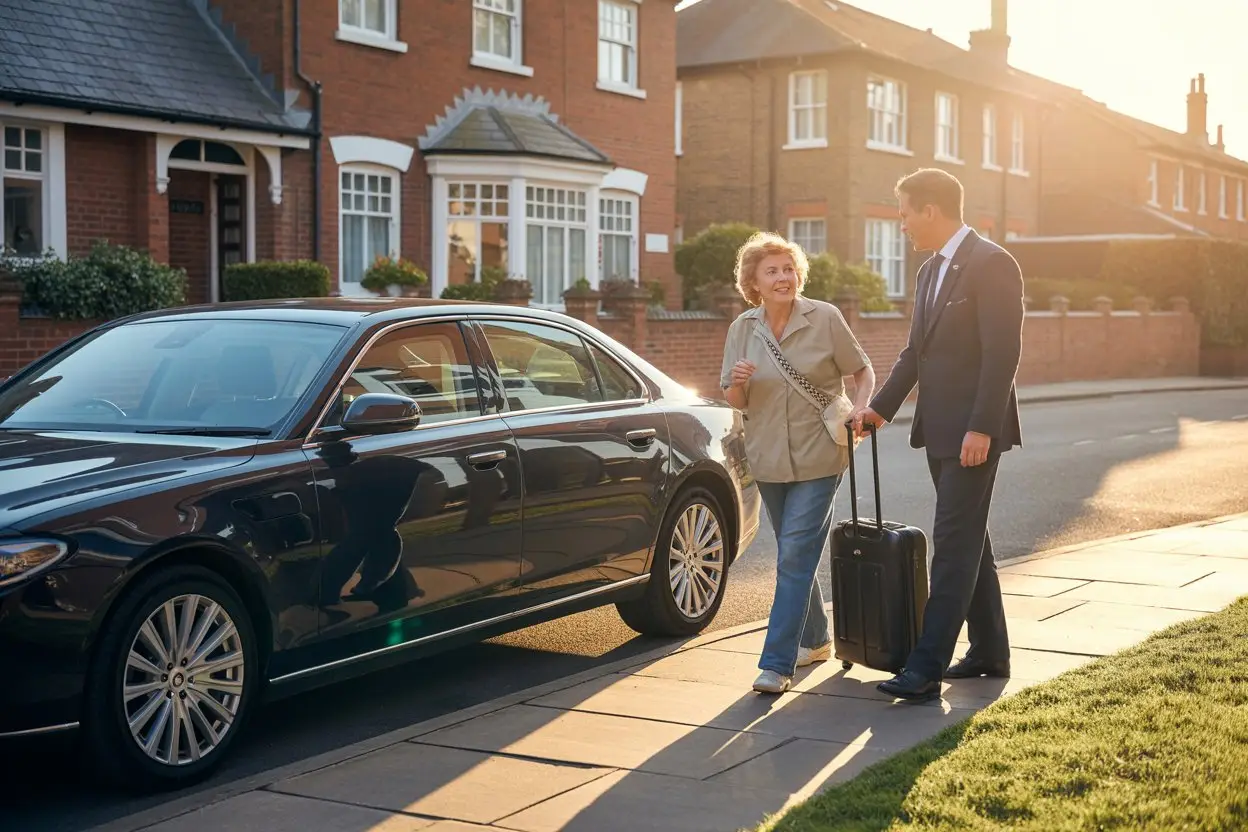
The complimentary chauffeur is Saga’s most distinctive practical feature for solo travellers, and it’s more useful than most people initially realise. Saga will send a car to your home to collect you and your luggage, drive you to the departure port (Southampton or Dover), and collect you on return. The service covers passengers living within 250 miles of either port.
For solo travellers, the implications are specific. No taxi to book, no train to catch with heavy luggage, no parking fees for a two-week sailing. If you’re managing any mobility consideration, the door-to-gangway service removes the most physically demanding part of the journey entirely. For passengers beyond the 250-mile radius, Saga offers free car parking at the port or regional flight options as alternatives.
What the brochure doesn’t spell out: The chauffeur service is door-to-port, not door-to-cabin. You still handle your own embarkation from the terminal. But Saga’s terminals are typically well-organised for older passengers, and embarkation on the Spirit ships is notably smoother than on larger vessels.
Solo Social Infrastructure: What Saga Actually Provides
The structural advantage of every passenger being 50+ means the social environment is self-selecting in a way no programming can replicate. You are guaranteed to be surrounded by peers with broadly similar life experience. That creates a baseline ease in conversation that passengers consistently report as Saga’s most underrated feature.
Beyond the demographic, Saga runs specific solo infrastructure on every sailing:
- Solo meet-and-greet events: Organised at the start of every cruise, with crew facilitating introductions rather than leaving passengers to find each other
- Excursion buddy matching: Solo travellers who prefer not to go ashore alone can be paired with other solo passengers for shore excursions before they disembark
- Communal dining tables: Open seating is available in the main Dining Room; solo travellers can request to be seated with others rather than at a table alone
- Organised solo social events: Listed in the daily programme throughout each sailing, not just at embarkation
- The Library: On both ships, the Library on Deck 7 operates as the informal solo traveller hub , plush armchairs, bookshelves, daily newspapers, self-service coffee and tea. It generates the kind of quiet, unforced conversations that organised mixers rarely produce
For tactics that work beyond what the ship provides, the guide to making friends on solo cruises covers the full range of approaches that experienced solo sailors use.
Dining Alone on Saga: The Reality
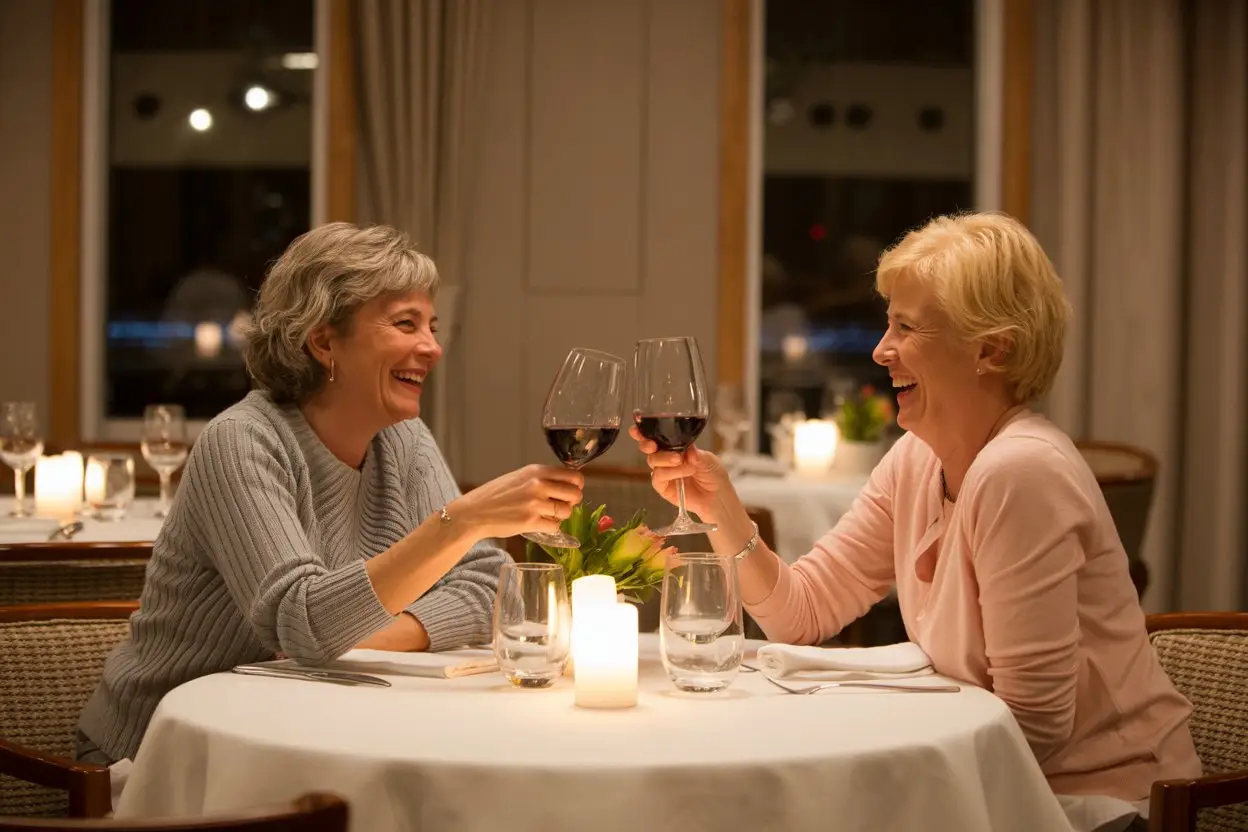
Solo dining on Saga is handled more thoughtfully than on most lines, but it requires you to be proactive rather than passive. The options are specific:
- Open seating in the Dining Room: Request communal seating at booking. The maitre d’ will place you with other solo travellers or welcoming couples. Same-table companions develop over the course of a sailing into genuine friendships on longer voyages.
- Specialty restaurants: All free, all bookable, and all genuinely good. Solo diners are welcomed without the subtle awkwardness that single diners experience in land-based fine dining. Staff-to-passenger ratios on the Spirit ships are high enough that a solo diner never feels like an inconvenient table allocation problem.
- Afternoon tea: Saga’s signature daily afternoon tea in the Dining Room is one of the best natural social occasions on any ship. It’s structured, time-limited, and produces conversations that wouldn’t happen at a bar. For solo travellers who find open-ended socialising harder, the tea service is a gift.
- The Lido Bar and Grill: Casual daytime food , fish and chips, light lunches , at an outdoor setting where solo eating is entirely comfortable and conversation with adjacent passengers is the norm rather than the exception.
Saga Solo Cabins: Which Grade Is Worth It?
The honest answer depends on what you actually use.
- The Standard Single at 185 sq ft is larger than many hotel rooms and significantly more comfortable than the solo cabin offerings on most other lines. The balcony is functional , two chairs and a table , and the double bed, armchair and vanity desk make it a genuinely liveable space for a two-week sailing. For first-time Saga solo bookers, this is where to start.
- The Superior Single adds 35 sq ft and a king-size bed. The extra space is noticeable on longer voyages. If you’re booking a 14+ night sailing and spend meaningful time in the cabin reading or working, the upgrade is worth it.
- The Deluxe Single is the one experienced Saga solo travellers tend to book. The walk-in wardrobe changes the practical experience of cabin living significantly , no more negotiating a small wardrobe for formal wear, shore excursion gear and everyday clothes simultaneously. The larger balcony is useful on scenic itineraries like the Norwegian fjords.
- The Single Suite is genuinely luxurious , butler service, rainfall shower, bathtub, separate lounge and bedroom. It’s the right choice for travellers who treat the cabin as a primary social space rather than just sleeping quarters, and for longer world cruise segments where cabin quality has a direct impact on daily wellbeing.
Saga Itineraries: The Best Options for Solo Travellers
Saga’s itinerary programme is designed around extended port stays rather than port-collecting. Where mainstream lines offer 8-hour sprints at major Mediterranean ports, Saga typically schedules 3-4 day stays that allow genuine exploration. For solo travellers who use shore time for independent discovery rather than organised coach tours, this is a significant practical advantage.
The strongest solo itineraries on Saga specifically:
- Norwegian Fjords: Overnight stays in Bergen and Geiranger when other lines rush through. The scenic cruising days generate natural conversations on deck that shore-heavy itineraries don’t. The demographic on fjord sailings skews toward culturally curious, well-travelled passengers.
- British Isles circumnavigation: The no-fly, round-Britain itinerary attracts a high proportion of first-time solo cruisers precisely because there’s no flight anxiety and the ports are familiar enough to provide confidence for independent exploration. Strong community feel onboard.
- Repositioning crossings: Atlantic repositioning sailings attract experienced solo travellers and generate the best social dynamics on any Saga sailing. Extended sea days mean the social infrastructure gets genuinely used rather than briefly attended. The best times to book singles cruises guide covers why repositioning sailings frequently offer better solo value than regular itineraries.
- Canary Islands: Year-round warm weather, reliable conditions and familiar ports make Canaries sailings the go-to for solo travellers trying Saga for the first time. Lower risk, well-worn itinerary, good opportunity to assess whether Saga’s style suits you before committing to a longer voyage.
Accessibility and Mobility on Saga Ships
Both Spirit ships were built with accessibility as a design priority rather than a regulatory compliance exercise. The specifics matter for solo travellers managing mobility considerations who don’t have a companion to provide assistance.
- 10 adapted cabins per ship, all with private balconies, in three categories: Adapted Standard, Adapted Deluxe and Adapted Junior Suite
- Every adapted cabin has an interconnecting door to an adjacent solo cabin
- Adapted cabin features include power-assisted doors, roll-in showers with fold-down benches, grab rails throughout, lowered safes and wardrobe rails, raised toilets, hand-held shower heads and wider turning spaces
- 6 elevators on each ship covering all cabin decks
- Wraparound promenade deck with no obstructions
- Port shuttle buses included at most ports, removing the need to negotiate transport independently
The smaller ship scale helps. At 999 passengers, you are navigating a manageable environment rather than a floating city. Staff know returning passengers by name within a day or two, which means asking for assistance feels natural rather than conspicuous. The Southampton accessibility guide covers the port-side logistics in detail.
Who Saga Solo Cruising Works For
- Over-50s who want a genuinely age-consistent demographic: If the prospect of being the oldest person at the pool bar concerns you, Saga eliminates the issue structurally.
- Solo travellers who want everything sorted: The all-inclusive model plus the chauffeur transfer means the logistical overhead of solo travel is reduced to a minimum. You book, you pack, a car arrives.
- First-time solo cruisers: The organised social infrastructure, consistent passenger demographic and no-fly UK departure option make Saga the lowest-anxiety entry point into solo cruising for passengers who are new to sailing alone.
- Passengers with mobility considerations: The accessible cabin design with solo interconnecting doors, included port shuttles and smaller ship scale make Saga the strongest accessible solo option in the UK market.
- Longer-voyage solo travellers: On 14+ night sailings, the all-inclusive model’s value increases substantially. The social bonds that form on longer Saga sailings are notably stronger than those on short breaks.
Who Should Look Elsewhere
- Under-50s: The 50+ age restriction is absolute. Travel companions can be 40+, but the primary passenger must be 50 or over.
- Travellers seeking active nightlife: Saga ships wind down by 11pm. The entertainment programme is accomplished but not late-night. This is a feature for most passengers and a deal-breaker for some.
- Budget-first bookers: Saga’s all-inclusive model delivers genuine value, but the upfront fare is higher than comparable mainstream sailings. Passengers who prefer to control their own spending , skipping excursions, bringing their own drinks aboard, eating only in the main dining room , will likely find better value elsewhere. See the guide to avoiding single supplement fees for alternatives.
- Travellers wanting large-ship entertainment: No casino, no waterslides, no climbing walls. The Spirit ships are boutique hotels at sea. Passengers expecting a floating resort will be disappointed; passengers expecting a refined, curated experience will not.
For a direct comparison against the other main UK solo option, the Ambassador vs Saga breakdown covers the full contrast in priorities and value.
Practical Tips: Getting the Most from Saga as a Solo Traveller
- Book solo cabins early: 100 cabins sounds like a lot. On popular sailings, particularly Norwegian fjords in summer and Caribbean winter departures, they sell out months in advance. Solo cabins go before standard twins.
- Use the Library: This is the single best social space on both Spirit ships for solo travellers. It attracts readers and quiet conversationalists rather than bar-circuit socialites, and the self-service refreshments give you a natural reason to sit and stay. The best conversations of your sailing will happen here.
- Book the specialty restaurants early: All free, but limited capacity. Book all three for your preferred evenings on embarkation day rather than waiting until mid-sailing when availability tightens.
- Request communal seating at booking, not on the ship: The maitre d’ can place you with the right table companions if they know in advance. Asking on the day gets you whatever’s left.
- Pack for formal nights: Saga has formal occasions. Solo travellers without a partner to remind them frequently under-pack for these. One evening suit or dress is sufficient, but don’t arrive without it.
- Consider the Deluxe Single for voyages over 10 nights: The walk-in wardrobe makes a disproportionate difference to daily cabin life on longer sailings. The standard single works well for shorter breaks; the Deluxe earns its upgrade on extended voyages.
Before you sail, the solo cruise packing list covers everything worth bringing. For luggage, Level8 cases are hard-shell, lightweight and hold up to the handling that comes with a chauffeur-to-ship journey. A hanging toiletry bag is worth its weight on a ship where bathroom space in a solo cabin is limited, and a good travel pillow earns its place on longer repositioning crossings.
Travel Insurance for Saga Solo Travellers
Saga’s all-inclusive model does not include travel insurance. Given the demographic, this is the non-negotiable addition to any Saga booking. Generic travel insurance frequently excludes pre-existing conditions and caps medical evacuation at insufficient levels for international itineraries. Cruise-specific cover is essential. Compare UK cruise insurance quotes and ensure the policy covers missed port, cabin confinement and medical evacuation specifically.
Common Questions
Can I bring a travel companion who is under 50 on a Saga cruise?
Travel companions must be 40 or over. The primary passenger (the one in whose name the booking is made) must be 50+. Anyone under 40 cannot sail with Saga regardless of who they’re travelling with. Children are not permitted on any Saga sailing.
What happens if my solo cabin sells out before I book?
You can book a standard twin cabin for sole occupancy, which carries a single supplement. Saga’s solo supplement on twin cabins is lower than most comparable lines, but it is a supplement. The alternative is joining a cancellation list , solo cabins do come available as bookings shift, particularly in the 60-90 days before departure. Direct booking through Saga gives you faster access to cancellation releases than booking through an agent.
Does the chauffeur service work for passengers living in Scotland or Wales?
The 250-mile radius from Southampton or Dover covers most of England and parts of Wales. Scotland, Northern Ireland and the far southwest fall outside the radius. Passengers beyond the boundary receive free car parking at the departure port or can arrange regional flights through Saga instead. Call Saga directly to confirm your postcode falls within the service area before booking.
Are the solo cabins on the same decks as the standard cabins?
On Spirit of Discovery, Standard Singles are on A through E decks. Superior Singles are on A, B and D decks. Deluxe Singles are on C and D decks and the Sun Deck. They are distributed throughout the ship rather than concentrated on a single deck, which means solo passengers are integrated into the general cabin population rather than segregated into a solo zone.
How does the excursion buddy matching actually work?
Before each port of call, solo travellers who’ve flagged an interest in sharing excursions are connected , typically through the tour desk or an organised pre-excursion meeting. It’s informal rather than algorithmically matched, and the quality depends partly on who else has opted in. On sailings with a high proportion of solo passengers, the matching produces genuine touring groups. On sailings where solo travellers are in the minority, options are more limited. The ship-organised excursions are the most reliable fallback.
Is Saga genuinely better value than Fred. Olsen for solo travellers?
It depends entirely on how you cruise. Add up what you’d spend on a comparable Fred. Olsen sailing including drinks, specialty dining, shore excursions, gratuities and transport to the port. On many itineraries, Saga’s all-in fare compares favourably once the full cost is calculated. On shorter sailings or itineraries where you’d skip most excursions, Fred. Olsen’s lower base fare with selective add-ons can work out cheaper. Run the numbers for your specific itinerary length and cruising style. The Fred. Olsen guide and the Ambassador vs Saga comparison both help with this calculation.
What is the average passenger age on Saga ships?
The 50+ rule creates a floor but not a ceiling. The average age on most Saga sailings sits between 63 and 70, with longer voyages and world cruise segments skewing older. School holiday sailings attract the younger end of the eligible demographic. If you’re 55 and want a passenger mix closer to your own age, a summer school-holiday sailing is counterintuitively your best option.
Do Saga solo cabins have the same amenities as the twin cabins?
Yes. Every cabin on both Spirit ships , regardless of grade or occupancy type , has a private balcony, Sealy mattress, bathrobe and slippers, minibar, 24-hour room service, kettle, binoculars, Wi-Fi and a flat-screen TV with British channels. The solo cabins are smaller in total square footage than equivalent twin grades, but the amenities list is identical. The Standard Single at 185 sq ft (plus balcony) is larger than many boutique hotel rooms.
What’s the best Saga sailing for a first-time solo cruiser?
A 7-10 night British Isles or Canary Islands sailing. Short enough to be low-commitment for a first experience, familiar enough in ports that solo shore exploration feels manageable, and on a UK departure so there’s no flight complexity. The passenger demographic on these sailings includes a high proportion of first-time solo Saga cruisers, which makes the social environment particularly accessible. For the full timing strategy, the first solo cruise guide covers every decision point.
Why Trust This Guide?
About2Cruise is independent , not owned by Saga, not compensated by Saga for recommendations. The solo cabin specifications, included amenities and accessibility details in this guide are verified against Saga’s own published specifications and third-party ship reviews. Where affiliate links appear (luggage, insurance), these are products we independently recommend.
About the Author
Jo Pembroke is a cruise expert and travel writer who has sailed extensively across the UK and European cruise market. Her particular focus is the over-50s solo travel sector, and she has strong opinions about which lines actually deliver on their solo promises and which ones merely tolerate solo passengers while charging them double.
Last Updated: 15 February 2026