
Cruise ships in San Juan, Puerto Rico dock at one of two spots: the Old San Juan piers (1, 3 and 4), a short stroll from the old town’s forts and cobbled streets, or the Pan American Pier across the water in Isla Grande. Every pier here is a berth alongside dock, so nobody’s clambering into a tender boat to get ashore.
San Juan Cruise Port at a Glance
San Juan is the busiest cruise port in the whole Caribbean. The Puerto Rico Ports Authority oversees the public side of things, while SJCP (San Juan Cruise Port Ltd), a subsidiary of Global Ports Holding, handles the day to day running of the terminals as part of a project to modernise both terminal districts.
People often ask whether it’s safe to head out for a few hours in San Juan, Puerto Rico, and for most visitors sticking to the old town’s main streets in daylight, the answer’s yes. If you’re hunting for a fixed Pan American Pier San Juan schedule before you fly, stop looking. Pier assignments shift with ship size, season and whether San Juan is your embarkation point, so your cruise line’s boarding documents are the only thing worth trusting. The map below shows the layout of both terminal districts.
In the most recent full year of published figures, the port waved through just over 1.4 million cruise passengers across more than 500 ship calls, according to San Juan Cruise Port’s own passenger statistics.
San Juan Cruise Port Map: Where Do Cruise Ships Dock in San Juan, Puerto Rico?
The map below shows the cruise terminal area in Old San Juan, handy for getting your bearings before you land or fly in. Ships dock alongside a fixed pier rather than anchoring offshore, so there’s no tender, the small boat used to ferry passengers ashore at ports without a deep water berth.
The two terminal areas sit either side of the Caño de San Antonio, the waterway that separates Old San Juan from the Isla Grande district. The Old San Juan piers handle most of the calls and sit right against the old town, while the Pan American Pier, built for large scale operations, is a short drive away across the water.
The Old San Juan Piers
Piers 1, 3 and 4 sit along the harbour front on the south side of the old town. Pier 1 tends to take the smaller ships, Pier 3 has been dredged and reinforced recently to cope with today’s largest vessels, and Piers 3 and 4 share a single terminal building.
This side of the port is where most transit calls come alongside, the stops lasting a single day rather than the start or end of a cruise.
The Pan American Pier
Across the Caño de San Antonio in Isla Grande, the Pan American Pier is a two tiered terminal split into East and West sections, built for larger scale homeport operations, where passengers begin or end their cruise rather than just calling in for the day.
It handles a mix of transit and homeport sailings, and like the Old San Juan piers, ships berth directly alongside rather than anchoring offshore.
Which Pier Will Your Ship Use?
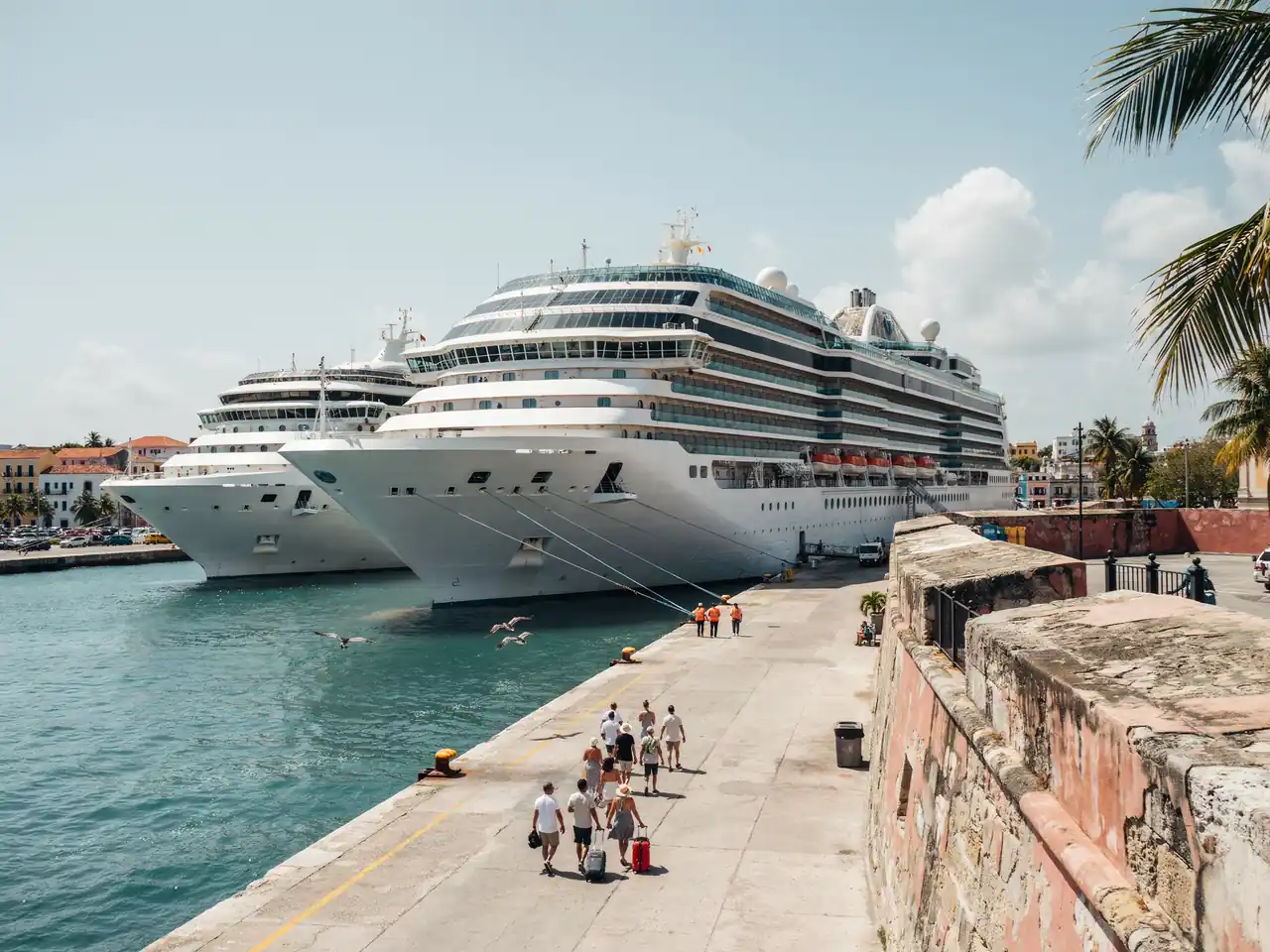
This is where even the well researched guides start contradicting each other. Some list Carnival at the Old San Juan piers, others put Carnival at the Pan American Pier, and the same disagreement crops up for Celebrity, Royal Caribbean and Norwegian Cruise Line. Ship size, whether San Juan is a transit call or your homeport, and the season can all change the answer.
- Check your cruise line’s boarding pass or embarkation email once it’s issued. It’s the only source that’s reliably up to date on your exact pier.
- If you’re booking a private transfer or a hotel for the night before, hold off confirming pickup details until your documents name the terminal.
- On the day, port staff and taxi marshals at either terminal will point you toward the right pier if you’re not sure.
Getting Between the Port, the Airport and Old San Juan
From the Old San Juan piers, it’s about a five minute walk into the old town’s cobbled streets. Luis Muñoz Marín International Airport is roughly a 15 minute drive from these piers, or closer to 10 minutes from the Pan American Pier.
There’s no public transport running to either terminal, so passengers docking at the Pan American Pier usually take a short taxi into Old San Juan rather than walk it.
When Several Ships Are in Port at Once
San Juan can have more than one ship alongside on the same day, and published capacity estimates for the two terminal areas combined range from six to nine vessels depending on who you ask. On busy days, expect a livelier old town, more competition for taxis outside the piers, and longer queues if you’re beginning or ending your cruise here rather than just calling in for the day.
- Head back to your ship earlier than you think you need to on multi-ship days. Taxi ranks back up fast once everyone’s had the same idea about heading home.
- If San Juan is your embarkation port, build in extra time for check-in. Several ships boarding at once means a busier terminal hall than you might expect.
Puerto Rico Cruise Port Comparison
San Juan isn’t the only Puerto Rican stop on Caribbean itineraries, and if you’re weighing up Puerto Rico’s cruise ports more broadly, there’s usually more than one call in the mix.
| Port | Coast | Typical Ship Size | Best For |
|---|---|---|---|
| San Juan | North | All sizes, including the largest ships afloat | Old town sightseeing, forts, embarkation |
| Ponce, Puerto Rico cruise port | South | Small and mid-sized ships | A quieter call with colonial architecture |
For a wider view of the region, our Greater Antilles cruise ship ports guide sets San Juan alongside neighbouring islands, including the Port of Port-au-Prince, Haiti cruise port guide.
Puerto Rico’s pull as a whole hasn’t dimmed. In the last full year before pandemic era travel disruption, the island hosted 1.78 million cruise passengers, the fourth highest total of any Caribbean destination tracked that year, according to Caribbean Tourism Organization figures.
Cruising to Puerto Rico: What to Check Before You Go
- Confirm your terminal once boarding documents are issued rather than trusting last year’s guidebook. Assignments shift.
- Puerto Rico is a US territory, so US citizens don’t need a passport for domestic travel here, though you’ll need a valid passport if you’re joining or leaving the ship from outside the US.
- Pack for heat and humidity all year round, with short, heavy downpours more likely between roughly May and November.
- Bring comfortable, broken in shoes with decent grip for the old town’s cobbled streets. They get properly slippery when wet.
- Keep some small notes on you for market stalls, even though cards work almost everywhere else.
A Few Hours Ashore in Old San Juan
Most of the headline sights sit within a short walk of the Old San Juan piers, so there’s no real need to book a ship excursion for this one.
- Castillo San Felipe del Morro, the fortress guarding the harbour entrance, with views back down over the cruise piers.
- Castillo San Cristóbal, a larger fort further into the old town, with tunnels and lookout points to explore.
- Calle del Cristo, a cobbled shopping street running down through galleries and cafés.
- The Bacardí Rum Factory, worth the trip if you’ve got a longer day in port.
The forts offer next to no shade at midday, so slap on reef safe sunscreen before you leave the ship. It takes two minutes and saves you a lot of regret later.
Local Quirks That Catch First-Time Visitors Out
Afternoon showers arrive fast and clear just as quickly, so there’s rarely any point rearranging your whole day around one. Just keep a light rain layer in your bag rather than buried in a cabin case.
Cobblestones in Old San Juan are original, uneven and properly slippery when wet, which catches out visitors expecting a flat, paved boardwalk.
Common Questions
Is San Juan a tender port?
No. Every pier in both the Old San Juan and Pan American terminal areas is a straight alongside berth, so you step off the ship and onto the dock. No tender boat required.
How far is it from the ship to Old San Juan’s old town?
From the Old San Juan piers, about five minutes on foot. From the Pan American Pier, most people hop in a taxi instead.
Which pier will my cruise line use?
It depends on ship size, the season, and whether San Juan is a transit call or your embarkation port. Check your boarding documents closer to sailing rather than trusting a fixed list anywhere online.
Do I need a passport to cruise to San Juan, Puerto Rico?
Puerto Rico is a US territory, so domestic US travellers don’t need one. You will need a valid passport though if you’re joining or leaving the ship from outside the US.
Is San Juan safe for cruise passengers exploring alone?
Old San Juan’s main streets are generally safe and busy with visitors during the day. As with any city, stick to well lit, populated areas once the sun’s gone down.
What currency is used in San Juan?
The US dollar, since Puerto Rico is a US territory. Cards work almost everywhere, but small shops and market stalls often prefer cash.
How do I get to the airport from the cruise terminals?
By taxi. Roughly 15 minutes from the Old San Juan piers, closer to 10 from the Pan American Pier.
Can more than one ship dock in San Juan on the same day?
Yes. Capacity estimates for the two terminal areas combined range from six to nine ships, so on the busy days the old town gets noticeably busier too.
Why Trust About2Cruise
This guide is built from official port operator information, published passenger statistics and multiple independent cruise industry sources, cross-checked against each other because terminal details in San Juan keep changing as redevelopment work continues. Where sources disagreed outright, such as on which cruise line uses which exact pier, we’ve said so rather than dressing up a guess as settled fact. You can read more about how About2Cruise researches and fact-checks its port guides on our about us page.
Last Updated: 19 October 2026