
Cruise ships heading to Tenerife dock at the Port of Santa Cruz de Tenerife, not down at Los Cristianos further south. Your ship will use one of three berths, Muelle Sur, Dársena Dique Este or the newer Muelle Ribera terminal, and depending on which one you get, the walk into central Santa Cruz could take anywhere from five minutes to half an hour.
Santa Cruz de Tenerife is the Canary Islands’ largest cruise port and its main homeport for roundtrip sailings. A recent year saw more than 540,000 cruise passengers pass through it, the busiest total of any Canary Islands port, according to Statista, citing Puertos del Estado. Among Spanish cruise ports it comes second only to Barcelona, handling close to a million passengers a year across its terminals, and the Port of Santa Cruz de Tenerife alone carries around 23% of all sea passenger traffic in the archipelago, according to the Port of Santa Cruz de Tenerife entry on Wikipedia. The bit that really matters to you is which berth your ship gets, since Muelle Sur, Muelle Ribera and Muelle Norte sit at different points around a harbour ringed by the Anaga Mountains. Land at Muelle Ribera and you’ve got the easiest day of anyone, since it’s only a few minutes’ walk from Plaza de España, the square at the heart of town. And because Tenerife is largely tax-free, duty-free shopping for electronics, perfume and tobacco is one of the bigger draws for anyone with only a few hours ashore.
Where Do Cruise Ships Dock in Tenerife?
The Port of Santa Cruz de Tenerife, sometimes just called the Santa Cruz Tenerife cruise port or Santa Cruz cruise port, is where almost every cruise ship calls, sitting on the island’s north-eastern coast under the management of the Santa Cruz de Tenerife Port Authority. Most large ships tie up along Muelle Sur, a long breakwater that’s been reserved for tourist cruise ships since the early twentieth century, while others use the deeper Dársena Dique Este or the newer Muelle Ribera terminal closer to town. It’s one of the world’s deepest natural harbours, and there’s barely a day of the year without a ship in.
Finding Your Berth: Terminal Map and Comparison
The map below shows where the cruise terminal sits relative to the city centre, handy for getting your bearings before you head off the ship.
The table below runs through the port’s main berths. Which one you get comes down to your ship’s size and itinerary, and none of this gets published in advance, so treat it as a guide rather than a promise.
| Terminal | Draught | Berth Length | Distance to Centre | Notes |
|---|---|---|---|---|
| Muelle Sur | 8.5 to 12 metres | 2,600 metres, 3 gangways | About 1.5 to 2 kilometres, 15 to 30 minutes on foot | Long breakwater used by most large cruise ships, walk time depends on where along it your ship berths |
| Dársena Dique Este | 14 to 19 metres | 2,700 metres | Similar to Muelle Sur | Deepest berths in the port, used for the largest ships |
| Muelle Ribera | 10 to 12 metres | 395 metres, 2 gangways | A few minutes’ walk to Plaza de España | The Canary Islands’ largest cruise terminal building, with a fifty-desk check-in hall |
| Muelle Norte | Not specified in port data | Not specified in port data | About 1 kilometre, roughly 15 minutes on foot | Home to the Agustín de Betancourt terminal, closer to the centre than Muelle Sur |
Why Walking Distance Advice Differs So Much
If you’ve seen wildly different figures for the walk into town, anywhere from five minutes to half an hour, there’s a simple reason for it. Muelle Sur is a long breakwater with several berths strung along its length, so where your ship actually ties up decides your walking time. A blue line marks the official route from Muelle Sur into the centre, and the port authority’s own estimate is fifteen to twenty minutes, though ships berthed further out will add to that. From Muelle Ribera, it really is only a few minutes, since that terminal sits right by Plaza de España.
Getting From the Port Into Santa Cruz
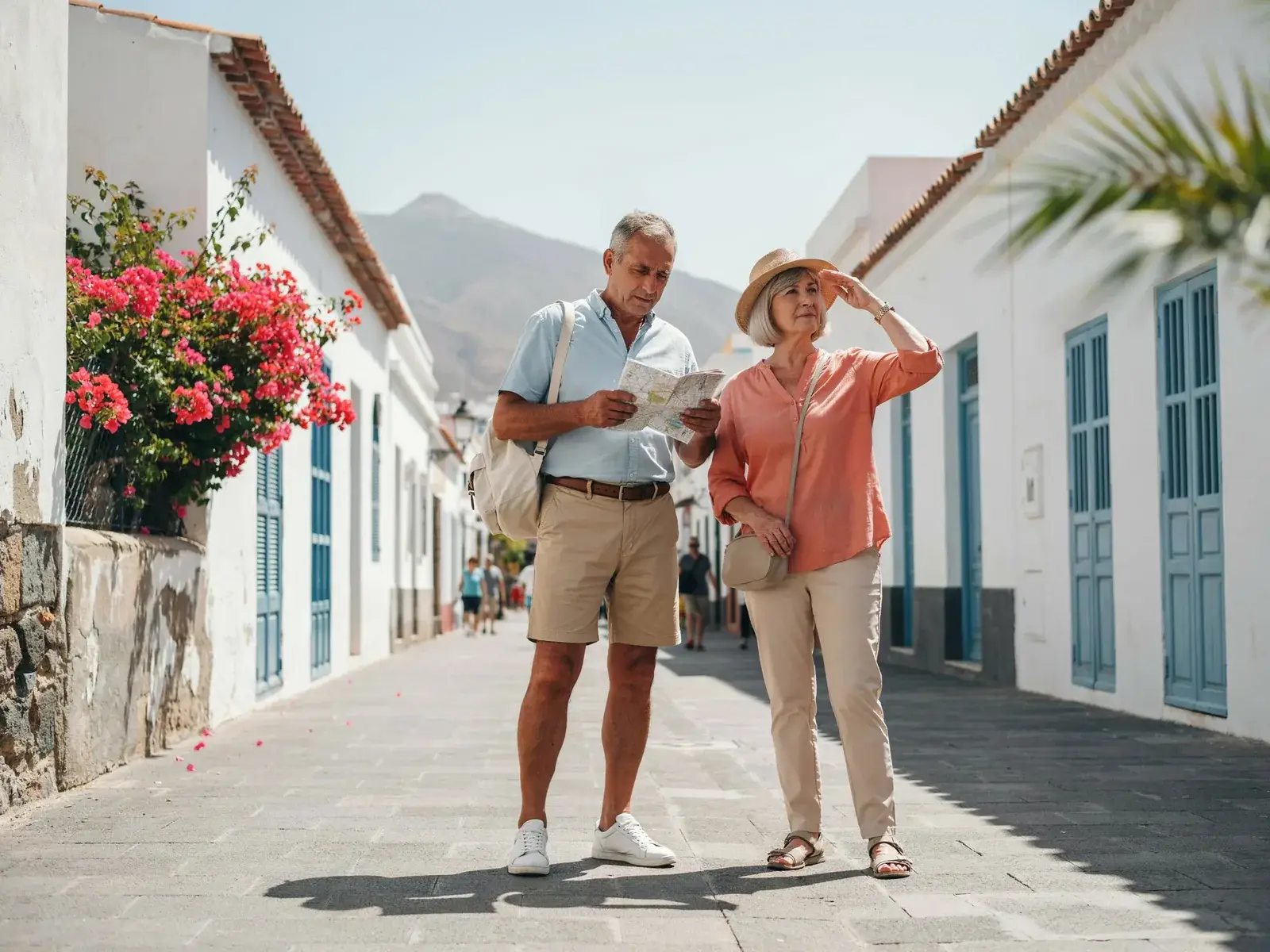
Once you’re off the ship, getting into town isn’t complicated, but it helps to know your options before you walk out of the terminal.
- Free shuttle buses, laid on by the port authority, run from the terminal to Plaza de España, the square where the city’s pedestrianised shopping streets all meet.
- Official taxis, painted white with an SP plate under the number plate, wait at the pier and charge a base fare plus a per kilometre rate, with a surcharge on Sundays, holidays and after 10pm.
- Walking is entirely doable from most berths, and comfortable walking shoes are worth packing, given the distance can run to half an hour from the far end of Muelle Sur.
- Only taxis and shore excursion buses are allowed on the pier itself, so if you’re walking on your own, follow the marked route out of the terminal.
One quirk to bear in mind: shuttle buses and pierside taxis are occasionally reported as unavailable, particularly when several ships are in port at once, despite being advertised as open to everyone. The fix is simple enough, agree a pickup time and spot with a taxi driver when you arrive, or book a shore excursion that includes transport, rather than assuming a shuttle or taxi will be sitting there waiting when you fancy heading back.
Santa Cruz de Tenerife, Los Cristianos and Santa Cruz de La Palma: Not the Same Port
Tenerife has two commercial ports that take cruise ships, and it’s easy to mix them up when you’re booking or researching. Santa Cruz de Tenerife, the one this page covers, is the island’s capital and main cruise port, handling most cruise calls and the ferry links to Gran Canaria, home to the Las Palmas de Gran Canaria cruise port guide, and to mainland Spain. The Los Cristianos cruise port guide covers a separate port in the island’s main tourist resort area to the south, used mainly for onward ferries to the other Canary Islands, and when cruise ships do call there, passengers are tendered ashore rather than docking directly. Santa Cruz de La Palma is a different port entirely, covered in our Santa Cruz de La Palma cruise port guide, on the neighbouring island of La Palma, and shares nothing but a name with Tenerife’s capital, so it’s worth double checking which one is actually on your itinerary. For an overview of the archipelago’s other calls, our Canary Islands cruise ship port guide is a useful starting point.
What’s in Port: Tenerife Highlights Within Walking Distance
If you’re wondering what there is to see, Santa Cruz itself has no beach, but there’s plenty else within easy walking distance of most berths.
- Plaza de España, the city’s central square, where the shuttle bus and most walking routes arrive.
- Calle del Castillo, the main shopping street, lined with local and international fashion brands.
- Mercado de Nuestra Señora de África, a market that’s good for souvenirs, crafts, local food and wine.
- Auditorio de Tenerife, the striking concert hall that’s one of the island’s most photographed buildings.
- The Museum of Open Air Sculptures, with works by Henry Moore, Joan Miró, Martín Chirino and Andreu Alfaro on permanent outdoor display.
- Palmetum, a twelve hectare botanical garden holding one of the world’s largest palm tree collections.
Tenerife Cruise Port Duty Free and Shopping
Tenerife’s more or less tax-free status means duty-free shopping crops up both at the cruise terminals and right across Santa Cruz, with electronics, perfume and tobacco noticeably cheaper than what you’d pay on board. El Corte Inglés, an upmarket department store with its own shopping centre attached, sits about fifteen minutes’ walk from the port. Most shops in the centre stay open through the day, though smaller stores elsewhere on the island still close for siesta between 1pm and 4pm, so don’t assume the whole island runs on city centre hours if you head further afield.
Beyond the City: Beaches, Mount Teide and La Laguna
Santa Cruz itself has no beach, but Playa de las Teresitas, its sand shipped in from the Sahara, is around eight kilometres north and an easy hop on bus 910 from the road in front of the terminal. Pack reef safe sunscreen if you’re planning a beach stop, there’s barely any shade on that stretch of sand.
For a bigger day out, Mount Teide, at 3,718 metres the highest point in Spain, sits around 40 kilometres away and takes about 45 minutes to reach by taxi or shore excursion, and a cable car runs from a station at the mountain’s foot for anyone who’d rather not do the climb. La Laguna, a UNESCO World Heritage town with well preserved historic architecture, is a shorter trip and an easy tram or bus ride from Santa Cruz.
There’s also a hop-on hop-off sightseeing bus that stops right by the cruise terminal, running roughly every half hour between 9.30am and 6.15pm, with eleven stops including the Auditorio de Tenerife, Castillo de San Juan and Parque García Sanabria. A full loop takes about ninety minutes.
Facilities at the Cruise Terminal
- Free wifi throughout the terminal building, and at several cafes and restaurants nearby.
- Plenty of seating plus a VIP lounge inside the terminal.
- A car rental desk and a few souvenir shops on site.
- Public toilets along the seafront and at the port entrance, though not inside the terminal itself.
- You’ll usually find a port representative on hand for the first few hours after a ship arrives, handing out maps and local information.
Before You Dock: A Quick Checklist
- Confirm whether you’re sailing into Santa Cruz de Tenerife or the tender port of Los Cristianos, since the two are entirely different arrival experiences.
- Don’t rely on a shuttle or taxi being there the moment you want to return, agree a plan in advance, especially on days when several ships are in.
- Pack for a walk of anywhere from five to thirty minutes, depending on your berth, and bring comfortable footwear.
- Note that Santa Cruz has no beach, Playa de las Teresitas is the nearest, about eight kilometres away by bus.
- Keep some cash for the taxi meter, which adds a surcharge on Sundays, holidays and after 10pm.
- Check duty-free prices in town against onboard prices before you buy, since the port’s tax status often makes electronics, perfume and tobacco cheaper ashore.
Common Questions
Does my cruise ship dock in Santa Cruz de Tenerife or Los Cristianos?
Most cruise itineraries call at Santa Cruz de Tenerife, the island’s main cruise port. Los Cristianos, further south, is mostly a ferry port, and any cruise calls there are by tender. Check your cruise line’s documentation to see which one applies to you.
How far is the port from the city centre?
It depends entirely on your berth. From Muelle Ribera it’s a few minutes’ walk to Plaza de España, from Muelle Sur it can be fifteen to thirty minutes, since ships dock at different points along that long breakwater.
Is there a free shuttle bus into town?
Yes, the port authority runs a free shuttle to Plaza de España for cruise passengers. It’s occasionally reported as unavailable when several ships are in port at once, so it pays to have a backup plan rather than relying on it alone.
Are taxis available at the pier?
Official white taxis with an SP plate usually wait at the pier and charge a metered fare, plus a surcharge on Sundays, holidays and after 10pm. Availability can be patchy on busy days, so agree a return time with your driver if you can.
Is there a beach near the cruise terminal?
Not in central Santa Cruz, no. The nearest, Playa de las Teresitas, is about eight kilometres north and reachable on bus 910 from outside the terminal.
Can I visit Mount Teide on a short call?
Possible, but tight. The National Park entrance is around 40 kilometres and 45 minutes away by road, so a shore excursion or taxi is your most reliable bet for fitting it into a single day ashore.
Is duty-free shopping worth it in Santa Cruz?
Tenerife’s tax-free status makes electronics, perfume and tobacco noticeably cheaper than a lot of onboard prices, and you’ll find duty-free shopping at the cruise terminals and right through the city centre.
Which terminal will my ship use?
Nobody publishes this in advance for a specific sailing, unfortunately. Larger ships tend to end up at Muelle Sur or the deeper Dársena Dique Este, while some cruises now use the newer Muelle Ribera terminal closer to town.
Why Trust About2Cruise
This guide draws on published port authority data, terminal specifications and passenger facing information about Santa Cruz de Tenerife, cross-checked across sources to flag where the figures really don’t line up, such as walking times from Muelle Sur, rather than handing you a single unverified number as fact. You can read more about how we research and fact-check our port guides on our about us page.
Last Updated: 14 August 2026