
You’ve probably been told that cruising is something you do with someone. A romantic getaway, a family holiday, maybe a couple’s milestone trip. Well, ignore that. Cruising solo is one of the most flexible, self-contained ways to travel alone, and if you’re happy making your own decisions without checking in with a travel companion, it’s worth serious consideration.
Solo cruising offers total freedom over your schedule and pace, with built-in social opportunities and simplified logistics. You’ll pay more per person than sharing a cabin in most cases, but you’ll avoid compromises, set your own dining times, and choose exactly which activities and ports suit you without negotiating with anyone else.
This guide covers why cruising solo appeals to independent travellers, the honest trade-offs including single supplements and dining dynamics, which types of cruisers benefit most, and practical strategies to get the best value and experience when you’re travelling alone at sea.
The Real Appeal of Going Solo
The freedom is the obvious draw. You wake up when you want, eat where you fancy, skip the port excursion if you’d rather read on deck, and change your mind without consulting anyone. That autonomy extends to everything from which shows you attend to how long you linger over breakfast.
But there’s more to it than just doing what you want. Cruising solo often accelerates your confidence in unfamiliar situations. You’re more likely to strike up conversations at the bar, join a shore excursion group, or ask the crew for recommendations when you’re not defaulting to a travel partner for company. Some people find that liberating. Others find it exhausting. Your mileage will vary depending on how social you naturally are.
- Complete schedule control: No negotiating over whether to do the walking tour or the beach day. You decide, you go, you change your mind halfway through if you like.
- Social flexibility: Join group activities when you’re in the mood, retreat to your cabin when you’re not. You’re not locked into anyone else’s energy levels.
- Simplified logistics: Everything you need is on the ship. No coordinating separate hotels, restaurants, or transport between destinations.
- Personal pace: Spend three hours in a museum without worrying you’re boring your companion, or skip the cultural stuff entirely and hit the beach without guilt.
Why the Ship Format Works for Solo Travellers
A cruise ship is a self-contained environment, which suits solo travel better than you might expect. You’re not navigating a foreign city alone every night looking for dinner, and you’re not dealing with the isolation of a hotel room in an unfamiliar place with no obvious social entry points. The ship provides structure without rigidity.
Dining, entertainment, and activities are all built in, so you’re never at a loss for what to do or where to go. But crucially, you’re also not forced into constant interaction. There are quiet corners, libraries, and deck spaces where you can be alone without feeling like you’re missing out. That balance between access and autonomy is hard to replicate in other solo travel formats, especially if you’re looking for a guide to your first solo cruise.
The Honest Trade-Offs You Need to Know
Let’s be clear: solo cruising costs more per person than sharing a cabin. Cabins are priced assuming double occupancy, and when you book solo, you’ll either pay a single supplement or book into a dedicated solo cabin if the ship has them. That supplement can range from a modest uplift to nearly double the per-person rate, depending on the cruise line and itinerary.
Some cruise lines have cottoned on to the solo market and now offer studios or single cabins at more reasonable rates. Norwegian Cruise Line, for example, has studio cabins with single occupancy pricing and a shared lounge for solo travellers. Saga Cruises and Cunard also cater to solo passengers with reduced supplements on certain itineraries. But these options aren’t universal, and you’ll need to compare carefully before assuming you’re getting a fair deal. If you’re over fifty or sixty, consider checking singles cruises for over 50s or singles cruises for over 60s for age-specific options.
Dining on Your Own Terms
Dining dynamics vary wildly depending on the ship and your preferences. Traditional fixed dining can be awkward if you’re seated with couples or families who aren’t particularly interested in chatting with a solo traveller. On the other hand, some solo cruisers actively enjoy being placed at a larger table with other singles or mixed groups.
- Open seating: Gives you flexibility to dine when and where you like, but you may wait longer for a table during peak times if you’re on your own.
- Fixed dining: You’ll be assigned a table, which can be social or isolating depending on your tablemates. Request a larger table with other solo travellers if possible.
- Specialty restaurants: Often easier for solo diners, as they tend to have more flexible seating and bar areas where solo guests feel less conspicuous.
- Buffets and casual venues: The path of least resistance. No waiting, no fuss, no pressure to make conversation if you’d rather not.
If dining alone makes you uncomfortable, book a line with flexible dining options or one that actively organises solo traveller meetups. Some ships have hosted tables or specific nights where solo passengers are grouped together, which takes the guesswork out of making friends on solo cruises.
Social Energy and Alone Time
The social aspect of solo cruising is a double-edged sword. If you thrive on meeting new people, the ship is full of opportunities: group excursions, trivia nights, fitness classes, and bars where conversation flows easily. But if you need regular downtime to recharge, you’ll need to actively carve out that space, because the ship’s default mode is activity and interaction.
Some solo travellers report feeling overstimulated by the constant buzz of a large ship, especially on sea days when thousands of passengers are all using the same facilities. If you know you need quiet, book a cabin in a less trafficked area, avoid peak pool times, and make use of the library or quieter deck spaces. It’s perfectly acceptable to skip the group activities and spend a day reading or staring at the ocean. No one’s checking.
Who Solo Cruising Suits Best
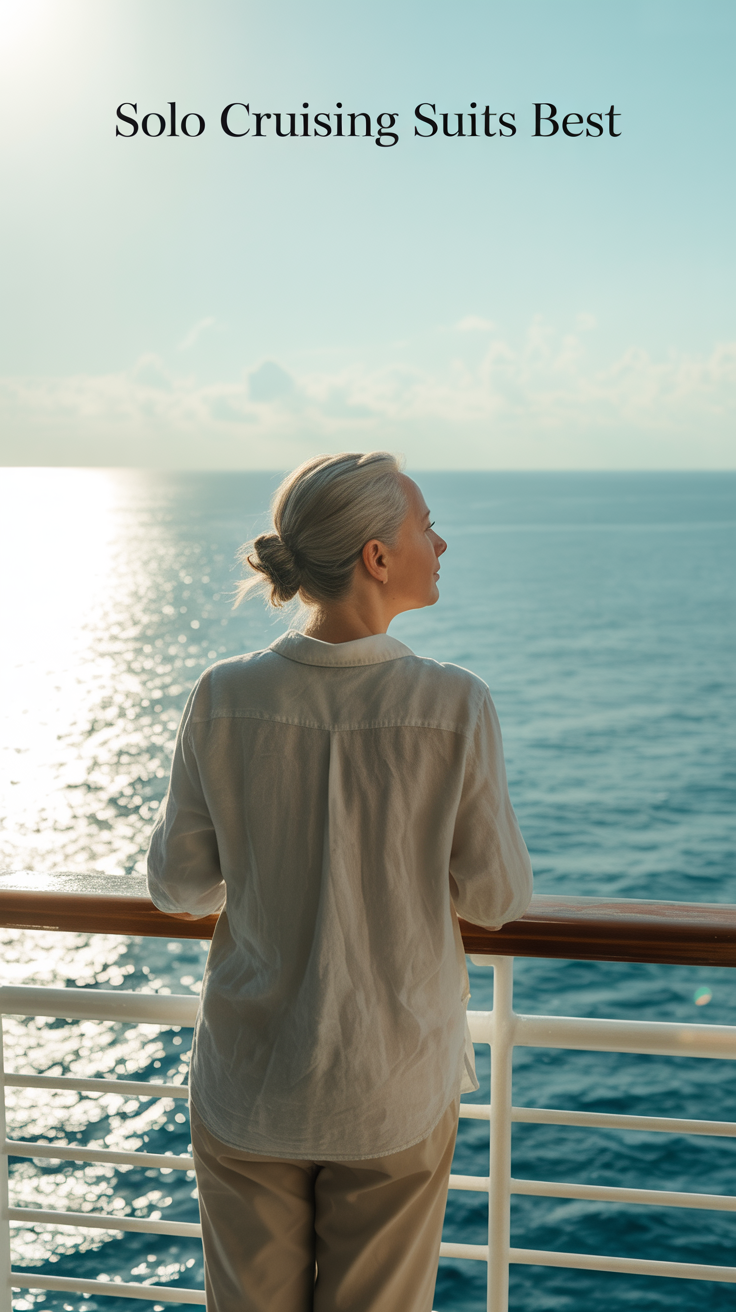
Solo cruising isn’t for everyone, and that’s fine. It works particularly well for people who are comfortable making decisions independently and don’t need external validation for how they spend their time. If you’re the type who enjoys wandering a new city without a plan, or you’re happy dining alone in a restaurant without feeling self-conscious, you’ll probably find cruising solo straightforward.
It also suits travellers who want the option of company without the obligation. If you like socialising but also value solitude, the cruise format gives you both. You can join a group excursion or a cocktail-making class, then retreat to your cabin for the evening without offending anyone.
- Independent decision-makers: You don’t want to consult anyone about what time to get up or whether to skip a port day.
- Social but selective: You enjoy meeting people but on your own terms, not because you’re stuck with a travel companion who wants constant interaction.
- First-time cruisers testing the waters: If you’re not sure whether you’ll enjoy cruising, going solo means you’re not dragging a reluctant partner along.
- Travellers who want logistics sorted: You’re happy to pay for convenience and want accommodation, food, and transport bundled without having to coordinate with someone else.
When Solo Cruising Might Not Suit
If you find eating alone in public uncomfortable, or if you’re someone who struggles with unstructured time, solo cruising could feel isolating rather than liberating. Similarly, if you’re very budget-conscious, the single supplement can be a bitter pill, especially on premium lines or longer itineraries where the cost difference becomes significant.
Cruising solo also requires a degree of self-reliance. If something goes wrong, such as missing the ship in port or dealing with a medical issue, you’re handling it yourself. Most cruise lines are helpful, but you won’t have a companion to share the problem-solving or stress.
Practical Strategies to Get the Most Out of Solo Cruising
If you’ve decided to book, here’s how to make it work in your favour. Start by researching which lines actively cater to solo travellers. Norwegian Cruise Line, as mentioned, has dedicated studio cabins and a solo traveller lounge. Cunard, Saga, and Fred Olsen often reduce or waive single supplements on selected sailings, particularly outside peak season. Check Fred Olsen cruise lines, Saga Cruises, and Cunard cruise line for specific offerings.
If solo cabins aren’t available or are outside your budget, look at repositioning cruises or off-peak sailings where single supplements are lower. River cruises can also be a good option for solo travellers, as the smaller ship size and more intimate atmosphere make it easier to meet people. Explore river cruises for solo travel or broader river cruise options if you’re interested.
- Book solo-specific cabins: Studios or designated single cabins are priced more fairly and sometimes include perks like a shared lounge or social events.
- Flexible dining: Choose open seating or specialty restaurants where you can eat on your own schedule without the formality of assigned tables.
- Join organised meetups: Many ships host solo traveller gatherings on the first night. Attend even if you’re not naturally sociable; it’s an easy way to meet people without the pressure of one-on-one conversation.
- Book group shore excursions: These are natural social opportunities and give you company for the day without committing to ongoing interaction.
- Budget for extras: Factor in specialty dining, drinks packages, or spa treatments if you plan to use them. Solo travel can feel more indulgent when you’re not splitting costs.
- Choose mid-ship cabins: These are steadier in rough seas and closer to lifts and public areas, making it easier to navigate the ship quickly.
Safety and Comfort Considerations
Cruising is statistically very safe, but you’re still navigating a large ship, foreign ports, and shore excursions on your own. Basic precautions go a long way. Keep your cabin locked, don’t advertise that you’re travelling alone, and let someone on shore know your itinerary. In port, stick to well-trafficked areas if you’re exploring independently, and consider joining a group excursion for more remote or unfamiliar destinations.
Pack a small safety kit with a torch, door wedge, and basic first aid supplies. If you’re prone to motion sickness, choose a cabin mid-ship on a lower deck, and bring medication just in case. For added cabin security, consider a portable door lock that works on different door types. If you’re concerned about cabin location, ask for one near the lifts or a crew area where there’s more foot traffic.
What a Realistic Solo Itinerary Looks Like
Here’s how a week-long solo cruise might play out, balancing social activities, port exploration, and downtime. This isn’t prescriptive, just an example of how you might structure your time without over-committing or under-utilising what’s available.
| Day | Activity | Notes |
|---|---|---|
| Day 1 | Embarkation, explore the ship, attend solo traveller meetup | Familiarise yourself with layout, grab a map, find quiet spots |
| Day 2 | Port day: join group shore excursion | Easy way to see the sights and meet people without committing to a full day together |
| Day 3 | Port day: explore independently | Wander at your own pace, grab lunch ashore, return when you like |
| Day 4 | Sea day: spa, pool, evening show | Mix relaxation with scheduled activities |
| Day 5 | Port day: half-day excursion, afternoon on ship | Balance exploration with downtime |
| Day 6 | Sea day: fitness class, trivia, quiet reading time | Join group activities but also carve out alone time |
| Day 7 | Disembark, last port visit or relaxed packing | Don’t over-schedule your final morning |
This structure gives you a mix of social interaction, independent exploration, and rest. You’re not locked into constant activity, but you’re also not isolated if you don’t want to be. Adjust based on your energy levels and how social you’re feeling day to day.
Comparing Solo Cruise Options
Not all cruise lines treat solo travellers equally. Some actively cater to the solo market, while others treat it as an afterthought. Here’s how the main options stack up if you’re trying to decide where to book. You might also want to explore singles cruises for dedicated solo traveller sailings.
| Cruise Line | Solo Cabin Availability | Supplement Typical Range | Social Opportunities |
|---|---|---|---|
| Norwegian Cruise Line | Yes, studios with shared lounge | Lower for studio cabins | Strong, dedicated solo events |
| Cunard | Limited, depends on sailing | Can be reduced or waived off-peak | Formal dining, hosted tables available |
| Saga Cruises | Yes, actively markets to solo travellers | Often reduced or waived | High, mature passenger base |
| Fred Olsen | Yes, smaller ships suit solo travel | Variable, check specific sailings | Intimate atmosphere, easy to meet people |
| River cruise lines | Rare, but smaller ships more social | Can be high | Very high, small group dynamics |
If you’re exploring alternatives to ocean cruising, small ship cruising can offer a more personal experience with fewer passengers, which some solo travellers prefer.
Common Questions About Solo Cruising
Is cruising solo more expensive than other types of solo travel?
It depends on how you measure it. Per day, a cruise bundles accommodation, food, and transport, which can be competitive with independent travel once you add up hotels, meals, and getting between destinations. However, the single supplement inflates the cost compared to sharing a cabin, so it’s not always cheaper than budget solo travel on land.
Will I feel awkward dining alone every night?
It varies by ship and your comfort level. Buffets and casual venues are straightforward, and specialty restaurants often have bar seating that feels less conspicuous. Traditional dining rooms can be hit or miss; request a larger table with other solo travellers if you want company, or opt for flexible dining if you’d rather control the experience.
Are there enough solo travellers to make friends easily?
It depends on the cruise line, itinerary, and time of year. Lines that actively market to solo travellers, like Norwegian or Saga, tend to have higher numbers of solo passengers and organised meetups. On mainstream family-oriented lines, you might be one of only a handful, which can feel isolating unless you’re comfortable initiating conversations with couples or groups.
Can I avoid the single supplement entirely?
Sometimes. Look for ships with dedicated solo cabins, or search for sailings where the line has waived the supplement as a promotion. Repositioning cruises and off-peak dates are your best bet. Otherwise, you’ll be paying some form of uplift in most cases.
Is solo cruising safe for women?
Yes, cruising is generally very safe, and ships have security and crew presence throughout. That said, use common sense: lock your cabin, don’t advertise that you’re alone, and be cautious in ports, especially if exploring independently. Group excursions are a safer option in unfamiliar or more remote destinations.
What if I get ill or have an emergency on my own?
Ships have medical facilities and crew trained to assist. Let someone on shore know your itinerary and check in periodically. Travel insurance with medical cover is essential. If you have a serious condition, carry documentation and inform the ship’s medical team when you board.
Will I be forced to socialise if I’d rather keep to myself?
No. Cruise ships are large enough that you can be as social or solitary as you like. Skip the group activities, avoid the main dining room, and use quieter deck areas or the library if you need space. No one’s tracking your attendance or judging you for eating alone in the buffet.
Are river cruises better for solo travellers than ocean cruises?
River cruises are smaller and more intimate, which some solo travellers find easier for meeting people. However, solo cabins are rarer, and single supplements can be steep. If you value a social atmosphere and don’t mind close quarters, river cruising can work well. If you prefer anonymity and variety, a larger ocean ship gives you more options to blend in or stand out as you choose.
Why Trust About2Cruise
- I’m Jo, and I’ve researched solo cruise policies across major lines, comparing cabin availability, supplements, and onboard social structures to give you an honest breakdown.
- This article is updated whenever cruise lines introduce new solo cabins, change supplement policies, or launch solo traveller programmes.
- We don’t take payment from cruise lines to recommend them, so if something’s overpriced or awkward for solo travellers, we’ll say so.
You can read more about us here.
Last Updated: 27 August 2026