
Cruise ships calling at Suva tie up at South Kings Wharf, right in the middle of Fiji’s capital. That’s the main terminal for the port of Suva, and it puts you an easy walk from markets, museums and Victoria Parade, the city’s main shopping street, without a shuttle bus in sight.
Where ships dock in the Suva Fiji cruise port
Suva, the capital and biggest city in Fiji, sits on the southeastern coast of Viti Levu Island. The port, known locally as Kings Wharf, has been the busiest cruise call in the country for years, and the terminal sits close enough to downtown that most passengers never bother with transport at all.
If you’ve been searching for the Suva Fiji cruise port, the port of Suva, or just where the ships dock in Suva, Fiji, it’s all the same wharf, a short walk back from the harbour front.
Suva’s Kings Wharf and what happens when several ships call
South Kings Wharf takes the big ships, and on a typical day you’ll walk straight off the gangway into downtown Suva within minutes. When two ships turn up on the same day, which happens more often during the busier part of the season, one gets shifted to the nearby Walu Bay cross berth instead. Worth checking your ship’s daily programme to see which wharf you’re using, and whether that means a walk or a shuttle to reach the main gate.
The one thing that catches passengers out at Suva
Booked an independent shore excursion or a private transfer instead of a ship’s tour? Your driver won’t be standing at the gangway waiting for you. Most independent operators meet passengers outside the Suva Wharf area at the South Security Gate, a short walk from where you disembark. Sort it before you sail: confirm the exact meeting point with your operator, and give yourself ten to fifteen minutes to clear the gate and find your guide.
Things to do in Suva from your cruise ship, on foot
With a few hours ashore and nowhere you need to be driven, downtown Suva covers most of what a first-time visitor wants to see.
- Have a wander round the multi-level Suva Municipal Market, near the bus station and an easy walk from the wharf, for fresh produce, kava roots and local handicrafts.
- Walk Cumming Street for a taste of everyday Suva life, then cut through Albert Park for some shade.
- Shop Victoria Parade for jewellery, cameras, clothing and souvenirs, with most shops open from early morning until early evening, Sundays and public holidays included.
- Duck into Thurston Gardens and the Fiji Museum for a couple of hours of history and shade.
Fiji Museum and Thurston Gardens
The Fiji Museum sits inside Thurston Gardens, Suva’s botanical gardens between Albert Park and Government House, and holds more than 10,000 objects, including archaeological material dated back roughly 3,700 years. Expect textiles, war clubs, natural history specimens and archival photographs that tell the islands’ history in a way a quick walk through downtown simply can’t.
Opening hours shift a bit day to day, with most running from mid-morning to mid-afternoon, and one evening a week when the museum stays open later. Worth checking when you arrive rather than assuming a fixed schedule. Admission is modest and paid on the door, with a lower rate for Fijian citizens than for overseas visitors.
Colo-i-Suva Forest Park, beyond walking distance
Colo-i-Suva is a patch of protected rainforest with walking trails, natural swimming pools and waterfalls, roughly twenty to thirty minutes’ drive from central Suva depending on the traffic and exactly where in town you’re starting from. Taxis wait at the port and will run you there and back, but agree the fare before you set off, meters aren’t always used for out-of-town trips.
If you’d rather save the taxi fare, catch the ‘Sawani’ bus from the main Suva bus terminal near the market, running roughly hourly through the day. Entry is a modest fee at the park gate, with a reduced rate for Fijian citizens, and the trails turn muddy fast after rain, so sturdy footwear built for uneven, wet trails earns its place in the bag.
Excursions further afield: Pacific Harbour and Beqa Lagoon
Pacific Harbour, about an hour’s drive from Suva, calls itself the adventure capital of Fiji, with river tubing and white water rafting on the Navua River, boat tours along the same stretch, and scuba or shark diving on reefs further out. That’s well beyond a sensible independent taxi trip on a single port day, so it’s one best left to an organised shore excursion rather than arranging it yourself.
Snorkelling at Beqa Lagoon is another popular add-on from Suva, over clear water and coral reef. Getting in the water? Pack sunscreen formulated not to harm coral reefs, reef-friendly products are more or less expected at marine sites across Fiji these days. Closer to the city, the Wainadoi waterfall swimming hole makes for a shorter outing, with roadside stalls selling snacks along the way.
Weather on a Suva port day
Suva has a tropical rainforest climate, so temperatures stay warm and fairly steady year round, typically low twenties up to around 28 degrees Celsius. Rain is the variable that actually matters here. Suva is noticeably wetter than Nadi or the western side of Viti Levu, with the wettest months running November through to April, and a drier, more comfortable stretch from around June to October.
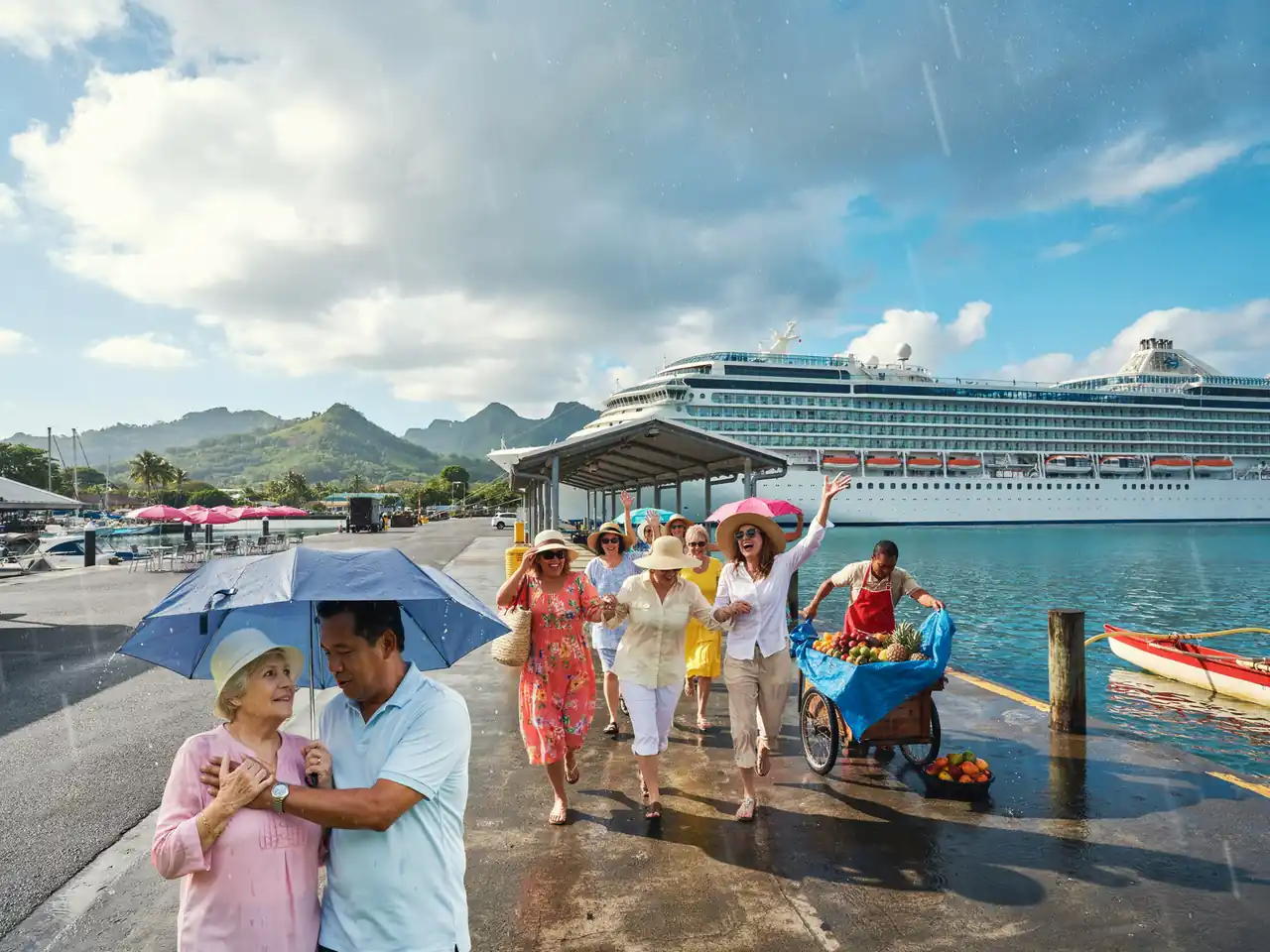
Sailing in during the wetter half of the year? A lightweight, packable rain layer earns its spot in the day bag, downtown Suva has next to no covered walkway between the wharf and the shops.
How Suva compares with Fiji’s other cruise ports
Suva is a working city port, built for cargo and passenger traffic rather than resort leisure, and it helps to see it alongside Fiji’s other calls when you’re planning a wider itinerary. Our guide to Fiji’s cruise ports covers the full picture, but in short, Port Denarau’s cruise ship terminal leans towards resort transfers and water sports, while Lautoka’s cruise ship port guide covers Fiji’s sugar town alternative on the western side of Viti Levu, a different pace entirely from Suva’s working capital.
Cruise interest in Suva has grown sharply in recent years. Fiji Ports Corporation Limited’s most recent annual figures recorded 79 cruise vessel calls across Fiji’s ports in a single year, a jump that helped drive the organisation’s financial rebound. Passenger numbers followed the same curve nationally, peaking at 86,151 cruise visitors in the busiest recent year before dropping back to 65,293 the following year, according to compiled Fiji tourism arrival data.
Money and practicalities in Suva
Fiji’s currency is the Fijian Dollar, and you’ll find ATMs and currency exchange close to the port, with major credit cards accepted at most shops and restaurants in town. English and Fijian are both official languages, and English is spoken wherever cruise passengers are likely to go, so language is rarely an issue.
Getting around once you’re off the ship
You won’t need a shuttle to explore downtown Suva, the wharf sits close enough to walk to the shops, the market and the museum district in twenty minutes or less. Some ships run a short shuttle to Prouds, an upmarket department store nearby, though the distance is modest enough that walking does the job just as well.
Taxis queue at the port for anyone heading further out, to Colo-i-Suva or beyond, but fares run relatively high for the Pacific, so agree a price or ask for the meter before you climb in. Nadi International Airport is roughly a three hour drive away, well outside the scope of a single port day, while Nausori International Airport sits just a few kilometres from the city itself.
Common Questions
Where exactly do cruise ships dock in Suva, Fiji?
At South Kings Wharf, in the heart of downtown Suva, close enough to walk to the shops, the market and the museum district without arranging transport.
Is the Suva cruise port within walking distance of the city centre?
Yes. Most of downtown Suva, including the market, the shopping streets and Thurston Gardens, sits within a fifteen to twenty minute walk of the wharf.
Do I need to book a shuttle bus from the ship?
Not for downtown. Some ships run a short shuttle to the Prouds department store, but the walk is short enough that most passengers skip it.
How do I get to Colo-i-Suva Forest Park from the port?
By taxi, with the fare agreed upfront, or on the local ‘Sawani’ bus from the Suva bus terminal near the market. Allow around twenty to thirty minutes each way.
What currency do I need in Suva?
The Fijian Dollar. ATMs and currency exchange sit near the port, and major credit cards are accepted in most shops and restaurants in town.
Is Suva a good port for shark diving or snorkelling?
Not straight off the wharf, but Beqa Lagoon and Pacific Harbour, both a drive from Suva, offer shark diving, reef snorkelling and river adventures as organised excursions.
What’s the weather likely to be like on my port day?
Warm all year, but Suva is noticeably wetter than Fiji’s western ports. November to April brings the heaviest rain, so a light rain layer is a sensible addition to your day bag.
How does Suva compare with Lautoka or Port Denarau as a cruise stop?
Suva is a working capital city port with markets and museums on foot, while Lautoka and Port Denarau lean more towards resort transfers, beaches and water sports.
Are taxis expensive in Suva?
Relatively, yes, against other costs in Fiji. They’re easy to find at the port, but agree a fare upfront for anything further out of town.
Why Trust About2Cruise
This guide draws on official port data from Fiji Ports Corporation Limited, published information from Fiji’s museum and forestry authorities, and cross-checked tourism statistics, rather than a single blog post or an out of date itinerary. We update our port guides as facilities and routes change, and you can read more about how we research and fact-check every page on our about us page.
Last Updated: 4 October 2026