
You’ve watched enough YouTube videos, scrolled past enough sunset balcony photos, and now you’re ready to book your first solo cruise. But here’s the thing: most guides skip the awkward bits. The bit where you realise you’re paying nearly double for a cabin designed for two. The moment you walk into the dining room alone on night one and wonder where on earth you’re supposed to sit. The surprise when you discover that “solo-friendly” doesn’t always mean what you think it does.
Solo cruising can be brilliant. It can also be lonely, expensive, and slightly bewildering if you don’t know what you’re walking into. This isn’t about selling you the dream. It’s about making sure you book the right ship, pack the right attitude, and know exactly what to expect before you hand over your credit card.
Going solo means you’ll pay more, eat differently, and probably feel a bit self-conscious for the first 24 hours. It also means you’ll do exactly what you want, when you want, without negotiating over shore excursions or dinner times. The trick is knowing which ships make it easy and which ones leave you feeling like the only person without a plus-one.
This guide covers how to choose a solo-friendly ship, dodge the worst of the single supplement fees, navigate dining without awkwardness, meet people without forcing it, budget for the hidden costs, and pack the essentials. It also includes what nobody mentions until you’re already at sea.
The Single Supplement Problem (and How to Avoid Paying Double)
Most cruise lines price cabins assuming two people will share. Book as a solo traveller and you’ll often pay a single supplement, which can be 100% of the standard fare. That means you’re paying for two people to sleep in a cabin built for two, even though you’re only using half the bed.
Some lines have woken up to this and now offer proper solo cabins, sometimes called studios. These are smaller than standard cabins but priced for one person. Norwegian Cruise Line pioneered this with studio cabins that include access to a private studio lounge where solo travellers can meet without the forced jollity of a mixer event. studio cabins on cruise ships are also available on P&O Cruises, Saga Cruises, and Cunard, though availability varies by ship.
If your chosen ship doesn’t have studios, here’s how to make the single supplement less painful:
- Book an inside cabin on a shorter sailing. Three or four nights in a windowless box is manageable. Ten nights less so.
- Look for promotions that waive or reduce the single supplement. These pop up during wave season (January to March) or on repositioning cruises.
- Consider lines that cater to solo travellers by default. Saga Cruises and Fred Olsen Cruise Lines have lower single supplements and a higher proportion of solo guests.
- Check how to avoid single supplement fees for specific tactics that work across different cruise lines.
Choosing the Right Ship and Itinerary
Not all ships are equally solo-friendly. A large resort-style ship with thousands of passengers might sound overwhelming, but it’s often easier to blend in and meet people than on a smaller, couple-heavy sailing. Mega-ships also tend to have more solo cabins and organised social events.
- Shorter itineraries work better for first-timers. Four to seven nights gives you a taste without the commitment of a fortnight at sea. It also limits your exposure to the single supplement if you’re paying full whack. no fly cruises and cruises from UK ports cut out the faff of flights and foreign airports, which is one less thing to navigate alone.
- Look at the itinerary with a critical eye. Are the ports somewhere you genuinely want to visit, or are they the same Caribbean stops every ship does? How many sea days are there? One or two is fine for reading and recharging. Four or five can feel long if you’re not naturally social.
- Check what social programming the ship offers. Some lines run regular singles cruises or have dedicated meetups for solo travellers. Others do nothing and leave you to fend for yourself in a sea of honeymooners and family groups.
Cabin Strategy: Where to Sleep and How Much Space You Need
Inside cabins are cheap and functional, but they can feel claustrophobic if you’re spending a lot of time in them. No window means no natural light, which messes with your sense of time and can leave you feeling a bit flat. If you’re only using the cabin to sleep and change, fine. If you’re planning to retreat there between activities, consider spending a bit more.
- Balcony cabins give you private outdoor space and daylight, which makes a surprising difference to your mood over several days. They’re not essential, but they do make solo cruising feel less isolating. You can have breakfast on your balcony, read in the sun, and generally avoid the crowds when you need a break.
- Location matters more than you’d think. Midship cabins on lower decks are the most stable, so you’ll feel less motion if the seas get rough. They’re also closer to lifts and stairs, which matters when you’re hauling yourself back from dinner or heading out for an early shore excursion. Avoid cabins near nightclubs, theatres, or crew areas unless you enjoy being woken at 2am by thumping basslines or clanging trolleys.
- If the ship has proper solo cabins, book one. They’re designed for single occupancy, so the layout makes sense and you won’t feel like you’re rattling around in a space built for two. Many come with access to a dedicated solo travellers’ lounge, which is a low-pressure way to meet people without committing to a full evening of small talk. For more detail on cabin types and layouts, check out our guide to cruise cabins.
The single supplement is the extra charge applied when one person books a cabin designed for two. It’s usually a percentage of the per-person fare, often 100%, effectively doubling the cost. Some cruise lines offer reduced single supplements or dedicated solo cabins to avoid this.
Dining Alone Without the Awkwardness
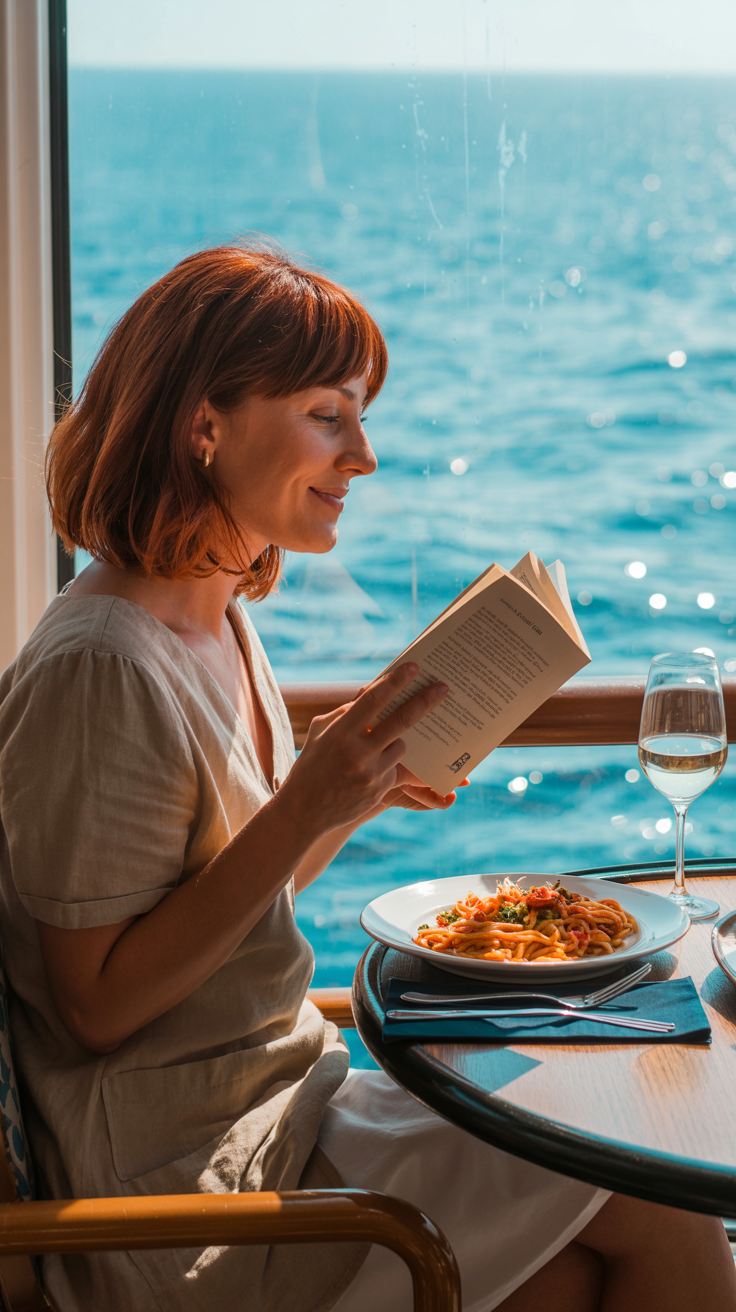
This is the bit most first-time solo cruisers worry about. Walking into a dining room full of couples and families, looking for a table, and trying not to feel conspicuous. The good news is that cruise ships are set up to handle solo diners better than most land-based restaurants. The less good news is that it can still feel awkward for the first night or two.
- Breakfast and lunch are easier solo. Head to the buffet or grab something casual by the pool.
- Dinner is when you’ll feel most conspicuous, so plan ahead. Request shared seating or book specialty dining in advance.
- If you’re comfortable with it, strike up a conversation with the people next to you at breakfast. You’ll probably see them again, and it makes subsequent meals less awkward.
- Don’t force it. Some nights you’ll want to eat alone with a book, and that’s fine. Nobody’s judging.
Meeting People Without Forcing It
If you’re more introverted, you can still meet people without committing to full-on socialising. Sit in communal areas like the library, coffee bar, or pool deck with a book. Smile at people. Make eye contact. You’d be surprised how often someone will start a conversation if you look approachable. For more tips on connecting with other passengers, read our guide on making friends on solo cruises.
Shore Excursions: Book Smart or Go Independent
Shore excursions can eat up a huge chunk of your budget, especially if you’re paying solo rates for tours designed for couples or groups. Cruise line excursions are convenient, guaranteed to get you back to the ship on time, and require zero planning. They’re also expensive and often involve large groups, long waits, and a lot of standing around while the guide repeats everything in three languages.
For key ports where you really want to see something specific, book an excursion. For other ports, wander off the ship and see where you end up. Many cruise ports are within walking distance of the town centre, though some are miles out and require a shuttle bus or taxi. Check this before you disembark. For more advice on staying safe while exploring independently, see our travel safety tips in port.
- Book small group excursions if you want to meet people. Large coach tours are impersonal and you’ll struggle to chat with anyone.
- Check excursion departure times carefully. Missing the ship is expensive and complicated, especially when you’re travelling alone.
- Bring a charged phone, a map, and the ship’s contact details. If you’re going independent, have a backup plan.
- Some ports are safer and easier to navigate solo than others. Do your homework before you wander off alone in an unfamiliar city.
Budgeting for the Hidden Costs
The advertised cruise fare is just the starting point. By the time you’ve added gratuities, drinks, excursions, Wi-Fi, and the occasional impulse spa treatment, you can easily spend as much again on top of the base price.
- Gratuities are charged per person per day and added to your onboard account automatically. Some lines let you pre-pay, which takes the sting out of the final bill. Others add them at the end and leave you with a nasty surprise when you settle up on the last night.
- Drink packages can be good value if you drink a lot, but they’re often overpriced for solo travellers who aren’t knocking back cocktails from breakfast onwards. Do the sums. If you’re only having a couple of glasses of wine with dinner, it’s cheaper to pay as you go. If you’re planning to drink heavily, the package might pay for itself by day three.
- Wi-Fi on ships is slow, patchy, and expensive. Decide in advance whether you need to stay connected or whether you’re happy to unplug for the duration. If you’re travelling solo, you might want a reliable way to contact people back home, in which case budget for a decent internet package. Otherwise, save your money and use port Wi-Fi or a local SIM card when you’re docked.
- Set a daily budget for onboard spending and stick to it. It’s very easy to swipe your room card for drinks, photos, and spa treatments without realising how much it’s adding up. Check your account every couple of days so you’re not blindsided at the end.
| Cost | Typical Range | Solo Traveller Consideration |
|---|---|---|
| Gratuities | Per person per day | Non-negotiable, factor into total cost |
| Drinks Package | Varies by line | Often not worth it unless you drink heavily |
| Wi-Fi | Expensive and slow | Consider whether you need it at all |
| Shore Excursions | Wide range | Book selectively, go independent where possible |
| Specialty Dining | Premium charge | One or two meals, not every night |
| Spa Treatments | High | Book early for discounts, or skip entirely |
Health, Safety, and What Can Go Wrong
Seasickness is real and it’s miserable. If you’re prone to motion sickness, bring medication with you. Ginger tablets, over-the-counter anti-nausea pills, or prescription patches all work to varying degrees. Midship cabins on lower decks are more stable, so you’ll feel less movement. Avoid cabins at the front or back of the ship, which pitch and roll more in rough seas.
- Attend the muster drill. It’s tedious and you’ll be tempted to skip it, but you’re not allowed to and you’ll be glad you know where the lifeboats are if the ship hits bad weather. Take it seriously. Note where your muster station is and how to get there from your cabin.
- Lock your cabin door every time you leave. Cruise ships are generally safe, but theft does happen and you’re more vulnerable when you’re travelling alone. Use the in-cabin safe for valuables, passport, and cash. Carry photocopies of your important documents separately in case you lose the originals.
- Know where the medical centre is and what it covers. Cruise ship doctors can handle minor issues, but serious medical problems require evacuation to a hospital on land, which is expensive and complicated. Travel insurance with medical cover and evacuation is essential. Don’t skip this. For advice on staying safe as a solo female traveller, check out our solo female cruise safety guide.
- In ports, keep your belongings close, don’t flash expensive jewellery or electronics, and stick to well-lit, busy areas if you’re exploring alone. Ports are generally safe, but pickpockets target cruise passengers and you’re an obvious mark if you’re wandering around with a camera and a confused expression.
Packing for a Solo Cruise
Pack light but don’t skimp on essentials. You’ll want layers for sea days when the air conditioning is arctic, comfortable shoes for walking around ports, and smart-casual outfits for evening dining. Some ships have formal nights, which are optional but fun if you’re in the mood. One smart outfit is enough. Don’t pack a ball gown unless you genuinely enjoy dressing up.
Essential items you’ll regret not bringing:
- Sunscreen and a hat, even if you’re cruising in winter. The sun reflects off the water and you’ll burn faster than you think.
- Seasickness medication if you’re even slightly prone. Bring more than you think you’ll need.
- A universal power adapter if you’re cruising outside the UK, as cabin plugs vary by ship and region.
- Medications in original packaging. Ship pharmacies are limited and expensive.
- A waterproof phone pouch for your boarding pass, excursion tickets, and emergency contact details keeps everything protected and accessible.
- Comfortable walking shoes designed for long distances with grip are essential, as ports involve cobblestones, hills, and uneven surfaces.
- A collapsible water bottle saves you buying overpriced drinks on land and takes up almost no space in your bag when empty. Most ships have water dispensers where you can fill up before you disembark.
For a full breakdown of what to pack, check out our solo cruise packing list.
Documentation, Insurance, and the Admin You Can’t Skip
- Your passport needs to be valid for at least six months beyond your return date. Some countries require this even if you’re only docking for a few hours. Check the visa requirements for every port on your itinerary. Some countries require a visa on arrival, others want an electronic travel authorisation applied for in advance. Missing this can mean you’re not allowed off the ship when it docks.
- Travel insurance is non-negotiable for solo travellers. You need cover for medical emergencies, trip cancellation, lost luggage, and evacuation. Cruise-specific policies often include cover for missed ports, itinerary changes, and onboard medical treatment. Don’t rely on your standard travel insurance unless you’ve checked it explicitly covers cruises.
- Keep your boarding pass, excursion tickets, and emergency contact numbers in a waterproof envelope or stored on your phone. You’ll need your boarding pass to get on and off the ship at every port. Lose it and you’ll spend an hour at guest services getting a replacement while everyone else heads into town.
- Give someone at home a copy of your itinerary, passport details, and the ship’s contact number. If something goes wrong, they’ll need this information to reach you or help sort things out. Agree on a communication plan before you leave so they’re not panicking if you don’t respond to messages for a few days.
Your Pre-Booking Checklist
Before you hand over your deposit, work through this checklist to make sure you’ve thought through the practicalities.
- Does the ship have solo cabins or studios? If not, what’s the single supplement and can you afford it?
- Is the itinerary genuinely interesting to you, or are you booking it because it’s cheap?
- How many sea days are there? Can you handle that much downtime?
- What’s the ship’s reputation for solo travellers? Are there meetups, mixers, or organised social events?
- What are the dining arrangements? Can you request shared seating if you want company?
- What are the total costs including gratuities, excursions, drinks, and Wi-Fi? Does this fit your budget?
- Do you have valid travel documents, insurance, and a plan for each port?
- Have you checked visa requirements for every country on the itinerary?
- Do you have a way to contact people at home in an emergency?
A Quick-Start Plan for Your First Solo Cruise
If you want a simple framework to follow, this works for most first-timers:
- Choose a four to six night sailing on a line with a good reputation for solo travellers. Ambassador Cruise Line, Norwegian Cruise Line, or Saga Cruises are solid choices.
- Book a balcony or studio cabin midship if you can afford it. If not, go for an inside cabin on a short itinerary.
- Plan at least one organised shore excursion per port. Leave one or two ports free for independent wandering.
- Attend two or three onboard social events in the first couple of days. If you meet people, great. If not, you’ve tried.
- Set a daily budget for onboard spending and check your account every other day.
- Pack versatile clothing, all essential medications, and photocopies of important documents.
- Buy comprehensive travel insurance that covers cruises, medical emergencies, and evacuation.
Common Questions About First Solo Cruises
Will I feel lonely on a solo cruise?
Possibly for the first day or so, but most solo travellers report meeting people quickly if they make even a small effort. Ships with dedicated solo lounges or social events make this easier. If you’re naturally introverted, bring books and plan solo shore days.
Can I avoid the single supplement completely?
Only by booking a dedicated solo cabin or catching a rare promotion that waives it. Otherwise, you’ll pay at least a portion of the supplement. Some lines charge less than others, so shop around.
Is it safe to cruise alone as a woman?
Generally yes. Cruise ships are well-monitored and incidents are rare. Lock your cabin, don’t share your room number, and use common sense in ports. Solo female travellers report feeling safer on cruises than in many land-based holidays.
Do I have to dress up for formal nights?
No. Formal nights are optional. If you don’t want to dress up, eat at the buffet or visit a casual dining venue that evening. Nobody will force you into a dinner jacket.
What happens if I miss the ship at a port?
You’re responsible for getting yourself to the next port at your own expense. This is why travel insurance with missed departure cover is essential. Cruise line excursions guarantee you’ll be back on time, which is one advantage they have over independent exploration.
Can I share a table at dinner or will I eat alone every night?
Most ships can arrange shared seating if you request it in advance. You’ll be placed with other solo travellers or small groups. If you prefer to eat alone, that’s also an option. Flexibility is key.
How much should I budget for onboard spending as a solo traveller?
It depends on your habits, but budget for gratuities, drinks, Wi-Fi, excursions, and any specialty dining or spa treatments. As a rough guide, expect to spend as much again on extras as you did on the base fare if you’re not careful.
Are solo cabins actually smaller than standard cabins?
Yes, usually. They’re designed for one person and efficiently laid out, but you’ll have less floor space than a standard cabin. The trade-off is that you’re not paying a single supplement and you often get access to a dedicated solo lounge.
Should I book excursions in advance or wait until I’m on the ship?
Popular excursions sell out, so book key ones in advance if you have your heart set on something specific. For other ports, you can decide once you’re onboard or go independent. Booking in advance gives you peace of mind but less flexibility.
Why Trust About2Cruise
We’ve spent months researching solo cruise policies, comparing single supplements across lines, and speaking to travellers who’ve done this before. You’re not reading marketing copy.
- I’m Jo, and I’ve compared single supplement policies and solo cabin availability across every major cruise line to write this guide.
- We update this content when cruise lines change their solo traveller policies, launch new studio cabins, or adjust pricing structures.
- We’re not paid by cruise lines to recommend anything. If it’s here, it’s because it’s useful.
For more about how we research and update our guides, visit our about us page.
Last Updated: 17 February 2026