
Right, let’s cut through the scaremongering and the “you go girl” fluff. Can you cruise solo as a woman? Yes. Is it completely risk-free? No. But then neither is crossing the road in your home town, and you manage that just fine.
Cruising is one of the safer ways to travel alone. You’re in a controlled environment with security staff, CCTV, and a front desk that never closes. The biggest risks aren’t the ship itself, they’re the same ones you’d face in any unfamiliar place: dodgy port areas, too much sangria, and that bloke who won’t take a hint at the piano bar.
Cruises for solo women have become genuinely popular, and singles cruises and first solo cruise experiences are now better catered for than ever. Some lines even offer proper solo cabins without the wallet-crippling single supplement. But you still need to know what you’re doing.
This guide covers the practical safety measures that actually matter, which cruise lines handle solo travellers best, what to plan before you go, how to stay safe in ports, and the honest challenges you won’t find in the brochure.
Are Cruises Safe for Single Women?
In most cases, yes. Cruise ships are more like floating hotels than nightclubs in Magaluf. They have 24-hour security teams, cameras in public areas, key-card access to cabin corridors, and strict procedures for who comes on and off the ship. Staff are trained to spot problems, and there’s always someone at reception if you need help.
The risk level is generally lower than staying in a city hotel or backpacking through Europe. You’re not navigating unfamiliar streets alone at 2am trying to find your Airbnb. Your room is down the corridor, the crew know who’s on board, and if something goes wrong, there’s a medical centre and security office.
That said, you’re not in a convent. Ships have bars, people drink, and not everyone behaves themselves. The main safety concerns for solo women tend to be:
- Unwanted attention from other passengers, especially in bars late at night
- Shore excursions where you’re in an unfamiliar port without a group
- Cabin security if you’re not careful with your key card or door lock
- Alcohol-related poor judgment, either yours or someone else’s
- Tender boats and remote ports where ship security can’t follow
The good news is that all of these risks can be managed with a bit of common sense and planning. You don’t need to wrap yourself in cling film and hide in your cabin. You just need to be as switched on as you’d be in any other travel situation.
Choosing the Right Cruise Line and Ship
Not all cruise lines are equally solo-friendly. Some have invested in proper facilities for single travellers, while others still treat you like an inconvenient anomaly who should be paying double.
- Larger, mainstream lines with good reputations for solo travellers include Norwegian Cruise Line, which has dedicated studio cabins with no single supplement and a studio lounge where solo guests can meet if they want to. Cunard, P&O Cruises, and Royal Caribbean also offer solo cabins on some ships, though availability varies.
- Saga Cruises is worth considering if you’re over 50. They cater specifically to British solo travellers and have hosted solo events for years. Fred Olsen Cruise Lines runs smaller ships with a more intimate feel, and solo travellers often find it easier to make friends on solo cruises when there are fewer people around. Cunard Cruise Line offers single-occupancy cabins on Queen Mary 2 and has gentlemen hosts on some sailings, though that’s more for dancing partners than safety.
- Ship size matters. Bigger ships have more anonymity, which can be good if you want to be left alone, but also means it’s easier for someone to follow you down an empty corridor. Smaller ships feel more community-oriented, but you can’t escape that weird bloke from dinner.
- Itinerary also plays a role. Western Caribbean, Mediterranean, and Northern Europe routes on major lines tend to have well-established shore excursions and better port security. Remote or adventurous itineraries, river cruises in developing regions, or expedition ships might not be the best choice for your first solo trip unless you’re an experienced traveller.
Booking Decisions That Affect Your Safety
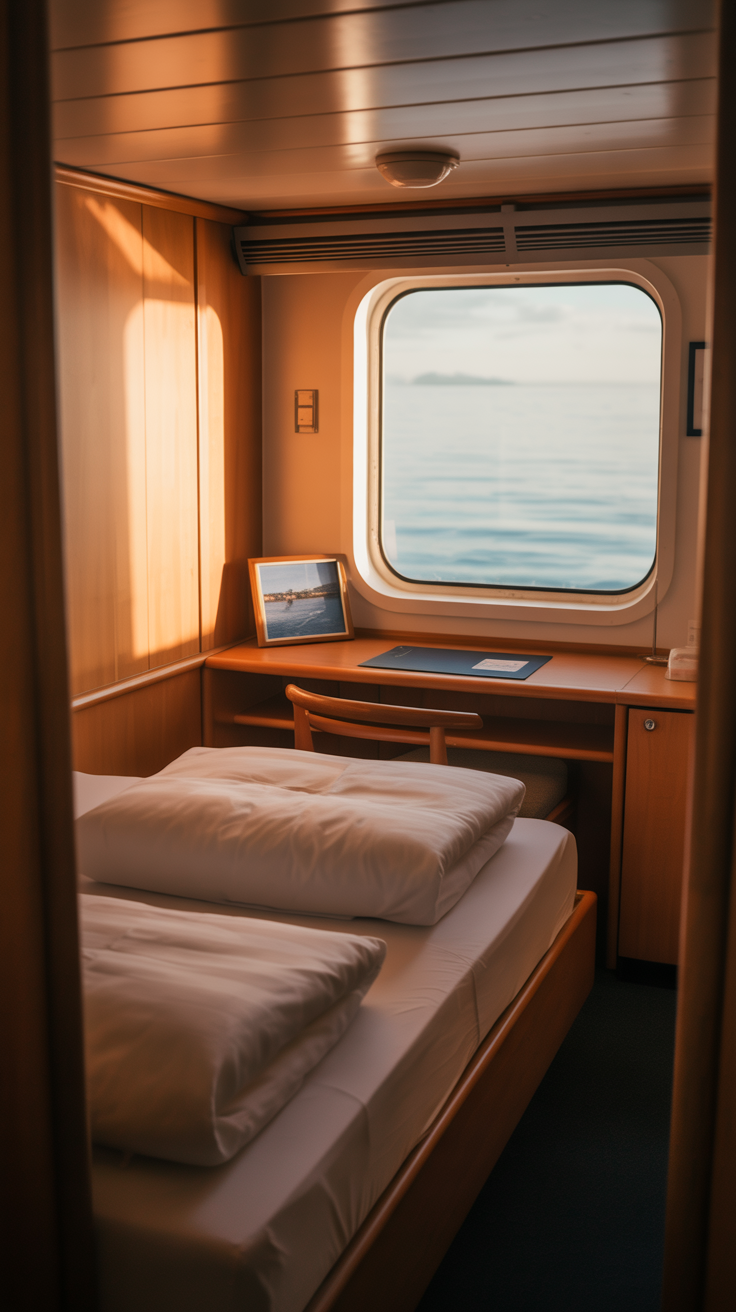
Your cabin choice isn’t just about budget and views. It affects how safe and comfortable you’ll feel.
- Solo cabins are the obvious choice if available. They’re smaller than standard cabins but designed for one person, often with no single supplement or a reduced one. You get your own space, your own bathroom, and you’re not sharing with a stranger or paying double.
- If solo cabins aren’t available or don’t fit your budget, go for an inside or oceanview cabin in a sensible location. Mid-ship, around decks 5 to 9, is the sweet spot. You’re near lifts and stairs, not too high up or too low down, and in the most stable part of the ship if you’re worried about seasickness.
- Avoid cabins at the far ends of long corridors, especially on lower decks where foot traffic is minimal. You want to be where there are other people around, not isolated in a dead-end hallway. Also avoid cabins directly below nightclubs or above engine rooms, unless you enjoy industrial noise at 3am.
- Balcony cabins are lovely, but they add a security consideration. Keep your balcony door locked when you’re out, and don’t leave valuables visible. Balconies aren’t as private as you think, especially on port days when other passengers are leaning over theirs with binoculars.
What to Sort Out Before You Leave
This isn’t the time to wing it. A bit of planning now saves panic later.
- Passport: Valid for at least six months after your return date. Some countries won’t let you in otherwise. Make two copies, one in your cabin safe, one in your day bag.
- Travel insurance: Non-negotiable. Get comprehensive cover that includes medical expenses, evacuation, trip interruption, and missed departure. Check it covers cruise-specific issues like missed port departures. If you have pre-existing conditions, declare them and get a waiver if needed.
- Emergency contacts: Write down the ship’s name, your cabin number, and the cruise line’s 24-hour contact number. Give this to someone at home. Also save the ship’s phone number in your mobile.
- Medications: Bring more than you need, in original packaging with prescriptions if they’re controlled substances. The ship’s medical centre can help with basics, but they’re not a pharmacy and they charge for everything.
- Money: A credit card, a debit card, and some cash in small denominations for ports. Inform your bank you’re travelling so they don’t block your cards. US dollars or euros are useful in many ports, but check what’s needed for your itinerary.
- Phone plan: Either an international roaming add-on or an eSIM for data in ports. Ship Wi-Fi is expensive and often useless. You want to be able to call for help or check in with someone at home without paying a fortune.
Documents You Actually Need
Don’t just throw your passport in a bag and hope for the best. You need:
- Passport and two copies stored separately
- Printed cruise booking confirmation and boarding pass if issued in advance
- Travel insurance policy and emergency contact number
- Copy of prescriptions for any medication you’re carrying
- Emergency contact card with ship details and a contact at home
- Any visas required for your ports of call
Store digital copies in your email or a cloud service you can access from anywhere. If your bag gets nicked in Naples, you can still prove who you are.
Onboard Safety: The Practical Stuff
Once you’re on the ship, most of your safety is in your own hands. The crew can’t follow you around, and they’re not mind readers.
Your Cabin
- Lock your door. Every time. Use the deadbolt or chain when you’re inside, especially at night or when you’re showering. Don’t prop the door open to pop down the corridor. It takes two seconds for someone to slip in.
- Use the in-room safe for your passport, cash, cards, and any jewellery you’re not wearing. The safe is bolted to the wall or wardrobe, so it’s harder to steal than your handbag. Don’t leave the combination as 0000 or 1234.
- If your cabin has a balcony, keep the door locked when you’re not using it. Don’t leave valuables out there, and don’t lean too far over after a bottle of Prosecco.
Public Spaces and Belongings
Don’t leave your bag unattended on a sun lounger or in the buffet. Theft on cruise ships is rare but not unheard of, and it’s usually opportunistic. Take your valuables with you or lock them in your cabin.
Be cautious about sharing personal information with people you’ve just met. You don’t need to lie about being solo, but you also don’t need to announce your cabin number or tell everyone you’re travelling alone. A bit of vagueness is fine.
If someone’s making you uncomfortable, move. Go to a different bar, sit somewhere else at the show, or tell a crew member. You’re not being rude, you’re being sensible.
Alcohol and Judgment
This is where most problems start. Ships have all-inclusive drinks packages, and it’s easy to lose track of how much you’ve had when you’re on holiday. But your judgment gets worse with every glass, and so does everyone else’s.
Keep your drink in sight. Don’t accept drinks from strangers unless you watch them being poured. Don’t leave your drink on the bar and wander off. This isn’t paranoia, it’s the same advice you’d follow in any pub.
If you’re feeling tipsy, head back to your cabin. Don’t stay out late alone in a deserted part of the ship. The pool deck at 2am is not where you want to be on your own.
Nighttime and Quiet Areas
Stick to well-lit, well-populated areas after dark. Avoid empty decks, far-flung corridors, or the crew areas where passengers shouldn’t be. Use the main stairwells and lifts near the atrium, not the ones at the back of the ship that no one uses.
If you’re walking back to your cabin late at night and you see someone following you or acting strangely, don’t go to your cabin. Go to reception, a bar, or anywhere with people and staff. Trust your instincts.
Reporting Problems
If something happens, tell someone immediately. Go to the reception desk, call security from your cabin phone, or find any crew member. Don’t assume it’ll sort itself out or that you’re overreacting. The crew would rather you report something that turns out to be nothing than stay silent about something serious.
Shore Excursions and Ports: Where Risk Goes Up
This is where cruising gets less safe, because you’re off the ship and in an unfamiliar place. You’re also more visible as a tourist, which makes you a target for pickpockets, scammers, and aggressive street vendors.
The safest option is to book a guided group tour through the cruise line or a reputable operator. You’re with other people, you have a guide who knows the area, and the ship won’t leave without you if the tour runs late. Ship excursions are more expensive, but they’re also insured and vetted.
If you want to explore independently, do it in ports where it’s safe and straightforward. Many Mediterranean and Northern Europe ports are walkable and well-signed. Caribbean ports vary wildly, some are safe and touristy, others less so. Check online forums and recent trip reports before you decide to wander off alone.
Independent Port Days
If you’re going ashore on your own, tell someone. Either a friend at home, or another passenger you’ve met, or even just post your plans in a cruising Facebook group. If something goes wrong, someone knows where you were supposed to be.
- Carry a small day bag with water, sun protection, a map or the port’s information card from the ship, and your ship’s contact card. Dress modestly if you’re visiting religious sites or conservative countries. Leave expensive jewellery on the ship.
- Use official taxis or pre-booked transfers. Don’t accept rides from random blokes with a car. If you’re using a taxi, agree the fare before you get in, or insist on the meter. Take a photo of the taxi number plate if you’re nervous.
- Stay in tourist areas. Don’t wander into residential neighbourhoods or industrial areas alone. If somewhere feels wrong, leave. You’re not being overcautious, you’re being smart.
- Be back at the ship well before sailing time. The ship will not wait for you if you’re late, unless you’re on an official ship excursion. Budget at least 30 minutes earlier than the all-aboard time to allow for traffic, queues, or getting lost.
Common Port Scams and Hassles
You’ll encounter pushy taxi drivers, street vendors who won’t take no for an answer, and people offering to be your guide for cash. Some are harmless, some are trying to rip you off, and a few are worse.
Don’t get in a taxi that hasn’t been recommended or isn’t official. Don’t let a stranger lead you to a “better place” to change money or buy souvenirs. Don’t hand your phone to someone for a photo and then turn your back. Keep your bag closed and in front of you in crowded areas.
If you’re being harassed or followed, go into a shop, café, or anywhere with other people. Make a scene if you need to. Better to be embarrassed than unsafe.
What to Pack for Safety and Comfort
You don’t need a survival kit, but a few sensible items make life easier and safer. Check the solo cruise packing list for the full rundown.
Don’t pack anything valuable you’d be devastated to lose. Leave the heirloom jewellery and expensive watch at home. You’re on a cruise ship, not the Oscars.
Health and Medical Care at Sea
- All ships have a medical centre with a doctor and nurses. They can handle common illnesses, injuries, and emergencies, but they’re not an NHS hospital and they charge for everything.
- If you have a chronic condition, bring a doctor’s note and enough medication for the whole trip plus a few days extra. If you need something specific like an EpiPen or insulin, make sure you have it with you in your hand luggage, not in your checked bag.
- Seasickness is miserable but not dangerous. If you’re prone to it, consider medication before you board. Stugeron, Kwells, or prescription patches are options. Wristbands and ginger sweets help some people. If you start feeling rough, get fresh air, look at the horizon, and avoid alcohol and heavy food.
- Check the health advisories for your destinations before you go. Some countries require vaccinations or malaria prophylaxis. Make sure your routine jabs are up to date. If you’re visiting tropical regions, consider hepatitis A and typhoid.
Most Dangerous Cruise Routes and Itineraries
Most cruise routes are perfectly safe, but a few regions have higher risks for solo travellers, either because of local crime, political instability, or challenging logistics.
- Central America and parts of the Western Caribbean can be less safe in certain ports. Avoid wandering off alone in ports like Belize City, Nassau, or some Mexican ports outside the tourist zones. Stick to organised excursions or well-established tourist areas.
- Transatlantic and repositioning cruises involve long stretches at sea with no ports for days. If you’re nervous about being on a ship with no escape route, these might not be the best choice for your first solo trip.
- Expedition and adventure cruises to remote regions like the Arctic, Antarctic, or isolated Pacific islands are harder to manage if something goes wrong. These trips attract experienced travellers, but they’re not ideal if you’re testing the waters of solo cruising.
Cabins to Avoid on Popular Solo-Friendly Ships
Some cabins look fine on the deck plan but turn out to be noisy, isolated, or just awkward. If you’re booking solo, you want to avoid cabins that make you feel unsafe or uncomfortable.
- On Ambassador Cruise Line’s Ambience, avoid cabins near the crew areas or at the far ends of long corridors on lower decks. Also skip cabins directly below the nightclub or buffet, unless you enjoy vibrating floors and clattering cutlery at breakfast time.
- On any ship, avoid cabins near the anchor mechanism, which sounds like a freight train at 6am. Also avoid cabins on decks with no direct access to stairs or lifts, which means you have to walk through empty corridors to get anywhere.
- If you’re booking an inside cabin, check it’s not one of the tiny “guarantee” cabins that cruise lines use to fill empty space. These are often in odd locations with no natural light and limited storage.
Practical Warnings the Brochure Won’t Tell You
There are a few realities of solo cruising that don’t make it into the glossy marketing.
- Single supplements are still extortionate on most lines. Unless you’re booking a dedicated solo cabin, you’ll pay between 150% and 200% of the per-person rate for a double cabin. Some lines reduce this on certain sailings, but it’s rare. Budget for it or book far in advance when deals are more likely.
- Solo dining can be awkward. Some ships offer communal tables or “friends of Dorothy” dining for solo guests, but on others you’ll be plonked at a tiny table for one near the kitchen. If you want company, arrive early for open-seating dinners and ask to join a larger table, or book specialty dining where tables for two are more common.
- You will be asked why you’re alone. Other passengers mean well, but the question gets tedious. Have a stock answer ready. “I fancied some time to myself” works. You don’t owe anyone your life story.
- Solo travellers get the worst upgrade odds. If the ship is overbooked and they need to move people, couples and families get the upgrades. Solo passengers are easier to leave where they are.
- You might feel lonely. Even the most confident solo traveller has moments of wishing they had someone to share a sunset or a joke with. That’s normal. Bring a good book, join an onboard activity, or chat to people at the bar. It passes.
Common Questions About Solo Female Cruising
Do cruise lines offer solo cabins without a supplement?
Norwegian Cruise Line offers studio cabins with no single supplement on most ships, along with a studio lounge for solo guests. Cunard, P&O, and some other lines also have solo cabins on selected ships, though availability is limited and they sell out quickly.
Can I book shore excursions independently and still be safe?
Yes, in many ports it’s perfectly safe to explore on your own, especially in Western Europe, the Mediterranean, and major tourist ports. Stick to well-populated areas, tell someone your plans, and be back well before sailing time. For less familiar or higher-risk ports, book a guided tour.
What should I do if someone on the ship is making me uncomfortable?
Report it to guest services or security immediately. Don’t wait to see if it gets worse. The crew take these complaints seriously and can move your cabin, bar the person from approaching you, or remove them from the ship in serious cases.
Are cruise ships safe at night for solo women?
Generally yes, but stick to well-lit, populated areas. Avoid empty decks, isolated corridors, or crew-only sections. If you’re out late at bars or shows, walk back to your cabin with other passengers or ask crew for an escort if you feel nervous.
How do I avoid paying a huge single supplement?
Book a dedicated solo cabin if available, or look for cruise lines that offer reduced single supplements on certain sailings. Booking last-minute or during wave season can sometimes get you lower rates. Alternatively, consider lines like Saga or Fred Olsen which cater specifically to solo travellers.
What happens if I get ill or injured on the cruise?
All ships have a medical centre with doctors and nurses. They can treat common illnesses and injuries, stabilise emergencies, and arrange evacuation if necessary. You’ll be charged for treatment, which is why comprehensive travel insurance with medical and evacuation cover is essential.
Is it safe to drink alcohol alone on a cruise ship?
Yes, but stay in control. Keep your drink in sight, don’t accept drinks from strangers unless you watch them being poured, and head back to your cabin if you’re feeling tipsy. Most problems happen when people drink too much and lose their judgment.
Are there cruise lines that specialise in solo travellers?
Norwegian Cruise Line is the best known for solo facilities, with studio cabins and solo lounges. Saga Cruises caters specifically to over-50s and runs solo-friendly sailings. Cunard, P&O, and Fred Olsen also offer solo options, though they’re not exclusively solo-focused.
What are nude cruises and are they safe for solo women?
Nude or clothing-optional cruises are specialist sailings for naturists, usually chartered by dedicated companies on mainstream ships. They have strict behaviour codes and are generally very safe, but they’re not for everyone. If you’re curious, research the specific company and read reviews before booking.
Why Trust About2Cruise
- I’m Jo, and I’ve sailed solo on six cruise lines across three continents, testing cabin security, solo dining options, and port logistics firsthand.
- This guide is updated whenever new solo cabin options launch or when safety protocols change following passenger feedback.
- We don’t take payment from cruise lines for favourable coverage. If a line treats solo travellers poorly, we’ll say so. Check our editorial approach here.