
You know that moment when you board a ship carrying 5,000 passengers and realise you’ve accidentally signed up for a floating town? For some people that’s heaven. For others, it’s the exact opposite of what they wanted from a week at sea.
Small ships, those carrying fewer than 500 guests and sometimes as few as 100, offer something fundamentally different. Not better in every way, but better for certain types of travellers who value intimacy over choice, access over amenities, and conversation over crowds.
If you’ve been wondering whether Alaska small ship cruises or other small vessel options might suit you better than the mega-ships, or if you’re researching cruise ships with less than 2000 passengers after finding the larger ones overwhelming, you’re asking the right questions. The cruise ship size survey results consistently show a divided market: some passengers want everything under one roof, others want to feel like they’re actually travelling rather than visiting a resort that happens to move.
This guide covers who genuinely benefits from smaller ships, what you gain and lose compared to larger vessels, which itineraries suit them best, and the practical considerations that determine whether a small ship cruise will delight or disappoint you.
What Actually Counts as a Small Ship
In cruise terms, a small ship typically carries between 100 and 500 passengers. Some industry classifications extend this to under 1,000, but the real intimacy and operational advantages kick in below 500. For context, a mega-ship carries 3,000 to 6,800 passengers.
The distinction matters because it changes how the ship operates. Below 500 passengers, you’re looking at single-seating dining, no queueing for tenders, shore excursions that don’t require coach convoys, and the realistic possibility that crew will remember your name by day three.
Between 500 and 1,000 passengers you get some of these benefits but start losing others. Above 1,000, you’re essentially on a large ship with slightly fewer people. The experience changes fundamentally at that threshold.
Who Benefits Most From Smaller Ships
This isn’t about snobbery or budget. It’s about travel style and priorities. Small ships genuinely suit certain passengers better, and if you recognise yourself in this list, it’s worth investigating further.
- First-timers who worry about getting lost or overwhelmed: Navigation is straightforward, embarkation takes minutes not hours, and you’ll never spend fifteen minutes looking for the right restaurant
- Travellers prioritising ports over onboard time: If you see the ship as transport rather than destination, small vessels often spend longer in port and reach places larger ships can’t
- Anyone prone to seasickness: Smaller ships can feel rougher in heavy seas, but many are designed with stabilisers and operate in protected waters where large ships would never fit
- Guests who value meaningful shore experiences: Thirty people on a guided walk through a historic neighbourhood works. Three hundred doesn’t
- Those seeking opportunities to make friends on solo cruises: Smaller numbers mean you’ll see the same faces repeatedly, making conversation easier and less forced
- Passengers with mobility limitations: Fewer decks, shorter distances, and excursions designed for smaller groups often mean better accessibility
- Food enthusiasts: Small ships can’t offer ten restaurants, but they can offer better quality from a single galley with chefs who aren’t cooking for thousands
Families with young children expecting kids’ clubs and water slides should look elsewhere. Same for anyone who wants West End-scale theatre productions or expects nightlife beyond a piano bar and conversation.
Why Small Cruise Ships Work Better for Certain Itineraries
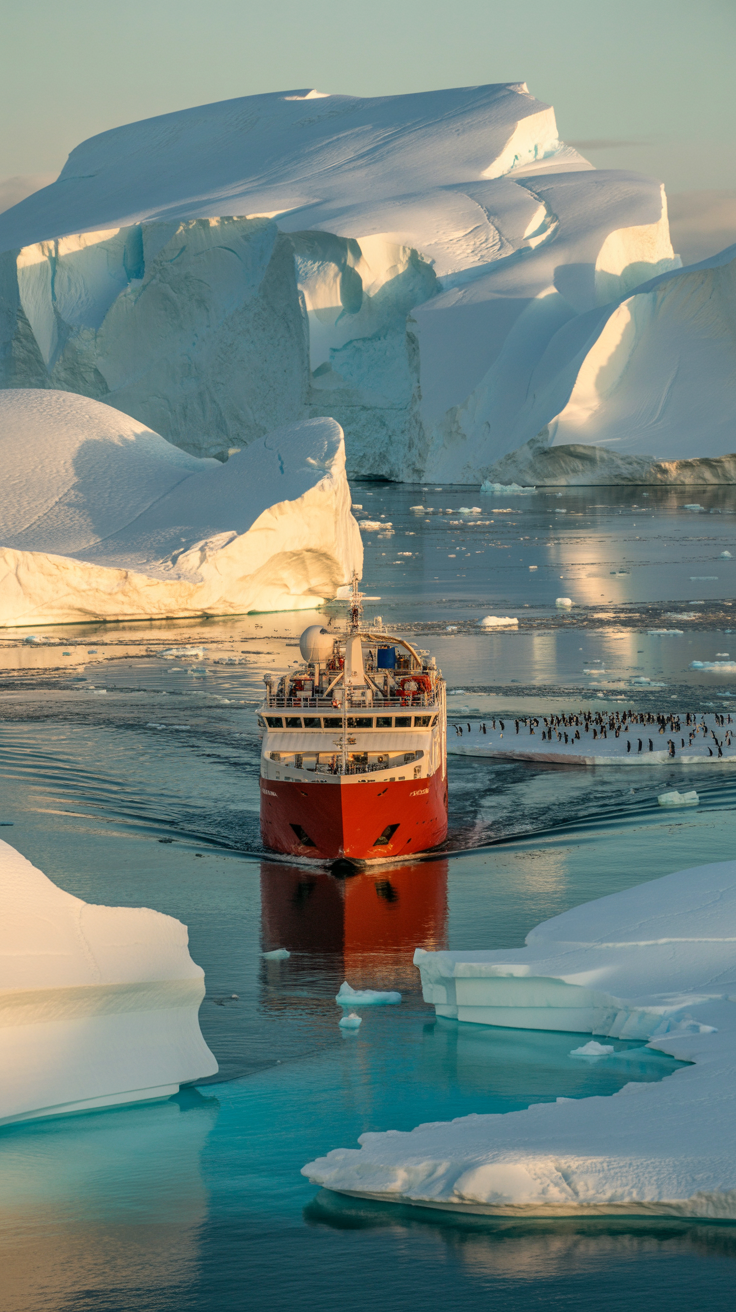
Size determines access. Physics doesn’t care about your marketing budget. Small ships reach harbours and anchorages that large vessels physically cannot, and that capability opens itineraries that would otherwise require constant tendering or simply aren’t possible.
Expedition and Wildlife Routes
Antarctica, the Arctic, the Galápagos, and remote Alaskan passages belong to small ships. Regulations in these regions often limit passenger numbers ashore at any time. A ship with 100 guests can disembark everyone in two Zodiac runs. A ship with 3,000 can’t even attempt most expedition landings.
For luxury Alaska cruise small ship itineraries, you’ll reach glacier faces where larger ships anchor miles offshore, and wildlife viewing happens from small boats where animals aren’t disturbed by a floating tower block.
Mediterranean Harbours and Greek Islands
Many of the best Greek island cruises small ships can offer involve harbours like Hydra, Monemvasia, or smaller Cycladic islands where large ships must tender from deep water. Small ships tie up at the town quay. You walk off the gangway into the village square.
The same applies to Croatian coastal towns, Turkish gulets routes, and the more interesting bits of the French and Italian Riviera.
Rivers and Coastal Waterways
Technically these are often river cruises rather than ocean cruises, but the principle holds. Shallow draft vessels reach towns and cities that ocean-going ships never see. If your interests lean toward history, architecture, and culture, this access matters more than onboard facilities.
Cruise Ship Amenities: What You Gain and Lose
| Feature | Large Ships (2,000+ passengers) | Small Ships (Under 500 passengers) |
|---|---|---|
| Restaurants | Multiple venues, often 5-12 including speciality dining | Usually 1-2 restaurants, sometimes a single dining room |
| Entertainment | Theatre shows, multiple bars, casino, nightclub | Talks, live music, piano bar, conversation |
| Pool space | Multiple pools, hot tubs, deck space but shared with thousands | One small pool or none, but far fewer people using it |
| Service ratio | Roughly 1 crew per 2-3 passengers | Often 1 crew per 1-2 passengers, sometimes better |
| Shore excursions | Dozens of options but groups of 40-50 common | Fewer choices but groups of 10-20, more flexible |
| Embarkation time | Can take 2-4 hours with security and processing | Usually 30-60 minutes start to cabin |
| Enrichment | Available but often scheduled around entertainment | Central to the experience, naturalists and experts integrated throughout |
| Port time | Typically 8-10 hours in port | Often 10-14 hours, sometimes overnight stays |
The trade-off is real. You’re swapping breadth for depth. If you need options and variety to stay entertained, small ships will bore you by day three. If you’re happy reading on deck, chatting to the expedition leader, and spending full days ashore, the lack of a climbing wall won’t matter.
Minimal Impact Cruising and Environmental Considerations
Minimal impact cruising focuses on reducing environmental footprint through smaller vessel size, lower passenger numbers, advanced waste management, and itineraries designed to avoid overtourism pressure on sensitive destinations and communities.
- Small ships don’t automatically equal eco-friendly, but they do make certain sustainable practices more achievable. Waste systems on a 200-passenger ship are easier to manage well than on a 5,000-passenger vessel. Shore visits create less pressure on infrastructure when you’re landing twenty guests instead of two hundred.
- Several small ship operators have invested in hybrid propulsion, advanced wastewater treatment, and single-use plastic elimination. These aren’t universal, so you’ll need to research specific lines, but the smaller scale does enable tighter operational control.
- More important is the minimal impact on destinations themselves. A small ship visiting a 3,000-population island creates a ripple. A mega-ship visiting the same island creates a tidal wave that distorts local economies and infrastructure. If you care about sustainable tourism, vessel size matters as much as propulsion technology.
Which Small Ship Lines to Consider
Not all small ships are created equal, and the line matters as much as the size. Some cater to luxury markets, others to expedition travellers, and a few to singles cruises or specific age demographics.
- Saga Cruises: UK-focused line with ships around 500-1,000 passengers, aimed squarely at over-50s who want smaller vessels without expedition pricing. Spirit of Adventure and Spirit of Discovery sit at the larger end of small but deliver good value and strong solo travel options on Saga cruises
- Fred Olsen Cruise Lines: Operates genuinely small ships with capacities from 800 down to 1,300 passengers. Traditional rather than trendy, popular with singles cruises over 60, and known for reaching smaller ports around the UK, Norway, and Atlantic islands
- Cunard Cruise Line: Not typically classified as small ship, but worth mentioning because Queen Victoria and Queen Elizabeth carry around 2,000 passengers, making them mid-sized with some small ship advantages like better service ratios
- Hurtigruten: Norwegian line specialising in expedition and coastal voyages with ships from 180 to 500 passengers. Strong environmental credentials and focus on polar and Nordic regions
- Lindblad Expeditions: Partnership with National Geographic delivers expedition cruises with genuine naturalist programming. Ships carry 50-150 passengers typically
- Ponant: French luxury expedition line with elegant small ships, often under 200 passengers, covering polar regions, Asia-Pacific, and Mediterranean routes
Pricing varies wildly. Some small ship cruises cost more per day than luxury suites on mega-ships. Others, particularly Fred Olsen and regional operators, offer competitive rates when you factor in what’s included.
Practical Realities You Need to Know
The marketing brochures won’t tell you these bits, but they’ll affect your experience more than the deck plan will.
- Motion matters: Smaller ships move more in rough seas. If you’re sailing Drake Passage or North Atlantic routes in winter, expect movement. Modern stabilisers help but don’t eliminate it
- Limited cabin choice: You might get three cabin categories, not fifteen. If you need connecting cabins or specific accessibility features, confirm availability before assuming it exists
- Set dining times: Many small ships operate single-seating dining at fixed times. Flexibility exists but isn’t guaranteed like on larger ships with multiple restaurants
- Weather changes plans: Small ships can adjust itineraries for wildlife sightings or weather, which sounds romantic until it’s your third choice port that gets swapped. This flexibility cuts both ways
- Limited medical facilities: Ships under 500 passengers often carry a nurse rather than a doctor. If you have complex medical needs, this matters
- No children’s facilities: Most small ships don’t accommodate families with young children. Some ban under-18s entirely. Check before booking
- Tipping still expected: Smaller crew doesn’t mean no gratuities. Budget for this separately unless explicitly included
- Drink packages rare: All-inclusive exists on some expedition ships, but many small vessels charge for alcohol beyond wine with dinner
Getting the Most From a Small Ship Experience
Small ships reward different behaviour than large ones. The passengers who love them treat the voyage as an experience rather than a floating hotel.
- Engage with enrichment programming: The naturalist talks, guest lectures, and workshops are what you’re paying for. Skipping them to read in your cabin wastes the main advantage
- Be flexible with plans: When the captain announces a detour to watch feeding whales, go with it rather than resenting the schedule change
- Choose midship cabins: Motion is minimised in the middle of the ship. If you’re remotely concerned about seasickness, don’t book forward or aft
- Pack properly for expedition sailings: If you’re heading to cold climates, layering gear matters. Your ship will likely provide parkas and boots, but confirm what’s included. Consider bringing a packable lightweight jacket for layering that won’t take up precious cabin space.
- Talk to other passengers: The social atmosphere on small ships thrives on conversation. Solo travellers find particular benefits from cruising in this environment because the smaller numbers make interaction natural
- Book shore excursions early: Limited spaces fill fast. On expedition ships, Zodiac outings might operate first-come-first-served, so pay attention to briefings
- Consider pre and post extensions: If you’re travelling to remote regions, adding a few days before or after maximises the journey’s value and breaks up long-haul flights
When Small Ships Are the Wrong Choice
Honesty matters here. Small ships aren’t universally better, and pretending otherwise does nobody any favours.
- If you want formal nights and glamorous evenings, small ships tend toward smart casual at best. If your teenagers need entertainment, they’ll be bored senseless. If you like trying different restaurants every evening, one dining room will feel limiting by day four.
- Anyone who struggles with seeing the same faces repeatedly might find the intimacy claustrophobic rather than cosy. And if you’re hoping to blend into anonymity, you can’t. The crew will know your name, your dining preferences, and probably your life story by midweek.
- Budget matters too. While some small ships compete on price, many charge premium rates for the enhanced experience and destination access. If you’re watching costs carefully, the per-day rate might shock you compared to mass-market alternatives.
Common Questions About Small Ship Cruising
Do small ships feel cramped or crowded compared to larger vessels?
Not typically, because the passenger-to-space ratio often favours small ships despite fewer square metres overall. You’ll have less total space but share it with far fewer people, meaning lounges, decks, and dining rooms rarely feel packed. Cabins are usually smaller though, so compression packing cubes that maximise storage space become essential.
Are small ships safer in rough weather or more dangerous?
Small ships move more in rough seas but aren’t less safe. Modern small vessels have excellent stability systems and experienced captains who know their ships’ capabilities. They’re more likely to alter course to avoid severe weather, whereas large ships push through.
Can I find small ship cruises that aren’t expedition or luxury priced?
Yes, particularly with lines like Fred Olsen and Saga that operate traditional cruising at moderate prices. River cruises also offer small ship experiences at various price points. The ultra-premium pricing is mainly for polar expedition and luxury yacht-style vessels.
Do small ships offer all-inclusive packages or is everything extra?
It varies by line. Some expedition operators include almost everything because of remote locations where spending opportunities don’t exist. Traditional small ship lines often operate similar pricing models to large ships, with drinks and excursions charged separately unless specified.
Will I get seasick more easily on a small ship?
You’ll feel more motion, but whether that causes sickness depends on your personal susceptibility and the specific sailing. Ships under 200 passengers in protected waters like the Mediterranean or Inside Passage sail smoothly. The same size ship crossing the Drake Passage will move considerably.
How far in advance do I need to book a small ship cruise?
Popular expedition sailings to Antarctica or the Galápagos can sell out a year ahead, particularly for peak season. Traditional small ship cruises in Europe or Alaska typically offer availability six to nine months out, though specific cabin categories fill earlier.
Are small ships suitable for passengers with mobility issues?
Some are excellent, others challenging. Newer small ships often incorporate lifts and accessible cabins. Expedition ships requiring Zodiac boarding present obvious difficulties. Always discuss specific mobility needs directly with the cruise line rather than assuming suitability.
What happens if I don’t like the other passengers on a small ship?
This is a legitimate concern. On a 100-passenger ship, you can’t easily avoid people. Most passengers find the social atmosphere pleasant, but if you value privacy and anonymity, small ships force more interaction than large vessels where you can disappear into the crowd.
Do small ships visit ports on the same days as mega-ships?
Sometimes, but small ships often access ports that large ships can’t reach at all, or they dock in town while large ships anchor offshore. Even when visiting popular ports simultaneously, the small ship experience differs because you’re not competing with thousands for transport and attractions. Having a waterproof phone pouch for shore excursions means you can capture those intimate port moments without worrying about water damage during Zodiac transfers.
Why Trust About2Cruise
- I’m Jo. I’ve sailed on vessels from 80 to 5,000 passengers, researching exactly how size changes the onboard and shore experience for this piece.
- We update this guide whenever lines launch new small ships, change capacity, or when reader questions reveal gaps in our coverage.
- Nobody pays us to recommend their ships. If a small vessel offers poor value or limited access despite marketing claims, we’ll say so clearly.
More about our editorial approach and research methods.
Small ships aren’t a compromise. They’re a deliberate choice that delivers specific advantages for travellers who value destination access, personal service, and intimate experiences over extensive facilities and entertainment options. If you’ve read this far and recognised yourself in the descriptions of who benefits most, you’re probably someone who’ll genuinely prefer cruising on a smaller vessel. The question isn’t whether small is objectively better, it’s whether small is better for you.
Last Updated: 27 August 2026