
Cunard or Princess? Both sail under the Carnival Corporation umbrella, but that’s where the similarity ends. Cunard wraps you in British formality and ocean liner tradition. Princess gives you contemporary ease and mainstream flexibility. I’ve spent weeks on both, and here’s the honest breakdown of who suits which.
This guide covers the formality gap, dining differences, what you’ll pay for each experience, itinerary strengths, ship atmosphere, and who’ll feel most at home on each line.
The Formality Gap (And Why It Matters More Than You Think)
- Cunard maintains a dress code that’s not negotiable. Gala nights mean black tie or dark suit. Even on sea days, you won’t find many passengers in shorts after noon in public areas. The Queens Grill suites come with a separate restaurant where jackets are required every evening. If you packed one pair of smart trousers and hoped for the best, you’ll feel underdressed.
- Princess dropped its formal nights years ago. You’ll find “evening chic” nights instead, which translate to anything from a sundress to a blazer. Most passengers interpret this liberally. The buffet stays open late if you can’t face the main dining room. No one will raise an eyebrow at smart jeans in most venues after dark.
- The difference shows up in unexpected places. Cunard’s ballroom has proper dance hosts and a live orchestra playing foxtrot standards. Princess has a resident band playing classic rock covers. Both have their charm, but they’re aimed at completely different crowds.
- If you need to ask whether you can get away with business casual on Cunard, you’re probably better suited to Princess. And that’s not a criticism of either line.
Dining: White Glove Service vs Flexible Choice
Cunard runs traditional fixed dining with assigned tables and the same waiters throughout your voyage. Your dining room is determined by your cabin grade. Grill passengers eat in exclusive restaurants with menus that change daily. Britannia Restaurant passengers get two sittings and solid British-influenced menus. The quality is high across both, but the segregation by cabin category feels archaic if you’re not used to it.
| Aspect | Cunard | Princess |
|---|---|---|
| Main dining | Fixed seating, assigned tables, cabin grade determines venue | Traditional or anytime dining, your choice |
| Specialty dining | Queens Grill, Princess Grill (suite guests only), limited alternative venues | Multiple speciality venues across all ships, charge applies |
| Casual options | Kings Court buffet, Golden Lion pub, limited hours | World Fresh Marketplace buffet, Horizon Court, pizzeria, 24-hour room service |
| Afternoon tea | Daily in Queens Room, white glove service, proper three-tier stands | Available but more casual, varies by ship |
- Princess gives you anytime dining as standard if you request it at booking. You can also stick with traditional fixed seating if you prefer the same table each night. The main dining rooms serve a broader international menu. Speciality venues cost extra but there are more of them: Crown Grill steakhouse, Sabatini’s Italian, Chef’s Table experiences.
- The buffet quality tilts toward Princess. Cunard’s Kings Court does the job but feels institutional compared to Princess’s World Fresh Marketplace, which has better variety and more live cooking stations.
- Where Cunard wins without question: afternoon tea. The Queens Room service is the real deal, with finger sandwiches, scones with clotted cream, and a harpist playing in the background. Princess offers tea but it’s a pale imitation.
What You’re Paying For (And What’s Included)
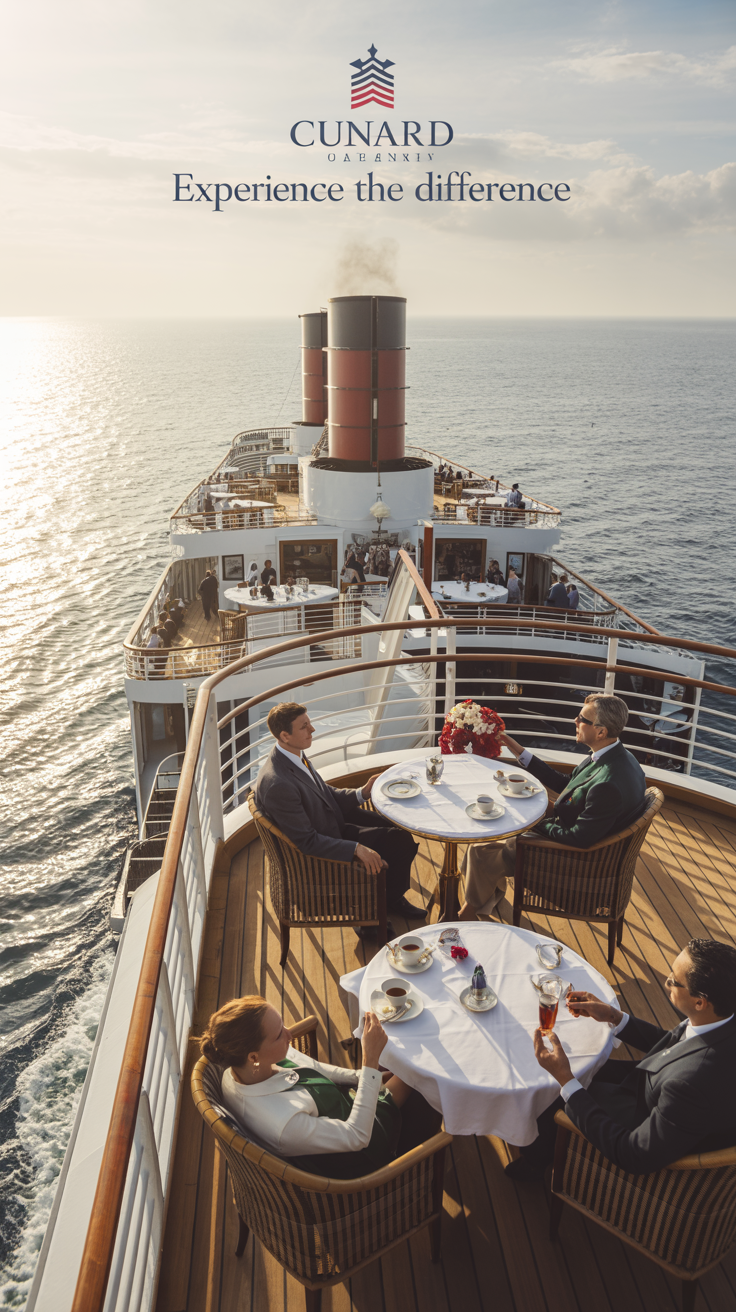
- Cunard sits in the premium bracket. You’ll pay more per night than Princess, sometimes considerably more for comparable cabin grades. That premium buys you the ocean liner experience, higher crew-to-passenger ratios, and inclusions like the white glove dining and afternoon tea that define the line.
- Neither line includes much beyond meals and basic entertainment in their standard fares. Both charge for speciality dining, drinks packages, gratuities, and Wi-Fi. Princess runs more aggressive promotions and you’ll often find packages that bundle drinks, Wi-Fi, and speciality dining at a reduced rate. Cunard’s offers tend to focus on cabin upgrades or onboard credit rather than inclusive packages.
- If you’re comparing similar itineraries, expect to pay around 20-40% more for Cunard. The gap widens on transatlantic crossings where Cunard owns that market and prices accordingly.
- Princess offers better value if you sail frequently. The Captain’s Circle loyalty programme kicks in faster and the benefits accumulate more quickly across their much larger fleet. Cunard’s loyalty programme is generous but you need more sailings to reach the upper tiers, and with only four ships in the fleet, your redemption options are limited.
Ships and Atmosphere: Museum or Resort?
- Queen Mary 2 remains the only true ocean liner still crossing the Atlantic on schedule. She’s built for weather, with a reinforced hull and that distinctive profile. The public rooms are grand, art deco-influenced spaces. The ship feels like a floating country house. You’ll find a proper library with thousands of books, a planetarium, and enough teak deck space to walk miles without retracing your steps.
- Queen Victoria and Queen Elizabeth cruise ship are smaller, more traditional in layout, and appeal to passengers who want the Cunard experience without QM2’s scale. Queen Anne launched recently and brings a more contemporary edge while maintaining Cunard’s service standards.
- Princess operates a much larger fleet with more variation between ships. The Royal-class vessels are mega-ships with multiple pool areas, Movies Under the Stars, and enough dining venues to eat somewhere different every night. The smaller ships like Island Princess offer a more intimate experience but with the same Princess hallmarks: easy-going atmosphere, comprehensive activities, and solid execution across the board.
- Cunard ships feel quieter. Passengers tend to be older, more British, and more settled in their routines. You’ll see the same faces in the same spots every day. Princess attracts a broader demographic including families, younger couples, and more North American passengers. The energy level is higher, the entertainment is louder, and you’ll have far more children onboard outside school term time.
- If you’re looking for what makes Cunard different from other lines, it’s this atmosphere above all else. You can compare specs and facilities all day, but the what makes Cunard different from other lines comes down to passenger expectations and the formality they maintain.
Itineraries: Where Each Line Excels
- Cunard owns the transatlantic crossing market. Queen Mary 2 sails scheduled voyages between Southampton and New York multiple times each season. These aren’t cruises in the traditional sense, they’re point-to-point transportation with gala evenings and enrichment lectures to fill the sea days. If this appeals, no other mainstream line offers it.
- For longer voyages, Cunard runs extensive world cruise programmes. Both Queen Mary 2 and Queen Anne offer complete circumnavigations with options to join for segments. Queen Mary 2’s westbound world voyage includes a first-time Panama Canal transit, while Queen Anne sails eastbound. These attract a devoted following and book out well in advance. The passenger demographic skews heavily toward retirees with time and budget for 90-plus-day voyages.
- Princess matches Cunard on world cruise offerings through Island Princess, which sails a comprehensive itinerary of around 115 days with North American departure options. Princess also dominates Alaska deployment with more ships and more varied itineraries than almost any competitor. If Alaska is your target, Princess offers better choice, more departure dates, and deeper penetration into inside passage routes.
- Princess runs a broader variety of shorter itineraries across the Caribbean, Mediterranean, and Northern Europe. Cunard focuses more on longer voyages with fewer turnaround days. If you’re booking a week or 10 days, you’ll find more options with Princess. For two weeks or longer, Cunard’s itineraries often include more overnights and late evening departures that give you proper time in port.
Entertainment and Activities: Traditional vs Contemporary
- Cunard books guest speakers, authors, and cultural lecturers. You’ll hear historians discussing your next port of call, astronomers explaining the planetarium shows, and former ambassadors offering geopolitical context. The entertainment is sophisticated: West End-style productions, classical recitals, and ballroom dancing with professional instructors. It’s enrichment over adrenaline.
- Princess leans into mainstream entertainment with broader appeal. Production shows are slick and accessible. Movies Under the Stars screens recent releases on a giant poolside screen. The Lotus Spa is more extensive than anything on Cunard. You’ll find more active programming: fitness classes, sports courts, golf simulators, and cooking demonstrations with the ship’s chefs.
- Neither line offers the mega-ship gimmicks you’ll find on Royal Caribbean or Norwegian. No water slides, no go-kart tracks, no robot bartenders. But Princess sits closer to that contemporary cruise model while Cunard actively resists it.
- If you measure a successful sea day by how much you’ve learned or how elegantly you’ve relaxed, Cunard delivers. If you want options to stay busy and entertained without any stuffiness, Princess is the better fit.
Who Actually Suits Each Line
Cunard works best if you:
- Appreciate formality and enjoy dressing for dinner without feeling it’s a chore
- Prefer assigned seating and the ritual of traditional dining
- Want enrichment lectures and cultural programming over pool parties and game shows
- Value British service traditions and understated elegance
- Plan longer voyages where the ship experience matters as much as the itinerary
- Don’t mind paying a premium for an atmosphere that deliberately excludes mass-market compromises
Princess suits you better if you:
- Want flexibility in dining times and dress codes
- Prefer a broader choice of venues, activities, and entertainment styles
- Value straightforward, efficient service over ceremonial formality
- Sail with family or mixed-generation groups who want different things from the holiday
- Focus more on destinations and itineraries than onboard traditions
- Appreciate better value on standard fares and more frequent promotions
The demographic split is real. Cunard passengers tend to be older, British, and drawn to the line specifically for what it represents. Princess pulls a broader mix of ages and nationalities with less devotion to brand identity. Neither approach is superior, but you need to know which camp you fall into.
If you’re still deciding, consider this: have you enjoyed luxury hotels that maintain dress codes and formal service? Does the idea of assigned dinner seating appeal or irritate? Your answers to those questions will point you in the right direction more accurately than any comparison of cabin sizes or entertainment schedules.
Cunard vs Other Lines: Where Does Princess Fit?
- Understanding where both lines sit in the broader market helps clarify the choice. Cunard cruise line positions itself above mass-market operators but below true luxury brands like Silversea or Seabourn. It’s premium, traditional, and uncompromising on certain standards. When comparing Cunard vs Royal Caribbean, you’re looking at opposite ends of the cruise spectrum despite similar pricing on some itineraries.
- Princess cruises sits firmly in the contemporary premium segment alongside Holland America, Celebrity, and others. It’s more upmarket than Carnival or Norwegian but less formal than Cunard or P&O Cruises’ adult-only ships. The comparison between Cunard vs Holland America is actually closer than Cunard vs Princess, because Holland America maintains some traditional elements that Princess has shed.
- If you’ve sailed Princess and enjoyed it but want to try something more traditional, Cunard is a logical step up. If you’ve sailed Cunard and found it too stuffy, Princess offers a comfortable landing without dropping down to the mass-market mayhem of some competitors.
Practical Booking Considerations
When to book Cunard:
- Transatlantic crossings sell out early, especially in summer and for Queen Mary 2’s milestone crossings
- World cruise segments release around 18 months ahead and the best cabins go fast
- Grill suites offer the most significant upgrade in experience and book out first
- Solo travellers pay full single supplements with rare exceptions, making Cunard expensive for one
When to book Princess:
- Alaska sailings require booking 8-12 months ahead for decent cabin choice
- Promotional pricing appears more frequently, so monitor offers rather than booking immediately
- Balcony cabins on Princess represent better value than Cunard’s equivalent grades
- The loyalty programme offers better benefits faster if you plan multiple sailings
Both lines allow changes and cancellations up to a point, but Cunard’s penalties kick in earlier and cost more. Princess offers more flexibility with their booking policies, which matters if your plans might shift.
Neither line is particularly strong for last-minute deals. Cunard rarely discounts steeply, and Princess only does so on less popular itineraries or repositioning voyages. If you need to book within 90 days, your cabin choice will be limited on both lines.
Common Questions
Can you wear jeans on Cunard?
Not in the evening in public areas or dining rooms. Daytime is fine in casual spaces. Princess allows smart jeans in most venues after they relaxed their evening dress code.
Which line is better for solo travellers?
Neither is ideal. Both charge full single supplements on most cabins. Princess has a few dedicated solo cabins on newer ships, making it marginally better. Cunard’s formality can feel isolating if you’re dining alone.
Do you tip on both lines?
Yes. Both charge automatic daily gratuities added to your onboard account. Amounts are similar and adjust based on cabin grade. You can modify them at guest services but it’s expected practice.
Which has better Wi-Fi?
Princess has faster, more reliable internet across the fleet. Cunard’s Wi-Fi works but costs more and performs worse, especially on transatlantic crossings where satellite coverage is the only option.
Can you take children on Cunard?
Yes, but facilities are minimal compared to Princess. There’s a small children’s area that only opens during school holidays. Most Cunard passengers don’t bring children, and the atmosphere reflects that. Princess runs proper kids’ clubs and teen spaces year-round.
Which line offers better excursions?
Similar quality and pricing through both lines’ official programmes. Princess often includes more active options like kayaking or hiking. Cunard focuses on cultural and historical tours. Both overcharge compared to booking independently.
How do cabin sizes compare?
Cunard’s standard inside and outside cabins are smaller and feel more dated. Princess balconies are larger and better designed. Cunard’s Grill suites are genuinely spacious and luxurious. At the entry level, Princess offers better space for your money. If you’re bringing formal wear for Cunard’s gala nights, a compact travel steamer helps keep everything wrinkle-free in smaller cabins.
Which is more British?
Cunard is distinctly British in service style, passenger mix, and cultural references. Princess is American-owned and internationally staffed with a more generic mid-Atlantic feel. If Britishness matters to you, only Cunard delivers it authentically.
Can you switch between dining times on Princess?
If you book anytime dining, yes. Traditional dining locks you to early or late seating. You choose at booking but can request changes onboard if space allows. Cunard’s fixed seating is rigid by comparison.
Why Trust About2Cruise
- I’m Jo, and I’ve sailed both lines multiple times across different ship classes and itineraries to write this comparison from direct experience.
- We update comparisons when either line changes dining policy, launches new ships, or shifts their market positioning in ways that affect your choice.
- We don’t run cruise line advertising and we’re not funnelling you toward whichever brand pays the highest commission this month. Read more about our approach.