
Alaska offers authentic gold panning and mining tour experiences where visitors can learn historical techniques and keep their discoveries. Tours operate across the state, particularly near Fairbanks, Juneau, and Anchorage, providing hands-on panning instruction, mine site visits, and insights into Alaska’s Gold Rush heritage. Activities suit all ages and skill levels, with equipment typically provided.
Quick Facts
| Detail | Information |
|---|---|
| Duration | 1-4 hours typical |
| Cost Range | $50-$150 per person |
| Best Locations | Fairbanks, Juneau, Skagway, Anchorage |
| Season | Late May through early September |
| Equipment | Provided by tour operators |
| Keep Your Gold? | Yes, almost always |
| Age Suitability | All ages (children supervised) |
Want to know more about planning your Alaska shore excursions?
What to Expect on a Gold Panning Tour
Most gold panning tours begin with a brief history lesson about Alaska’s Gold Rush era. You’ll learn about the fascinating Gold Rush history that shaped the state and why certain areas became boomtowns practically overnight. Then comes the practical instruction on panning technique.
The actual process involves filling your pan with gravel and water, then using a specific swirling motion to let heavier gold settle while lighter materials wash away. It sounds simple but takes practice to get right. Tour guides will demonstrate multiple times and watch your technique to offer corrections.
Types of Tours Available
- Creek-side panning: Wade into actual streams where gold naturally occurs
- Historic mine visits: Tour old mining operations and pan at established sites
- Indoor panning: Weather-proof option with seeded gravel (guarantees finds)
- Combination tours: Pair gold panning with scenic railway excursions or other activities
- Extended mining experiences: Half-day or full-day adventures with sluicing and metal detecting
Top Gold Panning Locations
Juneau Area
The Juneau region offers convenient gold panning as part of the best shore excursions in Juneau. Several historic mining camps operate tours within easy reach of the cruise port. These tours often include transportation through beautiful Alaskan scenery and visits to actual mining equipment from the past.
Fairbanks Region
Fairbanks sits in the heart of Alaska’s gold country. The area produced millions of ounces of gold and mining continues today. Tours here tend to be more authentic and less touristy, with some operations run by actual working miners. You’ll see larger-scale mining equipment and learn about modern mining techniques alongside historical methods.
Skagway
This town was the gateway to the Klondike Gold Rush and maintains strong connections to Skagway’s Gold Rush history. Tours here are deeply historical with costumed guides sometimes recreating the boomtown atmosphere. The scenery is spectacular and you’re literally walking in the footsteps of thousands of hopeful prospectors.
What You’ll Actually Find
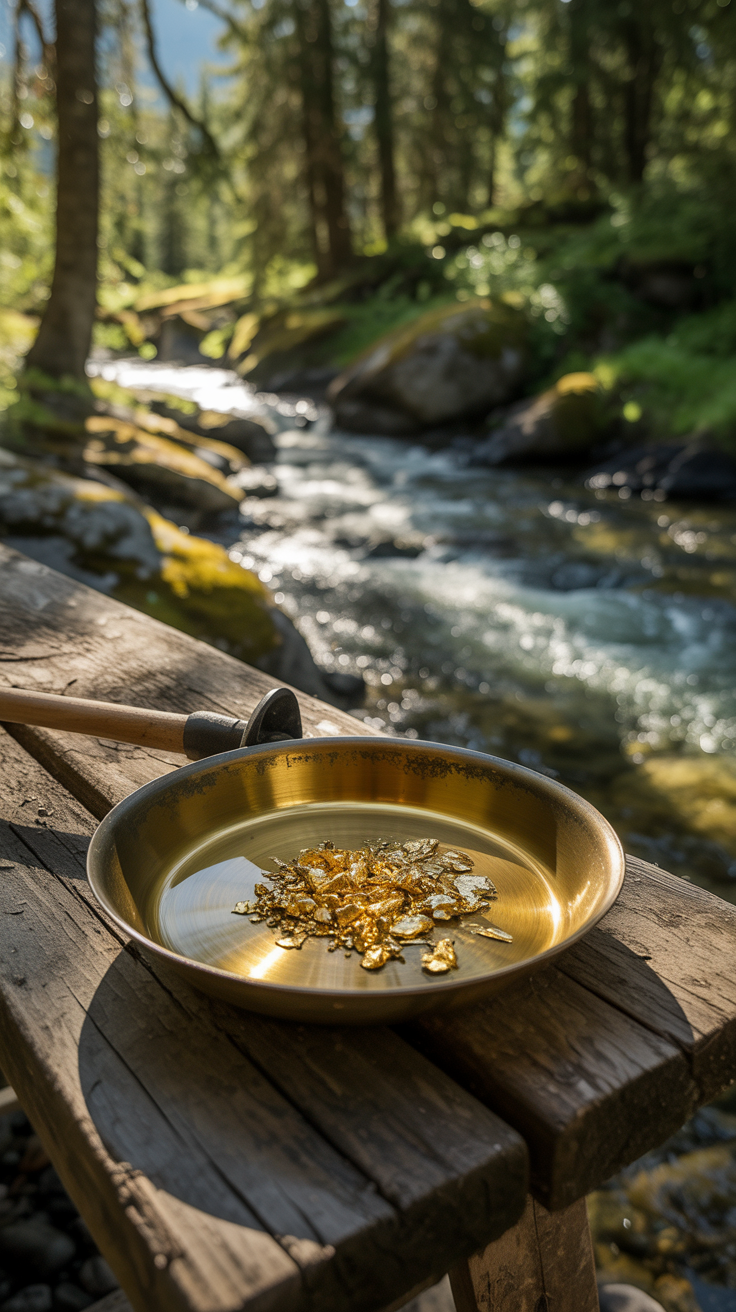
Let’s be honest about expectations. You won’t strike it rich or find a nugget the size of your thumb. What you will find are flakes and occasionally small pieces called “pickers” that you can actually pick up with your fingers. The amount varies wildly based on location and luck.
Most people collect between a few specks and maybe a quarter gram of gold. That translates to roughly $5-$20 worth at current gold prices. But here’s the thing nobody tells you: the monetary value is completely beside the point. Finding even the tiniest fleck of gold that you panned yourself is genuinely thrilling.
Indoor vs Outdoor Panning
Indoor facilities use “seeded” gravel that’s guaranteed to contain gold. You’ll definitely find something, which makes these excellent for family-friendly excursions with young children who might get discouraged by empty pans. Outdoor creek panning is more authentic but results are never guaranteed.
Practical Tips for Success
- Dress for wet and muddy conditions: Waterproof boots are ideal even if not required
- Bring layers: You’ll be near cold water and weather changes quickly
- Skip the manicure: Your hands will get dirty no matter how careful you are
- Listen carefully to technique instruction: The difference between finding gold and washing it away is subtle
- Bend your knees not your back: Panning involves repetitive motion that can strain muscles
- Book morning tours when possible: You’ll have more energy and better light for spotting gold
- Ask about guarantees: Some tours promise you’ll find gold or your money back
Beyond Basic Panning
Many tours include additional mining techniques that process material faster than hand panning. Sluice boxes use running water to separate gold from gravel on a larger scale. Some operations let you try metal detectors or show you modern dredging equipment.
The most comprehensive tours visit actual mining claims where you can see working operations. You’ll understand why modern Alaska mining is a serious industrial operation requiring significant investment and expertise. It’s a far cry from the lone prospector with a pan, though that romantic image persists.
Combining Gold Panning with Other Activities
Gold panning pairs wonderfully with other Alaska adventures. Consider these combinations:
- Morning helicopter tours over glaciers followed by afternoon panning
- Gold panning combined with visits to cultural heritage sites for complete historical context
- Guided hiking excursions to remote panning locations
- Multi-activity tours including ATV adventures through mining country
- Zipline adventures at adventure parks that also offer gold panning
Check the shore excursion booking guide for tips on scheduling multiple activities efficiently.
Challenges to Consider
Gold panning isn’t for everyone. The repetitive motion can be hard on arms and shoulders. Standing or kneeling near cold water for extended periods gets uncomfortable. People with mobility issues might struggle with the physical aspects, though many operators accommodate special needs with seating and modified equipment.
Weather plays a huge role in outdoor experiences. Rain makes everything muddier and less pleasant. Some tours cancel in heavy rain while others proceed regardless. Ask about weather policies when booking.
The biggest challenge is probably managing expectations. Some visitors arrive thinking they’ll find substantial gold and feel disappointed by tiny flakes. Embrace the experience for what it is: a fun, hands-on way to connect with Alaska’s history, not a get-rich-quick scheme.
Bonus Tips
- Bring a small magnifying glass: Gold flakes are tiny and a loupe helps you spot them
- Take a vial or small container: Most tours provide these but having a backup ensures you don’t lose your gold
- Photograph your gold in the pan: The photo is often more impressive than the actual amount
- Ask guides about “black sand”: This iron-rich material indicates gold might be present
- Learn to read the creek: Inside bends and behind large rocks are prime spots
- Try different pan sizes: Smaller pans are easier for beginners to control
- Watch for fool’s gold: Pyrite is common but guides will help you distinguish it from real gold
- Consider tour timing with cruise schedules: Don’t book the last possible time slot before your ship departs
- Skip this if you did dog sledding or fishing excursions that same day: Your arms will be too tired
- Bring hand warmers: Even summer water temperatures are shockingly cold
- Ask about prospecting claims: Some guides share fascinating details about staking claims and mining regulations
What About Kayaking adventures or Flightseeing tours?
While those activities offer spectacular scenery, gold panning provides something different: a tangible connection to history and the satisfaction of finding treasure yourself. You’re not just observing Alaska, you’re participating in a tradition that defined the state. Plus you actually take home something physical beyond photos and memories.
Common Questions and FAQ
Can I keep all the gold I find?
Yes, virtually all commercial gold panning tours let you keep everything you discover. It’s part of the appeal. You’ll receive a small vial to store your flakes.
Do I need any experience or special skills?
Absolutely not. Tours are designed for complete beginners. Guides provide thorough instruction and help you develop the technique. Children as young as five can successfully pan for gold with supervision.
What if I don’t find any gold?
Indoor facilities with seeded gravel guarantee finds. Outdoor tours in natural creeks can’t guarantee results but guides know the productive spots and most participants find at least some color. Some operators offer satisfaction guarantees.
How much gold do people typically find?
Most people collect anywhere from a few tiny flakes to perhaps a quarter gram during a standard tour. The amount is small but finding it yourself makes it special. Think of it as a unique souvenir rather than a payday.
Is gold panning legal everywhere in Alaska?
No, you can only pan on certain public lands or private claims where you have permission. Never pan randomly on your own. Tours operate on legal sites where panning is explicitly allowed. Recreational panning regulations vary by location.
What’s the difference between panning and sluicing?
Panning processes small amounts of gravel by hand in a shallow pan. Sluicing uses running water and a ribbed box to process much larger volumes of material more efficiently. Many tours let you try both techniques.
Can I bring my own panning equipment?
Tours provide all necessary equipment, but if you have your own favorite pan you can usually bring it. However, using provided equipment ensures you have the right tools for the location and technique being taught.
How cold is the water?
Alaskan streams are fed by snowmelt and glaciers. Water temperatures typically range from 35-50°F even in summer. You’ll definitely feel the cold but most people find it tolerable for the tour duration. Waterproof gloves help.
Are there bathroom facilities at panning sites?
Established tour operations near towns have restroom facilities. More remote creek locations might only have portable toilets or none at all. Ask about facilities when booking if this is a concern.
What should I do with my gold after finding it?
Keep it as a souvenir in the vial provided. Some people have their gold flakes set into jewelry or display pieces. Local jewelers near popular tourist areas offer these services. The sentimental value far exceeds the monetary worth.
Personal Experience
I never thought I’d get so excited about mud and water until I tried gold panning in Alaska. Our guide, a grizzled prospector who’d been mining for thirty years, showed us exactly how to swirl the pan in that rhythmic motion that separates worthless sediment from actual gold flakes. He made it look easy, but let me tell you, my first attempts sent half the gravel back into the creek. The trick is patience and the right angle – something I learned after watching him demonstrate three times. When I finally spotted those tiny golden specks glinting at the bottom of my pan, my heart actually raced. Sure, it was maybe five dollars worth of gold dust, but I’d found it myself in an actual Alaskan creek.
What surprised me most was how much there is to learn about reading the landscape. Our guide pointed out where gold naturally settles in the riverbend and explained why certain spots are more promising than others. We got to try different tools too – not just pans, but sluice boxes that process way more material. The tour wasn’t just about finding gold, though that’s obviously the fun part. It was understanding the history of the miners who came before us and getting your hands dirty in one of the most beautiful places on earth. I brought home a tiny vial of gold flakes and some seriously sore arms, but honestly, the experience itself was worth more than any nugget.