
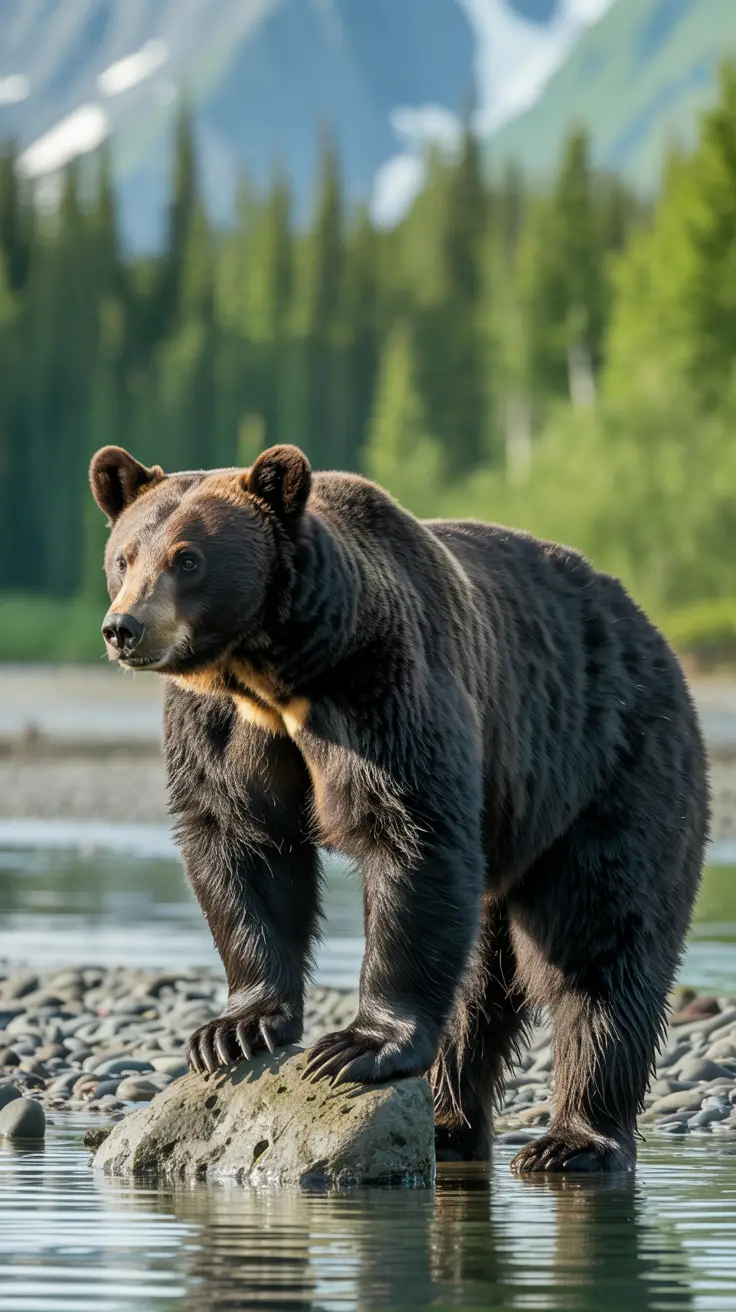
Alaska’s black bears are commonly spotted along cruise routes, particularly in Inside Passage regions like Icy Strait Point, Juneau, and Ketchikan. The best viewing occurs during salmon spawning season when bears gather near streams and shorelines. Shore excursions often include guided wildlife viewing at designated bear-watching platforms and protected wilderness areas throughout Southeast Alaska.
Quick Facts: Alaska Black Bears
| Detail | Information |
|---|---|
| Best Viewing Season | Late May through September (peak: July-August during salmon runs) |
| Top Locations | Icy Strait Point, Admiralty Island, Pack Creek, Tongass National Forest |
| Safe Viewing Distance | Minimum 50 yards (follow guide instructions) |
| Population in Southeast Alaska | Approximately 17,000 black bears |
| Color Variations | Black, cinnamon, brown, blue-grey (glacier bears) |
Want to know more about Alaska’s incredible wildlife diversity and what you might encounter on your cruise adventure?
Why Black Bears Trump Brown Bears for Cruise Passengers
Here’s something most first-time Alaska cruisers don’t realize: you’re actually more likely to see black bears than their larger cousins, the massive brown bears that dominate Katmai and other remote regions. Black bears thrive in the coastal forests along cruise routes, while brown bears tend to hang out in areas that require floatplanes or serious hiking to reach.
Black bears are surprisingly adaptable and less aggressive than brown bears, which means tour operators can offer closer (but still safe) viewing opportunities. They’re also smaller and more comfortable around human activity, making them the stars of shore excursions in ports like Ketchikan where wildlife viewing excursions are carefully managed.
Prime Viewing Locations by Port
Icy Strait Point
This is the undisputed champion for black bear sightings. The ZipRider attraction actually passes over bear habitat, and the port itself sits on Chichagof Island, which has one of the densest black bear populations on Earth. Book the bear search expedition early because it fills up fast.
Juneau
Pack Creek on Admiralty Island offers the most structured bear viewing experience from Juneau. The Forest Service limits daily visitors to just 24 people, which means you need to book months in advance through your cruise line. It’s pricey but worth every penny for serious wildlife enthusiasts who want to explore premier wildlife viewing locations with expert naturalists.
Ketchikan
The Neets Bay Bear Watch combines floatplane adventure with bear viewing. You’ll also spot bald eagles perched along the shoreline and possibly even catch glimpses of marine life like sea lions and harbor seals during the flight.
Timing Your Cruise for Maximum Bear Action
The cruise lines won’t always tell you this, but when you cruise Alaska matters enormously for wildlife viewing. Here’s the insider scoop:
- Late May to early June: Bears emerge hungry and feed on sedge grass and emerging vegetation along beaches. They’re highly visible but less predictable.
- July through August: Peak season coincides with salmon runs when bears congregate at streams and become incredibly focused on fishing. This is your best bet for dramatic feeding behavior.
- September: Bears enter hyperphagia (extreme eating mode) and consume up to 20,000 calories daily. They’re desperate to pack on weight before hibernation, making them very active but also more solitary as competition for food intensifies.
Shore Excursions: What Actually Works
Skip the “wildlife and glacier combo” tours if bears are your priority. These multi-focus excursions spread their time too thin. Instead, look for:
- Dedicated bear watching tours: Usually 3-4 hours focused solely on finding bears
- Small group sizes: Six to twelve people max means better positioning and less noise
- Naturalist guides: Not just any guide, but someone with wildlife biology credentials
- Boat-based platforms: Offers mobility to follow bear movement along shorelines
- Elevated viewing platforms: Provides safety and excellent sightlines at established feeding areas
Pro tip: Tours departing at 7 AM might sound painful after a late night on the ship, but bears are most active in early morning. Grab the coffee and go.
What Your Wildlife Guide Covers
A comprehensive Alaska wildlife guide will prepare you for everything from bears to birds, but here’s what to know specifically about black bears before you go:
- Despite their name, black bears come in multiple colors including cinnamon, blonde and even the rare blue-grey “glacier bear” found only in Southeast Alaska
- They’re excellent swimmers and regularly move between islands
- Adult males can weigh 600 pounds but females typically max out around 300 pounds
- They have color vision and exceptional hearing
- Cubs stay with mothers for about 18 months before striking out on their own
The Reality of Bear Viewing: Managing Expectations
Let’s be honest about what can go wrong. Weather in Southeast Alaska is famously unpredictable. Your excursion might face rain, fog or choppy seas. Bears are wild animals with their own schedules, not performers on cue. Some days they simply don’t show up where expected.
I’ve talked to passengers who spent hundreds on bear excursions and saw nothing but trees. I’ve also met people who spotted a bear from the ship’s deck while everyone else was on a paid tour. That’s wildlife viewing.
Increase your odds by:
- Booking multiple ports with bear opportunities
- Choosing tours with “bear guarantee” policies (usually offering partial refunds or photo opportunities if no bears appear)
- Staying flexible and maintaining realistic expectations
- Appreciating whatever wildlife appears, whether that’s whales breaching offshore, colorful puffins bobbing in the water, or even orcas hunting in nearby channels
Photography Tips from the Platforms
Those coveted Alaska wildlife photo opportunities require some preparation:
- Zoom lens essential: 200mm minimum, 400mm ideal for frame-filling shots while maintaining safe distance
- Fast shutter speed: Bears move quickly, especially when fishing. Start at 1/500 second minimum
- Continuous shooting mode: Burst mode captures the perfect moment when a bear catches salmon
- Stabilization matters: Tripods rarely work on boats, so invest in image stabilization or bring a monopod
- Weather protection: Rain covers for your camera aren’t optional in Alaska, they’re mandatory
- Extra batteries and cards: Cold drains batteries fast and you’ll shoot way more than planned
Beyond Black Bears: Wildlife Bonuses
The beauty of Southeast Alaska is that bear viewing locations overflow with other wildlife. During bear excursions, you’ll likely encounter:
- Humpback whales feeding in the same bays where bears fish
- Gray whales migrating through Inside Passage waters
- Sitka black-tailed deer browsing along forest edges
- River otters playing in kelp beds
- Eagles everywhere (seriously, they’re like pigeons in Alaska)
- Harbor seals hauled out on rocks
Safety Protocols You Should Know
Reputable tour operators follow strict protocols, but understanding them helps you stay calm and safe:
- Never approach a bear on your own, even if it seems small or far away
- Stay with your group and follow guide positioning exactly
- Keep noise to whispers once bears are spotted
- Never eat snacks or have food visible during bear viewing
- If a bear approaches your position, guides will move the group calmly
- Bear spray is carried by guides but should never be needed at proper viewing distances
Bonus Tips Most Cruise Passengers Miss
- Book independent tours: They’re often cheaper than cruise line offerings and use smaller boats with more flexibility
- Bring binoculars even on platform tours: When bears move to far shorelines, they’re essential
- Wear rubber boots: Many viewing areas involve muddy trails or beach walks
- Download a bear identification app: Learning to distinguish individuals by markings and behavior enriches the experience
- Ask about recent sightings: Ship naturalists and port information desks track daily bear activity
- Consider the cruise ship naturalist program: Some lines include onboard wildlife experts who offer private guidance
- Check tide tables: Low tide concentrates salmon in shallower water, bringing bears closer to viewing areas
- Pack hand warmers: Even summer mornings on the water get chilly during long waits
- Respect photography etiquette: Don’t block others for the perfect shot; everyone paid for this experience
Common Questions and FAQ
Can I see black bears from the ship without booking an excursion?
Occasionally, yes. Bears sometimes forage along shorelines visible from ships passing through narrow channels, particularly in Icy Strait and parts of the Inside Passage. Stay on deck during scenic cruising and keep binoculars handy. However, dedicated excursions dramatically increase your chances and offer much better viewing.
Are black bears dangerous to cruise passengers on excursions?
Black bears are potentially dangerous but attacks on guided tours are extraordinarily rare. Licensed operators maintain safe distances, use established viewing platforms, and employ guides trained in bear behavior. Following instructions and staying with your group eliminates virtually all risk.
What’s the difference between seeing black bears versus brown bears in Alaska?
Black bears are smaller, more common along cruise routes, and easier to observe from shore excursions. Brown bears require trips to remote locations like Katmai, typically involving floatplanes and higher costs. Black bear excursions are more accessible and practical for cruise passengers with limited time in port.
Do I need to tip the bear viewing guide?
Yes, tipping is customary for exceptional service. Budget 15-20% of the tour cost if you had a great experience with knowledgeable guides who successfully found bears and provided engaging information. Cash tips are preferred.
What happens if weather cancels my bear viewing excursion?
Tour operators typically offer refunds or alternative excursion options when weather makes bear viewing impossible. Cruise line excursions guarantee you’ll make it back to the ship even with schedule changes. Book through the ship for this protection, or verify independent operator policies carefully.
Can children participate in bear viewing tours?
Most tours welcome children but have age minimums, typically 5-8 years old depending on the format. Boat-based tours are usually more child-friendly than hiking excursions. Consider your child’s ability to stay quiet and still for extended periods, as noise can scare bears away.
Personal Experience
I spent months planning my Alaska cruise, but nothing prepared me for the moment I spotted my first black bear along the shoreline near Icy Strait Point. We’d left the ship early for an excursion to Pack Creek, and our guide had us set up with binoculars about 100 yards from where the bears were feeding on sedge grass. The timing was perfect—early June meant the bears were out and active, not yet gorging on salmon but hungry enough to stay visible along the beaches. I’m so glad I brought my zoom lens and wore layers because we stood there for nearly two hours in the misty morning air, completely mesmerized.
The best advice I got was to book shore excursions specifically focused on bear viewing rather than hoping to spot them from the ship. Places like Admiralty Island and the Tongass National Forest have incredible guided experiences where naturalists know exactly where the bears hang out during different times of the season. Keep your distance, stay quiet, and listen to your guide—these aren’t teddy bears, and respecting their space makes the experience better for everyone. Pack snacks, a waterproof jacket, and way more memory on your camera than you think you’ll need. Watching a mama bear teach her cubs to forage is something that stays with you long after you’re back home.