
Five hours in Florence from your Livorno cruise port isn’t quite enough to see everything, but it’s sufficient for the three big hitters: the Uffizi Gallery, the Duomo, and Michelangelo’s David. The catch is ruthless organisation—Florence sits 90 minutes inland, which shrinks your five-hour window to roughly three hours of actual sightseeing once you factor in transport. That’s tight but workable if you pre-book every ticketed attraction and map out a walking route that doesn’t backtrack.
Florence’s historic centre is compact with major sites within a 15-minute walk of each other, but most cruise passengers waste at least an hour standing in avoidable queues. Advance planning is the difference between seeing two attractions or all three.
Want to know more about your port options? Check out our complete Livorno cruise ship port guide for shuttle timings and alternatives.
Getting From Livorno Port to Florence
Your two main options are the cruise line’s official shuttle or an independent train. The shuttle typically costs around €60-80 per person return and drops you at Piazzale Montelungo, which is about a 10-minute walk from the Duomo. It’s pricey but stress-free, and the timing is coordinated with your ship’s schedule so there’s zero risk of missing the boat. Shuttles usually depart about 8:30-9:00am and the last pickup from Florence is around 4:00-4:30pm, giving you that five-hour window.
Trains from Livorno Centrale to Firenze Santa Maria Novella station run frequently and cost about €8-12 each way, taking roughly 75-90 minutes. You’ll need to factor in the 15-20 minute transfer from the port to Livorno Centrale station, either by taxi (€15-20) or the free cruise line shuttle if your port allows it. From Florence’s train station it’s a pleasant 15-minute walk to the city centre. The train gives you more flexibility and costs less, but you’re entirely responsible for getting back to the ship on time. If there’s a delay or you miscalculate, you could miss the sailing. For more detailed transport comparisons, have a look at our guide on transport options from Livorno cruise port to Florence.
Pre-Booking Tickets: Absolutely Non-Negotiable
This cannot be emphasised enough: if you show up at the Uffizi or Accademia without advance tickets on a cruise day, you’re looking at queues of 90 minutes to two hours. That’s your entire Florence visit gone before you even get inside. Both museums offer timed-entry tickets that you must book online at least a few days ahead, though a month or more is safer during peak season (April through October).
- Uffizi Gallery: Book through the official Opera di Firenze site or a reputable reseller like Tiqets who sell a number of different entry tickets for Uffizi Gallery. Choose the earliest slot you can manage after your shuttle arrives – usually 10:00-10:30am works well. The booking fee is about €4 on top of the €20 entrance, but it guarantees you’ll walk straight past the massive queue at the door.
- Accademia Gallery (David): Same system, smaller museum. A 1:00-2:00pm slot works nicely if you do Uffizi first and Duomo in between. Entry tickets and priority entry are best bought from Tiqets. You’ll spend about 45-60 minutes here, which is plenty to see David and the other highlights without rushing.
- Duomo climb: If you want to climb the dome or bell tower, you’ll need separate tickets. The queue moves reasonably well but can still eat 30-45 minutes of your time. Most people skip the climb on a port day and just photograph the exterior, which is genuinely spectacular and costs nothing.
Print your tickets or have them saved offline on your phone. Florence has plenty of WiFi but you don’t want to be fumbling with a dodgy connection when you’re trying to show your QR code at the entrance. Keep your phone charged with a portable power bank that includes built-in cables so you’re never stuck with a dead battery at museum entry.
A Realistic Five-Hour Florence Itinerary
Assuming your shuttle drops you around 10:00am and you need to be back by 3:00pm, here’s what actually fits:
| Time | Activity | Duration |
|---|---|---|
| 10:00-10:15 | Walk from drop-off point to Uffizi | 15 mins |
| 10:15-11:45 | Uffizi Gallery (pre-booked slot) | 90 mins |
| 11:45-12:00 | Walk to Duomo via Piazza della Signoria | 15 mins |
| 12:00-12:45 | Duomo exterior, Baptistery, surrounding square | 45 mins |
| 12:45-13:00 | Grab takeaway food, walk toward Accademia | 15 mins |
| 13:00-14:15 | Accademia Gallery (pre-booked slot) | 75 mins |
| 14:15-14:45 | Quick stop at San Lorenzo market or gelato | 30 mins |
| 14:45-15:00 | Walk back to shuttle pickup point | 15 mins |
This schedule is tight but achievable. You’re sacrificing any sit-down meal and you won’t be browsing souvenir shops at length, but you’ll hit the three major sights and still have a few minutes for a proper Italian gelato. The walk between each attraction takes you through beautiful squares and streets, so you’re constantly seeing Florence even during the transitions.
Comfortable women’s walking shoes or men’s walking shoes are essential for navigating the cobblestone streets without ending up with painful blisters – consider bringing blister prevention products as well since you’ll be covering several kilometres on uneven surfaces.
What to Prioritise at the Uffizi
The Uffizi is enormous and you could easily spend four hours there if you tried to see everything. With 90 minutes you need to be selective. Most cruise passengers head straight for these key works:
- Botticelli’s Birth of Venus and Primavera (Rooms 10-14): These are the Uffizi’s most famous paintings and they’re genuinely stunning in person. The rooms are usually crowded but people move through fairly quickly.
- Leonardo da Vinci’s Annunciation (Room 35): Often less mobbed than the Botticelli rooms, and it’s a masterpiece worth seeing.
- Michelangelo’s Doni Tondo (Room 35): His only confirmed panel painting, often overlooked but extraordinary up close.
- Caravaggio works (Room 90+): If you like dramatic lighting and intense emotion, don’t miss these on your way out.
Grab a museum map at the entrance and plot your route to these rooms specifically. You can glance at other works as you pass through, but don’t get sidetracked into reading every placard or you’ll run out of time. The Uffizi also has a rooftop café with brilliant views over the city, but skip it on a port day – you simply don’t have the minutes to spare.
The Duomo: Outside Is Honestly Enough
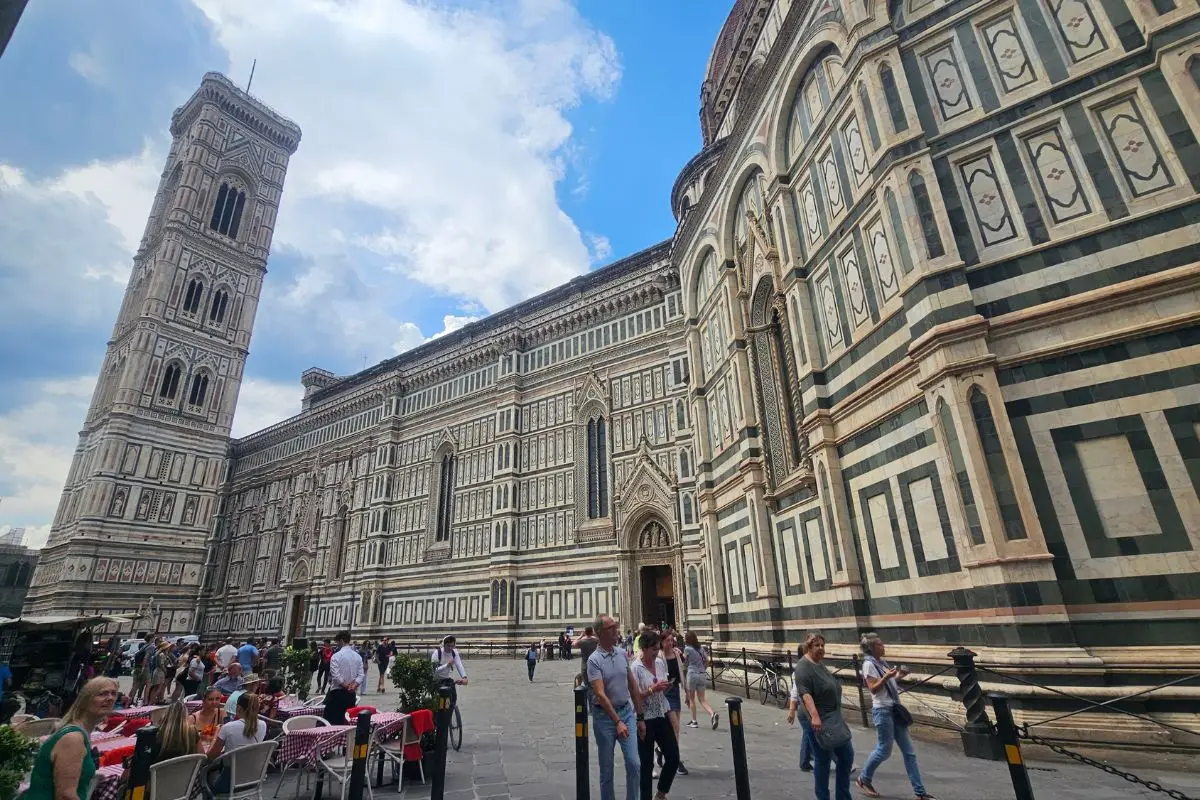
The Cathedral of Santa Maria del Fiore, with its iconic red-tiled dome and intricate marble façade, is one of those buildings that looks better from outside than in. The interior is surprisingly plain compared to the ornate exterior, and while climbing Brunelleschi’s dome offers fantastic views, it takes at least 90 minutes start to finish when you factor in queuing and the 463 steps up.
On a five-hour port day, most people opt to admire the exterior, photograph the Baptistery doors, and move on. The Piazza del Duomo itself is a superb spot for taking it all in, and you’re not missing some unmissable interior experience by skipping the climb. If you absolutely must go up, book a climb slot for around 11:30am, but accept that this will mean cutting either the Uffizi or Accademia short.
The Baptistery’s bronze doors (particularly Lorenzo Ghiberti’s Gates of Paradise on the east side) are worth a close look. They’re copies now – the originals are in the Museo dell’Opera del Duomo – but still beautifully detailed and you can study them for free without queuing.
Seeing Michelangelo’s David at the Accademia
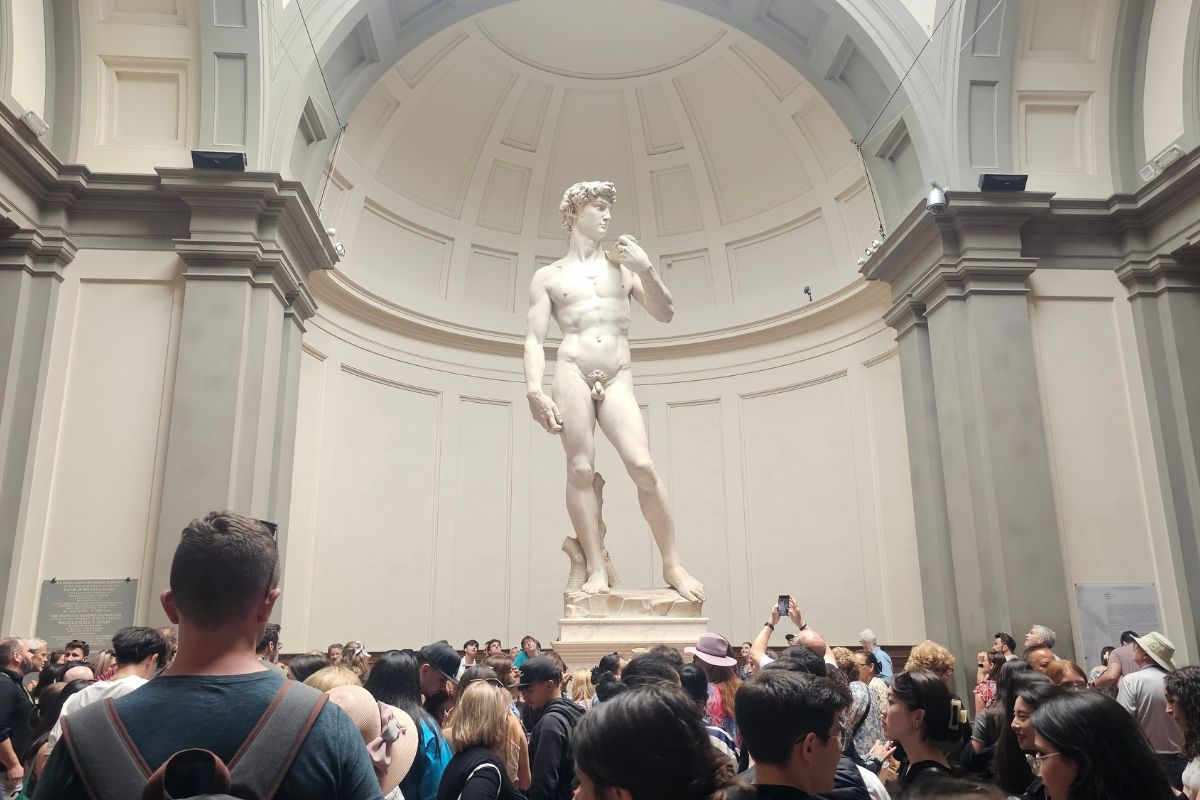
The Accademia is a much smaller museum than the Uffizi, and most visitors are there for one reason: the 17-foot marble statue of David. With a pre-booked ticket you’ll be inside within minutes, and the gallery is laid out so that you walk down a corridor lined with Michelangelo’s unfinished Prisoners sculptures before emerging into the tribune where David stands under a skylight.
The statue is genuinely impressive – larger and more detailed than you expect from photos. Plan to spend 15-20 minutes in the David room, then another 20-30 minutes exploring the rest of the collection, which includes Renaissance paintings and a hall of plaster models. An hour to 75 minutes total is realistic and you won’t feel rushed.
The Accademia gets absolutely rammed between 11:00am and 1:00pm, so an early afternoon slot (1:00-2:00pm) often feels less claustrophobic. You’ll still have crowds but they’re manageable compared to mid-morning when multiple tour groups descend at once.
Eating on the Go: Where to Grab Quick Food
Sitting down for a proper Florentine lunch with multiple courses isn’t realistic on a five-hour schedule. Instead, grab takeaway food that you can eat while walking or perched on a bench in one of the squares. Keep a collapsible water bottle in your daypack to stay hydrated as you explore – Florence can get quite warm, especially during summer months. Here are the best quick options near your route:
- All’Antico Vinaio (Via dei Neri, near the Uffizi): Famous for massive focaccia sandwiches stuffed with Italian meats, cheeses and vegetables. There’s usually a queue but it moves quickly. Expect to pay €8-10 for a sandwich that’ll easily feed two people.
- Mercato Centrale (near San Lorenzo): The ground floor has stalls selling porchetta sandwiches, pizza slices, and fresh pasta to go. Upstairs is a food court with more variety but table service, so stick to the market stalls if you’re in a hurry.
- Pizzeria Toto (Via del Giglio): Excellent pizza by the slice, cheap and cheerful. Grab a couple of slices and keep moving.
- Grom or Vivoli (multiple locations): When you’ve earned a gelato break, these are reliable choices with proper artisanal flavours. Skip the bright, piled-high gelato that looks like fluorescent foam – that’s tourist rubbish with more air than cream.
The key is to eat strategically during transition time – between museums or while walking – rather than dedicating 45 minutes to a restaurant experience you can’t really enjoy when you’re watching the clock.
What to Pack for Your Florence Day Trip
Since you’ll be spending the entire day walking between museums and outdoor monuments, pack smartly in a theft-resistant backpack or anti-theft crossbody bag that keeps your valuables secure in crowded tourist areas. Essential items include your pre-printed museum tickets, passport, euro currency, and phone. If you’re visiting during the cooler months (November through March), bring a packable lightweight jacket for women or men’s lightweight puffer that won’t take up much space but will keep you comfortable. Spring and autumn can be unpredictable, so a compact rain jacket for women or waterproof rain jacket for men is sensible insurance against unexpected showers.
Don’t forget a European plug adapter if you need to charge devices at cafés or restaurants, and keep your phone powered throughout the day with a compact 10000mAh portable charger. A waterproof phone case is useful if rain threatens and you still want to take photos. Store everything organized with travel cable organizers to keep charging cables from tangling in your bag.
Florence and Pisa in One Day: Is It Doable?
Some cruise passengers attempt to tick off both Florence and Pisa in a single port day. It’s technically possible but involves significant compromise. Pisa is about 20 minutes from Livorno by train, and you can see the Leaning Tower, cathedral and baptistery in roughly 90 minutes. If you do Pisa first (9:00-10:30am) then train to Florence (arriving around 11:30am), you’ll have perhaps two hours for Florence before heading back.
That’s really only enough time for one Florence museum plus a quick look at the Duomo exterior. You’ll be rushing constantly and you won’t see David, the Uffizi highlights and the Duomo properly in 120 minutes. For more detailed planning on this option, see our guide to visiting Florence and Pisa from Livorno in one day.
Most people who try the two-city combo end up feeling like they didn’t properly experience either place. If you’re torn, consider that Pisa is essentially a one-trick pony – the tower is brilliant fun but it’s over quickly – whereas Florence has layers of art and architecture that reward deeper exploration. Unless you’re absolutely determined to get that tower photo, dedicate your five hours to Florence alone.
Crowds and Queue Strategies by Season
Florence gets absolutely mobbed during peak cruise season (May through September), and even with pre-booked tickets you’ll be navigating crowded museums and packed squares. Here’s what to expect by season:
- April-May: Busy but manageable. Weather is lovely and queues are moderate if you’ve pre-booked. This is arguably the sweet spot for a port visit.
- June-August: Peak chaos. The Uffizi and Accademia are shoulder-to-shoulder, the heat is intense, and even pre-booked entry might involve some queuing at security. Morning slots are slightly better than afternoon. Bring water and prepare for crowds.
- September-October: Still busy but crowds thin slightly in October. Excellent time to visit with comfortable temperatures and decent light for photography.
- November-March: Far quieter, though some cruise lines reduce Mediterranean itineraries in winter. You’ll have a much more relaxed experience but shorter daylight hours and potential rain. Museums are less crowded and you might even find same-day tickets available, though don’t count on it.
Whenever you visit, the single most important strategy is booking timed entry tickets well in advance. This cannot be stressed enough. People who show up hoping to buy tickets on the day lose at minimum an hour per museum, often two during peak season. That’s your entire Florence visit wasted standing in line.
What You’re Realistically Sacrificing
Five hours means tough choices. Here’s what you almost certainly won’t have time for on a port day:
- Climbing the Duomo or Campanile: Takes 90+ minutes with queuing and the climb itself.
- Ponte Vecchio and Oltrarno district: The bridge is lovely and the artisan workshops across the river are charming, but they’re a 15-minute walk from the main cluster of sights and you can’t fit them in without cutting a major museum.
- Pitti Palace and Boboli Gardens: Beautiful but requires at least two hours. Save this for a longer visit.
- Bargello Museum: Excellent sculpture collection including Donatello’s David, but another museum when you’ve only got time for two.
- Leisurely shopping: You might grab a quick souvenir at San Lorenzo market, but serious leather shopping or browsing boutiques isn’t happening today.
- Proper sit-down meal: As discussed, you’re eating on the go or not at all.
This isn’t a relaxed exploration of Florence. It’s a greatest-hits sprint. If that sounds exhausting, consider booking a ship excursion that handles logistics and pacing for you, or save Florence for a land-based trip where you can give it two or three proper days.
Extend Your Stay in Florence
If your cruise schedule allows it, spending a night or two in Florence before or after your sailing transforms the experience completely. Accommodation in Florence ranges from budget hostels to luxury hotels, with excellent mid-range options in the Santa Croce and Oltrarno districts where you’ll be staying among locals rather than just tourists. Hotels in Florence book up months ahead during peak season, so plan early if you’re extending your trip.
If you’re staying overnight, pack smart with compression packing cubes that maximize space in your hardside carry-on luggage. Keep toiletries organized in a hanging toiletry bag that’s perfect for hotel bathrooms, and use travel shoe bags to keep dirty footwear separate from clean clothes. A compact travel steamer helps you look presentable for nicer restaurants without the bulk of an iron.
With even one extra day you can climb the Duomo at a civilised pace, explore the artisan workshops across Ponte Vecchio, take a proper food tour through the markets, and enjoy an evening passeggiata with aperitivo. Florence reveals itself slowly – the art, the architecture, the food culture – and five hours barely scratches the surface. An extra night means you can experience the city at sunset when the cruise passengers have left and the day-trippers have gone home, which is when Florence really breathes.
Personal Experience
We had five hours between our shuttle dropping us off and the last bus back to Livorno, and honestly that’s enough time if you’re smart about it. We booked Uffizi tickets online weeks before – absolutely essential because the queue was insane when we walked past. Spent about ninety minutes there, which was perfect for the highlights without getting museum fatigue. From there it’s literally a ten-minute walk to the Duomo, and you can admire it from outside for free. We didn’t climb it because that eats up too much time with queuing, but the exterior is stunning enough that you don’t feel like you’re missing out.
For David at the Accademia, we’d also pre-booked and got in around 2pm. Another hour there was plenty – it’s a smaller gallery than you’d think. The trick is accepting you can’t see everything Florence offers in one port day. We grabbed focaccia sandwiches from a little place near San Lorenzo market and ate while walking, which saved us sitting down for a long lunch. By 4:30pm we were back at the pickup point, tired but genuinely satisfied. The pre-booked tickets are the absolute key though – we saw people in queues who probably waited two hours, and that would’ve wrecked the whole day. Florence is totally doable from a cruise if you plan the logistics properly.
Common Questions & FAQ
Can I see all three major attractions without pre-booking tickets?
Technically yes, but realistically no. Walk-up queues at the Uffizi and Accademia regularly hit 90-120 minutes during cruise season. That means you’d spend three to four hours just standing in lines, leaving almost no time to actually see anything inside. Pre-booking timed-entry tickets costs a few extra euros but guarantees you’ll walk straight in at your designated slot. Book at least a week ahead, or a month or more during peak season from May through September.
Is the cruise line shuttle worth the extra cost versus taking the train?
The shuttle costs roughly €60-80 return per person compared to about €20-30 for train tickets and taxis, but it eliminates all risk of missing the ship. The shuttle is coordinated with your sailing time and you don’t need to worry about train delays or navigating Italian rail strikes. If you’re comfortable with independent travel and checking train schedules carefully, the train offers better value and more flexibility. If the thought of potentially missing your ship causes anxiety, pay for the shuttle and sleep better.
How much walking is involved and is Florence accessible for limited mobility?
You’ll walk about 3-4 kilometres total between the major sights, all on cobblestones and uneven pavements. Florence’s historic centre is compact but not particularly accessible – lots of narrow streets, kerbs, and steps. The museums themselves have lifts and accessible routes, but getting between them can be challenging if you use a wheelchair or have mobility issues. Taxis can help with longer distances but the city centre is largely pedestrianised, so you’ll still face some walking. Consider a private accessible tour if mobility is a significant concern. If you do have to walk extensively, compression socks for travel can help reduce leg fatigue and swelling during long days on your feet.
What happens if I miss the last shuttle back to the ship?
You’re responsible for getting back to Livorno at your own expense, which typically means a taxi (about €150-200 for the 90-minute drive) or emergency train if there’s time. The ship will not wait. This is why most first-time cruisers opt for the official shuttle or a ship-organised excursion – the cruise line guarantees they’ll get you back, or hold the ship if their transport is delayed. If you’re travelling independently by train, build in at least a 90-minute buffer before all-aboard time to account for potential delays.
Should I bring euros or can I use cards everywhere in Florence?
Most museums, restaurants and larger shops accept cards, but street food vendors, small cafés and market stalls often prefer cash. Bring at least €50-80 in euros for takeaway food, gelato, drinks and any small purchases. ATMs are widely available in Florence if you need more cash. Don’t rely solely on cards, especially for quick food stops when you’re in a hurry and don’t want to faff about with contactless payment at a busy sandwich counter.
Is it worth climbing the Duomo dome on a five-hour port day?
Not really, unless you’re prepared to sacrifice one of the major museums. The climb takes 90+ minutes including queuing, climbing the 463 steps, spending time at the top, and coming back down. The views are spectacular but you can see excellent panoramas from Piazzale Michelangelo (if you have time for a taxi up there) or simply enjoy the dome from ground level. Most port-day visitors photograph the exterior, peek inside the cathedral briefly, and move on to maximise museum time.
Can I store luggage anywhere if I’m doing Florence between cruise embarkation and a flight?
Florence’s Santa Maria Novella train station has left luggage facilities (deposito bagagli) charging about €6-8 per bag for up to 12 hours. There are also private luggage storage services dotted around the city centre that you can book online. This works well if you’re disembarking in Livorno, training to Florence for a final day of sightseeing, then continuing to the airport. Just factor the storage location into your walking route so you’re not backtracking across the city to collect bags before your airport transfer. If you’re doing this, a luggage scale helps ensure your bags meet airline weight limits before you head to the airport.
Are there any Rick Steves audio tours or apps worth downloading for Florence?
Rick Steves offers free audio tours for the Accademia and a Renaissance Walk through Florence’s historic centre that many cruise passengers find helpful. Download them before you leave the ship (WiFi can be patchy in the museums) and listen while you walk or queue. The official Uffizi app is decent but the museum is well-signed and you can navigate the highlights without it if you’re short on time. Any audio guide will slow you down slightly, so use them selectively rather than trying to listen to every single commentary track when you’ve only got a few hours.
Last Updated: 28 January 2026