
Puerto Limón is Costa Rica’s main Caribbean cruise port, and your ship ties up directly at the Hernán Garrón Salazar Terminal rather than making you queue for a tender. The city centre, taxis and tour desks are all a short stroll from the pier, and this one gateway is where trips to Cahuita, Tortuguero and the rainforest interior all begin.
Cruise Puerto Limón: Your Costa Rica Cruise Port Overview
The question everyone wants answered is simple: where does the ship stop, and how far is that from anything worth seeing? Puerto Limón answers both plainly. It’s a working cargo port on Costa Rica’s Caribbean coast, roughly 80 miles east of the capital, San José, sitting just south of the mouth of the Reventazón River, with a dedicated cruise pier built into the wider commercial harbour.
You’ll often find Puerto Limón tucked into wider Central America itineraries alongside Belize’s Port of Harvest Caye or Honduras’s Mahogany Bay on Isla Roatán, all part of the same broader Western Caribbean cruise route working its way down through the region.
Puerto Limón Costa Rica Cruise Port Map
Here’s the port and terminal laid out against Limón city centre and the road heading towards Moín, in case a map makes more sense than paragraphs.
Puerto Limón Costa Rica: Terminal Basics
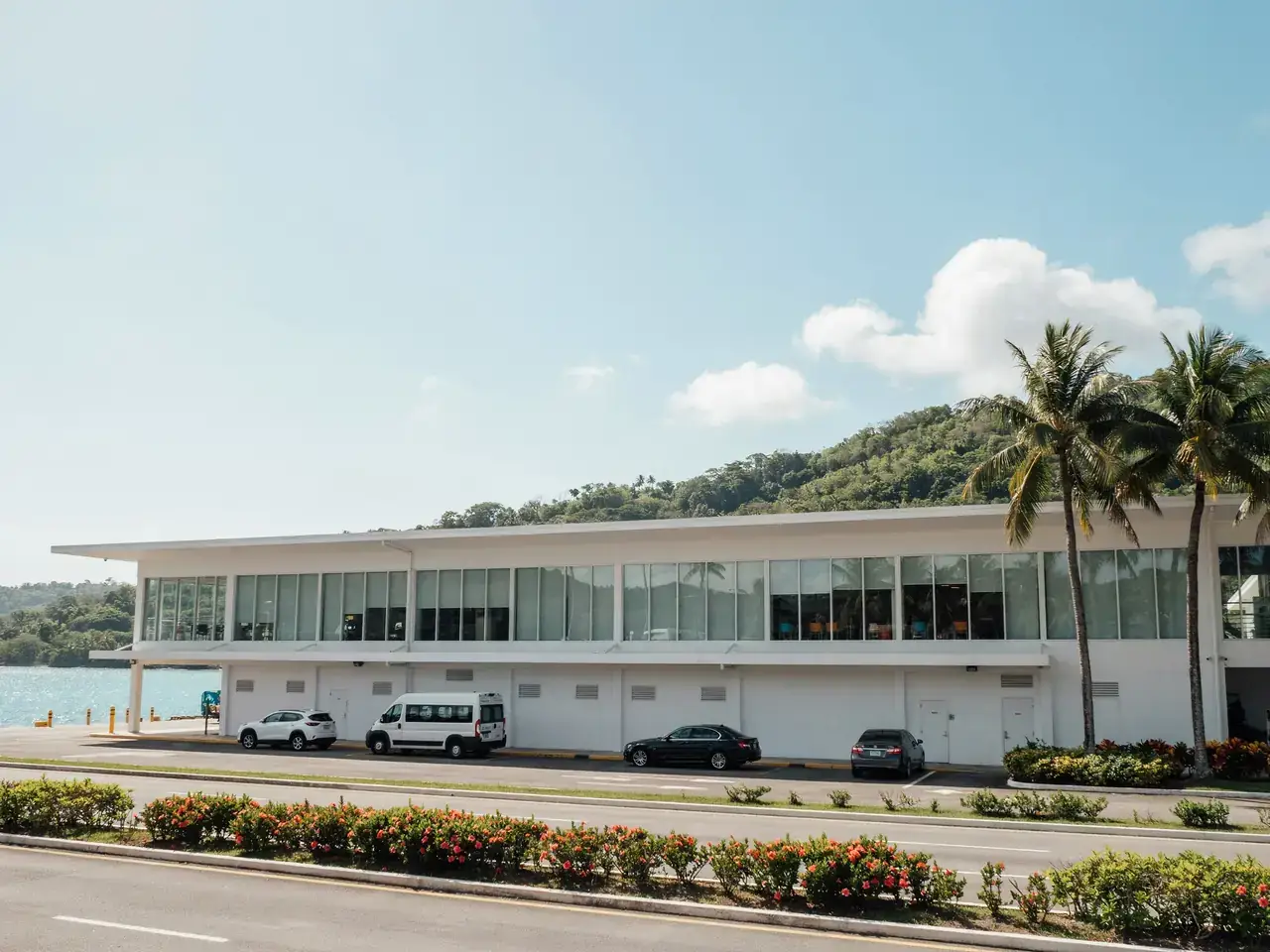
Its full name is the Hernán Garrón Salazar Terminal, sitting right next to the city of Limón, home to a little over 55,000 people. JAPDEVA, Costa Rica’s Atlantic port authority, runs the show, and the port itself dates back to the mid-1800s. Ships tie up directly alongside, so you skip the tender queue entirely, no small boats, no waiting around for your group number to be called.
Inside the terminal, you’ll find:
- Telephones and internet-connected computers
- A craft market for last-minute souvenirs
- A tourist information point
- Tour operator desks, including Caribe Tico, Blue Limbo and Mambo Tours, selling trips to Cahuita, the Tortuguero Canals and the Rainforest Aerial Tram
Before the pandemic paused things for a while, this terminal was welcoming an average of 200 cruise ships and more than 200,000 passengers a year, according to JAPDEVA. When a big ship is in, the tour desks and taxi rank get properly busy, so it’s worth having a rough plan before you step off the gangway rather than working it out on the spot.
Where Do Cruise Ships Dock in Costa Rica?
Cruise ships calling at Costa Rica use one of three main ports: Puerto Limón on the Caribbean coast, or Puerto Caldera and Puntarenas, the country’s other two principal cruise ports. Which one you get depends entirely on your itinerary and route.
| Port | What passengers should know |
|---|---|
| Puerto Limón | Costa Rica’s main Caribbean cruise port. Ships dock directly at the Hernán Garrón Salazar Terminal, no tender required. |
| Puerto Caldera | One of Costa Rica’s other two principal cruise ports, also served by mainstream international cruise lines. |
| Puntarenas | One of Costa Rica’s other two principal cruise ports, also served by mainstream international cruise lines. |
Puerto Limón Cruise Port to the City Centre
Nobody quite agrees on the exact distance from ship to town. Some say a few hundred metres, others reckon closer to a mile and a half. What everyone does agree on is that it’s a short walk, somewhere around five to ten minutes.
Parque Vargas, the waterfront park and Limón’s main attraction, sits five blocks east of the JAPDEVA terminal gate along Avenida 2. It’s the obvious first stop once you’re through the gate.
A Logistical Quirk
Plenty of shore excursions don’t meet inside the terminal at all. Instead, groups gather outside the port, somewhere between 150 and 350 metres away towards Vargas Park, reached by crossing a pedestrian crossing and walking past a run of souvenir tents to the public street beyond the exit gates.
The fix is simple. Give yourself an extra ten minutes before your excursion time, watch for your tour operator’s signage rather than assuming the meeting point is right at the gangway, and skip the souvenir stalls on the way there if you’re already cutting it fine.
Things to See Within Walking Distance
- Parque Vargas, a shoreline park with walking trails, a gazebo, statues and thick tropical vegetation right by the port
- Mirador El Fortín, a simple observation platform about 25 minutes on foot from the dock, useful for a photo of your ship in port
- Uvita island, a tiny island visible as you enter or leave the port, reachable only by boat, where Christopher Columbus is said to have stopped for ship repairs in the early 1500s
- Etnohistorico Museum, around ten minutes from the terminal
- Plaza Puerto Limón, a shopping mall in the downtown area if you want several shops in one place
The Nearest Beach: Playa Bonita
Playa Bonita is your closest beach, generally reckoned at ten to fifteen minutes away by taxi, though one source puts it closer to six kilometres. Either way, it’s a solid option if you fancy sand and sea rather than a full day excursion. Pack some reef safe sunscreen if you’re getting in the water, this is the kind of beach you’ll properly want to swim at, not just photograph.
Excursions Worth Booking Ahead
The real draw of Puerto Limón is everything beyond the city itself, and most of it is best sorted before you’re standing on the dock, not decided on a whim once you’re there.
- Cahuita National Park, roughly 50 kilometres south, with a rainforest walking path near a sandy beach; some sources describe it as around an hour’s drive
- Veragua Rainforest, about 25 kilometres inland, with a cable car, hiking trails and a research station, generally under an hour from port
- Tortuguero Canals, roughly 35 kilometres north, reached by boat tour departing from Moín, a short distance west of Limón along Route 32
If the canal boat tour is on your list, a dry bag waterproof pouch earns its keep for a phone or camera. Spray and sudden downpours both happen out on the water, often at the same time.
Getting Around: Taxis, Buses and Car Hire
Red taxis wait just outside the JAPDEVA terminal gate, at a rank marked with a yellow triangle. They’re metered in theory, but most drivers will quote a flat fare in US dollars for cruise passengers, so ask upfront if they take a card before you get in.
MEPE, the regional bus operator, runs hourly services to Cahuita, Puerto Viejo and the Sixaola border from a terminal on Avenida 4, about eight minutes’ walk from the ship. The timings rarely line up neatly with cruise schedules, and delays happen often, so this is better suited to travellers with time to spare than anyone working to a fixed return.
Driving yourself isn’t really recommended for a single port call. Costa Rica drives on the right, rural roads can be narrow and rough, and mandatory liability insurance bumps up the cost of any rental noticeably. Whichever way you get around, leave yourself generous time to get back. Bus routes can be sporadic, and traffic around Limón has a habit of turning gridlocked when you least expect it.
Money in Puerto Limón
The official currency is the Colón, but US dollars are widely accepted anywhere aimed at tourists. Carry small USD notes for taxis and tours, plus a bit of local currency for the market and buses. ATMs are easy enough to find in the city centre, and cards work in most established shops, though the smaller market stalls want cash only.
Weather and What to Pack
Puerto Limón sits in a tropical rainforest climate, hot and humid, with rain a possibility whatever month you turn up, and average temperatures running between 24°C and 32°C. Showers tend to hit hard and fast rather than settle in for the whole day. The Caribbean hurricane season runs from June to November, and while Costa Rica rarely takes a direct hit, rainfall does pick up through that stretch. Light, breathable clothing and strong insect repellent are the two things to sort before you get off the ship.
Is Puerto Limón Safe for Cruise Passengers?
Costa Rica carries a Level 2 travel advisory, which means increased caution, largely down to petty and violent crime elsewhere in the country, including occasional armed robbery. With an advisory like that in place, it makes sense to book tours through your cruise line or a well-established local operator rather than jumping in with an unknown driver you’ve just met at the gate.
Pickpocketing happens, so keep valuables out of sight and properly secured. A view that comes up again and again from travellers is that the port area feels safe enough by day, even if it’s not exactly pretty, since Limón is first and foremost a working commercial port, not a resort town built for photographs. That’s a general impression rather than an official finding, but it lines up with the advice to stick to guided trips once you go beyond the immediate port area.
A New Marina and Cruise Terminal on the Way
Costa Rica has signed off legislation clearing the way for a new marina and dedicated cruise terminal at Puerto Limón. According to The Tico Times, JAPDEVA has indicated the marina could offer up to 120 berths with services such as fuel and food, while the new cruise terminal is designed to handle as many as 10,000 passengers on a peak day. No construction timeline has been confirmed yet, so for now the existing Hernán Garrón Salazar Terminal is still the one you’ll be walking through.
Common Questions
Is Puerto Limón the same place as Limón, Costa Rica?
Yes. Puerto Limón is the cruise port serving the city of Limón, sometimes just labelled “Limón” on maps and itineraries. Same place, same coast.
Do cruise ships tender in at Puerto Limón?
No. Ships tie up directly alongside the Hernán Garrón Salazar Terminal, so there’s no tender boat and no wait to get ashore.
How far is it to walk into town from the ship?
Sources vary a bit, but most land on a short walk, somewhere between five and ten minutes to reach Parque Vargas and the edge of downtown Limón.
Is Puerto Limón safe for cruise passengers?
Costa Rica carries a Level 2 travel advisory, meaning increased caution, largely due to petty and violent crime elsewhere in the country. Daytime visits near the port are generally considered manageable if you stay alert.
Can I book excursions once I’m off the ship?
Yes, tour operator desks inside the terminal, including Caribe Tico, Blue Limbo and Mambo Tours, sell trips to Cahuita, Tortuguero and the Rainforest Aerial Tram on the day.
What currency do I need in Puerto Limón?
The Colón is the official currency, but US dollars are widely accepted in tourist businesses. Carry small USD notes and a little local currency for markets and buses.
Is there Wi-Fi at the cruise terminal?
The terminal has internet-connected computers you can use, though dedicated Wi-Fi for personal devices isn’t confirmed in the information available.
How do I get to the Tortuguero Canals from the port?
Boat tours depart from Moín, a short distance west of Limón, and are best booked as an excursion, since public transport isn’t set up for cruise-day timing.
Will I still get to see much if it rains?
Likely, yes. Showers in this climate are typically heavy but brief, so a short delay or a covered market stop is usually all you need to wait out.
Why Trust About2Cruise
About2Cruise builds its port guides from official port authority information, cruise line port data and verified travel reporting, cross-checking sources for accuracy before we publish anything. We haven’t sailed into Puerto Limón ourselves to write this guide, and we’re not going to pretend otherwise. Our job is to gather the most reliable information out there and lay it out clearly for anyone planning their day ashore. You can find out more about how we research and fact-check on our about us page.
Last Updated: 23 August 2026