
Rijeka’s cruise port drops you right in the middle of the city, with ships tying up along the Molo Longo breakwater a short stroll from Old Town Rijeka and the Korzo promenade. No shuttle bus, no hunting down an official Rijeka port map, the terminal just opens onto the streets you came to see.
Rijeka Croatia Cruise Port at a Glance
Rijeka is an odd one among Adriatic ports, in a good way. There’s no transfer to arrange because the working harbour and the historic centre share the same stretch of waterfront. It’s a working port too, handling cargo ships alongside cruise liners, and the terminal area, sometimes called the Korzo Cruise Terminal, has a check-in desk, currency exchange and a small tourist information point tucked close to the main shopping streets.
| Detail | What to know |
|---|---|
| Country | Croatia |
| Where ships dock | Molo Longo breakwater, in the heart of the city |
| Walk to Old Town and Korzo | About 5 minutes |
| Nearby transport | Central train and bus stations, both within walking distance |
| Currency | Euro |
| Terminal facilities | Check-in desk, currency exchange, tourist information point |
Getting From the Ship Into Old Town Rijeka
Ships dock right alongside the breakwater, so most people just walk off and into town rather than standing around waiting for a bus. The port sits in the town centre itself, close to the central train and bus stations, so onward travel under your own steam is straightforward too.
The port authority has never published an official downloadable map, whatever you might have been told before you booked. The map below is your best bet for getting your bearings before you dock, since it shows exactly how close the berth sits to the streets you’ll be wandering.
There’s a small mystery here. One source names a terminal Wi-Fi network called Rijeka Cruise Port, another says there’s no dedicated signal at all, just the city’s public network once you step outside. The terminal’s exact address is equally disputed, so the fix for both is the same: treat the connection as unreliable and navigate by landmark instead. Tell a taxi driver you want the cruise port, or just walk toward Korzo, and you’ll get there fine. Pack a battery pack that keeps your phone going all day, so maps and photos don’t drain it dry.
What to Do in the Port of Rijeka
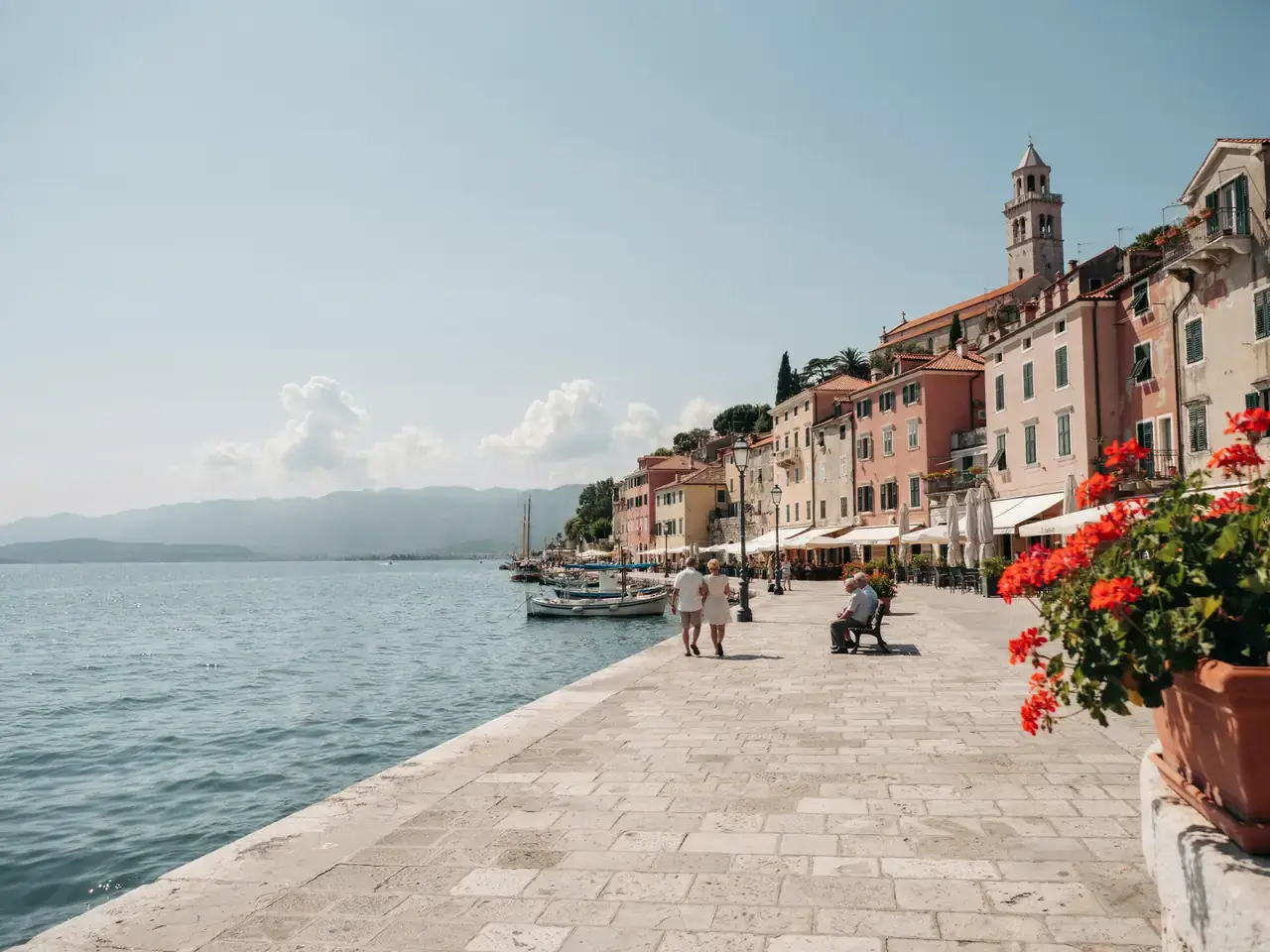
If you’ve only got a few hours ashore, the good news is that almost everything worth seeing is within walking distance of the gangway. Korzo, the traffic-free promenade running through the centre, is where you start and where you’ll keep ending up.
- Walk the Korzo, Rijeka’s pedestrianised main street, lined with shops, cafes and the route to most other attractions
- See the Leaning Tower, actually the bell tower of the Church of the Assumption of the Blessed Virgin Mary, which now tilts visibly as the ground beneath it has settled over the centuries
- Step inside the Cathedral of St Vitus, Rijeka’s most important church, home to a Baroque main altar and a Gothic crucifix
- Look up at the banana-yellow City Clock Tower, still keeping time over the old gate into town
- Find the Roman Arch down a narrow alley behind Trg Ivana Koblera, a quiet reminder of the city’s much older layers
- Take the bus or climb up to Trsat Castle for the best views over the harbour
Trsat Castle
Trsat Castle is the excursion here, a hilltop fortress with the port and the coastline laid out below. The site first turns up in records as a parish centre in the late 13th century, and the castle you see today was built soon after by the Frankopan family, a powerful Croatian noble house, on what’s thought to be the footprint of an even older Roman hill fort.
Sources differ slightly on timing, but expect somewhere between 10 and 15 minutes by taxi or car from the port. Autotrolej, the local bus operator, runs Line 2, a popular route that drops you about five minutes’ walk from the castle entrance, which spares your legs the climb.
The alternative is on foot, up the Petar Kružić staircase, nicknamed the Stairway to Heaven, which runs to more than 500 steps. If you’re tackling it instead of catching the bus, a solid pair of shoes built for steady hill walking will make the climb far more bearable. There’s a small Info Point at the castle, the Trsat Interpretation Centre, and while both this and the main Tourist Information Centre in town are wheelchair accessible, the castle’s medieval layout means not every corner of the site can be reached by wheelchair users.
Cruise interest in Trsat and the old city has grown steadily. Research published via ResearchGate puts Rijeka’s earlier comparison season at around 15 cruise vessels and just over 12,600 passengers, a modest start against more recent projections of considerably higher numbers. Separately, the Port of Rijeka handled just under 176,000 passengers in a recent year, according to Wikipedia, though that figure covers ferry and local traffic as well as cruise calls.
Old Town Rijeka and the Korzo
Old Town Rijeka is better wandered than ticked off a list. The Town Hall sits on the Korzo, the city clock tower marks the gate through to Trg Ivana Koblera, and the Roman Arch is tucked down the alley behind it. Rijeka held the title of European Capital of Culture a few years back, and the restoration work that came with it still shows around the old core.
The Tourist Information Centre sits on Korzo itself, between the City Hall and the Korzo Department Store, and its staff are your best bet for up to date opening hours at the cathedral and other sights.
Getting Around Rijeka
Most of central Rijeka is walkable, and Korzo is closed to traffic, so your own two feet are usually the easiest option. For anywhere further out, a local bus network loops round the city centre in one direction before fanning out to the suburbs, and Autotrolej’s buses are reliable and affordable for reaching sights like Trsat Castle.
ATMs are easy to find throughout the centre, and currency exchange offices work near the pier. Croatia switched to the Euro a few years back, replacing the Kuna, so Kuna notes and coins are no longer accepted anywhere in the city. Cards, particularly Visa and Mastercard, are widely accepted in shops, restaurants and at historic sites, though carry a little cash for small purchases like bus tickets or a coffee on the Korzo. Rijeka is also a very safe city for cruise passengers, with low rates of violent crime and a welcoming local community, so exploring alone on foot feels comfortable even without a group around you.
Rijeka Croatia Shore Excursions
Unlike some larger Mediterranean ports, there’s no confirmed line-up of pier-side tour operators at Rijeka, so most people either book through their cruise line or head off on their own. Given how central the terminal is, exploring independently is a realistic option here, even with only half a day ashore.
| Option | Best for | Roughly how long |
|---|---|---|
| Self-guided Old Town walk | First-time visitors short on time | 1 to 2 hours |
| Bus to Trsat Castle | History and views without the climb | Half a morning |
| Petar Kružić staircase on foot | Active travellers wanting the full route | Half a morning |
| Ship-organised shore excursion | Those wanting a guide and fixed pickup | Varies by itinerary |
Is Rijeka the Biggest Port in Croatia?
Depends what you mean by biggest. In cargo terms, the Port of Rijeka is Croatia’s largest, moving containers, ore, timber, grain and petroleum products in serious volumes. For passengers, the picture flips: Split is Croatia’s largest passenger port and one of the busiest on the whole Adriatic, while Dubrovnik remains the more established cruise stop. Rijeka’s cruise business is smaller and quieter by comparison, which is exactly the appeal if you’re tired of crowded old towns.
Piecing together a wider Croatian itinerary? Our overview of Mediterranean cruise ports in Croatia covers how Rijeka fits alongside stops like Split and Dubrovnik, and our Split cruise port guide and Dubrovnik cruise port guide are worth a look if either one’s on your itinerary. Head the other way along the coast and the cruise ship port guide for Pula covers Istria’s other major call, while further south the Kotor cruise ship port guide is handy if your route crosses into Montenegro.
When the Port Feels Busy
Rijeka isn’t a port where several ships pile in and swamp the old town, given its cargo-first identity and modest cruise calendar. Even so, ships dock so close to Korzo that a second vessel in port the same day gets felt in the cafes and narrow streets rather than at the gangway. An early start still pays off if you want the cathedral or the clock tower to yourself for photos.
Common Questions
Where is Rijeka port located?
Rijeka sits on Croatia’s northern Adriatic coast, and the cruise dock is built straight into the city centre, so you won’t need a transfer to reach the historic core.
Is Rijeka the same place as the Port of Fiume?
Yes. Fiume is the old Italian name for Rijeka, still turning up on older maps and shipping records. Today the city and its port go simply by Rijeka, Croatia.
Do I need a shuttle bus from the ship?
No. Ships dock alongside the Molo Longo breakwater, close enough to Old Town and Korzo that most passengers just walk straight off and into the streets.
Is Wi-Fi available at the terminal?
Reports conflict, so don’t count on it. Assume there’s no guaranteed on-site signal and plan on mobile data or the city’s public network once you’re out among the shops.
What currency should I bring?
The Euro. Croatia moved away from the Kuna a few years back, so Kuna notes are no longer accepted. Cards are widely taken, but keep some cash for small purchases.
Is Rijeka safe to explore alone?
Yes. Rijeka has a low rate of violent crime and a welcoming local community, so it’s a comfortable port for exploring alone on foot.
How do I get to Trsat Castle?
Take an Autotrolej bus, Line 2 is the popular choice, which drops you about five minutes’ walk from the entrance, or climb the roughly 500 step Petar Kružić staircase instead.
Is Rijeka the biggest cruise port in Croatia?
No. Rijeka is Croatia’s largest cargo port, but Split handles far more cruise and ferry passengers, and Dubrovnik remains the more established stop for cruise ship calls.
Can wheelchair users visit Trsat Castle?
The Tourist Information Centre and the castle’s Info Point are both accessible, but the medieval structure itself means full wheelchair access to every part of the site isn’t possible.
Why Trust About2Cruise
This guide draws on published port data, heritage records and tourism sources, and we cross-checked the points where accounts disagreed, including the conflicting claims about the terminal’s Wi-Fi and exact address covered above, rather than just picking whichever answer looked tidiest. Find out more about how we build our port guides on our about us page.
Last Updated: 19 October 2026