
The Dominican Republic has six working cruise port areas: Amber Cove and Taino Bay in Puerto Plata, La Romana, Santo Domingo, Samaná and Cabo Rojo, plus tender calls at Catalina Island and Cap Cana. Punta Cana has no deep-water cruise pier. Most ships dock on the north coast, but each coast serves a very different shore day.
Dominican Republic cruise ports map
The Dominican Republic’s cruise ports run from Cabo Rojo in the far southwest to Samaná and Punta Cana in the east, with Amber Cove and Taino Bay side by side at Puerto Plata on the north coast. Tap a pin to open that port’s guide.
Amber Cove: what the cruise terminal is actually like
Amber Cove is Carnival Corporation’s purpose-built terminal in the Bay of Maimón, about 11–12 km west of Puerto Plata. It has two berths and a 25-acre resort-style compound built around a large pool, an Aqua Zone with waterslides and a splash area, a zip line, overwater cabanas, bars, duty-free and craft shops.
There is no beach and nothing walkable outside the gates, so Amber Cove works best as a port-contained resort day or as a base for a pre-booked excursion. If you want to leave, taxis to Puerto Plata city, Playa Dorada or Cofresí take 15–20 minutes, with fixed per-vehicle fares shown on boards inside the terminal.
Taino Bay: the walkable Puerto Plata port
Taino Bay is ITM Group’s three-berth terminal inside Puerto Plata city itself, designed to handle around 14,000 passengers at once. Free facilities include the Dahao pool, a lazy river, a sand lounge with hammocks, aviaries and pier rickshaws. Splash surfing and Monkey Island cost extra.
The big difference from Amber Cove is walkability. The outer gates are roughly 800 m from Umbrella Street and about 15 minutes on foot from the historic centre, with Fortaleza San Felipe just under a mile away. Taino Bay is the best Dominican port for an independent town day, while still having a pool and lazy river to fall back on before all-aboard.
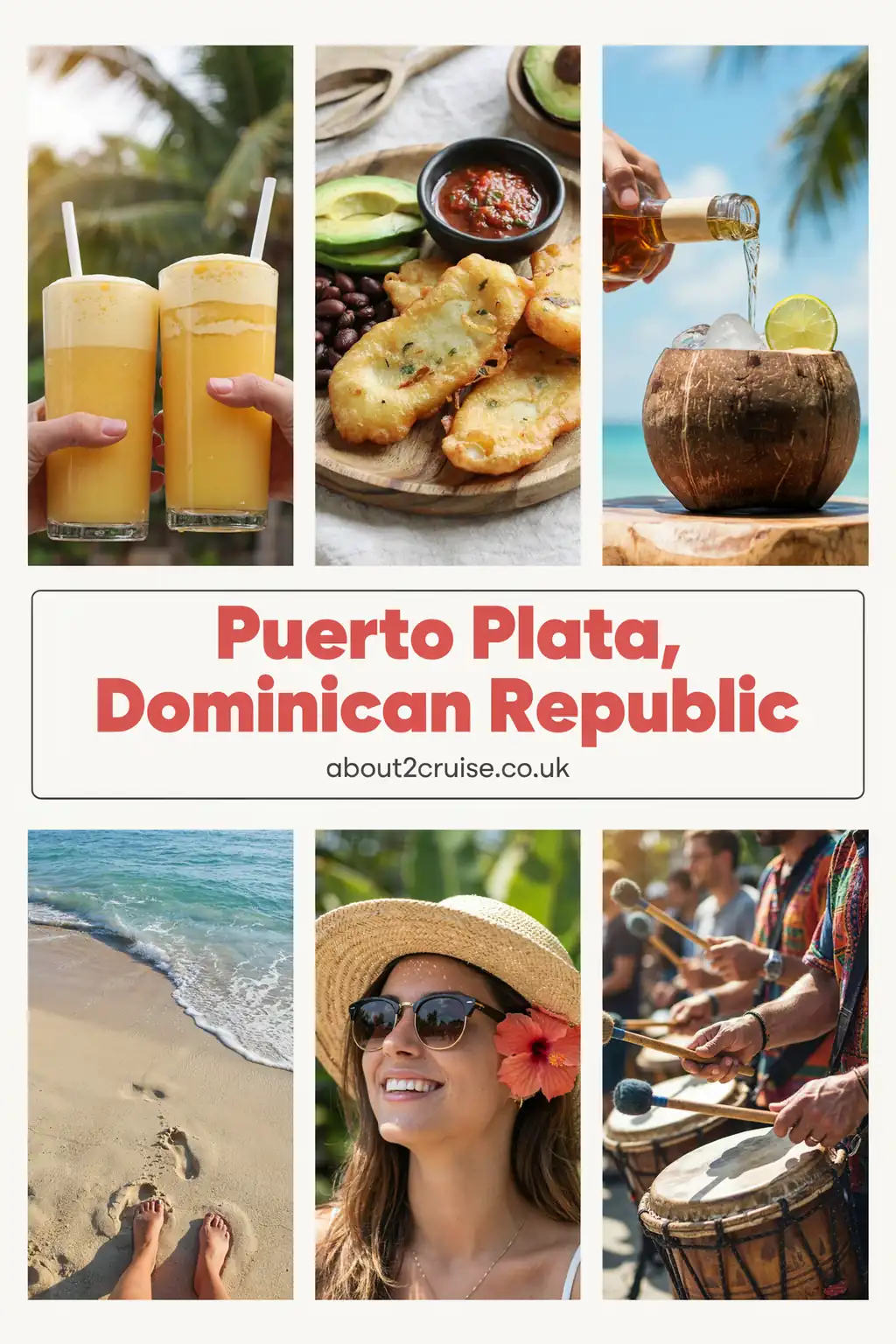
Puerto Plata: one city, two different cruise gates
Puerto Plata is the country’s cruise centre, but Amber Cove and Taino Bay are operated by different companies with different gates and different access systems. Always tell your driver exactly which terminal you need.
Amber Cove suits a port-contained resort day or a ship excursion. Taino Bay suits independent travellers who want to walk to the Malecón, the fort, Umbrella Street, Pink Street and the rum, amber and cigar shops around Parque Independencia. The Mount Isabel de Torres cable car is closed and not expected to reopen before 2028, so the summit is only reachable by road.
Puerto Plata is also the main starting point for the 27 Waterfalls of Damajagua, Ocean World, squirrel monkey encounters, buggy and ATV tours, and the nearest swimming beaches at Playa Dorada and Cofresí. Taxis from Amber Cove are charged per vehicle, not per person, which can be good value for families.
Samaná: whale watching and two separate terminals
Samaná Bay has two different cruise operations at different ends of the bay. Samaná Bayport on the Santa Bárbara Malecón is a tender terminal serving anchored ships beside the town, with easy access to whale-watching boats, Cayo Levantado and El Limón waterfall. Port Samaná at Arroyo Barril is a newer berthing terminal with two berths and visitor zones called Adventurers’ World and Xamana Village, with pools, restaurants, bars and shops.
Check which terminal your ship is using before booking independent tours, because tours sold for the town docks assume you landed there. Samaná is the humpback whale-watching centre of the Dominican Republic, with the official season running 15 January to 31 March.
La Romana: Casa de Campo, Saona and Catalina access
La Romana is on the southeast coast, with ships berthing at two wharves on the Río Romana between the town and Casa de Campo. The terminal has a free pool with swim-up bar, duty-free, pharmacy, handicraft stalls and restrooms, but no beach.
Most cruise lines run a complimentary shuttle to Casa de Campo, about 6 km or 15 minutes away, but it is a cruise-line service and not guaranteed. Casa de Campo is a private gated estate. Altos de Chavón, the stone Mediterranean-style village perched 300 ft above the river, is the main sight; walking around inside is free, though outside visitors typically pay about US$25 to enter.
The big boat excursions are Saona Island inside Cotubanamá National Park, about 7 hours door-to-door, and Catalina Island at about 5 hours. La Romana is also the country’s main fly-cruise homeport, with MSC Opera sailing year-round from here.
Santo Domingo: the oldest colonial city in the Americas
Santo Domingo is the capital and the oldest colonial city in the Americas, but it is a small cruise port rather than a homeport for most ships. Ships use one of two berths. Don Diego is on the west bank below the Colonial Zone: cross the road, climb the steps and you are in the UNESCO-listed old city within 10–15 minutes on foot. Sans Souci is the larger terminal on the east bank, roughly 2–3 km from the Colonial Zone, so a taxi or Uber takes 5–10 minutes.
The Colonial Zone’s core is the Catedral Primada, Calle Las Damas, Alcázar de Colón, Fortaleza Ozama and Plaza de España. Los Tres Ojos, a limestone cave system with underground lagoons, is about 8 km east of the old city and best reached by taxi. Cobbled streets and steps make comfortable shoes essential.
Catalina Island: a beach-only tender stop
Catalina Island is an uninhabited tender call about 2.5 km off La Romana. There is no pier; tenders land on the beach itself. It is a beach, snorkel and dive day, with The Wall, The Aquarium and Captain Kidd’s wreck as the underwater draws.
Cancellations happen and are usually replaced by a sea day because there is no alternative berth. A redeveloped beach operation called Catalina Sugar Beach has been adding organised facilities, but the call remains weather-dependent and basic. Reef-safe sunscreen, water shoes and cash for extras are sensible. If your itinerary says Catalina Island, treat it as a beach day rather than a sightseeing call.
Punta Cana / Cap Cana: no pier here, so read carefully
There is no deep-water cruise pier at Punta Cana. Ships listed as “Punta Cana (Cap Cana)” anchor off Cap Cana and tender passengers to Marina Cap Cana, a 15–20 minute boat ride. Small yachts can dock at the marina.
“Punta Cana (La Romana)” is a different port altogether: La Romana is roughly 70–80 km and 1 hour 15 to 1 hour 30 by road from the Punta Cana resort strip. Punta Cana itself is almost entirely a purpose-built all-inclusive resort coast, with Bávaro beach running more than 20 km. If your ship calls at Cap Cana, excursions are beach clubs, catamaran sails, Bávaro resort day passes and Scape Park or Hoyo Azul. Do not book a “Punta Cana” itinerary assuming a cruise pier in Punta Cana; check the exact port name.
Cabo Rojo: the remote southwestern stop
Cabo Rojo is a purpose-built cruise terminal on the arid southwest tip, operated by ITM Group and the Dominican Port Authority. It has a free lazy river, pools, a Ferris wheel and carousel at the port, but there is no town at the gate. Pedernales is about 22 km north, 20–30 minutes by road.
The signature excursion is Bahía de las Águilas, 8 km of undeveloped white sand inside Jaragua National Park, reached by a short drive to La Cueva and a 15–20 minute boat ride. Ship excursions typically run about US$79–149 per person. Other options include Laguna de Oviedo with flamingos and iguanas, Hoyo de Pelempito viewpoint, and the port’s paid Baby Beach Club. This is the best Dominican port for a genuinely remote, undeveloped beach day, not for independent town wandering. For a preview, see the Bahía de las Águilas photo gallery.
Barahona: not an active port yet
Barahona is not yet a working cruise port. The terminal has been under construction and the Dominican port authority expects completion in 2027, with the first cruise call scheduled for January that year. When it opens, the main appeal will be the coffee-producing mountains, larimar mining region and untouched southwest coastline. For now, if an itinerary mentions Barahona, treat it as future or chartered, and check the port’s status before relying on any shore plan.
What the Dominican Republic is famous for
Beaches, all-inclusive resorts and Punta Cana
The Dominican Republic is one of the Caribbean’s big beach and all-inclusive destinations. Punta Cana and Bávaro form a near-continuous resort strip, with Bávaro beach alone running more than 20 km. Cruise passengers usually reach this coast two ways: a Cap Cana tender call or a road transfer from La Romana, which is 70–80 km and 1 hour 15 to 1 hour 30 away. Most specific port areas do not have a beach immediately beside the pier, so if you want a swimming beach, plan a taxi, day pass or boat trip.
Colonial Santo Domingo
Santo Domingo holds the oldest permanent European settlement in the Americas. Its Colonial City is a UNESCO World Heritage site, laid out on a grid plan that was copied across the New World. It is the site of the first cathedral, first hospital, first customs house and first university in the Americas. For cruise passengers, the historic core is compact, walkable and ideal for a cultural port day, even though the cruise terminal itself is small.
Merengue, bachata, baseball, rum and cigars
Merengue and bachata are both on UNESCO’s list of Intangible Cultural Heritage, and you will hear them the moment you step ashore. Dominican winter baseball runs roughly October to January, with Tigres del Licey and Leones del Escogido sharing Estadio Quisqueya in Santo Domingo.
Rum is a signature product: Brugal, Barceló and Bermúdez are the best-known brands, with Brugal founded in Puerto Plata. The Cibao valley around Santiago is the tobacco heartland, and cigar rollers often work in front of customers in Puerto Plata shops. Larimar, a blue gemstone found only in the Dominican Republic, and mamajuana, the bark-and-herb rum drink, are the two souvenirs most passengers take home.
Whale watching in Samaná and wildlife
The humpback whale-watching season in Samaná Bay runs from 15 January to 31 March, set by the Ministry of Environment. Samaná Bay and the Banco de la Plata sanctuary are breeding and calving grounds, and an estimated 80% of the North Atlantic humpback population was born in Dominican waters. Whale watching is tightly regulated: only three boats may observe at once, waiting boats stay 250 m back, and time with each group is limited. Swimming with whales is prohibited. Out of season, Samaná substitutes are El Limón waterfall, Cayo Levantado and Los Haitises National Park.
How to tell which Dominican Republic cruise port your ship will use
Your cruise line is the only authoritative source, but the usual pattern is:
- Amber Cove: Carnival Corporation brands, Carnival, Princess, Holland America, Costa and Seabourn, plus occasional P&O and Cunard transatlantic calls.
- Taino Bay: Royal Caribbean, Celebrity, Norwegian, MSC, Virgin Voyages, Marella, Oceania, Regent Seven Seas and TUI.
- La Romana: MSC Opera’s year-round homeport, plus Costa, AIDA, TUI, Norwegian and other lines as a call or embarkation port.
- Santo Domingo: Costa embarks at Sans Souci; Crystal and TUI have called there. Don Diego is smaller and used for transit calls.
- Cabo Rojo: Norwegian, Royal Caribbean, Holland America, MSC and Costa have all called.
- Samaná: Virgin Voyages’ Resilient Lady was the first ship at Samaná Bayport; MSC Opera was the first at Port Samaná at Arroyo Barril.
Booking site names can be misleading. La Romana may appear as “La Romana”, “Casa de Campo”, “Punta Cana (La Romana)” or “Casa de Campo / La Romana”. “Punta Cana (Cap Cana)” is a different call from La Romana. Check the exact port name in your cruise line’s itinerary and app.
Amber Cove vs Taino Bay: which one fits your day?
Choose Amber Cove if you want a resort day without leaving the port: free pool and waterslides, shops, cabanas, zip line and a self-contained compound. Nothing is walkable outside the gates, so anything further needs a taxi or tour, and you should add 15–20 minutes to any journey into or east of the city compared with Taino Bay.
Choose Taino Bay if you want a town day: you can walk to the Victorian centre, the fort, Umbrella Street and the Malecón in 10–15 minutes, then return to the free pool and lazy river. It is also the better base for independent food stops and local shops.
Neither terminal has a swimming beach. Amber Cove has no beach at all; Taino Bay has a sand lounge but not a swim beach. If a swim is essential, take a taxi to Playa Dorada, Cofresí or a resort day pass.
Can you go ashore without an excursion?
At the docked ports, Amber Cove, Taino Bay, La Romana, Cabo Rojo, Santo Domingo and Port Samaná at Arroyo Barril, passengers can walk off and travel independently. At the tender ports, Catalina Island, Samaná Bayport and Cap Cana, going ashore depends on sea state and the ship’s tender operation, and the call can be cancelled altogether.
The UK Foreign, Commonwealth & Development Office advises carrying copies of your passport photo page and entry stamp at all times. Use official taxis or recognisable providers, agree the fare before boarding, and leave a sensible buffer for the return. From Puerto Plata’s historic centre, allow about 80 minutes before all-aboard; from nearby beaches allow 75–80 minutes, and from Damajagua allow at least two hours.
Getting around at each cruise port
- Amber Cove: Fixed-rate taxi stand inside the terminal. Photographed boards show Puerto Plata city or beach at US$40 one way / US$80 return for up to five passengers, each extra passenger US$8; Playa Dorada US$45 each way. Free carts run the long pier.
- Taino Bay: Walk to town in about 15 minutes. Free cycle-rickshaws run the pier between ship and Welcome Center. Taxis and tour operators meet outside the terminal; Uber operates in Puerto Plata but drivers cannot enter the terminal, so you may need to walk to the gate.
- La Romana: Cruise-line shuttles to Casa de Campo are common but not guaranteed. Taxis to Casa de Campo or Altos de Chavón run about US$15–20 per cab each way. Some independent transfers charge a port access fee per person, so confirm the total before booking.
- Santo Domingo: From Don Diego, walk to the Colonial Zone. From Sans Souci, take a taxi or Uber for 5–10 minutes. No transport is needed once you are inside the old city.
- Samaná: From Samaná Bayport, whale boats, water taxis and tours board beside the town tender docks. From Port Samaná at Arroyo Barril, you are away from town, so excursions and transfers are arranged from the terminal.
- Cabo Rojo: Pedernales is 22 km away. Taxis and excursions are the only way out; there is no walkable town.
- Punta Cana / Cap Cana: Tender to Marina Cap Cana. Pre-booked excursions meet at the marina; there is no town at the tender landing.
Beaches near each Dominican Republic cruise port
- Amber Cove: No beach. Playa Dorada is about 20 minutes by taxi; Cofresí is about 15 minutes west.
- Taino Bay: No swim beach at the terminal. Playa Dorada is about 15 minutes by taxi; Cofresí a little further.
- La Romana: No beach at the terminal. Bayahibe and Dominicus beaches are 20–30 minutes east; Catalina and Saona are boat trips.
- Santo Domingo: No beach at either berth. Boca Chica is roughly 30–40 minutes east; Juan Dolio is further.
- Samaná: Cayo Levantado, often called Bacardi Island, is reached by public launch from the Malecón or Simi Baez piers; Playa Rincón and Las Galeras are day trips. Public launches to Cayo Levantado quote roughly RD$250–800 per person round trip depending on source.
- Cabo Rojo: Bahía de las Águilas is the signature beach, reached by a 25-minute drive to La Cueva plus a 15–20 minute boat ride.
- Catalina Island: The beach is the destination; tenders land on the sand.
- Punta Cana / Cap Cana: Bávaro beach runs more than 20 km; Juanillo beach is near Cap Cana. Most beach access is through day passes or excursions.
Shore excursions worth booking
Independent operators at Puerto Plata are typically US$30–60 per person cheaper than the equivalent ship tour, with free cancellation up to 24 hours the norm. Prices below are indicative and can change.
- Puerto Plata / Amber Cove / Taino Bay: Damajagua Waterfalls (about US$45–65), buggy and ATV tours (US$80–125), catamaran and snorkel (US$65–85), Ocean World, squirrel monkey encounter, city and countryside sightseeing, and the Playa Dorada beach day. A sample ship excursion is Puerto Plata Sightseeing and Countryside at about US$95 for 5 hours.
- Santo Domingo: Colonial Zone walking tours, Catedral Primada, Alcázar de Colón, Fortaleza Ozama, Los Tres Ojos, and food or rum experiences. The best photo light at Los Tres Ojos is 08:00–09:00.
- La Romana: Saona Island full-day trip (about 7 hours), Catalina Island (about 5 hours), Altos de Chavón and Casa de Campo. Access to Altos de Chavón village usually costs about US$25 for outside visitors; walking around inside is free.
- Samaná: Humpback whale watching in season January–March, El Limón waterfall, Cayo Levantado beach day, Los Haitises National Park. Whale trips run about 2½ hours and board beside the town tender docks.
- Cabo Rojo: Bahía de las Águilas, Laguna de Oviedo with flamingos and iguanas, Hoyo de Pelempito viewpoint. Ship excursions run about US$79–149 per person.
- Punta Cana / Cap Cana: Bávaro beach club day passes, catamaran sails, Scape Park and Hoyo Azul, and resort day passes.
All-inclusive day passes near the ports
Resort day passes sold by platforms such as ResortPass and Day Pass can turn a port day into a hotel-style beach day. Examples include:
- Iberostar Waves Costa Dorada, Puerto Plata: US$65 all-inclusive.
- Viva Wyndham V Heavens, Puerto Plata: from US$60, adults only, 10:00–17:00. A taxi from Amber Cove is quoted at US$40 each way.
- Secrets Playa Esmeralda, Puerto Plata: US$145.
- Dreams Dominicus La Romana: US$85.
Casa de Campo is a private gated estate with no published day pass sold at the gate; entry comes through a pre-purchased excursion pass, restaurant booking or golf booking.
What to eat and drink
The national everyday lunch is la bandera dominicana: rice, stewed red beans and meat. Mangú, mashed green plantain with pickled onions, served with fried cheese, salami and egg, is the classic breakfast. Sancocho, a root-vegetable and mixed-meat stew, is the Sunday dish. Along the coast, mofongo, tostones and whole fried fish called chillo are staples.

In Puerto Plata, the streets around Parque Independencia hold the cafés, bakeries and rooftop restaurants, while the Malecón has seafood shacks and evening chimichurri stands. In Samaná, fish plates in beach comedores run about RD$700–1,400. In Pedernales, the local specialities are pulpo a la criolla and lambi, or conch. Presidente beer, rum and mamajuana are the drinks to try.
Is the Dominican Republic safe for cruise passengers?
The FCDO says the crime rate in the Dominican Republic is high, ranging from bag-snatching and pickpocketing to violent crime and carjacking. Thieves on motorbikes snatch bags and reach through car windows at red lights. Avoid remote areas after dark, keep phones out of sight, do not wear expensive jewellery or carry large amounts of cash, and never fight back if robbed. Bank card cloning and identity theft are specifically flagged, so keep your card in view when paying.
Use authorised taxis or hotel/terminal vehicles rather than random street taxis. Motorbike taxis, called motoconchos, are often driven badly and riders often have no helmet. Lifeguards may not be present at pools or beaches, and water sports, quad biking and horse riding providers may not meet UK safety standards. Tap water is not drunk by locals; bottled water is the norm everywhere, including for brushing teeth. The tourist police number quoted for emergencies outside Santo Domingo is +1 809-200-3500, and 911 does not have full national coverage.
Most cruise passengers have no trouble in port areas and on organised excursions. Follow the same precautions you would in any busy tourist destination.
Best time of year to cruise to the DR
Temperatures sit around 25–30°C year-round, with trade winds moderating the coast. December to April is the dry, busiest season and the best all-round window for cruise calls. May to November is wetter and hotter, but rain usually falls as short, heavy afternoon or evening showers rather than all-day rain. Hurricane season runs June to November, with the greatest risk in August and September.
The north coast has a slightly different pattern, with April and June–August driest there, and May and November wettest. Pedernales and the southwest are noticeably drier and more arid, with midday temperatures easily above 30°C. Strong Atlantic swells can occasionally make docking difficult for the largest ships on the north coast.
For whale watching, January to March is the season, and the official Samaná humpback season runs 15 January to 31 March. For dry weather and calm tenders, February to April is the sweet spot.
Money, language and tipping
The currency is the Dominican peso, often written RD$ or DOP. US dollars are widely accepted in tourist areas, but change usually comes back in pesos at the vendor’s rate, which may not be favourable. On a card, always choose pesos rather than your home currency: dynamic currency conversion can cost roughly 3–8%. Cards and contactless work at resorts, hotels, larger restaurants and shops; taxis, markets, colmados and street vendors run on cash. Bank ATMs are the best value for cash, with typical local fees of about RD$250 per withdrawal and limits around RD$10,000–20,000 per transaction.
Restaurant bills add 18% ITBIS sales tax plus a 10% legal service charge on top of menu prices. An extra 5–10% tip is customary on top. Spanish is the official language, but English is spoken in cruise terminals, tourist areas and ship-organised excursions. A few Spanish greetings go a long way in markets and taxis.
Accessibility at the ports
Amber Cove is wheelchair accessible across shops, restaurants and most pool and recreation areas, though hillside and poolside cabanas are not accessible apart from the Grand Cabana. Taino Bay has wide, flat walkways, accessible restrooms and free rickshaws along the pier; some stone-paver sections can be bumpy.
Tendering is the main barrier: mobility devices over 100 lb without the battery cannot usually be transferred, and gangways get steep with tide. La Romana, Santo Domingo, Cabo Rojo, Samaná Bayport and Port Samaná publish little or no terminal-specific accessibility detail, so wheelchair, scooter and accessible-transfer requests must be arranged with the cruise line before travel. Santo Domingo’s Colonial Zone has cobbled streets and steps, and the Don Diego approach involves steps up from Avenida del Puerto.
How to check your ship’s berth and schedule
There is no single official combined Dominican Republic cruise schedule for all ports. Amber Cove publishes its own arrival calendar on the Amber Cove website. Taino Bay publishes arrivals on the Port Taino Bay website. La Romana’s terminal operator Central Romana has a website, but it does not publish a full public schedule. The Dominican Port Authority publishes weekly and monthly call totals and named ships on its website.
Third-party cruise schedule sites commonly merge the two Puerto Plata terminals under one name, so a listing that says only “Puerto Plata” does not tell you which gate to use. Your cruise line’s app and booking documents are the only authoritative source for your own terminal, berth and all-aboard time.
Tender ports vs docked ports in the Dominican Republic
- Tender ports: Catalina Island, Samaná Bayport (for anchored ships), Cap Cana.
- Docked ports: Amber Cove, Taino Bay, La Romana, Santo Domingo’s two berths, Cabo Rojo, and Port Samaná at Arroyo Barril.
Tender calls depend on sea state and the ship’s tender operation, and can be cancelled. A cancelled Catalina call is usually replaced by a sea day because there is no alternative berth. Samaná’s two terminals sit at different ends of the bay, which changes independent tour meeting points. Check your terminal before booking.
Where to stay if your cruise starts or ends here
La Romana is the country’s fly-cruise homeport, about 15 minutes from La Romana International Airport. MSC sells Stay & Cruise packages of two or three hotel nights around La Romana departures, using hotels such as the Hilton Garden Inn La Romana, which is under 20 minutes from the port. Casa de Campo Resort & Villas is about 1.4 miles from the cruise terminal, with golf, marina, Minitas Beach and Altos de Chavón on site. Bayahibe and Dominicus are further east and need a longer embarkation-morning transfer. For any Casa de Campo transfer, give the villa number or hotel reception and confirm gate access before booking.
Airports and port transfers
- Gregorio Luperón International Airport (POP) is 18 km and about 25 minutes from Puerto Plata. Fixed airport taxis run about US$30–40 to the city centre, and Taino Bay is 15–25 minutes by taxi or transfer.
- La Romana International Airport (LRM) is 10–15 minutes from La Romana town and the cruise terminal.
- Punta Cana International Airport (PUJ) is 70–80 km and 1 hour 15 to 1 hour 30 from La Romana cruise terminal, with private transfers usually US$90–130. It is 10–25 minutes from Marina Cap Cana.
- Santo Domingo Las Américas International Airport (SDQ) is about 95–105 km and 1 hour to 1 hour 15 from La Romana cruise terminal.
There is no rail or scheduled coach link serving any Dominican cruise terminal; transfers are by road, taxi or pre-booked vehicle. UK passport holders can visit for tourism without a visa for 30 days, but must complete an online entry and exit form up to seven days before arrival and produce the QR code. Border officials take fingerprints and a photograph on arrival, and proof of onward or return travel may be requested.
7-day Dominican Republic cruise route ideas
MSC Opera’s La Romana week runs La Romana, Catalina Island, Martinique, Virgin Gorda, Antigua, bookable as 7 nights or 14 as a back-to-back. Carnival’s 8-night Caribbean rotations pair Amber Cove with Grand Turk and Half Moon Cay. Costa’s Caribbean programme embarks at Santo Domingo on Mondays and La Romana on Sundays, on 7- and 14-night circuits via the Antilles, Virgin Islands and Turks & Caicos. Peak Caribbean cruise season runs November to April, with the busiest Dominican days seeing five or six ships across the ports.
Within the Dominican Republic, a typical 7-night port itinerary might combine Puerto Plata with La Romana or Santo Domingo, but most ships use the country as one call in a wider Caribbean rotation rather than as a domestic-only itinerary. If you want more than one Dominican port, look for itineraries that pair Puerto Plata with La Romana or Samaná on a longer Eastern Caribbean sailing.
Dominican Republic cruise port FAQs
What is the capital of the Dominican Republic?
Santo Domingo. It is also the oldest colonial city in the Americas and has two cruise berths, Don Diego and Sans Souci.
What is the main sea port in the Dominican Republic?
For cruise passengers, Puerto Plata’s two terminals, Amber Cove and Taino Bay, handle the large majority of cruise traffic. Caucedo, sometimes searched, is the Haina/cargo and container complex; it is not a cruise terminal.
Is there a Punta Cana cruise port?
No. There is no deep-water cruise pier at Punta Cana. Ships listed as “Punta Cana (Cap Cana)” anchor off Cap Cana and tender to Marina Cap Cana; “Punta Cana (La Romana)” means the port of La Romana.
Can I walk to Puerto Plata from the cruise port?
From Taino Bay, yes: the historic centre is about 15 minutes on foot. From Amber Cove, no: the terminal is about 11–12 km west of the city, and a taxi takes 15–20 minutes.
Do I need a visa for the Dominican Republic from the UK?
UK passport holders can visit for tourism without a visa for 30 days. You must complete an online entry and exit form up to seven days before arrival and show the QR code.
When is whale watching in Samaná?
The official humpback whale-watching season runs from 15 January to 31 March. Peak months are January, February and March.
What is the best month to cruise to the Dominican Republic?
February to April offers dry weather, calm seas for tenders and the tail end of whale season. December to April is the busiest, driest overall window.
What currency should I use?
Use Dominican pesos for small purchases and change; US dollars are widely accepted in tourist areas but change may come back in pesos at a poor rate. On cards, always choose pesos.
Is the Dominican Republic safe for cruise passengers?
Most cruise passengers have no trouble in port areas and on organised excursions. Follow FCDO advice: avoid remote areas after dark, use official taxis, do not flash valuables, and keep an eye on your card when paying.
Can I leave the ship without booking an excursion?
At docked ports, yes. At tender ports, it depends on the ship’s tender operation and sea state. Independent travel is straightforward in Puerto Plata’s Taino Bay, Santo Domingo’s Don Diego and La Romana, but Amber Cove, Cabo Rojo and Port Samaná at Arroyo Barril need pre-arranged transport or a tour.
For more destinations, see the cruise port guides.
Last Updated: 15 November 2026