
Brazil’s main cruise ports are Rio de Janeiro, Santos (for São Paulo), Salvador da Bahia, Recife (for Olinda), Fortaleza, Maceió, Natal, Ilha Grande, Paraty, Búzios, Ilhabela, Porto Belo, Itajaí, Balneário Camboriú, Paranaguá, Rio Grande and Manaus on the Amazon. Rio and Santos are the two big embarkation hubs, while the rest are mostly beach, island and colonial-town calls. Some of the prettiest places are tender-only, so knowing the difference changes your planning.
Brazil cruise ports map
Brazil’s 18 cruise ports run from Fortaleza and Natal in the far north to Itajaí and Paranaguá in the far south. Tap a pin to open that port’s guide.
Quick Look: Dock Ports, Tender Ports, and Turnaround Hubs
- Dock ports: Rio de Janeiro, Santos, Salvador, Recife, Fortaleza, Maceió, Natal, Itajaí, Paranaguá, Rio Grande, Manaus.
- Tender ports: Búzios, Ilhabela, Ilha Grande/Angra dos Reis, Paraty, Porto Belo, Balneário Camboriú.
- Big turnaround ports: Santos, Rio de Janeiro, Salvador, Maceió, Itajaí, Balneário Camboriú, Paranaguá.
- Main cruise season: late October to mid-April, with Amazon river cruising running year-round separately.
Rio de Janeiro: The City Most People Picture When They Book Brazil
Rio is the city most people picture when they book a Brazil cruise. Ships dock at Pier Mauá, about 3km from downtown and 8–10km from Copacabana and Ipanema. The terminal sits on the VLT tram line, so you can reach the metro, Santos Dumont airport, and the bus station for R$4.70. Christ the Redeemer is about 9km and 25 minutes by road; Sugarloaf is 6km and 15 minutes. Both are must-book sights, and if you visit during Carnival the Sambadrome parades add a whole other layer. Even a normal port day here feels like a full day.
Best for: first-time Brazil cruisers, Christ the Redeemer, Sugarloaf, Copacabana, Carnival calls, and New Year fireworks.

Santos: The Busiest Embarkation Port and Gateway to São Paulo
Santos is Brazil’s busiest cruise turnaround port. The Concais terminal sits inside the Port of Santos, about 2km from the historic center and 76km from São Paulo. Most passengers use it as an embarkation point and base themselves in Santos or nearby Guarujá. It works better than Rio if you are flying into São Paulo/Guarulhos and want a simpler start. On a port day, the coffee museum, historic tram, and Monte Serrat viewpoint are all straightforward. A full São Paulo day eats 3–4 hours in transfers.
Best for: embarkation, cheaper Brazil cruise starts, São Paulo connections, coffee history, and a less manic first day.
Salvador da Bahia: Colonial History Right Above the Dock
Ships tie up at the Terminal Marítimo in the lower city. The UNESCO-listed old town is above you on the bluff, reached by the Elevador Lacerda or a short taxi ride. Pelourinho’s squares, churches, and baianas selling acarajé are the main draw, and you can cover most of the culture without a tour. Salvador is also a major Carnival port, with ships sometimes staying late so passengers can join the street parties.
Best for: colonial history, Afro-Brazilian culture, music, food, and one of the easiest old towns to reach from a ship.
Recife for Olinda: Use It as a Gateway, Not a Beach Stop
Recife is a working city port in the old Recife Antigo district. Walking through the port compound is not permitted, so passengers use a complimentary shuttle to the gate. Olinda, the real sight, is 6–7km north and has one of Brazil’s best-preserved colonial hill towns. Allow a taxi or ride-share. Beaches around Recife have shark warning signs, so most cruisers spend the day in Olinda or on a tour rather than swimming beside the port.
Best for: Olinda’s baroque churches, artists’ studios, and north-east culture. The port city itself is more of a working gateway.
São Luís: A UNESCO Old Town Reached from a Cargo Port
São Luís, the capital of Maranhão, is the only Brazilian state capital founded by the French. Ships berth at Porto do Itaqui, a working cargo port about 11 km from the UNESCO-listed Historic Centre, so plan a transfer or a ship excursion rather than walking out. The old town is the reason to come. Rua Portugal has the largest run of tiled façades in Brazil, and the compact core around Praça Dom Pedro II and Praia Grande takes 10 to 15 minutes to cross on foot, over cobbles and steps.
Fortaleza: An Easy Beach Day in the North-East
Fortaleza is a proper dock port in the Mucuripe area. The terminal puts you close to the Beira-Mar promenade, the fish market at Mercado do Peixe, and the urban beaches of Iracema and Meireles. The better beach day is usually Praia do Futuro or a buggy and dune trip out of the city. Local tourism staff generally meet ships with maps and a printed passenger passport.
Best for: easy beach day, seafood at the fish market, north-east warmth, and a more manageable port than Recife.
Maceió: Turquoise Lagoons and a Growing Turnaround Port
Maceió is a growing turnaround and call port on the Alagoas coast. Its famous shallow turquoise lagoons and natural pools are reached by boat or jangada, and the beach scene is the whole point. If your ship calls here, the easiest good day is a short transfer to Praia de Pajuçara or a beach-club day. It is less colonial than Salvador and less big-city than Recife.
Best for: turquoise water, jangada rides to sandbanks, relaxed north-east beach days, and a less complicated turnaround.
Natal: Dunes, Buggy Rides, and Wide Atlantic Beaches
Natal sits near the north-east corner of Brazil and is usually a beach-and-dunes port. The most famous excursions are buggy rides over the dunes at Genipabu and the giant cashew tree, with city beaches a short drive from the terminal. It is a regular call on north-east itineraries rather than a main turnaround.
Best for: dune buggy trips, wide Atlantic beaches, warm water, and an active outdoor day.
Ilha Grande: A Tender-Only Island with No Cars
Ilha Grande is a tender-only island call. Ships anchor and send passengers ashore to Vila do Abraão. The island has no cars, and beaches are reached on foot or by water taxi. The town is small, sandy, and relaxed, with forest trails behind it. Some itineraries describe this as Angra dos Reis, which may land downtown instead, so check the daily programme for which landing is used.
Best for: car-free beach day, trail walking, water taxis to quiet coves, and a genuinely slow island atmosphere.
Paraty: Cobbled Streets and a UNESCO Old Town
Paraty is a tender call that lands at the edge of a beautifully preserved colonial town. The streets are cobbled and uneven, and the gold-rush architecture is the sight, with dozens of islands in the bay for schooner tours. It is a UNESCO mixed cultural and natural site along with Ilha Grande, and it photographs brilliantly on a sunny morning.
Best for: colonial architecture, schooner trips, small art and cachaça shops, and a more intimate old town than Rio or Salvador.
Búzios: The Glamorous Resort Stop Near Rio
Búzios is a tender port on the coast north-east of Rio. Most landings are either at the central pier next to Rua das Pedras or at Porto Veleiro about 4km from the center. The town is a resort with boutique shops, waterfront restaurants, and a string of small beaches along Orla Bardot. It is a favourite short-break call on Rio and Santos mini-cruises, but tender queues build late in the day.
Best for: resort beach day, shopping, easy walking, and a glamorous but compact port stop.
Ilhabela: São Paulo’s Big Island Call
Ilhabela is São Paulo’s big tender island call. The landing is at Píer da Vila in the historic center, so you step off into town. Tours run to waterfalls, forest trails, jeep viewpoints, and beaches like Curral. On big-ship days the pier is strictly for passenger movement, and the island can feel busy, but it is one of the easiest outdoorsy stops around São Paulo.
Best for: rainforest trails, waterfalls, beach transfers, and a tender landing right in town.
Porto Belo: A Sheltered Bay for a Low-Key Beach Day
Porto Belo is a sheltered Santa Catarina bay used heavily by southern-Brazil and repositioning cruises. Ships tender to a tourist pier in the town center, and a free shuttle circulates around the waterfront. The bay is calm and good for boat trips to Ilha João da Cunha, or you can make it a low-key beach day. Three ships can anchor at once in high season.
Best for: gentle bay beaches, boat trips, smaller crowds, and a relaxed southern Brazil stop.
Itajaí: Southern Brazil’s Practical Turnaround Port
Itajaí is a southern turnaround port for Santa Catarina and Paraná coast cruises. The terminal has been developed in stages, with temporary check-in halls and bus transfers to berths, and a purpose-built facility is being expanded. The city itself is a working river port, but it is the practical gateway to Balneário Camboriú, Porto Belo, and Beto Carrero World.
Best for: southern Brazil embarkation, nearby beach cities, and shorter Santa Catarina loops.
Balneário Camboriú: A High-Rise Beach City Where You Still Tender
Balneário Camboriú is an unusual cruise port: ships anchor and passengers tender ashore even though it is also used as a turnaround. The Barra Sul terminal has check-in, security, and Federal Police facilities, with the beach city’s high-rise skyline right there. It pairs naturally with Porto Belo and Itajaí, and is popular with Brazilian cruisers rather than long-haul visitors.
Best for: Brazilian beach-city energy, high-rise views, cable car, and a southern turnaround option.
Paranaguá: The Seaport for Curitiba and Ilha do Mel
Paranaguá is the seaport for Paraná state and a regular southern Brazil call. It is the gateway to the historic railway and mountain town of Morretes/Curitiba, and to the low-key island of Ilha do Mel. The port itself is businesslike, but excursions can turn it into a lovely green day away from the ship.
Best for: Curitiba rail excursions, Ilha do Mel nature, and southern itineraries linking Brazil to Uruguay and Argentina.
Rio Grande: Brazil’s Far-South Stop on the Way South
Rio Grande is Brazil’s far-south cargo port, usually visited by smaller luxury, expedition, or repositioning ships. Calls are often short and sometimes technical, with a cultural welcome and a chance for a run out to Praia do Cassino. It is not a beach-holiday port like Búzios, but it makes sense on routes heading to Uruguay and Argentina.
Best for: southern Brazil route context, Cassino beach, and a quieter local welcome.
Manaus: An Amazon Port a World Away from the Coast
Manaus is around 1,000 river miles from the Atlantic, but oceangoing and expedition ships can reach it. The port sits on the Rio Negro, near the Teatro Amazonas opera house and the markets. The signature trip is the Meeting of the Waters, with pink river dolphins, indigenous village visits, and flooded-forest canoe trips available as boat tours. Amazon calls are rare on the main coastal season, but they are a completely different Brazil.
Best for: Amazon River cruising, rainforest excursions, river dolphins, and a completely different tropical port.
Dock vs. Tender Ports: What Actually Matters for Your Itinerary
The walk-off ports are Rio de Janeiro, Santos, Salvador, Recife, Fortaleza, Maceió, Natal, Itajaí, Paranaguá, Rio Grande, and Manaus. The tender-only calls are Búzios, Ilhabela, Ilha Grande/Angra dos Reis, Paraty, Porto Belo, and Balneário Camboriú. Tender ports land you in town or at a pier, so you do not need a shuttle, but the ship may cancel if wind and swell pick up. If you use a wheelchair or have balance issues, check with your line before booking a tender-heavy Brazil itinerary. On large ships, be back in the tender queue at least 90 minutes before all-aboard.
How to Choose the Right Brazil Ports for Your Cruise
If you want the classic first-time Brazil, pick an itinerary that starts in Rio or Santos and includes Búzios, Ilha Grande/Paraty, and maybe Salvador. If you want the warmest sea and sun, head to the north-east: Salvador, Maceió, Recife, Fortaleza, and Natal. If you want a cheap Brazilian mini-cruise, the 3–4 night Santos to Búzios or Ilhabela loops are the usual product. If you want a longer South America journey, look for ships that continue to Montevideo, Buenos Aires, or Patagonia after the Brazilian ports. Amazon and river cruising is a separate decision from the coastal season.
Rio or Santos: Which Embarkation Port Is Better?
Rio is the better embarkation port if you want to be in the middle of the sights from day one. Galeão airport is about 16km from Pier Mauá, and there are hotels within walking distance of the terminal. Santos is better if you are flying into São Paulo, want cheaper pre-cruise stays, or are joining a short Brazilian coast loop. The trade-off is that Santos itself is quieter, and São Paulo is 76km away. Whichever you choose, arrive at least a day before sailing.
Best Time to Cruise Brazil (and When to Expect Bigger Crowds)
Brazil’s cruise season runs from late October to mid-April, covering Christmas, New Year, school holidays, and Carnival. The rainy season runs November to March in the south and south-east, including Rio, and April to July in the north-east. Rio and Santos are hot and humid in January and February. The north-east ports are warm all year. The far south can be cool and wet even in the cruise months. If you want Carnival, check the dates before booking and expect high prices and bigger crowds. If you want the Copacabana New Year fireworks, book very early: it is one of the most sought-after itineraries of the season.
Typical Brazil Cruise Itineraries and Repositioning Routes
The core products are 3–4 night mini-cruises from Santos or Rio to Búzios, Ilhabela, and Ilha Grande; 7-night-plus north-east runs to Salvador, Maceió, and Recife; and Rio da Prata itineraries calling Montevideo, Punta del Este, and Buenos Aires. Transatlantic Grand Voyages sail from Europe in October and November and return March and April, taking 11–17 nights with calls such as Tenerife, Mindelo, and Salvador. Amazon river cruises run year-round from Manaus on their own cycle. Indicative fares seen on sale start from around US$67 for a 1-night Rio-Santos repositioning, US$389 for a 3-night Santos-Búzios loop, and US$849 for a 7-night Paranaguá-Ilhabela-Rio-Búzios-Ilha Grande sailing, all excluding taxes and port fees.
Cruise Lines and Ships Sailing Brazil
MSC and Costa are the two big coastal operators. MSC has four large ships in the country and Costa two, plus the Spanish start-up Corazul Cruceros’ Buenavista. Long-haul and luxury calls come from Cunard, Hapag-Lloyd, Seabourn, Regent Seven Seas, Silversea, Oceania, Ponant, Phoenix Reisen, and Scenic. The Brazilian season as a whole features around 700 calls and 800,000 berths on offer. If you are coming from the UK, you will usually either fly into Rio or São Paulo and join an MSC/Costa ship, or arrive on a transatlantic or luxury line.
Port-to-City Travel Times: First Things to Know
- Rio de Janeiro: Christ the Redeemer 9km or about 25 minutes; Sugarloaf 6km or about 15 minutes; Copacabana 8km; downtown 3km.
- Santos: São Paulo 76km, 1.5–2 hours; Guarulhos airport 114km, allow 2–3 hours; historic center about 2km or a 35–40 minute walk.
- Salvador: old town about 10 minutes on foot plus the Elevador Lacerda; Pelourinho around 1.2km.
- Recife: Olinda 6–7km, 15–20 minutes by taxi.
- Fortaleza: Beira-Mar and the beaches are a short taxi or app-car ride from the terminal.
- Tender ports: most land passengers in the town itself, so no shuttle is needed.
- Manaus: city sights sit near the river; the Meeting of the Waters is a boat trip.
Free Shuttles and Getting Around at the Port
There is no heavy passenger rail to any Brazilian cruise terminal. Rio is the easiest city: the VLT tram stops at Pier Mauá and costs R$4.70, linking Santos Dumont airport, the Novo Rio bus station, and the metro. Recife runs a complimentary shuttle from the berth to the port gate and a seasonal tourist bus. Porto Belo has a free town shuttle. Santos sometimes has line-run shuttles, but the historic center is walkable or a taxi ride. Tender ports land you in the main settlement, so no shuttle is needed. Balneário Camboriú uses tenders even though it is a turnaround port.
Excursion Planning: Realistic Port Timings and What to Book Ahead
Rio needs a full day and a vehicle. Pre-book Christ the Redeemer and Sugarloaf; the Corcovado train is the tighter ticket and morning is usually quieter. Book Christ first and Sugarloaf second, with sunset at Sugarloaf if you can. Santos splits into two different days: the coastal option around the historic center, coffee museum, and beaches, or a full day in São Paulo, which eats 3–4 hours in transfers. Salvador’s culture route needs no taxi at all. For Amazon calls, boat tours from Manaus usually run 3–7 hours. Iguazu Falls is not a port day; it is a pre- or post-cruise flight and stay.
Iguazu Falls as a Brazil Cruise Add-On (Not a Port Day)
Iguazu Falls is not a cruise port. It is the classic add-on reached by a flight from Rio, São Paulo, or Curitiba to Foz do Iguaçu. The Brazilian national park ticket is R$134 for foreign adults, with online timed tickets recommended and last entry at 16:00. Yellow fever vaccination is recommended for Paraná and Iguaçu. Plan at least one full day, preferably two, and do not try to fit it into a standard port day.
Safety and Local Transport in Brazil Ports
Use official taxi ranks, app cars, or pre-booked transfers, not street taxis. Book through the app and check the plates. Keep your card in sight and check the amount on the terminal. Leave passports and jewelry in the ship safe. Avoid favelas, including favela tours. Do not go on city beaches after dark. Phone theft is common, especially between 16:00 and 21:00. E-cigarettes and vaping devices are illegal in Brazil. Be careful with spirit-based drinks. Carnival and large celebrations attract pickpockets and group beach thefts, so keep personal security tight.
Money, Cards, and Tipping: What You’ll Actually Use
The currency is the Brazilian real. Contactless Visa and Mastercard work almost everywhere, including beach kiosks and taxis; American Express is patchy. Restaurants add a 10% service charge, which is understood as the tip. Round up or leave a few reais for taxis; porters get roughly R$5–10 a bag. Use ATMs inside bank branches rather than standalone machines, which can charge R$20–35 on foreign cards. Withdrawal limits fall to R$300–500 between 22:00 and 06:00. Always pay in reais and refuse the terminal’s offer to charge in your home currency. Carry small notes because street vendors cannot always change R$100. Official data puts average spend at about R$710 per port call and R$920 at turnaround ports.
Visas, Passports, and Entry Rules
British citizens can visit Brazil without a visa for up to 90 days for tourism. Your passport must have at least six months’ validity after arrival. Make sure the border officer stamps your passport. US, Canadian, and Australian passport holders need an e-visa via the official VFS Global portal. No yellow fever certificate is required to enter Brazil, though vaccination is recommended for many states. Cash or travelers cheques of US$10,000 or more must be declared online. Dual British-Brazilian children under 18 traveling without both parents need formal authorization.
Health and Vaccinations: What to Plan Before You Go
Hepatitis A, tetanus, and typhoid are recommended for most travelers. Yellow fever vaccination is recommended for Rio de Janeiro city, São Paulo city, Iguaçu Falls, Paraná, Santa Catarina, Rio Grande do Sul, Amazonas, and designated areas of Bahia. It is not recommended for Fortaleza or Recife. Dengue, chikungunya, and Zika occur across Brazil and are spread by daytime-biting mosquitoes, so repellent matters in every port, not just the jungle. Amazon travelers should use repellent, long sleeves, and trousers on forest excursions. FCDO advises against all but essential travel on parts of the Amazon and its tributaries because of armed groups and drug traffickers; check regional risks before booking a Manaus or river journey.
Packing for Brazil Cruise Ports
Pack for heat, humidity, and sudden rain. A light waterproof layer is useful from November to March in the south and south-east, and April to July in the north-east. Take strong insect repellent, high-factor sun cream, a hat, and comfortable shoes for cobbles, sand tracks, and uneven streets. Bring a cover-up for churches in Salvador and other religious sites. Leave jewelry and flashy watches on the ship. For the ship, pack a non-surge power strip, prescription medication, chargers, a change of clothes, and swimsuit in your carry-on. Buffet scrambled eggs are often made from liquid or powdered egg mix and kept warm, so the better choice is the made-to-order egg station or the dining room.
Food and Drink Near the Ports
Feijoada, the black-bean and pork stew, is Brazil’s national dish. Acarajé is the Bahian street food made from black-eyed pea fritters in dendê oil. Moqueca, the coconut-milk fish stew, is a north-east classic. Pão de queijo and a caipirinha are the easy national staples. Santos is coffee country, and the Museu do Café serves Brazilian beans. Fortaleza’s Mercado do Peixe lets you buy fish, shrimp, or lobster and have the adjoining stalls cook it by weight. In Manaus, the riverside market is the place to try Amazonian fruit and river fish.

Photography Spots: Where to Get the Best Shots
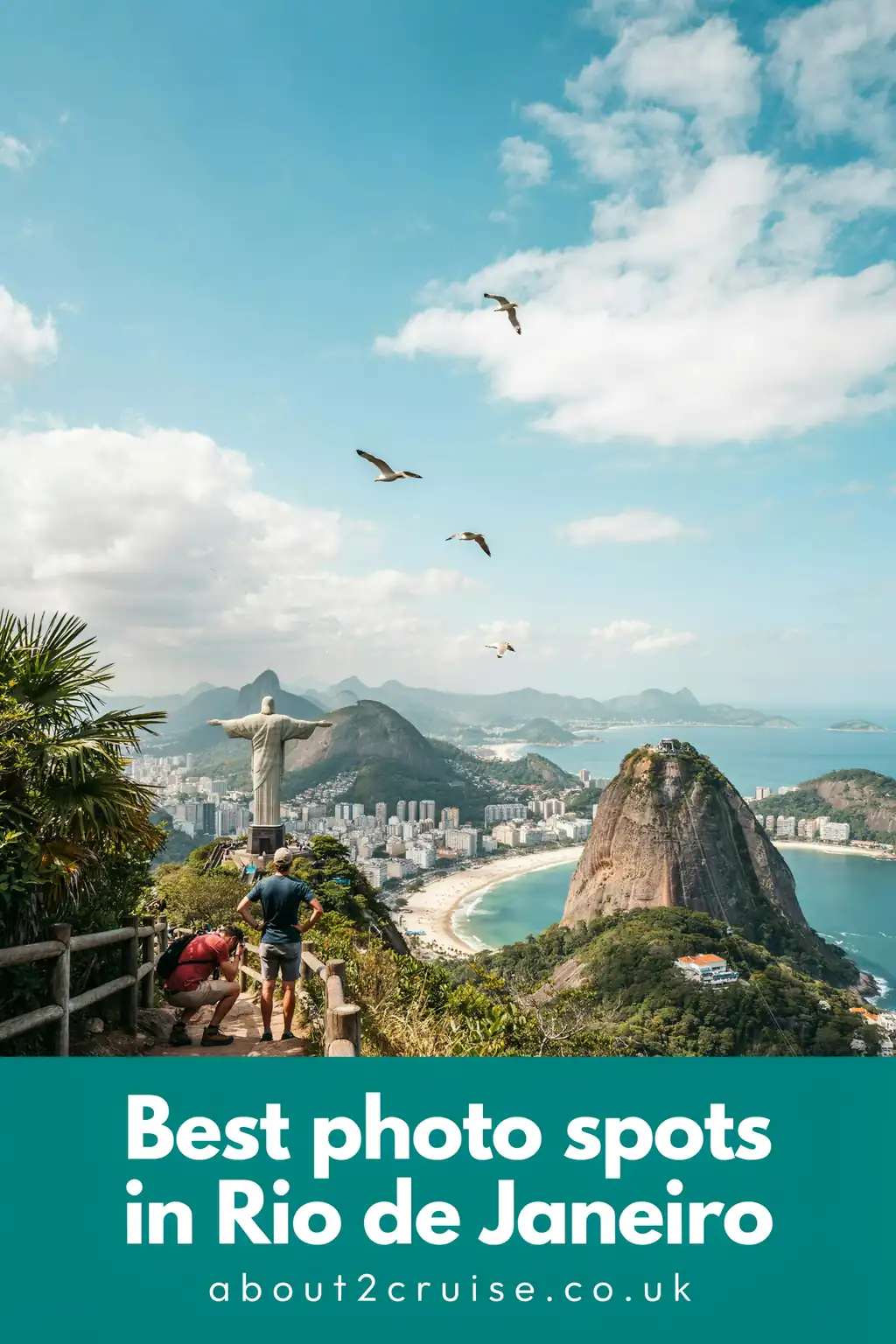
In Rio, the two iconic shots are Christ the Redeemer early morning and Sugarloaf at sunset. The free Mirante Dona Marta viewpoint gives you the bay, Christ, and Sugarloaf in one frame. The Selarón Steps are another easy photo stop. In Salvador, shoot the colored colonial houses of Pelourinho and the bay view from the top of the Elevador Lacerda. Santos comes alive from the top of Monte Serrat. Búzios has the Orla Bardot promenade and fishing boats. Ilhabela’s waterfront is right beside the tender landing, so the harbour-and-ship shot needs no transport.
Embarkation Ports, Hotels, Luggage, and Parking
Turnaround ports include Santos, Rio de Janeiro, Salvador, Maceió, Itajaí, Balneário Camboriú, and Paranaguá. In Rio, the Novotel Porto Atlântico and Windsor Guanabara are near the terminal; beach hotels in Copacabana and Ipanema are 8–10km away. In Santos, stay in Gonzaga for the beachfront, or Valongo for a closer-to-port option. Arrive at least one day early. Santos Concais has left-luggage, and Rio has third-party storage from about R$20 a day. Santos parking at Concais is R$95 a night for a car, R$45 for a motorbike, and R$565 for seven nights. Rio has the Parking Pier Mauá, but no published tariff. Balneário Camboriú parking is sold with the cruise and includes a shuttle.
Sustainable and Responsible Cruising in Brazil
Use reef-safe sunscreen, especially around Ilha Grande, Paraty, and the north-east pools. Do not touch coral, feed wildlife, or take shells. Book local guides and schooner operators so port income stays in the community. Keep plastic wrappers and sachets in your day bag until you are back on the ship. In Amazon ports, choose wildlife encounters that do not chase or handle river dolphins. Dress respectfully when entering churches in Salvador and Olinda.
Our South America cruise ports guide covers the other ports in the region.
Brazil Cruise Port FAQs
Do Brazil cruise ships have free shuttles from port to trains or city centers?
There is no heavy rail to Brazilian cruise terminals. Rio’s Pier Mauá has the VLT tram stop, Recife runs a free shuttle to the port gate, and Porto Belo has a free town shuttle. Tender ports land you in town, so no shuttle is needed. Santos has some line-run shuttles, but most passengers walk, taxi, or use an app car.
Is Iguazu Falls doable as a Brazil cruise add-on?
Yes, but only as a pre- or post-cruise stay. You fly from Rio, São Paulo, or Curitiba to Foz do Iguaçu. The Brazilian national park ticket for foreign adults is R$134, with online timed tickets recommended and last entry at 16:00. Allow at least one full day, preferably two. Yellow fever vaccination is recommended for the falls.
What happens if I miss the ship in Brazil?
If you are on a ship-organized excursion, the ship usually waits or the line arranges transport. If you are independent and miss all-aboard, contact the port agent immediately. In Brazil, the next practical meeting point is often the next port or a flight to the next turnaround. Keep a copy of the port agent’s name and number from your daily programme.
Are Brazil’s ports safe?
Most cruise passengers have no problems, but opportunistic theft and pickpocketing are common in big cities. Use app cars or official taxis, do not walk alone on quiet city streets after dark, leave valuables on the ship, and avoid favelas. Recife has shark warnings on local beaches, so follow lifeguard signs. Brazil is best treated as a port-day destination where you plan your route in advance.
Last Updated: 21 November 2026