
Japan’s cruise ports span two main gateways, Yokohama for Tokyo and Kobe for Osaka, plus dozens of calls running from Hokkaido in the north down to Okinawa and Ishigaki in the south. Most itineraries pair headline stops like Kyoto, Hiroshima and Kagoshima with a smaller regional port or two that only a few lines bother with.
Japan cruise ports map
Japan’s 18 cruise ports run from Hakodate and Aomori in the far north to Ishigaki and Miyakojima in the far south. Tap a pin to open that port’s guide.
Japan’s cruise port network
A long bench of secondary departure ports sits behind Yokohama and Kobe: Tokyo, Osaka, Nagoya, Kanazawa, Shimonoseki, Hakata, Sasebo, Nagasaki and Hakodate. The government has also named Yokohama, Shimizu, Shimonoseki, Sasebo, Yatsushiro, Kagoshima, Naha, Motobu and Hirara as international cruise hubs, meaning each has a dock built specifically for cruise ships, the same status Tokyo and Kobe already had.
Cruise ship calls at Japanese ports jumped by around a third year on year to 2,479, according to Ministry of Land, Infrastructure, Transport and Tourism figures reported by nippon.com’s cruise port data, which puts the total at about 85% of the record set a few years earlier.
Of the foreign-flagged ships counted that year, 57% were premium, luxury or expedition sailings rather than mainstream casual cruises, and between them they called at 97 different Japanese ports.
Honshu’s main gateways: Tokyo, Osaka and central Japan
Tokyo (Yokohama)
Tokyo (Yokohama) is Japan’s busiest embarkation point, though most ships dock at one of Yokohama’s piers rather than anywhere near central Tokyo. Osanbashi, the main terminal, sits between Yamashita Park and the Minato Mirai waterfront, a ten-minute walk from Chinatown. The Tokyo (Yokohama) cruise ship port guide has the full breakdown of the terminals and getting into the city.
Osaka (Kobe)
Kobe ranked among the ten busiest ports of call in a government survey. Ships dock at Kobe’s own cruise facilities, among the first built specifically for cruise ships anywhere in the country. The Osaka (Kobe) cruise ship port guide has the full terminal and transport details.
Kyoto (Osaka)
Kyoto (Osaka) shows up as its own stop on many itineraries, even though ships dock at the same Osaka or Kobe facilities, since Kyoto has no cruise terminal of its own. What you’re really booking is the train ride inland to Kyoto’s temples and gardens. The Kyoto (Osaka) cruise ship port guide covers getting from the port into the city.
Nagoya
The Nagoya cruise ship port guide has the full details.
Shimizu (Mount Fuji)
Shimizu is the port cruise lines use for Mount Fuji, and plenty of itineraries list it as “Mt Fuji” rather than by the city’s own name. The Shimizu (Mount Fuji) cruise ship port guide covers getting to the mountain from the pier.
Hiroshima
Hiroshima gets named as its own stop by several major cruise lines on their Japan and wider Asia-Pacific itineraries, rather than being folded into a nearby hub port’s call. The Hiroshima cruise ship port guide covers the walk or transfer from the pier into the city.
Niigata
Niigata is one of the ports several major cruise lines name directly on Japan itineraries, sitting on the Sea of Japan coast of Honshu rather than the more commonly visited Pacific side. The Niigata cruise ship port guide covers what the port offers passengers.
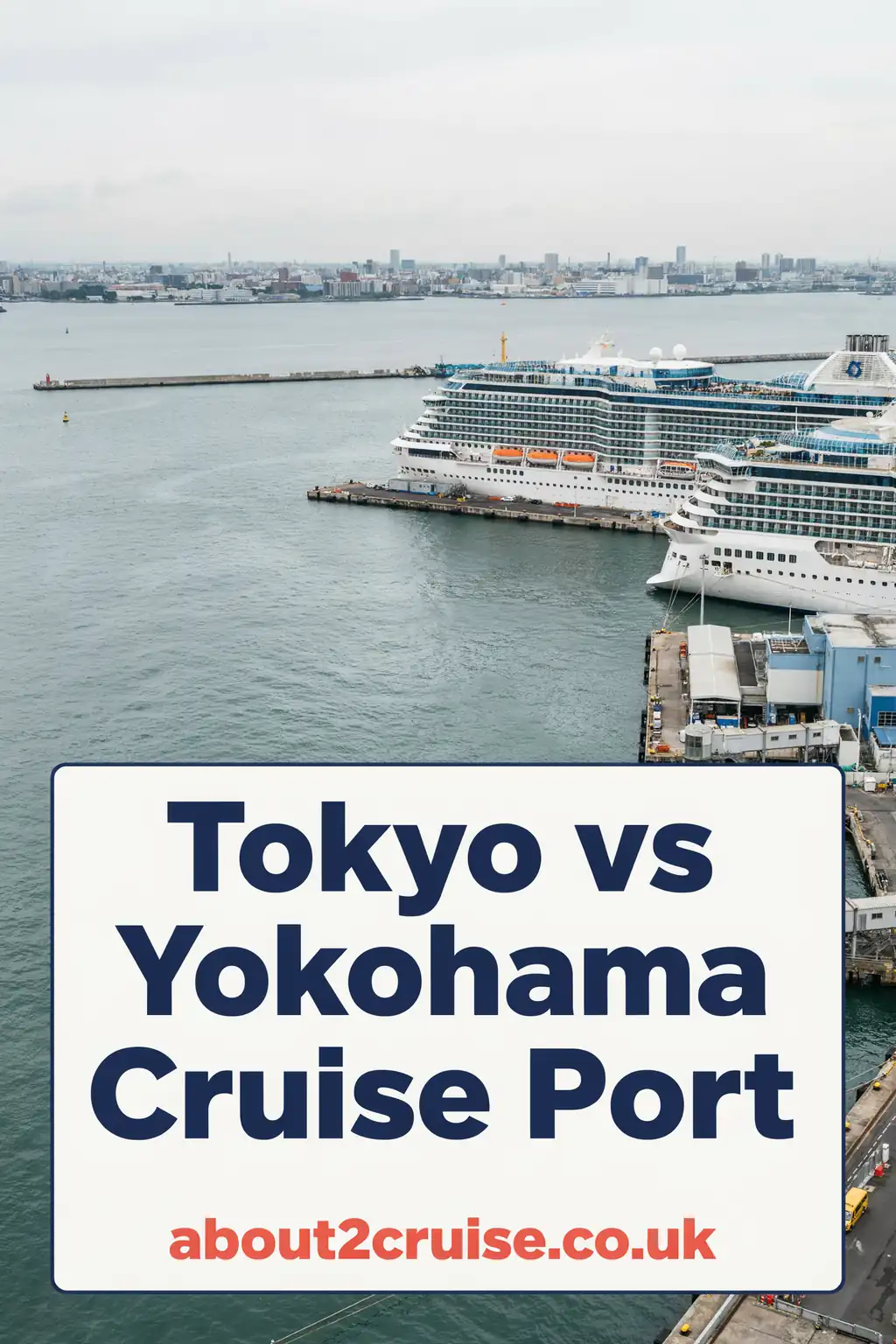
Why some itineraries list Tokyo when the ship docks in Yokohama
Itineraries list the port as Tokyo because that’s the city everyone’s heard of, even though Yokohama is about thirty kilometres south, so it’s worth checking which city your cruise line means before you plan a day in the capital. Tokyo does have its own cruise terminal, on the artificial island of Odaiba, and ships too tall to clear the nearby Rainbow Bridge dock there instead of at the older terminal closer to the centre.
The simplest fix is to check the terminal name on your documents rather than guessing from the itinerary title.
Northern Japan: Aomori and Hakodate
Aomori
Aomori sits at the northern tip of Honshu and is the gateway to the Hirosaki cherry blossoms and the Nebuta Festival, the two draws most cruise lines build their call here around. The Aomori cruise ship port guide has more on getting from the pier into town.
Hakodate
Hakodate, on the southern tip of Hokkaido, offers an alternative to the main Honshu hubs for passengers starting or ending a cruise up north. The Hakodate cruise ship port guide has the details on the terminal and getting into the city.
Kyushu’s cruise ports: Fukuoka, Kagoshima, Nagasaki, Beppu and Aburatsu
Fukuoka (Hakata)
Fukuoka’s cruise ships dock at Hakata Port, not in the city centre. Tenjin and Hakata Station sit four to six kilometres from the berths, linked by a bus rapid transit service that runs every 15 minutes from the terminal.
There are two terminal buildings, Fukuoka Chuo Wharf and Fukuoka Hakozaki Wharf, so it’s worth checking which one your ship uses before you set off, and the port consistently ranks among Japan’s two or three busiest for ship calls. The Fukuoka (Hakata) cruise ship port guide covers both terminals in full.
Kagoshima
Kagoshima looks straight across the bay at the active Sakurajima volcano, one of the more dramatic backdrops among Japan’s ports of call. It ranked among the ten busiest ports of call in a national survey. The Kagoshima cruise ship port guide has more on getting into the city.
Nagasaki
Nagasaki is one of Japan’s most visited ports of call, ranking fourth in a government survey and among the five busiest ports for ship calls in the most recent figures available. The Nagasaki cruise ship port guide has the details on the terminal and city.
Beppu
Beppu is a port of call only, with no embarkation or disembarkation there. Ships dock at the No. 4 Pier on the northern side of the city, an industrial berth with nothing to walk to nearby.
A free shuttle runs straight to JR Beppu Station, from where popular options include the Jigoku Meguri hot-spring tour and the Beppu Ropeway. The Beppu cruise ship port guide covers the shuttle and shore options in full.
Miyazaki’s Aburatsu
Aburatsu’s cruise terminal sits on the East Wharf in Nichinan City on Kyushu’s east coast, about ten minutes by shuttle from the town centre. Shore options from here include the remains of Obi Castle and Udo-jingu Shrine, perched over the Pacific near the rock formations at Aoshima. The Miyazaki’s Aburatsu cruise ship port guide has more on reaching each one.
Shikoku: Kochi
Kochi, on the Pacific coast of Shikoku, is one of the stand-alone stops several major cruise lines name directly on their Japan itineraries rather than grouping it under a nearby hub. The Kochi cruise ship port guide covers getting from the pier into the city.
Okinawa and the southern islands: Naha, Miyakojima and Ishigaki
Okinawa (Naha)
Naha, on Okinawa’s main island, topped a government survey as Japan’s most popular port of call. It’s still among the two or three busiest Japanese ports for ship calls in the most recent figures available. The Okinawa (Naha) cruise ship port guide has more detail on the terminal and city.
Miyakojima
Miyakojima’s port, at Hirara, ranked sixth in a government survey of the most popular ports of call. The Miyakojima cruise ship port guide covers what the port offers on a visit.
Ishigaki
Ishigaki ranked fifth in a government survey of Japan’s most popular ports of call and is among the five busiest Japanese ports for ship calls in the most recent figures available. The Ishigaki cruise ship port guide covers getting into town from the pier.
Smaller Japanese ports used by cruise ships
Beyond the main hubs, a long list of smaller Japanese ports also take cruise ship calls, usually on itineraries built around a particular region rather than one headline stop.
- Otaru, on the west coast of Hokkaido
- Akita, on the Sea of Japan coast of Tohoku, where JR East runs an irregular passenger train connecting Akita Port Station to Akita Station for cruise passengers
- Shimonoseki, one of Japan’s designated international cruise hub ports
- Sasebo, also a designated international cruise hub
- Yatsushiro, in Kumamoto, also a designated hub
- Fukuyama
- Takamatsu
- Uno
- Naze, on Amami Oshima
- Kitakyushu
- Miyanoura, on Yakushima
- Sendai, named directly by several major cruise lines on their Japan itineraries
Japan cruise ports FAQs
Is Yokohama a port city?
Yokohama is a port city in its own right, with three cruise piers between them, and it works as Tokyo’s main cruise gateway just to the south.
Can you cruise from the UK to Japan?
You can’t cruise round trip from the UK to Japan; you fly out and join the ship at a Japanese port, most often Yokohama or Kobe, then fly home from wherever the cruise ends.
Are Japan cruises round trip or one way?
Japan cruises run both ways. Some are round trips from a single port like Yokohama or Kobe, while others are one-way sailings linking Japan with other cruise ports across Asia.
How many cruise terminals does Yokohama have?
Yokohama has two central piers, Osanbashi and Shinko, plus a third, Daikoku, further out in the port and reached by a planned road or bus transfer. Count all three and the city has three cruise terminals in total.
Which is Japan’s busiest cruise port?
Hakata leads Japanese ports with 204 ship calls in the most recent year measured, according to Ministry of Land, Infrastructure, Transport and Tourism figures, followed by Naha (175), Nagasaki (160), Yokohama (147) and Ishigaki (120).
What does “international cruise hub” mean in Japan?
An international cruise hub is the government’s label for ports built with a dock specifically for cruise ships, covering nine ports including Yokohama, Kagoshima and Naha, alongside Tokyo and Kobe, which already had cruise docks before the scheme existed.
Do luxury and expedition ships visit different Japan ports than mainstream cruises?
Luxury, premium and expedition sailings make up the majority of foreign cruise calls to Japan, and they’re the ones most likely to add smaller regional ports to an itinerary rather than sticking to Yokohama, Kobe and the other main hubs.
Last Updated: 25 October 2026