
Mexico’s cruise ports split between two coasts: Caribbean-side Cozumel, Costa Maya, Playa del Carmen, Puerto Morelos and Cancún; Pacific-side Ensenada, Cabo San Lucas, Mazatlán, Puerto Vallarta, Manzanillo, Acapulco and Huatulco; plus La Paz on the Baja and Progreso on the Gulf, serving Mérida and Chichén Itzá. The big-ship staples are Cozumel, Costa Maya, Cabo, Mazatlán and Puerto Vallarta.
Mexico cruise ports map
Mexico’s 13 cruise ports run from Ensenada and Cabo San Lucas in the far west to Cancún and Puerto Morelos in the far east. Tap a pin to open that port’s guide.
Caribbean Mexico Cruise Ports
Cozumel: The Easiest DIY Beach, Reef or Taco Day
Cozumel is the busiest cruise stop in Mexico and one of the busiest in the Caribbean. Ships dock at one of three piers on the island’s sheltered west side: Punta Langosta downtown, or two piers about 4–5 km south of San Miguel. It’s the easiest port for a do-it-yourself beach, snorkel or taco day, and the ferry to Playa del Carmen leaves from the downtown pier. Choose Cozumel if you want reefs, beach clubs, or a low-stress first Mexico port call.
Costa Maya (Mahahual): A First Mayan Ruin or a Cheap Beach Day
At the end of a long pier there is a purpose-built cruise village. The actual town is Mahahual, 2–3 miles away, with a public beach and malecón. This is the port for the Chacchoben Mayan ruins and, on longer calls, Bacalar lagoon. Pick Costa Maya for a first Mayan ruin, a cheap beach day with a short taxi, or simply staying inside the port’s pools and shops.
Playa del Carmen: The Mainland Ferry Hub You Reach from Cozumel
Playa del Carmen is primarily the mainland ferry hub you reach from Cozumel, but a handful of smaller ships and expedition vessels tender here. Fifth Avenue, beach clubs, and nearby Xcaret and Tulum make it a useful base, but on a standard Cozumel port day the mainland is a round trip with ferry risk. It’s best for travellers who specifically want Playa or an organised mainland excursion, not as a default port day.
Puerto Morelos: A Quiet Mainland Stop Between Cancún and Playa
Puerto Morelos is a quieter mainland stop between Cancún and Playa del Carmen. It has a small-town beach, reef snorkelling, and a less polished Mexican feel than Playa. Smaller ships and some expedition lines call here; it isn’t a mainstream big-ship turnaround port. Choose it for reef trips and a relaxed mainland day without Cancún or Playa volumes.
Cancún: The Gateway You Probably Won’t Cruise Into
Cancún is the airport and hotel zone gateway for Caribbean Mexico, not a main deep-water cruise berth. If a ship does call here, expect a tender or a terminal serving smaller vessels, with the hotel zone and the Isla Mujeres ferry nearby. Most cruise passengers only experience Cancún as the airport for pre- or post-cruise stays.
Progreso: The Long Pier Port for Mérida and Chichén Itzá
Ships dock at the end of a 6.5 km pier, one of the longest in the world, and a free shuttle takes you into Progreso town. From there, Mérida is 40–45 minutes, Dzibilchaltún is 20–25 minutes, and Chichén Itzá is roughly 2–2.5 hours each way. Choose Progreso for Yucatán culture, cochinita pibil in Mérida, and the region’s most serious Mayan ruin day.
Pacific Mexico Cruise Ports
Ensenada: Walkable Baja Wine, Tacos and a Low-Cost Day
Ensenada is a docked, walk-off port on Baja California’s Pacific coast. The main tourist street, Avenida López Mateos, is a flat 15–20 minute walk from the pier, with fish tacos, the Mercado Negro seafood market and the malecón nearby. Inland, the Valle de Guadalupe wine country is 30–45 minutes, and La Bufadora blowhole is about an hour each way. Pick Ensenada for Baja wine, street food and a low-cost walkable day.
Cabo San Lucas: Tender Port with the Arch, Sea Lions and Winter Whales
Cabo San Lucas is a tender port in a bay framed by Land’s End. All large ships anchor and tender to the marina, putting you steps from the arch, sea lion colony and Lover’s Beach by water taxi. Whale watching runs from December to April. It has the Pacific route’s most dramatic sail-in, but the tender makes independent timing tighter. Choose Cabo for boat rides, whale watching and marina strolling.
Mazatlán: A Cheap, Walkable Colonial City Day
Mazatlán is a commercial harbour with a free tram from ship to terminal gate, then a painted Blue Line walking route about 15–20 minutes into the Centro Histórico. The old town, cathedral, market, Malecón and Stone Island water taxi are all cheap and independently doable. It’s best for a walkable colonial city day, shrimp, blue-agave spirit and Pacific sunsets.
Puerto Vallarta: Beach Resort Vibe, Short Ride to the Malecón
Ships dock at the Marina Vallarta cruise terminal, about 3–3.5 miles north of the Malecón and old town, so it is a short taxi or cheap bus ride rather than a walk. The downtown Malecón, Zona Romántica, Los Muertos beach and south-shore water taxis are the draw. Choose Puerto Vallarta for a beach resort day, art and food in old town, and resort-style excursions.
Manzanillo: Quieter Pacific Stop with Deep-Sea Fishing Heritage
Manzanillo is a Pacific port on the Colima coast, less often used by big UK-facing itineraries. It has a dual-bay coastline, a historic centre, beaches and a sailfish statue overlooking the bay. Ships usually dock, but tours and taxis are the practical way to reach beaches or the town centre. Pick Manzanillo for a quieter Pacific call, deep-sea fishing heritage and a low-key beach day.
Acapulco: Cliff Divers and Old-School Mexican Riviera Nostalgia
Acapulco is the original Mexican Riviera resort, now less central to mass-market US cruise rotations. Its bay, cliff divers at La Quebrada, fort and old town are the classic sights. Ships call on some longer Panama Canal, Pacific Mexico or world-cruise itineraries. Choose Acapulco for mid-century resort nostalgia, cliff divers and a day packed into one scenic bay.
Huatulco: Small, Walkable Oaxaca Coast Port with Nine Bays
Huatulco is a small, walkable Pacific port at Santa Cruz, with the beach and marina immediately off the pier. Huatulco’s nine bays are best seen by boat, with La Entrega for snorkelling, Pluma Hidalgo coffee inland, and the quiet town of La Crucecita a short walk or taxi. Choose Huatulco for uncrowded beaches, Oaxacan food and coffee in a less commercial port.
La Paz, on the Baja side, isn’t covered in detail here, but it is often a shuttle-bound excursion port rather than a walk-off, and it’s a good pick for wildlife in season.
Mexican Riviera vs Riviera Maya: Which Route Are You On?
If your ship is running round-trip from Los Angeles, San Diego, San Francisco or Seattle, you are on the Mexican Riviera. That means Pacific ports such as Cabo San Lucas, Mazatlán and Puerto Vallarta, sometimes Ensenada, Manzanillo or Huatulco.
If your sailing departs from Florida or a Gulf port, the Mexican calls are usually Caribbean: Cozumel and Costa Maya, sometimes Progreso or a mainland Riviera Maya stop.
The two coasts are different products. The Pacific side is drier, desert-like around Cabo, greener around Puerto Vallarta and Huatulco. The Caribbean side is humid, reef-backed and more likely to include a Mayan ruin or beach club day. For more route context, see the Western Caribbean cruise ports guide and the US West Coast cruise ports guide.
How the Ports Compare: Which One Fits You?
For a first-timer who wants an easy DIY day, Cozumel from Punta Langosta or a beach club taxi ride is the simplest. For a first Mayan ruin, Costa Maya’s Chacchoben is closer and cheaper than Progreso’s Chichén Itzá, but Chichén is the more famous site. For a walkable old town with almost no transport, Mazatlán and Ensenada are best. For a dramatic small-boat day, choose Cabo’s arch or Huatulco’s nine bays. For food and wine, Ensenada. For wildlife, La Paz or Cabo in season.
Progreso and La Paz are the most shuttle-bound, so treat them as excursion ports rather than walk-offs. Manzanillo and Acapulco suit longer Pacific or Panama-called itineraries. Playa del Carmen, Puerto Morelos and Cancún are more gateways than mainstream big-ship berths.
Best Time to Cruise to Mexico
Peak cruise season runs November to April, when both coasts are drier and less humid. Caribbean-side Cozumel and Costa Maya are warm year-round, with March and April driest; September and October are wettest. The Pacific side is dry November to May, hottest in summer and rainy July–September. Huatulco and Puerto Vallarta follow that pattern, while Cabo and Ensenada are arid.
Hurricane season in the Atlantic and eastern Pacific runs from June or May through November, with most storms July to October. Sargassum on the Mexican Caribbean usually peaks about April to September, so beach-club choice matters more late spring through summer.
What Kind of Cruises Stop in Mexico?
Caribbean-side Mexico calls usually come on closed-loop Western Caribbean sailings from Florida, Texas or Louisiana, often as Cozumel plus Costa Maya or a private island. Pacific-side Mexico is the Mexican Riviera, typically round-trip from Los Angeles or San Diego to Cabo, Mazatlán and Puerto Vallarta, with Ensenada on short California loops.
Longer Panama Canal, South Pacific and world cruises add Manzanillo, Acapulco, Huatulco or La Paz. Progreso appears on Western Caribbean and Gulf itineraries. Most Mexico ports are calls, not turnarounds, so you rarely handle bags or check in there.
Docking vs Tendering: What Changes Your Day
Cabo San Lucas is the big tender port on the Pacific side. Cozumel normally docks at one of three piers but can tender. Cancún or Playa del Carmen may tender when used by smaller ships. Ensenada, Progreso, Costa Maya, Mazatlán, Huatulco and Puerto Vallarta normally dock, but docking is never unconditional: wind, swell and berth availability can change it.
Tender ports mean the ship’s tours usually go ashore first, the last tender is a hard deadline, and mobility equipment may be left aboard.
Passport and Entry Rules for UK Passengers
British tourists do not need a visa for Mexico. Your passport should be valid for the duration of your stay; the Mexican Embassy in the UK recommends at least 180 days’ validity. Carry the original passport and entry stamp ashore when asked: copies are not enough.
Although US citizens can sometimes use a birth certificate on closed-loop cruises, that exception does not apply to UK passports. Every British cruise passenger needs a passport book. Vapes and e-cigarettes are illegal to bring into Mexico; they can be confiscated, and vaping in public can be fined.
Customs and Immigration on a Closed-Loop US Cruise
On a US closed-loop sailing that calls at Mexico and returns to the same US port, you go through immigration and customs in the US, not at Mexican ports. You still need your passport for re-entry and photo ID, and you may be asked to confirm the ship’s return.
Mexican port visits are treated as shore leave. There is generally no Mexican immigration check when stepping ashore from a cruise ship, but the ship is cleared as a whole. At the US return, a declaration is usually made by choosing the “nothing to declare” or “items to declare” queue, or by completing the ship’s form.
Money, Cards, ATMs and Tipping in Mexico
Mexico uses the peso, written with the same $ sign as US dollars. If a price looks too good or too high, ask “¿Es en pesos?” US dollars are often accepted in tourist zones but at poor rates; change usually comes in pesos. Visa and Mastercard work in mid-range and upscale places, but cash is still king for taxis, small eateries, markets and tips.
Always choose to be charged in pesos on card machines and ATMs. Bank ATMs in towns give far better rates than standalone machines at piers, which can charge 150–200 peso fees. Withdraw inside a shop or bank in daylight, and avoid large sums. Tipping is 10–15% in restaurants, up to 20% in places like Cabo and Puerto Vallarta; a few pesos or dollars to bar staff, and about US$5–10 per person for a half-day guide.
Taxis and Local Transport Without Overpaying
Fares are often by zone in Cozumel and posted at the terminal, per vehicle for up to four people. Puerto Vallarta has a split: white taxis inside the port charge per person, yellow city taxis outside the gate charge per vehicle. Costa Maya taxis to Mahahual often quote per person. Cabo, Ensenada, Mazatlán and La Paz are mostly negotiated or flat but not metered.
Always ask whether the price is per person or for the whole taxi and in which currency before getting in. At tender and busy ports, factor in extra time for queues, especially returning to the ship.
Food and Water Safety Ashore
Tap water is not generally safe for travellers in Mexico; use bottled or boiled water, including for brushing teeth. Avoid ice unless you know it is purified, and skip raw food washed in tap water. Choose food cooked to order and served hot. High-turnover stalls with separate money handlers are the safer end of street food.
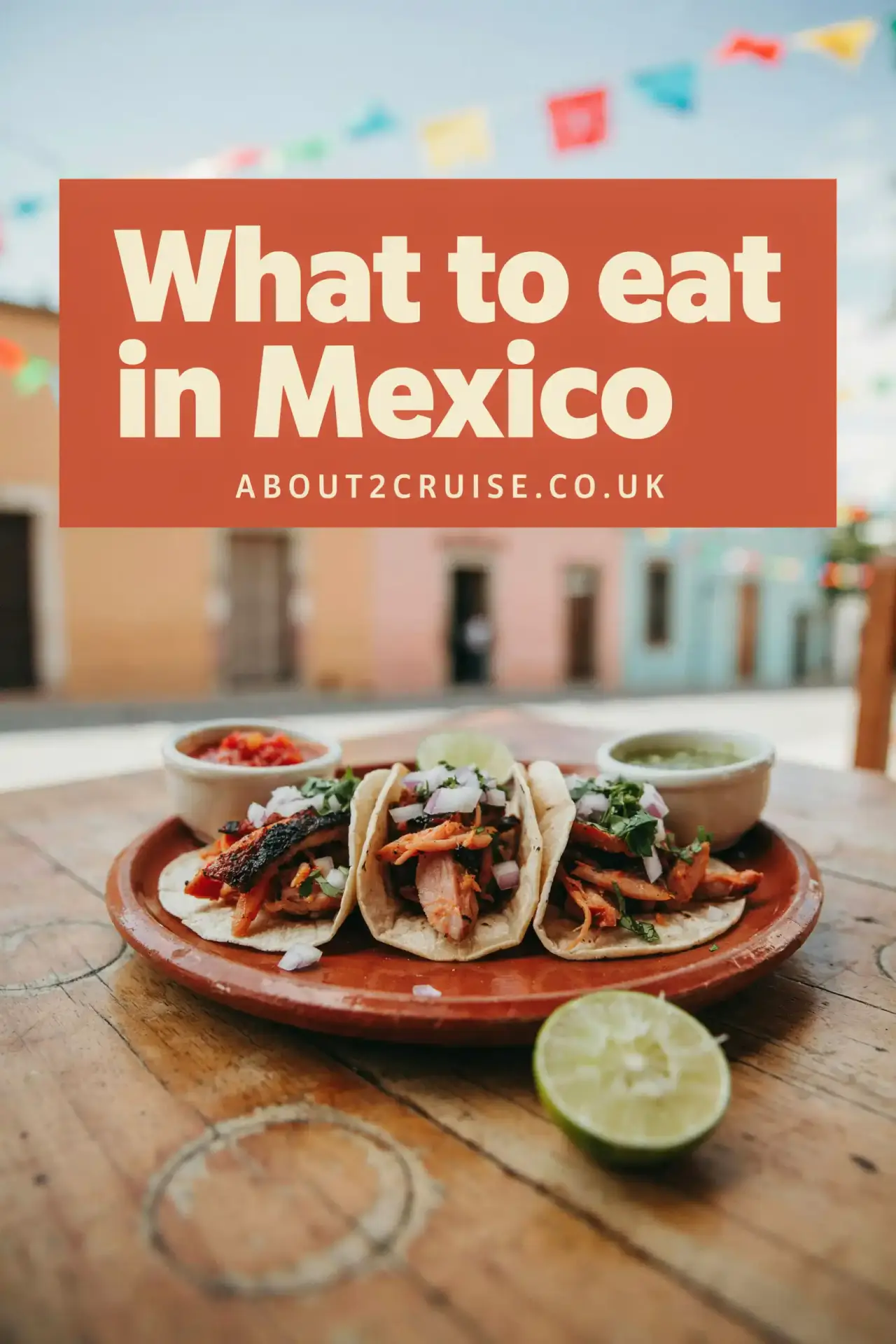
The CDC recommends hepatitis A and typhoid vaccines for most Mexico travel. In tourist restaurants near the piers, check for a dollar menu and a peso menu; the peso version is usually cheaper.
Safety in Mexico’s Port Tourist Zones
Mexico’s major cruise ports sit in tourist zones where the main risks are pickpocketing, unlicensed taxis, drink spiking and touts, not headline violence. The FCDO does not advise against the main cruise port cities, but it does advise against all but essential travel to parts of Sinaloa, Jalisco and other states. Mazatlán and Puerto Vallarta remain within the exceptions, but check the current FCDO map before booking anything independent.
Use sitio taxis or app-ordered transport, keep drinks in sight, avoid large ATM withdrawals, and treat “free gift” or time-share pitches as a sales process. Emergency number is 911.
Ship Excursions vs Independent Tours
Independent versions of the same trip usually run 20–50% cheaper. Cabo arch boats are US$10–25 independently against $70–95 through the ship; Costa Maya Chacchoben runs about $57–90 against $110–150 ship price. The ship’s tour buys protection: if it is delayed, the ship waits or arranges your return. If you go independent, that guarantee is the operator’s promise, not the cruise line’s.
The strongest case for a ship tour is a tender port or a long inland excursion with a tight all-aboard. Short, close-to-pier, walkable days favour independent plans.
Getting Back to the Ship on Time
All-aboard is typically 30–60 minutes before departure. Build your own buffer: aim to be at the pier a full hour before that. At tender ports, the last tender is the real deadline. On multi-ship days, queues at taxi ranks and tender points can add 20–30 minutes.
If you miss the ship, the cruise line’s port agent is listed in the daily programme or app; call that number, not the operator. Your passport may be left with the port agent, but the ship generally will not wait for independent travellers.
Time Zones and Ship Time
Mexico has four time zones and mostly does not change clocks. Quintana Roo, including Cozumel and Costa Maya, is UTC−5. Yucatán, including Progreso, is UTC−6. Baja California Sur, Sinaloa and Nayarit, including Cabo, Mazatlán and Puerto Vallarta, are UTC−7. Baja California, including Ensenada, is UTC−8 and does change with the US.
Ship time may differ from shore time. Phones can jump to local time automatically, so check your watch against the ship’s clock before you go ashore, and keep the ship’s time for all-aboard.
Sun, Heat, Hurricanes and Sargassum
The sun is strong even in winter; use high-factor sunscreen and reapply after water. Caribbean ports are humid year-round. Pacific ports can be hot and dry, with Cabo and Ensenada desert-like. Atlantic hurricane season runs 1 June–30 November; eastern Pacific starts 15 May.
Sargassum seaweed usually peaks on the Caribbean coast between April and September. Beach clubs that rake daily are the practical defence, while free public stretches may not be cleared. Winter “nortes” on Cozumel can roughen ferries and beach snorkelling.
Cruise Line Private Destinations and Beach Clubs in Mexico
Royal Caribbean has taken administrative control of Costa Maya cruise port and plans a Perfect Day Mexico at Mahahual with pools, slides and a lazy river, but Mexico’s environment ministry has said the project will not be approved as proposed. Costa Maya remains open to other lines, and the port village continues to operate.
Royal Caribbean’s separate Royal Beach Club Cozumel, on the former Playa Mia site, is planned for early 2028. Until a club or destination is actually on sale for your sailing, it cannot be booked as part of your port day.
Accessibility and Family-Friendly Choices
Cabo’s tender is the biggest access barrier: small boats, a step at the landing and possible powered-equipment restrictions. Carnival, Royal Caribbean and others may not allow motorised chairs on tenders if roll-on capability is not possible.
Docked ports like Cozumel, Ensenada, Huatulco, Mazatlán, Puerto Vallarta and Progreso are easier, but Progreso still has a mandatory pier shuttle. For families, Cozumel beach clubs, Costa Maya’s port pool, Huatulco’s Santa Cruz beach and Cabo’s water taxi are good. La Bufadora’s 800 m uneven path is hard with strollers or wheelchairs.
Shopping and Bargaining
Bargaining is normal in markets such as Mazatlán’s Pino Suárez, but less so in fixed-price shops and cruise-port malls. Cozumel jewellery shops near the piers often price from inflated starting points; the same goods can be 20–40% less a block off the main drag. Small peso notes help at markets.
Avoid “free ferry tickets” and tour offers around Cozumel and Playa del Carmen; they are usually time-share pitches. The best value souvenirs are food and drink, coffee, vanilla, textiles and small crafts, not port-village trinkets.
Phones, Wi-Fi and Offline Planning
Mexico is outside most UK network Europe zones. Check your plan: O2 has a daily or inclusive option in some plans, Three charges around £7–£8 a day, EE uses Roam Further or Abroad passes, and Vodafone’s Xtra Global Roam covers Mexico.
Download Google Maps offline areas for each port before sailing; walking directions won’t work offline, but the map and saved pins will. Port terminals vary: Puerto Vallarta and Costa Maya have Wi-Fi, Mahahual’s signal is unreliable. Take screenshots of taxi rates, meeting points and your ship’s all-aboard time.
Travel Insurance and Medical Care
Good travel insurance is essential. The FCDO says travel to areas advised against can invalidate cover. Standard policies often exclude or cap scuba, so check before booking a dive.
Mexican private hospitals commonly require payment or a card deposit at admission unless an insurer issues a guarantee of payment. Cozumel has 24/7 hyperbaric and hospital care, and all major ports have medical facilities, but evacuation from a remote port can be expensive. Emergency number is 911.
Basic Spanish and Local Etiquette
You can get through port days in English, especially in tourist zones, but a few phrases go a long way: “buenos días” good morning, “gracias” thanks, “¿cuánto cuesta?” how much, “¿es en pesos?” is it pesos, “la cuenta, por favor” the bill please.
Dress codes at churches mean shoulders and knees covered, as at Mazatlán cathedral. Bargain politely and lightly; do not photograph people without asking. Tipping is expected, not optional, in restaurants and for guides.
Mexico Cruise FAQs
Is the Mexican Riviera safe to cruise right now?
For cruise passengers sticking to the main port tourist zones and organised excursions, yes. The FCDO does not advise against the main cruise cities, but it does advise against parts of Sinaloa, Jalisco and other states. Check the latest FCDO Mexico advice before you travel, and avoid independent travel outside the cruise corridor unless you have checked the local situation.
Do I need a passport for a closed-loop Mexico cruise?
Yes. The US birth-certificate closed-loop exception only applies to US citizens and is not available to UK passport holders. British travellers need a passport valid for their stay in Mexico, and no visa is required for cruise shore leave.
Buffet scrambled eggs are often made in bulk from liquid or powdered egg product and held under heat lamps, which can make them watery or rubbery. The practical workaround is the made-to-order egg or omelette station, where eggs are cooked from scratch.
Last Updated: 19 November 2026