
Chile’s cruise ports stretch from the Atacama Desert to Cape Horn, but most first-time cruisers meet the country at San Antonio or Valparaíso, the two gateways for Santiago, then sail south through the Patagonian fjords to ports such as Puerto Montt, Castro, Puerto Chacabuco and Punta Arenas. Far-northern calls at Antofagasta, Iquique and Arica suit Atacama and Pacific-coast itineraries, while Hanga Roa on Easter Island and Robinson Crusoe Island are rare, weather-dependent tender ports.
Chile cruise ports map
Chile’s 16 cruise ports run from Arica and Iquique in the far north to Puerto Williams and Puerto Natales in the far south. Tap a pin to open that port’s guide.
How a Chile Cruise Works
The classic Chile cruise is a one-way voyage between central Chile and Buenos Aires, usually lasting 12–15 nights. Ships depart from Valparaíso or San Antonio, spend scenic days in the Chilean fjords and Beagle Channel, call at southern Patagonia ports such as Puerto Montt, Castro, Puerto Chacabuco or Punta Arenas, then round Cape Horn and continue to Ushuaia, the Falklands and Argentina. Some ships do the route in reverse, starting in Buenos Aires and ending in Chile.
You’ll also see longer South Pacific voyages that call at Arica, Iquique, Antofagasta or Coquimbo on the way between California, Panama, Peru and Chile. Expedition lines use Puerto Williams as a base for Cape Horn and Antarctica, and a few ships call at remote Easter Island and Robinson Crusoe Island on ocean crossings.
Most sailings operate between October and April. Princess, Holland America, Celebrity, Norwegian, Oceania, Regent, Silversea, Viking, MSC and expedition operators such as HX, Ponant, Scenic, Seabourn, Australis and Skorpios all appear in Chilean waters.
Main Chile Cruise Ports
San Antonio Cruise Port: The Efficient Gateway to Santiago
San Antonio is Chile’s other central-coast turnaround port, and it’s the one many of the largest ships use instead of Valparaíso. It’s a working harbour with a functional passenger terminal about 110 km from Santiago. For passengers, it’s less scenic than Valparaíso but efficient for embarkation and disembarkation. The San Antonio and Leyda wine valleys are the closest vineyards to the sea in Chile, and Paseo Bellamar has seafood restaurants and sea-lion boat trips. Best for: no-fuss turnarounds, wine tasting close to the ship, and straightforward transfers to Santiago.
Valparaíso Cruise Port: The Classic Santiago Gateway
Valparaíso is the classic Chilean cruise gateway. Ships dock at commercial terminals and passengers take a free shuttle to the passenger terminal at Muelle Barón. The UNESCO-listed old town of steep hills, street art, funiculars and miradors starts nearby, while Santiago lies about 115 km inland. Casablanca wine valley is around 40 km away. Best for: first-time cruisers, history and photography, wine tours, and starting or ending a Cape Horn voyage.
Coquimbo: A Relaxed Stop for La Serena and the Elqui Valley
Coquimbo is a smaller north-central port that pairs the working town of Coquimbo with La Serena’s colonial churches and the pisco-producing Elqui Valley inland. The terminal is close to town, and taxis to La Serena are reasonably priced. Best for: a relaxed warm-weather call, pisco and wine, and an introduction to northern Chile without the long distances of the Atacama.
Iquique: The Easy Northern Port for Beach and Town Days
Iquique is an Atacama coastal city with a beach resort strip, pleasant Victorian architecture along Paseo Baquedano and a compact centre near the port gate. It’s one of the easier northern ports to explore on foot, with Cavancha beach about a 30-minute walk or short taxi away. Best for: beach-and-town days, shopping, and a gentler alternative to the bigger northern cities.
Antofagasta: The Atacama Port for a Specific Overland Add-On
Antofagasta is a large mining hub in the Atacama, used by only a few cruise lines because San Pedro de Atacama is a very long inland drive away. The port itself is industrial, and ocean swell can force the ship to skip the call. Best for: travellers who specifically want to see the Atacama coast, or as a turnaround for unusual overland add-ons across the desert.
Arica: Chile’s Northernmost Port and the Chinchorro Mummies
Arica is Chile’s northernmost cruise port, set dramatically under the Morro headland and known for its eternal-spring climate. The town is walkable from the port gate, and the UNESCO-listed Chinchorro mummy sites are Arica’s archaeological highlight. Best for: mummies, desert-and-sea scenery, and as a start or end point for overland trips towards Peru and Bolivia.
Hanga Roa, Easter Island: The Rare Tender Port
Hanga Roa is the only town on Easter Island and one of the world’s most remote tender ports. Ships anchor offshore and you go ashore by small boat, usually to Hanga Piko or Hanga Roa harbour. The moai sites require a national-park pass and, at many sites, an accredited guide. Calls can be cancelled for swell. Best for: bucket-list archaeology, photography at Ahu Tongariki and Anakena, and a once-in-a-lifetime add-on to a long ocean crossing.
Other Chilean Ports and Anchorages
Punta Arenas: Penguins and Patagonian History
The main southern Patagonia call. Ships dock at or tender to Muelle Prat in the city centre. Punta Arenas is the starting point for Magellanic penguin colonies on Magdalena Island, the Strait of Magellan, and longer days into Tierra del Fuego for king penguins. Best for: penguins, Patagonian history and a real town after days in the fjords.
Puerto Montt: Gateway to Chile’s Lake District
Puerto Montt is the gateway to Chile’s Lake District. The pier is near the Angelmó fish market and craft stalls, and excursions head to Puerto Varas, Petrohué Falls and Osorno volcano. Best for: volcanoes, lakes, seafood and a gentle introduction to southern Chile.
Castro: Chiloé’s Colorful Tender Port
Castro is the main town on Chiloé Island, reached by tender. The bright yellow Church of San Francisco, the craft market and the stilted palafito houses are all within a short walk of the landing. Best for: Chiloé’s UNESCO wooden churches, local crafts, curanto seafood and a slower, wetter, greener side of Chile.
Puerto Chacabuco: A Working Port for Aysén Fjord Tours
A small working port in the Aysén fjords, used mainly as a gateway for scenic drives to Coyhaique or for fjord and river excursions. There is little to do in the port itself. Best for: scenic tours, fishing, and expedition-style Patagonia rather than an independent wander.
Puerto Natales: Gateway to Torres del Paine
Puerto Natales is the gateway to Torres del Paine and the Balmaceda and Serrano glaciers. Some expedition ships stay here rather than Punta Arenas. Best for: Torres del Paine day trips, glacier boat rides, and starting or ending an overland Patagonia journey.
Puerto Williams: Expedition Base for Cape Horn and Antarctica
Puerto Williams is a tiny naval town on Navarino Island and a growing expedition base for Cape Horn and Antarctic departures. Its new pier takes smaller expedition ships. Best for: expedition cruisers, Beagle Channel scenery and the true end of the world.
Robinson Crusoe Island: A Rare Green Stop in the Pacific
The main island of the Juan Fernández archipelago, about 670 km west of Valparaíso. Ships anchor in Cumberland Bay and tender to the small settlement of San Juan Bautista. Best for: hikers tackling the Selkirk lookout and anyone who wants a rare, green, far-off island call on a South Pacific itinerary.
Caleta Tortel and Puerto Edén: Off-Grid Patagonia for Small Ships
Both are expedition or small-ship calls in the southern channels. Tortel is a car-free village of wooden walkways, while Puerto Edén is one of the last Kawésqar settlements. Best for: expedition travellers and photographers looking for off-grid Patagonia.
Which Chile Cruise Port Is Right for You?
If you’re new to Chile, Valparaíso or San Antonio will almost certainly be your turnaround port, and both work well for Santiago and nearby wine country. Valparaíso has the better port day on foot; San Antonio is the more efficient embarkation point for a larger ship.
South of there, Puerto Montt is the best all-rounder for first-time scenic excursions, while Castro is a smaller, more atmospheric alternative focused on Chiloé. Punta Arenas is the essential call for penguins and Strait of Magellan scenery. Puerto Chacabuco and Puerto Natales appeal to travellers who want wilder fjord landscapes and are happy with a full-day tour rather than a walkable port. Puerto Williams is for expedition travellers and Antarctica cruisers.
In the north, Iquique and Arica are the easiest independent ports, Coquimbo is a pleasant small-city stop, and Antofagasta is the most specialised and least walkable. Easter Island and Robinson Crusoe Island are best treated as bonus calls rather than ports you can count on, because weather can cancel them.
When to Cruise Chile: Season, Weather, and Penguins
The Patagonian cruise season runs from about October to April. November, February and March are the best balance of weather, availability and price. December and January have the longest daylight hours and the warmest weather in Patagonia, but they’re also the busiest and most expensive months. Strong winds are common all season, with November often the windiest month.
In central and northern Chile, summer runs from November to February, with Santiago around 26–29°C and Puerto Montt around 16–19°C. Patagonia is cooler, typically 10–16°C by day, with wind, rain and clear spells often alternating within the same day. Magellanic penguin colonies are active from November to February, with chicks hatching in December and January.
Weather, Packing, and Sea Conditions
Pack for four seasons in one day. Bring waterproof and windproof outer layers, a warm mid-layer, a hat that won’t blow off, sunscreen and sunglasses: even in cool weather the Patagonian sun is strong at high latitudes. Sturdy, grippy shoes are useful for gravel paths, cobbled streets in Valparaíso and wet tender landings.
The Chilean fjords and Beagle Channel are mostly sheltered, and many days on a longer Chile cruise are surprisingly calm. The open ocean near Cape Horn and the Drake Passage is different: expect a variable crossing, and start anti-seasickness medication before the ship leaves sheltered water if you’re affected. A cabin low and midships reduces movement.
Scenic Cruising in Chilean Patagonia
Much of the best scenery on a Chile cruise isn’t a port at all. Ships spend whole days in the fjords, channels and glacier fields. You may sail through the Strait of Magellan, the Beagle Channel and Glacier Alley, where several glaciers come down to the water. Common glacier calls include Amalia Glacier, with a 70 m ice face, and Pío XI or Brüggen Glacier, the largest glacier in South America. Smaller expedition cruises may also visit El Brujo and Bernal glaciers.
For glacier viewing, open decks beat cabins. Ships usually rotate near a glacier face so both sides get the view, but if you want to sit on deck, arrive early and dress warmly. The side of the ship matters less than being outside, with a camera and binoculars.
Northbound vs Southbound Chile Cruises
Westbound from Buenos Aires to Chile saves the fjords and glaciers for the end of the voyage and lets you add Iguazú Falls before boarding. Eastbound from Chile to Buenos Aires puts the big scenery early and ends with a city stay in Argentina. Prices are usually similar, so choose by flights, pre- and post-cruise plans, and whether you prefer to recover from long flights before boarding or after.
Money, Cards, and Tipping in Chile
Chile uses the Chilean peso. Cards are widely accepted in cities, hotels and larger restaurants, but carry pesos for taxis, markets, tips and small purchases, especially south of Puerto Montt and in Patagonia. Many vendors can’t break large notes, so keep 1,000, 2,000 and 5,000 peso notes handy.
ATMs on the Redbanc network usually charge foreign cards CLP 3,000–5,000 per withdrawal. Always decline the machine’s offer to charge your card in British pounds, because that conversion adds around 3–8%. Restaurants often suggest a 10% tip on the bill. For guides, budget about US$3–5 per person per day; for drivers, US$2–3.
Language and Local Phrases
English isn’t widely spoken outside hotels, ship-organised tours and major tourist destinations. A few phrases help enormously:
- Hola / Buenos días: Hello / good morning
- Gracias: Thank you
- Por favor: Please
- ¿Cuánto cuesta?: How much does it cost?
- ¿Dónde está…?: Where is…?
- La cuenta, por favor: The bill, please
- Sin cuotas: Used when paying by card, meaning one payment rather than instalments
- Con propina, por favor: Add the tip, please
Learning “por favor” and “gracias” goes a long way in markets and cafés. Download an offline Spanish phrasebook or translation app before sailing, because mobile data in remote fjord areas is unreliable.
Passports, Visas, and Entry Rules for Chile
British citizens can enter Chile without a visa for up to 90 days. Your passport only needs to be valid for the day you plan to leave Chile. On arrival you’ll receive a tourist card, known as the tarjeta de turismo. Keep it safe, because you must hand it back when you leave. If you lose it, ask the PDI or migration staff for a duplicate.
Every arriving passenger must complete a SAG declaration covering plant and animal products, including food in your luggage. Don’t bring fresh fruit, seeds, plants, flowers, honey or animal products into Chile. The declaration can be completed online before arrival, which speeds up the process.
If your voyage continues to Argentina or the Falkland Islands, check the latest rules before sailing. Day calls at the Falklands don’t require a visa for cruise passengers under the in-transit exemption, but the Falkland Islands cruise passenger tax may be charged separately.
Getting Around: Ship Tours vs Independent Exploring
Valparaíso, Iquique, Arica and central Punta Arenas are all walkable enough for independent exploring on a clear day. Castro is small and easy on foot once you’re ashore, and Coquimbo is manageable around the town centre. But many of Chile’s most famous sights, Torres del Paine, Petrohué Falls, the Casablanca wine valley, penguin colonies, involve transfers of one to two hours or more each way. Those are usually better as ship-organised tours or pre-booked private tours, simply because the ship won’t wait for late private transport.
If you want to explore independently, always know the all-aboard time and the last tender time, and build in a cushion. Tender ports in Chile include Castro, Puerto Chacabuco, Easter Island, Robinson Crusoe Island and, depending on the ship, Punta Arenas and Puerto Williams. Check the daily programme on board rather than relying on online timings.
Excursion Costs and Booking Risks
Shore excursions in Chile aren’t cheap, but they’re often the only realistic way to see the headline sights. Expect ship tours such as a full-day Torres del Paine panoramic coach trip to be priced at a premium. Independent operators are usually cheaper: a ferry to the penguins at Magdalena Island is around CLP 96,000, a speedboat option around CLP 111,000–140,000, and a Petrohué Falls and Osorno volcano day may start around US$65–80.
Book weather-sensitive tours with an eye on cancellation terms. For example, one common penguin-boat policy gives a 100% refund if the trip is cancelled before sailing, but only 50% if it sails but cannot land. If you book independently and the tour runs late, the ship won’t wait.
Safety, Health, and Insurance
Chile isn’t a high-crime destination by global standards, but pickpocketing, distraction theft and theft from vehicles are common, especially in Santiago, Valparaíso and busy markets. Don’t leave bags on chair backs, keep phones and wallets out of back pockets, and use official taxi booths at airports. In Valparaíso, stay aware in the lower town and don’t flash expensive cameras in quiet streets.
There is no malaria risk in Chile and no yellow-fever entry requirement. Recommended travel vaccinations for most UK travellers are hepatitis A, typhoid and routine boosters. Medical care at private clinics is excellent but expensive, so make sure your travel insurance covers cruise travel, medical treatment and repatriation.
Accessibility and Tender Ports
Wheelchair users and passengers with limited mobility should be realistic about Chilean tender ports. Tender boats are often not accessible to full-time wheelchair or scooter users, and even at a docked pier the walk into town may involve steps, cobbles or industrial roads. Valparaíso’s historic hills are steep, with many steps and uneven pavements, although the lower town and the Barón-to-Viña train are easier.
Cruise lines generally require a mobility assessment before you can board a tender, and crew can’t lift or carry passengers. If a tender port is unsafe for you, the ship may not allow you ashore, and missed ports for accessibility reasons aren’t refunded. Check with your cruise line before booking if this matters to you.
Connectivity at Sea and Ashore
Most major cruise lines now use Starlink or similar low-earth-orbit internet, including Holland America, Princess, Celebrity, Oceania and Silversea. Wi-Fi is usually charged per device per day and is cheaper if bought before boarding. Some lines, including Viking, Seabourn, Regent and Silversea, include basic Wi-Fi in the fare.
Coverage can dip in high-latitude fjord systems and remote southern waters, so port days are usually the best time for big downloads, video calls and map updates. Consider an eSIM or roaming add-on for your phone for Chilean port days, but don’t expect reliable signal in the deepest fjords or around Easter Island and Robinson Crusoe Island.
Food and Drink in Port
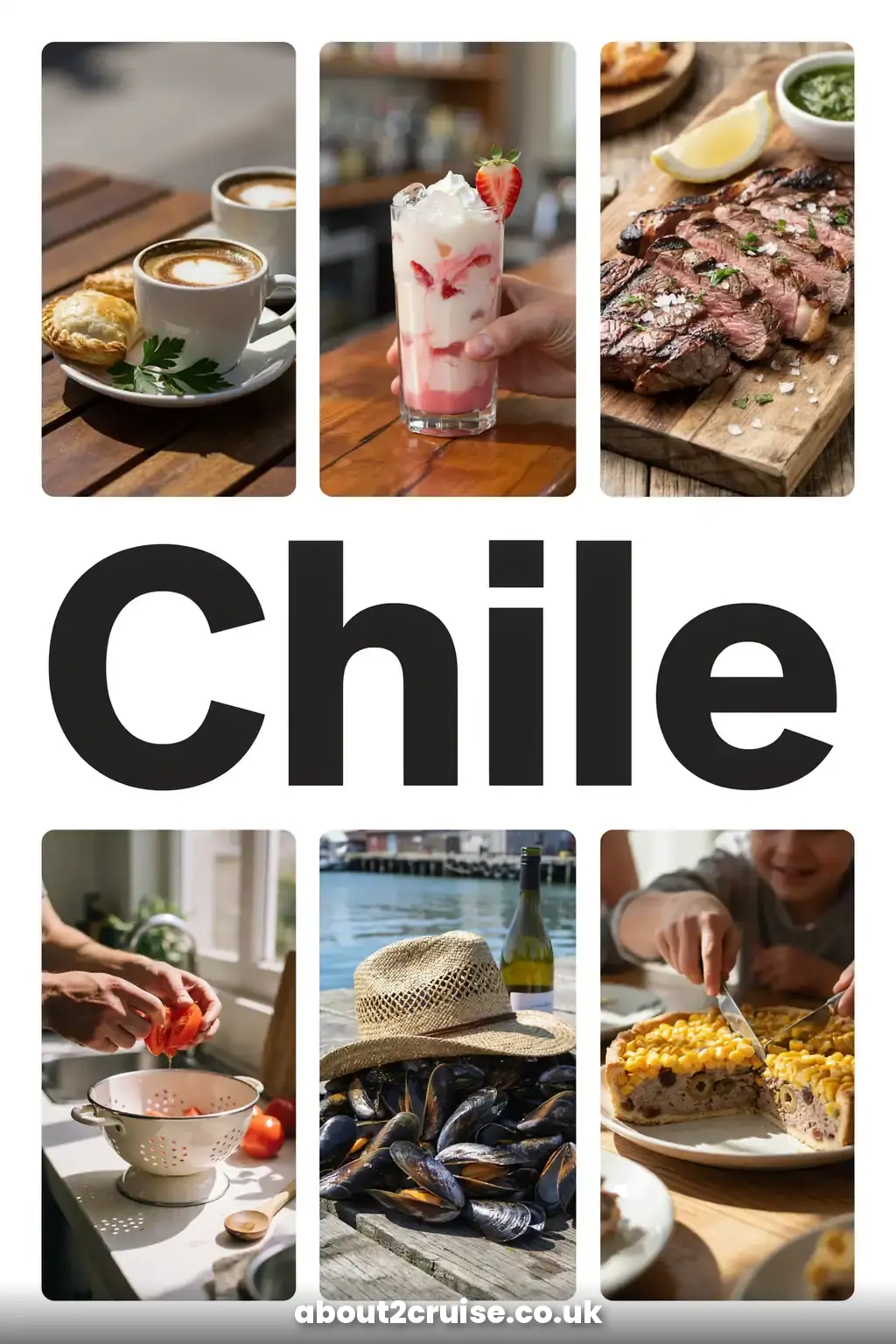
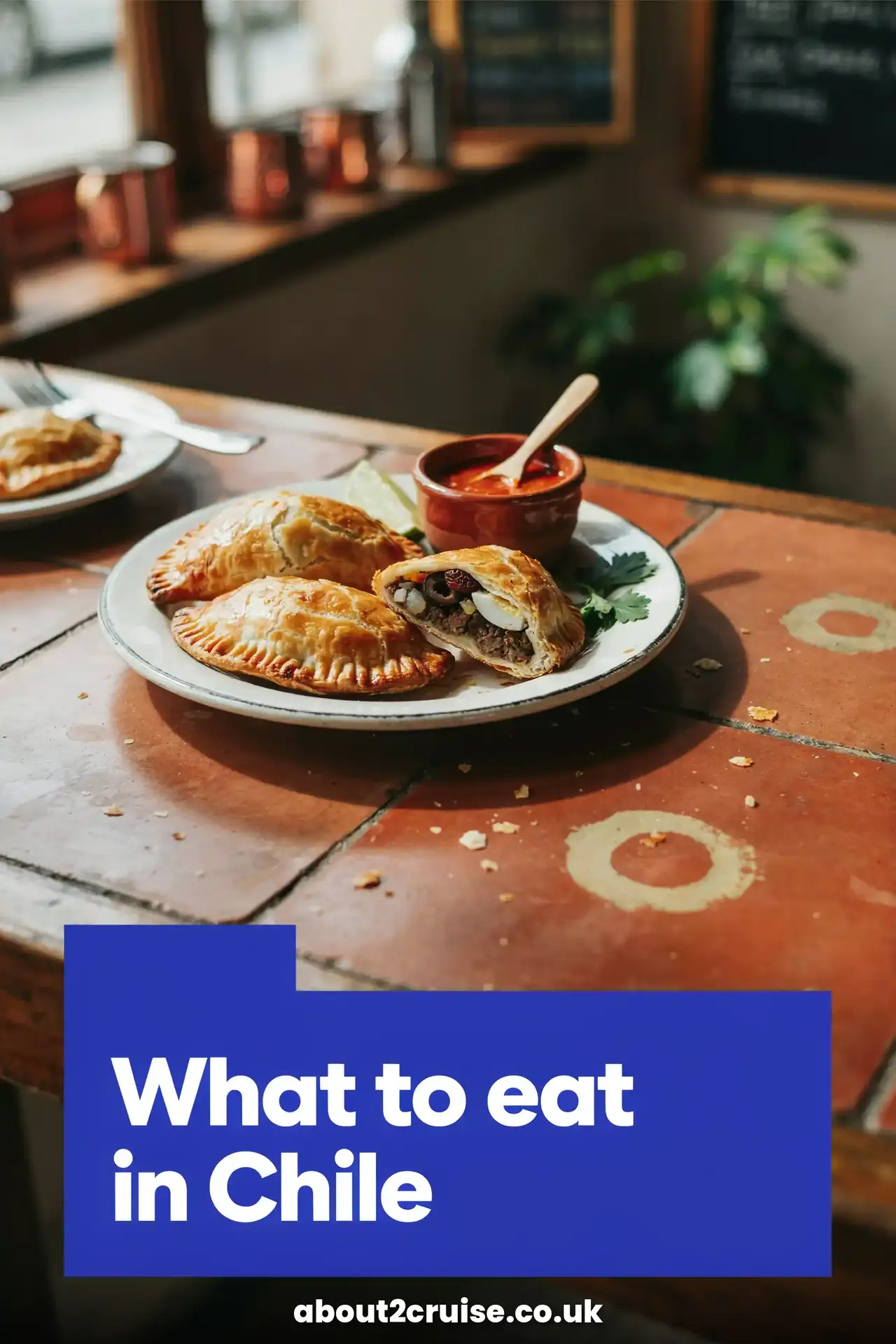
In port, eat local. On the central coast, try empanadas de pino, pastel de choclo and congrio fish stew. In Puerto Montt, the Angelmó fish market kitchens serve curanto, a Chilote dish of seafood, meat and potatoes steamed in a leaf-lined pit. In Patagonia, look for Magellanic lamb roasted on a spit and king crab stew. In the north, ceviche and fresh fish dominate.
Chile’s wine valleys are easy to reach from Valparaíso, San Antonio and, for pisco, Coquimbo. Casablanca and San Antonio-Leyda produce excellent cool-climate whites and coastal reds. Book winery tours in advance, and don’t drive after tasting: drink-driving law is strictly enforced.
Argentina and the Falklands on Chile Itineraries
Many Chile cruises are really southern South America cruises. If your ship continues to Ushuaia, Buenos Aires or the Falklands, remember you’ll pass through Argentinian and Falklands immigration rules as well as Chilean ones. On the classic Cape Horn route, the Falklands call is often the most weather-sensitive day of the cruise, and the harbour can close if winds are sustained at 30 knots or more. Have a plan B for a sea day, and don’t book non-refundable private tours there.
Families and Free Time in Port
Chile cruises tend to skew older, with an average passenger age around 60 on many lines, but active families can still enjoy the wildlife, boats and short hikes. Young children may find long coach transfers to Torres del Paine or the Atacama tough. Better family-friendly choices are the penguin boats from Punta Arenas, volcano-and-falls drives from Puerto Montt, and the beaches of Iquique or Arica. Check the age and height rules for boat trips and zodiac excursions, especially on expedition ships.
Is a Chile Cruise Worth It?
For scenery, yes. The Chilean fjords, glaciers and Cape Horn are among the most dramatic coastal landscapes in the world, and a cruise is the easiest way to see them without overland logistics. The trade-off is that some port calls are short, weather can change plans, and the best sights often require expensive excursions or long transfers.
Chile cruises suit travellers who want wild nature, wildlife and big-ship comfort; they’re less suited to people who want wall-to-wall museums, nightlife or guaranteed warm beach weather. If you’re happy with layers, wind, early starts and the possibility of a missed tender port, you’ll probably find it one of the most memorable cruises you can take.
Our South America cruise ports guide covers the other ports in the region.
Chile Cruise FAQ: What to Know Before You Sail
Do Chile cruises include Easter Island or Antarctica?
Most do not. Easter Island appears only on a handful of long ocean-crossing itineraries, and calls are tender-based and weather-dependent. Antarctica isn’t a casual add-on from mainland Chile; expedition cruises to Antarctica typically start from Punta Arenas or Puerto Williams and are separate, much longer voyages. A standard Chile fjords cruise does not include Antarctica.
Can I do Chilean cruise ports independently?
Partially. Valparaíso, Iquique, Arica, Castro and central Punta Arenas are good for independent wandering. But headline sights such as Torres del Paine, Petrohué Falls, the Casablanca wine valley and the penguin colonies usually need a booked tour or transfer. On a short call, an organised excursion is often the safest use of your time.
Are Chile cruise excursions expensive?
They can be. Ship tours into Torres del Paine, the lakes or penguin colonies are typically premium-priced. Independent tours are usually cheaper, but may not offer cancellation protection or guarantee your return to the ship. Budget at least £60–£120 per person for a half-day tour and considerably more for full-day trips.
Do you actually land at Cape Horn?
Only on expedition ships and some small-ship voyages. Larger cruise ships usually slow down and sail past Cape Horn if conditions allow, but they don’t land. Landing is by zodiac, takes place only when weather and sea conditions permit, and requires a climb up a staircase of around 100 steps to the lighthouse and monument.
Which side of the ship is best for the fjords?
For the Patagonian fjords and glacier cruising, the open decks matter more than the cabin side. Ships often rotate at glacier faces so both sides get the view. If you want a private balcony, know which direction you’re sailing and whether the coast is to port or starboard, but be prepared for the scenery to be on both sides at different times.
What currency do I need in Chilean ports?
Chilean pesos. Cards work in cities and larger businesses, but taxis, craft markets, small restaurants and remote Patagonian stops often prefer cash. Keep small notes and decline dynamic currency conversion when paying by card.
Is a Chile cruise rough?
Most of the time, no. The fjords and channels are sheltered, and many days are calm. The open water near Cape Horn and the Drake Passage can be rough, and the Falklands call is often windy. If you’re prone to seasickness, start medication before the ship leaves protected water and choose a low, midships cabin.
Last Updated: 21 November 2026